

The United Nations Office at Geneva
Multimedia Newsroom
UN General Assembly
Rhéal LeBlanc, for the United Nations Information Service (UNIS), reminded that the General Assembly was continuing in New York. On 24 September, in his remarks to the High-level Roundtable on Climate Ambition, the UN Secretary-General had stressed three urgent priorities: securing a sustainable COVID-19 recovery which promoted climate action; protecting economies and societies in line with what science told us; and prioritizing the most vulnerable people and communities. The Secretary-General’s remarks can be read here. On 12 December, an important climate event would be jointly organized by the United Nations and the United Kingdom to mark the fifth anniversary of the Paris Accord, and ahead of the COP26, which had to be postponed to November 2021.
45th Human Rights Council
Rolando Gomez, for the Human Rights Council (HRC), said that today at 10 a.m. the Council had heard from its Advisory Committee on several topics. Soon the Council would hear from High Commissioner Michelle Bachelet on the human rights situation in Venezuela; her statement would be shared with the media after the delivery. A general debate on the country’s situation would then commence, with 60 countries and 100 NGOs scheduled to speak. A discussion on the human rights of indigenous populations would also take place later today. It was also a deadline for draft resolutions that would be considered during the final days of the session; currently some 38 draft resolutions were expected. On 28 September, the Universal Periodic Review of 12 countries would commence.
More information on the HRC schedule can be found here.
COVID-19 and seasonal influenza
Dr. Ann Moen, Chief of Influenza Preparedness and Response at the World Health Organization (WHO), said the WHO was helping Member States with preventing and treating respiratory illnesses, including influenza and COVID-19. The influenza season might place an additional burden on already stretched health systems. On average, between 290,000 and 600,000 people died of seasonal respiratory influenza. The measures recommended by the WHO were all very important for avoiding both flu and COVID-19. There were a lot of ways to prevent flu and care for flu patients. The five priority vulnerable groups for vaccination, according to a 2012 WHO guidance, were: pregnant women, individuals with underlying health conditions, elderly people, health workers, and children. This year, however, under the current circumstances, experts had identified health workers and older people as the top risk groups. WHO also encouraged people to listen to the advice of their local and national authorities about the prioritization of vaccines.
Almost all the influenza vaccines being used now had been ordered before the COVID-19 pandemic, because supplies were normally ordered long in advance. WHO was working with its regional offices and industry partners to provide additional vaccine quantities where needed. The mentioned prioritization should be taken into consideration if there were short supplies.
Dr. Moen stated, responding to a question, that the safety profile is well known and if there are side effects they are generally mild. There were no studies that a flu vaccine would be effective against COVID-19; the target groups for flu and COVID-19 vaccinations could overlap. Dr. Moen stressed that influenza vaccine procurement was a lengthy process that could last up to 12 months; for example, countries in the Southern hemisphere were now placing their orders for May 2021. October was the right time to be vaccinated against influenza in the Northern hemisphere; the WHO was recommending that people get vaccinated as soon as the vaccines were available, said Dr. Moen. Different countries had different plans, some prioritizing certain groups at risk, others vaccinating entire populations.
Geneva announcements
Sarah Bel, for the United Nations Development Programme (UNDP), informed that Cartier, one of the world’s leading luxury brands, had joined the Lion’s Share Fund, a ground-breaking initiative to tackle the crisis in nature, biodiversity and climate. Led by the United Nations Development Programme (UNDP) and a coalition of businesses and UN partners, the Lion’s Share was an innovative financial mechanism to raise over USD 100 million per year within the next five years to halt biodiversity loss and protect habitats by asking brands to contribute 0.5% of their media spend every time an animal was featured in their advertisements. Some 20 per cent of ads globally featured an animal, said Ms. Bel. UNDP Administrator Achim Steiner and Cyrille Vigneron, CEO of Cartier, would brief the media today, via Webex, at 6 p.m. Geneva time.
Catherine Huissoud, for the United Nations Conference on Trade and Development (UNCTAD), informed that on Monday, 28 September at 4 p.m., there would be a hybrid press conference on the publication of the Economic Development in Africa Report 2020 - Tackling Illicit Financial Flows for Sustainable Development in Africa. Speakers would include Mukhisa Kituyi, UNCTAD Secretary-General, and Paul Akiwumi, Director of the Division on Africa, LDCs and Special Programmes. The report would be embargoed until 28 September 2020 at 7 p.m. Geneva time.
Rhéal LeBlanc, for the United Nations Information Service (UNIS), informed that the Committee on Economic, Social and Cultural Rights would open its virtual 68th session on 28 September, at 4 p.m. The only other public meeting planned for this session would be the closure meeting, on 16 October, at 4 p.m.
The Committee on Enforced Disappearances would not close today (as initially planned) its 19th session but only suspend it, to allow the dialogue with Iraq (which had been postponed) to take place on 5 October (12:30 to 2:30 p.m.) and on 7 October (4 to 6 p.m).
The Committee on the Rights of the Child (85th session, 14 September – 1 October) would hold its next public meeting for the closure of the session, on 1 October at 5 p.m.
Mr. LeBlanc informed about the inauguration of Tempus, the temporary conference facilities, at UN Geneva on 29 September at 12:30 p.m., in the presence of the UN Geneva Director-General Tatiana Valovaya and Switzerland’s Permanent Representative to the United Nations in Geneva, Jürg Lauber.
Mr. LeBlanc also reminded that 26 September would be International Day for the Total Elimination of Nuclear Weapons; 27 September - World Tourism Day; and 28 September- International Day for Universal Access to Information.
Similar Stories
1
1
1
Press Conferences | IOM , UNDRR
UN stresses importance of household preparedness for disaster risk reduction.
1
1
1
Statements , Press Conferences | OHCHR
1
1
1
Press Conferences | UNHCR , UNICEF , IFRC , OHCHR , UN WOMEN , IOM , OCHA , WHO
UNHCR – ExCom Meeting, UNICEF – Nepal Recovery, IFRC – Flash Floods, WHO – Mental Health, IOM – South Sudan Floods, OCHA – DRC Humanitarian aid, UNHCR – Sahel Displacement, UNICEF – Yemen Update, IOM – Gaza Shelter, UN Women – Gaza Women, OHCHR – Arrests and detentions of Syrians by Israeli force
2
1
2
Press Conferences | UNCTAD
Presentation of the Trade and Developement Report 2026
Embargoed until 9 October 2026 at 11 a.m. (Geneva Time)
UNCTAD: UNCTAD’s flagship report finds that governments increasingly use industrial, trade, financial and technology policies to pursue economic and national security objectives. Market access and the ability to move into higher-value activities now depend more heavily on technology, finance and geopolitics.
1
1
1
Press Conferences | UPU
Release of the State of the Postal Sector Report 2026
1
1
1
Press Conferences | IOM , ITU , UNECE , UNICEF , WHO , WMO
UNICEF: Ebola, DRC - children orphans or separating them from parents and caregivers; IOM: Humanitarian needs in Djibouti amid arrivals from Yemen and increased migrant movements; WHO: Darfur, scale of health needs far exceeds available resources; WMO co-sponsored Global Heat Forum, Bangkok, monthly Global Seasonal Climate Update; UNECE: UN Forum of Mayors; ITU Plenipotentiary Conference 2026; WHO: child and adolescent obesity guidelines and new global roadmap to tackle pregnancy hypertension, a leading cause of maternal mortality
1
1
1
Press Conferences | OCHA , UN WOMEN , UNHCR , WFP , WHO , WTO , UNEP
OCHA – $160M CERF allocation to 12 underfunded crises; UNHCR – 5.8M refugee children remain out of school amid funding cuts; UN Women – Middle East escalation and food security among women/girls; WHO – Gaza supplies and overall situation; WFP – Yemen food insecurity and impact on global hunger ; UNEP - First International Conference of the Global Framework on Chemicals in Geneva | 16-20 November 2026
1
1
1
Press Conferences | UNHCR , WHO
Yemen's health system nears collapse amid conflict, causing rising casualties and medicine shortages.
1
1
1
Press Conferences | HRC
Update by the Expert Mechanism to Advance Racial Justice and Equality in Law Enforcement
1
1
1
Press Conferences | WIPO , WHO , UNICEF , UNHCR , IOM , WFP , FAO
WIPO Global Innovation Index 2026 launch and press conference, WHO Composition of influenza vaccines for the 2027 Southern Hemisphere flu season, UNICEF Yemen hunger and malnutrition; UNHCR Sudan displacement into Chad; IOM Ebola and population movements in DRC; WFP emergency food assistance in Nepal; and FAO food loss and waste.
2
1
2
Press Conferences | UNCTAD
Gaza reconstruction needs reach $71.5 billion as Palestinian economy and public finances face severe strain. Latest UNCTAD report documents the loss of decades of development gains, economic collapse in Gaza and tightening economic constraints in the West Bank.
The report identifies three immediate priorities: transferring withheld Palestinian revenues, safeguarding the banking system and aligning reconstruction support with the documented scale of damage and economic losses.
1
1
1
Press Conferences | HRC
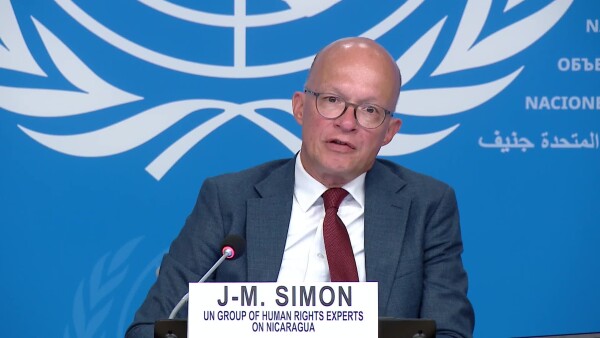
Press conference on the situation of human rights in Nicaragua by the UN Group of Human Rights Experts