

The United Nations Office at Geneva
Multimedia Newsroom
Press Conferences | UNCTAD
UNCTAD Press conference: Report 2026 on developments in the economy of the Occupied Palestinian Territory
STORYLINE
Gaza reconstruction needs reach $71.5 billion as Palestinian economy and public finances face severe strain.
Latest UNCTAD report documents the loss of decades of development gains, economic collapse in Gaza and tightening economic constraints in the West Bank.
Fiscal pressures threaten macroeconomic stability: The report finds that the Palestinian Government’s fiscal position has deteriorated sharply. Under the Paris Protocol, Israel collects more than two thirds of Palestinian fiscal revenue on behalf of the Palestinian Government. Transfers have been intermittent and subject to deductions. According to the report, clearance revenue transfers due to the Palestinian Government were fully withheld from May 2025 through mid-2026.
Risks to the banking sector: According to the report, the short validity of letters of indemnity issued by Israeli authorities affects correspondent banking relationships and access to global trade and finance. Palestinian banks also face constraints in converting physical shekel banknotes into digital balances because of restrictions on currency repatriation. Together, these constraints could disrupt financing for imports of fuel, medicines and food.
Economic crisis in Gaza: The report estimates that 92% of Gaza’s economic establishments have been damaged or destroyed since October 2023.
Reconstruction and recovery needs: The report identifies three immediate priorities: transferring withheld Palestinian revenues, safeguarding the banking system and aligning reconstruction support with the documented scale of damage and economic losses.
UNCTAD’s role: UNCTAD provides economic analysis and technical assistance on development conditions in the Occupied Palestinian Territory. In accordance with UN General Assembly resolution 77/22, UNCTAD reports on economic development in the Occupied Palestinian Territory, including East Jerusalem, and assesses the economic costs of the Israeli occupation. For nearly four decades, UNCTAD has conducted policy research, capacity-building and technical cooperation with Palestinian public and private sector institutions and civil society, within its trade and development mandate.
Full report: https://unctad.org/publication/report-unctad-assistance-palestinian-people-2025
Production Date: 24 September 2026
Creator: UNCTAD / UNTV CH
Subject Topical: Economy, Occupied Palestinian Territory
Geographic Subject: GLOBAL
Website: https://unctad.org/publication/report-unctad-assistance-palestinian-people-2025
DESCRIPTION
STORY: UNCTAD / PALESTINE REPORT 2026
TRT: 1:47
SOURCE: UNCTAD / UNTV CH
LANGUAGE: ENGLISH / NATS
DATELINE: 24 SEPTEMBER 2026, GENEVA, SWITZERLAND
WEBSITE: https://unctad.org/publication/report-unctad-assistance-palestinian-people-2025
SHOTLIST
1. Wide shot, Palais des Nations
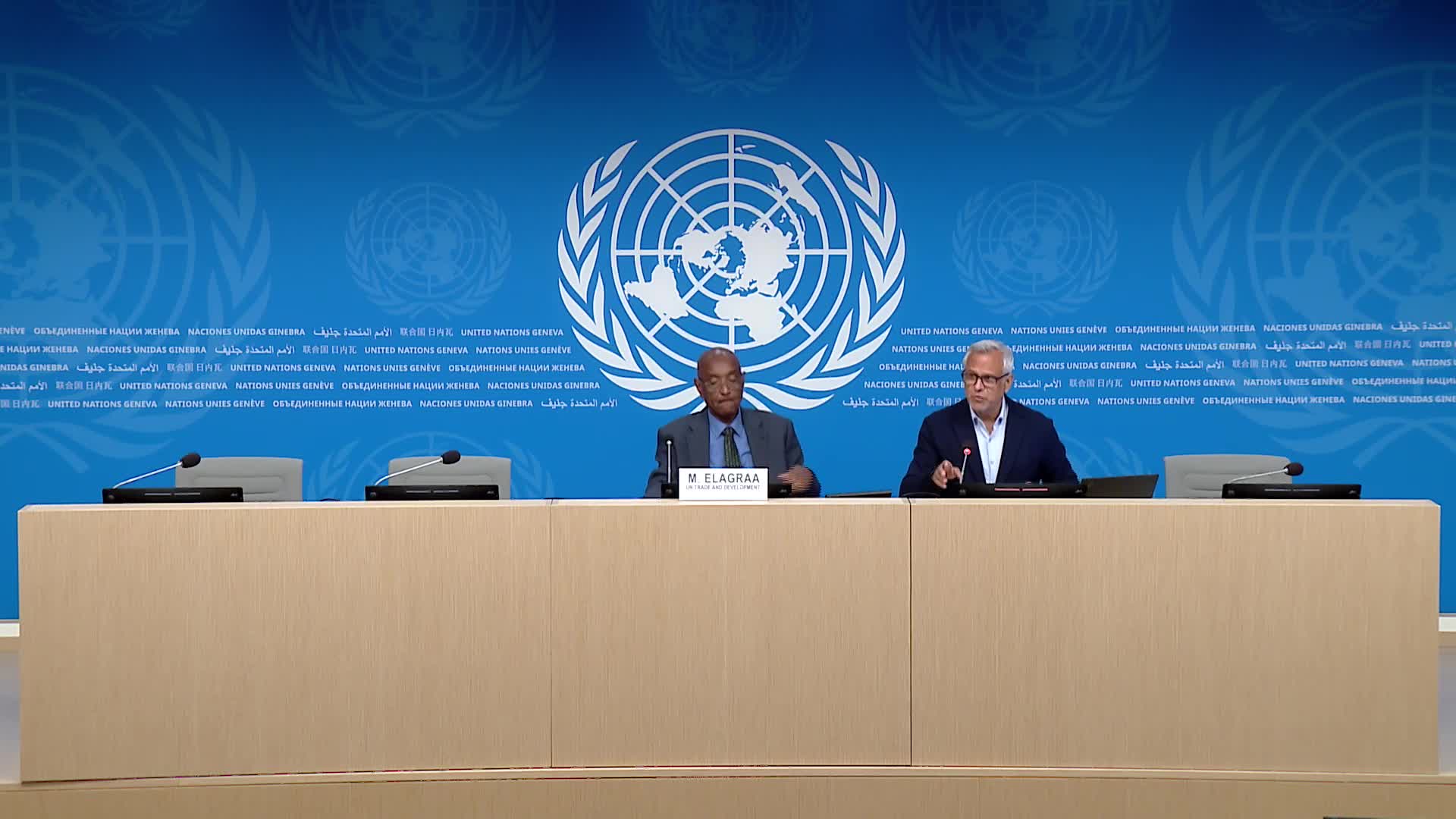
2. Various shots, briefing room
3. SOUNDBITE (English) Pedro Manuel Moreno, Acting Secretary-General UN Trade and development (UNCTAD): We estimate that 71.5 billion dollars will be needed to ensure the reconstruction and recovery of Gaza. And this figure, which is the latest joint assessment by the World Bank, the European Union and the United Nations, may still rise.
4. Mid Shot, desk area
5. SOUNDBITE (English) Pedro Manuel Moreno, Acting Secretary-General UN Trade and development (UNCTAD): 92% of all economic establishments that can generate employment and income in Gaza are now damaged or destroyed. Hundreds of thousands of jobs have been lost since 2023, and unemployment today is unprecedented: over 90% of the working age population has no employment. Today, the GPD per capita of Gaza is the equivalent of 0.58 USD per person per day while price levels are 274 percent higher than in 2022.
6. Close up, camera man
7. SOUNDBITE (English) Pedro Manuel Moreno, Acting Secretary-General UN Trade and development (UNCTAD): UNCTAD’s report therefore identifies the scale of the challenge, the cost of reconstruction and the areas central to rebuilding productive capacity and a functioning economy for the Palestinian people. But most importantly, it underscores the urgency of reconstruction, and that peace cannot be built on a collapsed economy.
8. Close up, journalist
9. Mid shot, back of briefing room
10. Wide shot, back of briefing room
Speakers:
- Pedro Manuel Moreno, UN Trade and Development, Acting Secretary General (Remote)
- Mutasim Elagraa, UN Trade and Development – Coordinator, UNCTAD Assistance to the Palestinian People
Similar Stories
1
1
1
Press Conferences | IOM , UNDRR
UN stresses importance of household preparedness for disaster risk reduction.
1
1
1
Statements , Press Conferences | OHCHR
1
1
1
Press Conferences | UNHCR , UNICEF , IFRC , OHCHR , UN WOMEN , IOM , OCHA , WHO
UNHCR – ExCom Meeting, UNICEF – Nepal Recovery, IFRC – Flash Floods, WHO – Mental Health, IOM – South Sudan Floods, OCHA – DRC Humanitarian aid, UNHCR – Sahel Displacement, UNICEF – Yemen Update, IOM – Gaza Shelter, UN Women – Gaza Women, OHCHR – Arrests and detentions of Syrians by Israeli force
2
1
2
Press Conferences | UNCTAD
Presentation of the Trade and Developement Report 2026
Embargoed until 9 October 2026 at 11 a.m. (Geneva Time)
UNCTAD: UNCTAD’s flagship report finds that governments increasingly use industrial, trade, financial and technology policies to pursue economic and national security objectives. Market access and the ability to move into higher-value activities now depend more heavily on technology, finance and geopolitics.
1
1
1
Press Conferences | UPU
Release of the State of the Postal Sector Report 2026
1
1
1
Press Conferences | IOM , ITU , UNECE , UNICEF , WHO , WMO
UNICEF: Ebola, DRC - children orphans or separating them from parents and caregivers; IOM: Humanitarian needs in Djibouti amid arrivals from Yemen and increased migrant movements; WHO: Darfur, scale of health needs far exceeds available resources; WMO co-sponsored Global Heat Forum, Bangkok, monthly Global Seasonal Climate Update; UNECE: UN Forum of Mayors; ITU Plenipotentiary Conference 2026; WHO: child and adolescent obesity guidelines and new global roadmap to tackle pregnancy hypertension, a leading cause of maternal mortality
1
1
1
Press Conferences | OCHA , UN WOMEN , UNHCR , WFP , WHO , WTO , UNEP
OCHA – $160M CERF allocation to 12 underfunded crises; UNHCR – 5.8M refugee children remain out of school amid funding cuts; UN Women – Middle East escalation and food security among women/girls; WHO – Gaza supplies and overall situation; WFP – Yemen food insecurity and impact on global hunger ; UNEP - First International Conference of the Global Framework on Chemicals in Geneva | 16-20 November 2026
1
1
1
Press Conferences | UNHCR , WHO
Yemen's health system nears collapse amid conflict, causing rising casualties and medicine shortages.
1
1
1
Press Conferences | HRC
Update by the Expert Mechanism to Advance Racial Justice and Equality in Law Enforcement
1
1
1
Press Conferences | WIPO , WHO , UNICEF , UNHCR , IOM , WFP , FAO
WIPO Global Innovation Index 2026 launch and press conference, WHO Composition of influenza vaccines for the 2027 Southern Hemisphere flu season, UNICEF Yemen hunger and malnutrition; UNHCR Sudan displacement into Chad; IOM Ebola and population movements in DRC; WFP emergency food assistance in Nepal; and FAO food loss and waste.
1
1
1
Press Conferences | HRC
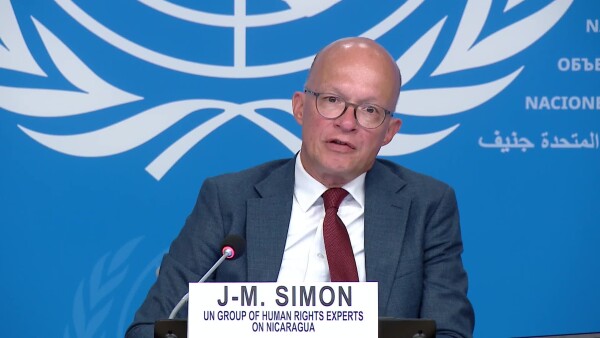
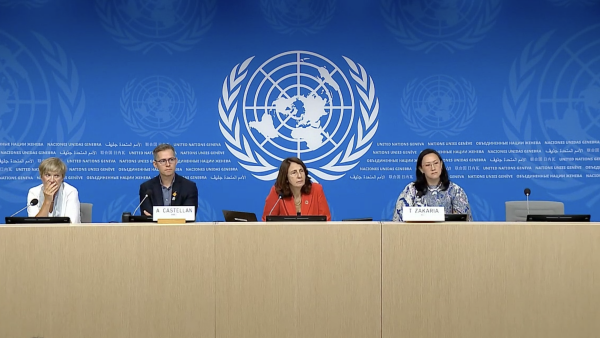
Press conference on the situation of human rights in Nicaragua by the UN Group of Human Rights Experts
1
1
1
Press Conferences | ITU , UNHCR , WHO , WMO
YEMEN - UNHCR: Escalating conflict in Yemen could fuel more displacement, refugee movement
CLIMATE - WHO / WMO: Health and Climate impact of El Niño