

The United Nations Office at Geneva
Multimedia Newsroom
Press Conferences | IFRC , UN WOMEN , WFP , WHO , WMO , OCHA
UN Geneva Press Briefing - 01 September 2026
UN INFORMATION SERVICE GENEVA PRESS BRIEFING
1 September 2026
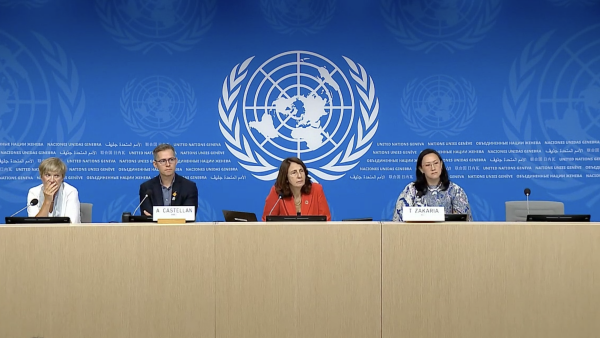
Rolando Gómez, Chief of the Press and External Relations at the United Nations Information Service in Geneva, chaired a hybrid press briefing, which was attended by the spokespersons and representatives of UN Women, the World Health Organization, the World Food Programme, the Office for the Coordination of Humanitarian Affairs, and the International Federation of Red Cross and Red Crescent Societies.
Aftermath of the Nepal floods
Christine Arab, UN Women Regional Director for Asia and the Pacific, speaking from Bangkok, said that an estimated 43,000 women and girls needed immediate humanitarian assistance following the flash floods in Nepal. When a disaster met inequality: the people already left behind were often the first to be swept away. UN Women’s partners on the ground stressed that women survivors were running out of food, that safe water was increasingly inaccessible, that protection risks were growing and that women risked being excluded from the decisions that will shape the response and their recovery. Women in the worst affected areas said that food was their foremost priority right now. Before the floods, women in Nepal had been more likely to eat least and to eat last in their families, with serious consequences for their own health, particularly those who are pregnant or breastfeeding.
Ms. Arab informed that an estimated one in three women were illiterate in some of the impacted districts, making awareness and access to essential services more challenging. When there were no separate or safe latrines, adequate lighting or privacy, women and girls could face risks simply when using the toilet, bathing, sleeping, or moving around after dark. With male-out migration common, one in three households in the affected areas were now managed by women, and they had to access relief without undue burden. Women in Nepal performed an estimated 85 percent of unpaid work, a percentage which was likely to grow with the high numbers of people injured, water systems and schools damaged, etc. Ms. Arab stressed that experience in the floods of 2021 and 2025 had shown that the overwhelming majority of women had not been significantly involved in applying for or receiving assistance. Women-led organizations were therefore critical partners for the humanitarian response. With more outreach to women, humanitarian support was more impactful for individuals, families, and communities, she concluded.
More details are available here.
Matt Baden, Operations Manager for the Nepal crisis response at the International Federation of Red Cross and Red Crescent Societies (IFRC), connecting from Kathmandu, shared some of the accounts of his IFRC colleagues who had traveled to the affected areas. Those included stories of people coming back to look for their houses, now covered in mud, and returnees digging out their houses, some of them desperately looking for their loved ones. The Nepal Red Cross Society had moved fast, with ready-to-eat food, blankets, mattresses, hygiene kits and drinking water reaching affected households. Mr. Baden said that search and rescue was still ongoing, but the threat of further landslides was still very real, he warned. Tens of thousands of people were affected. In the first hours following the disaster, the IFRC had released CHF one million to support the Nepal Red Cross in responding to the crisis and bringing immediate life-saving activities. In the following days, IFRC had launched an emergency appeal seeking another CHF 25 million to reach affected people with shelter, cash assistance, health, water, sanitation, to restore livelihoods and provide protection.
Mr. Baden said that in the coming days, the Nepal Red Cross Society intended to reach as many as 10,000 households, The full scope would not be known until flood subsided. Whole communities had been cut off, homes had been destroyed, and incomes ruined. Recovery efforts would need to be timely, effective, and coordinated with the understanding and intention that response should be led by local authorities with consultation with communities themselves because recovery would continue long after the news cameras faded away. IFRC called on the generosity of the international community, partners and donors to support the emergency appeal so affected communities in Nepal could receive the full scope of life-saving assistance they urgently needed.
Christian Lindmeier, for the World Health Organization (WHO), stated that maintaining access to health service remained a priority. Four health facilities had been affected, two health facilities had been partially damaged, and two were not accessible, bringing a total to eight impacted health facilities. Disease surveillance and public health risk management were of importance, while immediate efforts remained focused on life-saving interventions and preventing secondary public health impacts was equally important. Flooding, displacement, overcrowding, and stagnant water could increase the risk of disease outbreaks. WHO was supporting surveillance and affected and downstream areas to monitor the potential increase in these areas of dengue, scrub typhus, and other communicable diseases.
Replying to questions from the media, Matt Baden, for IFRC, said that the Nepali Government was leading search-and-rescue efforts. Sophia Calltorp, for UN Women, explained that UN Women and UNICEF were both part of the UN system in Nepal, and they worked closely together. Ms. Arab, also for UN Women, said that a big part of what UN Women was doing was to help inform other agencies of gendered aspects of the post-disaster recovery. UN Women was working with local women organizations who could reach those in need. UN Women was not delivering the same services UNICEF did. She explained that protection and exploitation issues, including trafficking, frequently occurred in the aftermath of such disasters, but did not have specific numbers for Nepal.
Jens Laerke, for the Office of Coordination for Humanitarian Affairs (OCHA), said that the reported death toll in China stood at 16 with 546 people missing. UN Resident Coordinator in Nepal had met with the Chinese Ambassador, with whom she had discussed the response and Chinese support to the Nepalese efforts underway. Communication channels with the Chinese side were open and functioning, confirmed Mr. Laerke. Christian Lindmeier, for WHO, said that personal protection equipment, including gloves, masks and surgical equipment, and body bags were being distributed to the local medical facilities, and medical tents were being set up where medical facilities were not functional. Conducting comprehensive assessments of damaged and needs would be among priorities in the coming days, as the access to the affected areas improved, said Mr. Baden. Mr. Laerke said that there were currently 987 confirmed casualties and 4,247 missing. On another question, Mr. Lindmeier clarified that two hospitals were currently inaccessible.
Deteriorating situation in the occupied Palestinian territories
Shaun Hughes, World Food Programme (WFP) Country Director for Palestine, speaking from London, announced that WFP was being forced to reduce the number of people it assisted in the West Bank by half, while the needs were double what they used to be two years back. Since October 2023, Since October 2023, the intensified settler violence, prolonged and escalating Israeli military operations, severe movement restrictions, demolitions, and widespread displacement in the West Bank had all eroded Palestinian livelihoods and contributed to increased food insecurity. A broader crippling economic crisis was pushing people to breaking point. Unemployment had more than doubled to 30 percent since 2023, warned Mr. Hughes; he spoke of witnessing families who once had been able to provide for themselves and were now facing incredible hardships. Almost one million people – a quarter of the population – were not food insecure in the West Bank. This percentage used to stand at 11 percent prior to the October 2023 escalation. Over the past two years, in partnership with UNRWA and the Palestinian Authority, WFP had been providing assistance to vulnerable people, but from September on, WFP would be forced to support only the very most vulnerable with cash assistance. Right now, WFP should be scaling up, not cutting down its food assistance in the West Bank.
Meanwhile, in Gaza, the situation remained brutal and volatile. Airstrikes and bombings had been increasing over recent days, including this morning. WFP's warehouses had been impacted and damaged. In many areas, particularly close to the advancing yellow line of Israeli military control, it was simply not safe enough for people to access land to farm, or their destroyed homes and businesses. Bakeries across the Gaza Strip were struggling to function because they had run out of spare parts or diesel oil. Israeli authorities ought to allow these items into Gaza in sufficient numbers, he stressed. Two-thirds of the population in Gaza still faced emergency levels of hunger, and as many as 90 percent of people could face high levels of acute food insecurity if no additional assistance came in before the end of the year. Any marginal gains achieved by the humanitarian community could be lost 386 USD million to avoid any further reductions in West Bank and Gaza over the coming six months. There was a real danger that the world’s attention moved on from Palestine, while the Palestinians’ needs were as high as ever. Now was not the time to look away, stressed Mr. Hughes.
Dr. Reinhilde Van De Weerdt, World Health Organization (WHO) Representative in the occupied Palestinian territories, speaking from Gaza, said that airstrikes were continuing despite the ceasefire in place. She said that one could never get used to entering Gaza because of the endless piles of rubble and so many people struggling to survive and make a basic living. So many tents with displaced people were literally placed by the sea, and the vast majority of people in Gaza still lived in very overcrowded sites of flimsy tents. It was unacceptable that water trucks were still the lifeline for so many Gazans. Water quality and water contamination remained a major issue: between January and August this year, over 6,700 water samples had been tested, and microbiological contamination almost tripled, from under six percent in January to over 18 percent in August. Given the very limited laboratory capacities in Gaza, only some problems could be detected. Critical laboratory and diagnostic supplies, such as testing reagents, were still not allowed to enter. Consequently, there had been a significant increase in cases of Acute Watery Diarrhea over the same period, when cases nearly doubled. Sewage, waste, and contaminated water would not stay where they were, they would spread into the very spaces where people sleep, cook, and care for their children, furthering the risk and spread of waterborne diseases.
Standing water would give pests and mosquitoes more places to breed. Damp, flooded tents will become breeding grounds for mold and bacteria, which was a major driver of respiratory infections, especially in young children. The ever-struggling health system in Gaza was not equipped these surges in diseases, which was exactly the pattern the previous winter. What was urgently needed was more permanent shelter, sustainable provision of water – both in quantity and quality, and waste management. Dr. Van De Weerdt spoke of some positive developments, including an increase in the number of health services, from primary healthcare to having more hospital beds, which allowed the thousands of Gazans that needed medical care to be treated in Gaza. The progress in medical care, however, had not been fast enough or equal. According to WHO 6,600 people required long-term care of limb amputations, but prosthetic limbs had not been allowed into Gaza since May 2024. As of July 2026, only 12 percent of patients who had lost limbs since October 2023 (4,600) had been fitted with a prosthetic device brought into Gaza by ICRC. Unimpeded and expedited entry of essential medicines and supplies, including lab materials and prosthetic limbs, at scale was necessary. Only that way could the upcoming winter be different from those before.
Answering questions, Mr. Hughes, for WFP, explained that WFP was by no means the only actor when it came to food assistance in the occupied West Bank. UNRWA and the Ministry of Social Development remained critical actors in this regard. WFP’s top-up was now becoming the main lifeline for many people, given the constraints others were facing. Dr. Van De Weerdt, for WHO, said that water sampling was done in a comprehensive manner; over 6,000 samples had been taken – and almost 20 percent had been found to be contaminated in August. The sewage was not working, and it could be seen and smelled everywhere. Garbage was not being collected. With limited water tracking capacities, people were getting their water from sometimes problematic sources. Gaza used to have quite a sophisticated water desalination systems before, while what was being done now was simple putting a band aid on a deeper structural problem.
Announcements
Rolando Gómez, for the United Nations Information Service (UNIS), informed that the UN Secretary-General was in Bishkek, where he was attending the Shanghai Cooperation Organization Summit. He was also holding several bilateral meetings on the sidelines of the Summit. The Secretary-General would deliver remarks at the Summit, which would focus on multilateral cooperation.
Amina Mohammed, UN Deputy Secretary-General, was in Palau, where she had attended the 5th Pacific Islands Forum Leaders Meeting and launched the Secretary-General's Special Report on Sea-Level Rise. From Palau, DSG Mohamed would travel to Rome for the fourth gathering on artificial intelligence and human development, part of a series of high-level dialogues to examine how one of humanity's transformative technologies was shaping human progress.
On 3 September at 10 am, the World Meteorological Organization (WMO) would present its El Niño Update. Speakers would be Celeste Saulo, WMO Secretary-General, and Wilfran Moufouma Okia, WMO Chief of Climate Prediction Section. All the information, under embargo, would be shared with the media in advance.
On 8 September at 9:30 am, there would be a press conference by the Independent International Commission of Inquiry on the Syrian Arab Republic to provide an update on the human rights situation in Syria.
The Committee on the Rights of the Child had opened its 101st session today at 10 am. During this session, the Committee was going to review the reports of Lesotho, Timor-Leste, Tanzania, Uganda, Burkina Faso, Slovenia, Kazakhstan, and Tajikistan.
***
TOPICS
- UN WOMEN - Christine Arab, UN Women Regional Director for Asia and the Pacific (From Bangkok): The impact of the Nepal floods on women and girls
- IFRC - Matt Baden, Operations Manager for the Nepal crisis response (From Kathmandu): Update on Nepal.
- WFP - Gemma Snowdon (Zoom) with Shaun Hughes, Country Director for Palestine (From London): WFP halves food assistance in the West Bank as food insecurity doubles.
- WHO - Christian Lindmeier (Zoom) with Dr Reinhilde Van De Weerdt, WHO Representative in the oPt (From Gaza): Gaza’s rehabilitation needs and continued spread of diseases
Similar Stories

1
1
1
Statements , Press Conferences | OHCHR

1
1
1
Press Conferences | UNHCR , UNICEF , IFRC , OHCHR , UN WOMEN , IOM , OCHA , WHO
UNHCR – ExCom Meeting, UNICEF – Nepal Recovery, IFRC – Flash Floods, WHO – Mental Health, IOM – South Sudan Floods, OCHA – DRC Humanitarian aid, UNHCR – Sahel Displacement, UNICEF – Yemen Update, IOM – Gaza Shelter, UN Women – Gaza Women, OHCHR – Arrests and detentions of Syrians by Israeli force

2
1
2
Press Conferences | UNCTAD
Presentation of the Trade and Developement Report 2026
Embargoed until 9 October 2026 at 11 a.m. (Geneva Time)
UNCTAD: UNCTAD’s flagship report finds that governments increasingly use industrial, trade, financial and technology policies to pursue economic and national security objectives. Market access and the ability to move into higher-value activities now depend more heavily on technology, finance and geopolitics.

1
1
1
Press Conferences | UPU
Release of the State of the Postal Sector Report 2026
1
1
1
Press Conferences | IOM , ITU , UNECE , UNICEF , WHO , WMO
UNICEF: Ebola, DRC - children orphans or separating them from parents and caregivers; IOM: Humanitarian needs in Djibouti amid arrivals from Yemen and increased migrant movements; WHO: Darfur, scale of health needs far exceeds available resources; WMO co-sponsored Global Heat Forum, Bangkok, monthly Global Seasonal Climate Update; UNECE: UN Forum of Mayors; ITU Plenipotentiary Conference 2026; WHO: child and adolescent obesity guidelines and new global roadmap to tackle pregnancy hypertension, a leading cause of maternal mortality
1
1
1
Press Conferences | OCHA , UN WOMEN , UNHCR , WFP , WHO , WTO , UNEP
OCHA – $160M CERF allocation to 12 underfunded crises; UNHCR – 5.8M refugee children remain out of school amid funding cuts; UN Women – Middle East escalation and food security among women/girls; WHO – Gaza supplies and overall situation; WFP – Yemen food insecurity and impact on global hunger ; UNEP - First International Conference of the Global Framework on Chemicals in Geneva | 16-20 November 2026
1
1
1
Press Conferences | UNHCR , WHO
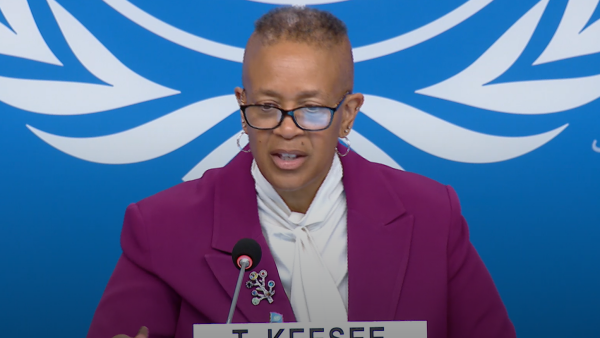
Yemen's health system nears collapse amid conflict, causing rising casualties and medicine shortages.
1
1
1
Press Conferences | HRC
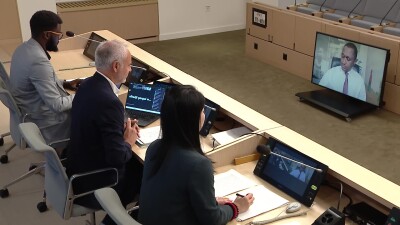
Update by the Expert Mechanism to Advance Racial Justice and Equality in Law Enforcement
1
1
1
Press Conferences | WIPO , WHO , UNICEF , UNHCR , IOM , WFP , FAO
WIPO Global Innovation Index 2026 launch and press conference, WHO Composition of influenza vaccines for the 2027 Southern Hemisphere flu season, UNICEF Yemen hunger and malnutrition; UNHCR Sudan displacement into Chad; IOM Ebola and population movements in DRC; WFP emergency food assistance in Nepal; and FAO food loss and waste.
2
1
2
Press Conferences | UNCTAD
Gaza reconstruction needs reach $71.5 billion as Palestinian economy and public finances face severe strain. Latest UNCTAD report documents the loss of decades of development gains, economic collapse in Gaza and tightening economic constraints in the West Bank.
The report identifies three immediate priorities: transferring withheld Palestinian revenues, safeguarding the banking system and aligning reconstruction support with the documented scale of damage and economic losses.
1
1
1
Press Conferences | HRC
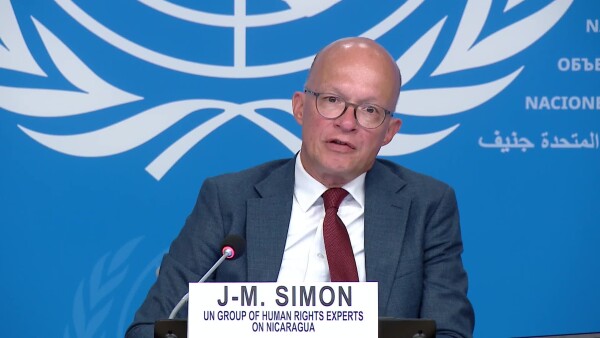
Press conference on the situation of human rights in Nicaragua by the UN Group of Human Rights Experts
1
1
1
Press Conferences | ITU , UNHCR , WHO , WMO
YEMEN - UNHCR: Escalating conflict in Yemen could fuel more displacement, refugee movement
CLIMATE - WHO / WMO: Health and Climate impact of El Niño