

The United Nations Office at Geneva
Multimedia Newsroom
Press Conferences | WHO , UNHCR , WFP , UNFPA , UNODA
UN Geneva Press Briefing - 14 August 2026
WHO Update on Attacks on Health Care
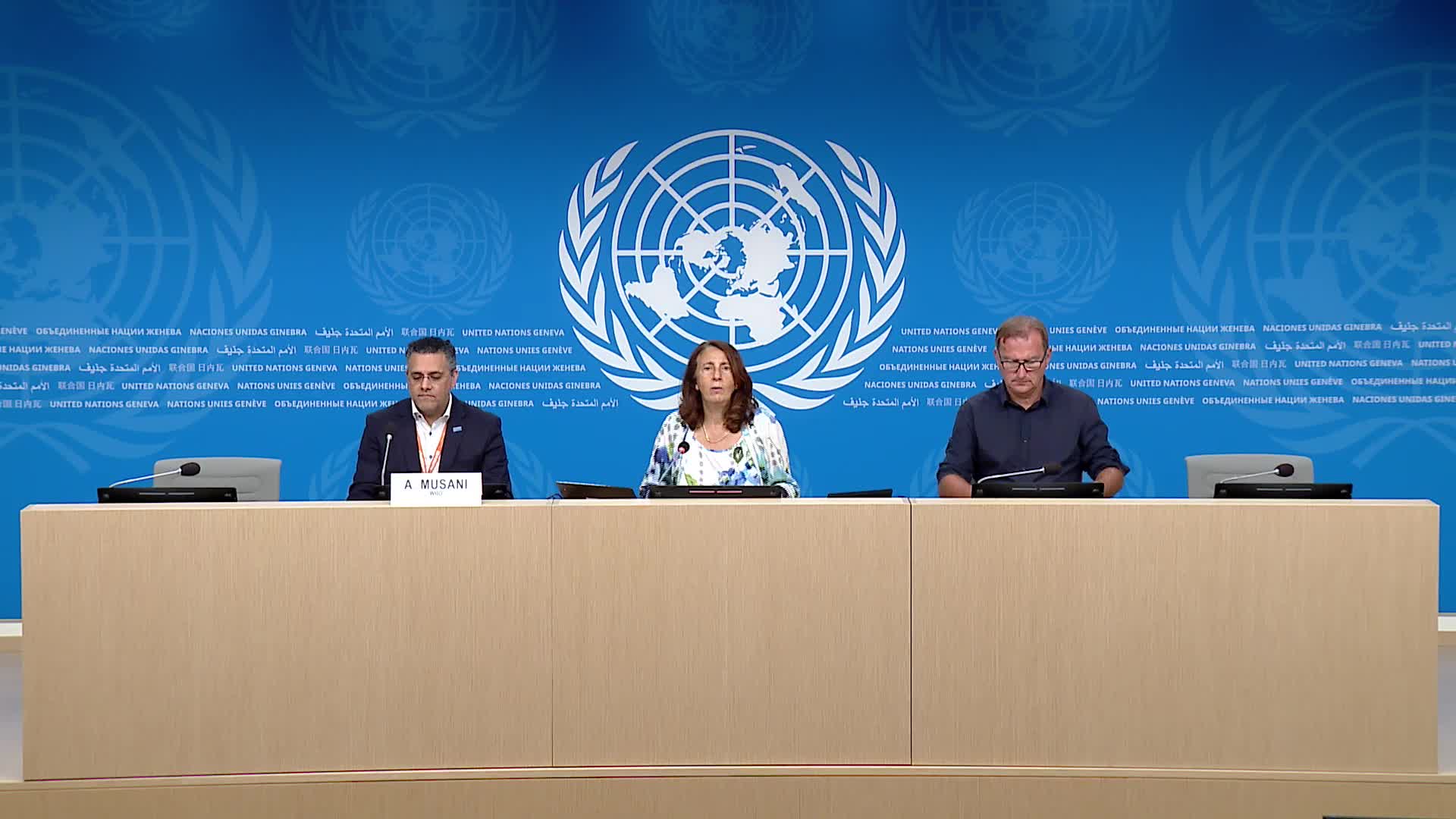
Altaf Musani, Director of Humanitarian and Disaster Management at the World Health Organization (WHO), said WHO's Surveillance System for Attacks on Health Care had documented, since 2018, more than 10,400 attacks in 29 countries and territories, resulting in approximately 5,700 deaths and 8,500 injuries. In 2026 alone, WHO had recorded 914 attacks, resulting in at least 911 deaths and 1,486 injuries, more than four attacks a day. Ukraine, Lebanon, and the occupied Palestinian territory accounted for most of incidents recorded. Other contexts with reported attacks on healthcare included Myanmar, Iran, Sudan, the Democratic Republic of the Congo, South Sudan, the Russian Federation, Syria, and Nigeria. There were multiple forms of violence, with heavy weapons were the most frequently reported means of attack in 2026.
Attacks on healthcare extended beyond direct physical violence. Also, numbers did not tell the whole story. When a hospital was attacked, the impact was not only on the people inside that hospital: it meant that the patients could not receive care the next day, that health workers could not return to work, or that medicine supply could no longer reach facilities.
WHO now had evidence that the consequences of these attacks could be substantial and long-lasting. In northwest Syria, a study of 69 attacks had found outpatient consultations falling by 51 percent the day after an attack, with the reduction continuing for up to 37 days. In Sudan, 37 percent of health facilities were reported non-functional by 2026. In Gaza, all 36 hospitals had been damaged, with only half remaining partially functional; primary care was similarly impacted. In Ukraine, WHO had verified more than 3,000 attacks since the beginning of the conflict, affecting not only health facilities but also ambulances, warehouses, and supply chains. In the Democratic Republic of the Congo, during the current Bundibugyo virus disease response, 12 attacks on health care had been verified since May 2026; these attacks also impeded the capacity to detect and contain outbreaks.
Behind every damaged facility was a service lost and behind every interrupted service was someone who may be left without care. It was necessary to make these human consequences visible, to use that evidence to protect healthcare and the people who depended on it, and to hold parties to conflicts accountable.
Journalists asked in what measure accountability for attacks against healthcare was enforced. Mr. Musani explained that WHO had neither the mandate nor the expertise to hold to account parties to a conflict: its mandate was centered on data and evidence collection, to verify such attacks; on advocacy, calling out and appealing for the protection of the medical mission or healthcare at large; and on coordination with other partners. WHO’s Director-General repeatedly called for parties to conflicts to be held accountable. Unfortunately, of the more than 10,000 verified incidents mentioned, not even one had entered the accountability system.
Other questions were raised on attacks on healthcare in Palestine. Alessandra Vellucci, for the UN Information Service, pointed journalists to a news report by UNIS, in which Ajith Sunghay, head of the UN office in the Occupied Palestinian Territory, spoke extensively about the situation and appealed to the Israeli security forces to stop the siege.
Regarding Ukraine, Mr. Musani said that more than six months into 2026, some 156 attacks on healthcare had been recorded in that country, including one last week against a WHO warehouse. Attacks were clearly affecting the Organization’s ability to provide supplies to health facilities, both on the front line and doing the backend work, supporting rehabilitation. This was having a direct impact on both patients and providers, who were actively providing life-saving support.
WHO had also recorded attacks on healthcare during the Middle East conflict, in Lebanon, Israel, and Iran.
Sudan: Maternal health challenges in Darfur
Fabrizia Falcione, United Nations Population Fund (UNFPA) Sudan Country Representative, back from Darfur, said she had traveled to the Tawila refugee camp to see and hear firsthand what women and girls were facing, and to determine what must be done urgently to strengthen reproductive health services and protection.
Arriving in Tawila, one was confronted with an unimaginable picture: more than 700,000 persons sheltering in a displacement camp stretching across the desert in all directions, with new families arriving daily and erecting their makeshift tents. One hospital must provide comprehensive emergency obstetric care, and that was the only place where a woman could have a C-section.
Priorities were, first, to bring reproductive healthcare closer to women, so that pregnant women had other option than going across a vast and difficult terrain to reach a hospital to give birth safely. Healthcare must be decentralized and mobile services expanded to reach those most difficult to reach. It was also necessary to better support community midwives, as a well-trained and properly equipped midwife could meet 90 percent of the medical needs before, during, and immediately after the delivery.
Another priority was to urgently get more reproductive health supplies, including family planning, into Darfur. In particular, health facilities in Tawil and across Central/North Darfur were running out of their stock of oxytocin, which was used to stop fatal bleeding during childbirth. These kinds of supplies were often not prioritized when it came to funding.
Answering questions from the media, Ms. Falcione said her own travel to Tawila had been a nine-hour drive, with only an hour on paved road, the rest across mountain tracks that were made for donkeys and camels. Pregnant women faced even more difficult conditions to get to this camp: they often had absolutely no money, so they could not even rent a donkey; they either had to walk, or travel on wooden stretchers carried by men on foot.
From a permit point of view, access for the UN was now easier. In Tawila, there were already several UN organizations present, including UNFPA, as well as NGOs providing basic emergency obstetric care.
Funding was limited to the point where UNFPA must close certain services in order to maintain service delivery in areas with higher needs. UNFPA had just received USD 1.8 million for reproductive health supplies: these would go mainly to Darfur.
UNFPA also worked closely with UN Women to support women-led organizations, so that these organizations could act as partners to humanitarian entities.
South Sudan: Funding shortfalls threatening life-saving assistance for refugees
Adham Effendi, World Food Programme (WFP) Deputy Country Director for South Sudan, warned that the funding situation for WFP in South Sudan was gearing towards a humanitarian funding cliff, as humanitarian needs outpaced available resources despite unprecedented operational efforts.
WFP had already delivered more than 55,000 metric tons of food assistance this year, distributed cash assistance worth USD 70 million and reached 2.9 million people as of the end of July 2026. Yet these efforts were no longer enough to keep apace with growing needs. Without immediate and urgent funding, the final food and nutrition assistance for the most vulnerable 240,000 refugees across the country would be provided in September. From 1 October, food assistance for approximately 180,000 internally displaced people would cease because of pipeline breaks affecting general food assistance. By November, some 600,000 people living in famine risk areas would no longer receive life-saving food assistance.
In a country where 7.8 million people faced acute food insecurity and 2.2 million children were acutely malnourished, shrinking humanitarian funding was no longer a resource gap, it was a direct reduction in life-saving assistance for those least able to cope.
When food assistance stopped, families were forced into impossible choices. People cut meals, sold productive assets, withdrew children from school, and adopted other negative coping strategies. Women and children faced heightened risks of exploitation and abuse.
Mesfin Degefu, United Nations High Commissioner for Refugees (UNHCR) Deputy Representative in South Sudan, said the Refugee Agency sounded the alarm not just about hunger, but also about the severity of the broader protection consequences that arose when refugee families lost access to the assistance they depended on to survive. Funding cuts had already forced UNHCR to scale down services. For many refugee families, food assistance was not simply a source of nutrition: it was a critical protection intervention, as when they got food, families kept their children in school, which in turn reduced the risk of exploitation.
The 240,000 refugees mentioned by WFP were part of the 650,000 refugees currently in South Sudan, of whom 90 percent were from Sudan, where the situation was dire. For the Refugee Agency, one of the most concerning consequences was the increased risk of cross-border movements, as when people could no longer meet their most basic needs, they may feel compelled to move again in search of food, services, and safety. Indeed, some refugees had already requested that UNHCR help them return to Sudan. However, UNHCR did not promote nor support return to Sudan as the current situation in that country was not favorable for the return.
UN agencies, in collaboration with the Government of South Sudan, had made tangible progress in advancing refugee self-reliance. Authorities were thus allocating agricultural land and humanitarian agencies provided vocational training and enterprise training, to help families move into a sustainable livelihood and wage employment. Early results were very promising. This was why the timing of this funding gap was so damaging.
Journalists asked how much money both agencies needed to get their operations back on track. Mr. Effendi said the World Food Programme was looking at approximately USD 86 million to sustain the rest of its operation during the last quarter of 2026. Overall, over 50 percent of the 14 million persons living in South Sudan required food assistance during the lean season. One must take into accounts the effects of floods, which had been the trend in these past 5-6 years, and the adverse consequences of El Nino and other climate shocks pushing additional population into extreme hunger. Mr. Degefu said UNHCR needed USD 286 million for the entire of 2026: it had received only 28 percent of this sum. Between USD 20 and 50 million would permit the Agency to continue life-saving assistance until the end of 2026.
Update on the Earthquake in Colombia
Eujin Byun, for the United Nations High Commissioner for Refugees, said the earthquake in Colombia was particularly concerning because it had struck areas – 69 affected municipality across eight departments – that were already facing significant humanitarian and protection pressure, including living with the consequences of armed conflict and forced displacement. Families who had already been forced from their homes were now facing the prospect of losing them once again.
UNHCR had a long-standing presence in three communities and was already supporting the government-led emergency response with teams on the ground in affected area, including Cali and Buenaventura. They were working closely with the national and local authorities, community organizations, and humanitarian partners. The Government of Colombia was leading the response, with UNHCR and other UN agencies supporting through established coordination mechanism under the UN Resident Coordinator.
The most urgent needs included shelter, food, clean water, healthcare, and psychosocial support, particularly for families whose home had been damaged or destroyed. UNHCR had activated its emergency procedure and was preparing the distribution of critical relief items already available in its stockpiles in Colombia, including more than 18,000 hygiene kits, 3,100 solar lamps, and 30 refugee housing units for temporary shelter.
Announcements
Alessandra Vellucci, on behalf of United Nations Office for Disarmament Affairs (UNODA), said the ninth session of the Working Group on the Strengthening of the Biological Weapons Convention (BWC) would take place in the Assembly Hall from 17-21 August, under the presidency of Brazil. [Interested journalists can write to Daniel Feakes (daniel.feakes@un.org) for off-the-record briefings or contacts with the Chair.]
While the norm enshrined in the Convention was strong, the Convention lacked an institution and a verification system. The Working Group was expected to make recommendations to strengthen and institutionalize the Convention in these aspects and develop institutional mechanisms. This was especially important in a context where the convergence of AI and biology was lowering the technical barriers to developing biological weapons, and where some terrorist groups expressed interest in these weapons. The focus of the discussion next week would be the comprehensive draft of the Working Group’s final report. Negotiations on this report were approaching a crunch point, the Group being due to adopt its final report by consensus at its tenth session, next December. If adopted, the report would represent a significant strengthening of the 50-year-old convention, enabling it to better guard against the misuse of biology and the risk posed by the artificial intelligence.
The Committee on the Rights of Persons with Disabilities (CRPD) was reviewing today the report of Sri Lanka. Next week, it would review the reports of Lithuania (17-18 August), Chili (18-19 August), and Slovakia (20 August).
The Committee on the Elimination of Racial Discrimination (CERD) would review the report of Finland next Monday, 17 August, in the afternoon, and the next day in the morning.
A ceremony would be held on 19 August, at 4 p.m. in the Salle des Pas-Perdus of the Palais des Nations, to celebrate World Humanitarian Day. A testimony would be heard from a survivor of the 2003 terrorist attack against the UN Mission in Baghdad.
Finally, answering a question, Ms. Vellucci reminded that the election of the new UN Secretary-General was a matter carried out in New York by Member States, that would choose the successor to António Guterres, who had been fulfilling his functions as Secretary-General for ten years, ending in 2026. Full information on this process was available on this General Assembly webpage.
TOPICS
WHO Tarik Jašarević (PR) with Altaf Musani, Director, Humanitarian and Disaster Management (PR)
· WHO’s update on Attacks on Health Care
UNFPA Fabrizia Falcione, UNFPA Sudan Country Representative (From Carrara, Italy)
· Maternal health challenges in Darfur
WFP/ UNHCR
Adham Effendi, WFP Deputy Country Director for South Sudan (From Juba).
Mesfin Degefu, UNHCR Deputy Representative in South Sudan (From Juba)
· Critical funding shortfalls threaten life-saving food, nutrition, and other assistance for refugees in South Sudan
TOPICS
WHO Tarik Jašarević (PR) with Altaf Musani, Director, Humanitarian and Disaster Management (PR)
· WHO’s update on Attacks on Health Care
UNFPA Fabrizia Falcione, UNFPA Sudan Country Representative (From Carrara, Italy)
· Maternal health challenges in Darfur
WFP/ UNHCR
Adham Effendi, WFP Deputy Country Director for South Sudan (From Juba).
Mesfin Degefu, UNHCR Deputy Representative in South Sudan (From Juba)
· Critical funding shortfalls threaten life-saving food, nutrition, and other assistance for refugees in South Sudan
Similar Stories
1
1
1
Press Conferences | UN WOMEN , WFP , WHO
UN WOMEN: Sudan Women and girls one year after the fall of El Fasher; increasing drone attacks across the country; WFP: DRC - Ebola spreads to eighth DRC province as WFP delivers food, builds treatment centres and keeps supplies moving; WHO - Update on Ebola (Bundibugyo Virus Disease)
1
12
1
1
Press Conferences , Images | UNOG
Closing Press Conference following the Sixth Consultative Meeting on Enhancing Coordination of Peace Initiatives and Efforts in Sudan

2
17
1
2
Edited News , Press Conferences , Images | OCHA , WMO
Two UN agencies teamed up on Wednesday to issue an appeal for immediate assistance to help communities already being impacted by the strongest El Niño on record.
1
1
1
Press Conferences | CITES
Wildlife trade and conservation policy discussions at the 81st meeting of the CITES Standing Committee (SC81)
1
1
1
Press Conferences | UNHCR , UNCTAD , WMO , OCHA , UNICEF , WHO
UNHCR Hungary’s 1956 Refugee Crisis: 70 Years On, UNCTAD World Investment Forum 2026, Doha, WMO Greenhouse Gas Bulletin and Climate Update for COP31, OCHA Afghanistan: Malnutrition, Girls’ Education and Recovery, UNICEF Yemen: Child Malnutrition and Unsafe Water in Taiz, WHO Inequalities in Noncommunicable Diseases and Risk Factors
1
1
1
Press Conferences | UNHCR
End of UNHCR's 77th Annual Executive Committee (ExCom) meeting week
1
1
1
Press Conferences | UNICEF , IOM , UNHCR
UN Special Assistant to the Personal Envoy Office (SUDAN): Peace Initiatives and Efforts in Sudan; UNICEF: Dire situation of children in Gaza; IOM: Damaged Homes and Energy Attacks Risk Displacing Ukrainians for this winter; UNHCR: update on EXCOM week
1
1
1
Press Conferences | IOM , UNDRR
UN stresses importance of household preparedness for disaster risk reduction.
1
1
1
Statements , Press Conferences | OHCHR
1
1
1
Press Conferences | UNHCR , UNICEF , IFRC , OHCHR , UN WOMEN , IOM , OCHA , WHO
UNHCR – ExCom Meeting, UNICEF – Nepal Recovery, IFRC – Flash Floods, WHO – Mental Health, IOM – South Sudan Floods, OCHA – DRC Humanitarian aid, UNHCR – Sahel Displacement, UNICEF – Yemen Update, IOM – Gaza Shelter, UN Women – Gaza Women, OHCHR – Arrests and detentions of Syrians by Israeli force
2
1
2
Press Conferences | UNCTAD
Presentation of the Trade and Developement Report 2026
Embargoed until 9 October 2026 at 11 a.m. (Geneva Time)
UNCTAD: UNCTAD’s flagship report finds that governments increasingly use industrial, trade, financial and technology policies to pursue economic and national security objectives. Market access and the ability to move into higher-value activities now depend more heavily on technology, finance and geopolitics.
1
1
1
Press Conferences | UPU
Release of the State of the Postal Sector Report 2026