

The United Nations Office at Geneva
Multimedia Newsroom
UN INFORMATION SERVICE GENEVA PRESS BRIEFING
7 August 2026
Rolando Gómez, Chief of the Press and External Relations Section at the United Nations Information Service (UNIS) in Geneva, chaired a hybrid press briefing, which was attended by spokespersons of the World Health Organization and the World Meteorological Organization.
Mr. Gómez, for the United Nations Information Service, read out a statement of the Secretary-General issued yesterday regarding recent events in Ukraine, in which Mr. Guterres strongly condemned “the latest large-scale missile and drone attacks by the armed forces of the Russian Federation on Kyiv and other cities in Ukraine, that reportedly killed and injured dozens of civilians, and led to extensive damage to civilian infrastructure”. The Secretary-General reiterated his “call for urgent de-escalation, leading to a full, immediate and unconditional ceasefire and for a just, sustainable and comprehensive peace, in line with international law, including the UN Charter and relevant UN resolutions”.
Mr. Gómez also quoted a statement by the Security Council, dated today, in which its members had condemned “in the strongest terms, the heinous and cowardly suicide terrorist attack outside a police station in Kabal, Swat District, Khyber Pakhtunkhwa Province, Pakistan, on 2 August 2026.”
Update on Ebola
Answering questions from journalists, Tarik Jašarević, for the World Health Organization (WHO), said the WHO Technical Advisory Group on candidate vaccine prioritization should publish very soon a report on the state of treatment and vaccines against Ebola, including new data on the efficacy of existing vaccines against previous strains.
Drought in Europe
Journalists also requested an update on the drought situation in Europe and the prospects for the coming weeks and months. Clare Nullis, for the World Meteorological Organization (WMO), mentioned, among others, extreme heat in the Republic of Korea and Japan, as well as warnings by Météo Suisse of more high temperatures coming next week, with no rainfall in sight. During next Tuesday’s press briefing, she would try and bring experts with more specific knowledge on the prospects regarding the drought in Europe.
Announcements
Rolando Gómez, for the United Nations Information Service (UNIS), informed that the Committee on the Elimination of Racial Discrimination (CERD) would open its 118th session next Monday, 10 August, at 10 a.m. During this session, the Committee would review reports submitted by Kuwait (10-11 August), India (11-12 August), Honduras (12- 13 August), and Finland (17-18 August). The session would end on 25 August.
Also, the Committee on the Rights of Persons with Disabilities (CRPD) would open its 35th session on Wednesday, 12 August, at 10 a.m. The Committee would review the reports of Qatar (12-13 August), Sri Lanka (14 August), Lithuania (17-18 August), Chili (18-19 August), and Slovakia (20 August). The session would end on 27 August.
9 August was the International Day of the World's Indigenous Peoples.
Finally, a small ceremony would be held today at 11 a.m. to mark the arrival of five new peacocks in the Ariana Park around the Palais des Nations, donated to the United Nations Office at Geneva (UNOG) by the Permanent Mission of India to UNOG.
Similar Stories

1
1
1
Press Conferences | IOM , UNDRR
UN stresses importance of household preparedness for disaster risk reduction.

1
1
1
Statements , Press Conferences | OHCHR

1
1
1
Press Conferences | UNHCR , UNICEF , IFRC , OHCHR , UN WOMEN , IOM , OCHA , WHO
UNHCR – ExCom Meeting, UNICEF – Nepal Recovery, IFRC – Flash Floods, WHO – Mental Health, IOM – South Sudan Floods, OCHA – DRC Humanitarian aid, UNHCR – Sahel Displacement, UNICEF – Yemen Update, IOM – Gaza Shelter, UN Women – Gaza Women, OHCHR – Arrests and detentions of Syrians by Israeli force

2
1
2
Press Conferences | UNCTAD
Presentation of the Trade and Developement Report 2026
Embargoed until 9 October 2026 at 11 a.m. (Geneva Time)
UNCTAD: UNCTAD’s flagship report finds that governments increasingly use industrial, trade, financial and technology policies to pursue economic and national security objectives. Market access and the ability to move into higher-value activities now depend more heavily on technology, finance and geopolitics.

1
1
1
Press Conferences | UPU
Release of the State of the Postal Sector Report 2026
1
1
1
Press Conferences | IOM , ITU , UNECE , UNICEF , WHO , WMO
UNICEF: Ebola, DRC - children orphans or separating them from parents and caregivers; IOM: Humanitarian needs in Djibouti amid arrivals from Yemen and increased migrant movements; WHO: Darfur, scale of health needs far exceeds available resources; WMO co-sponsored Global Heat Forum, Bangkok, monthly Global Seasonal Climate Update; UNECE: UN Forum of Mayors; ITU Plenipotentiary Conference 2026; WHO: child and adolescent obesity guidelines and new global roadmap to tackle pregnancy hypertension, a leading cause of maternal mortality
1
1
1
Press Conferences | OCHA , UN WOMEN , UNHCR , WFP , WHO , WTO , UNEP
OCHA – $160M CERF allocation to 12 underfunded crises; UNHCR – 5.8M refugee children remain out of school amid funding cuts; UN Women – Middle East escalation and food security among women/girls; WHO – Gaza supplies and overall situation; WFP – Yemen food insecurity and impact on global hunger ; UNEP - First International Conference of the Global Framework on Chemicals in Geneva | 16-20 November 2026
1
1
1
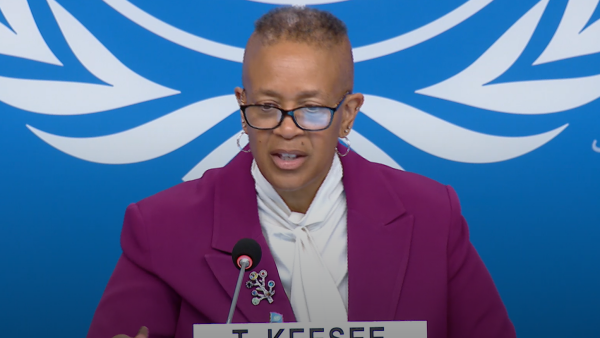
Press Conferences | UNHCR , WHO
Yemen's health system nears collapse amid conflict, causing rising casualties and medicine shortages.
1
1
1
Press Conferences | HRC
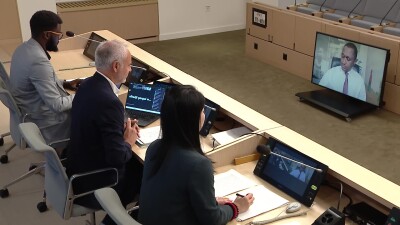
Update by the Expert Mechanism to Advance Racial Justice and Equality in Law Enforcement
1
1
1
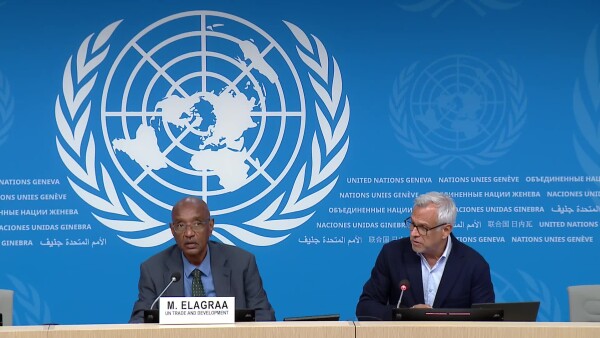
Press Conferences | WIPO , WHO , UNICEF , UNHCR , IOM , WFP , FAO
WIPO Global Innovation Index 2026 launch and press conference, WHO Composition of influenza vaccines for the 2027 Southern Hemisphere flu season, UNICEF Yemen hunger and malnutrition; UNHCR Sudan displacement into Chad; IOM Ebola and population movements in DRC; WFP emergency food assistance in Nepal; and FAO food loss and waste.
2
1
2
Press Conferences | UNCTAD
Gaza reconstruction needs reach $71.5 billion as Palestinian economy and public finances face severe strain. Latest UNCTAD report documents the loss of decades of development gains, economic collapse in Gaza and tightening economic constraints in the West Bank.
The report identifies three immediate priorities: transferring withheld Palestinian revenues, safeguarding the banking system and aligning reconstruction support with the documented scale of damage and economic losses.
1
1
1
Press Conferences | HRC
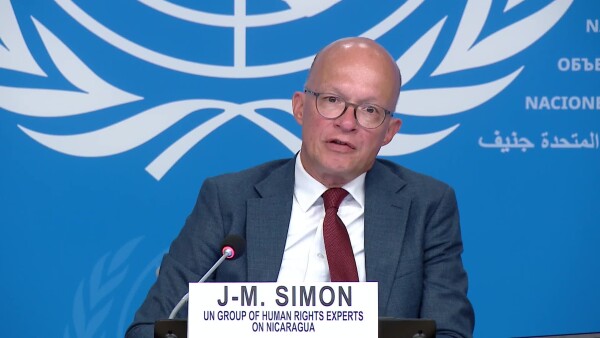
Press conference on the situation of human rights in Nicaragua by the UN Group of Human Rights Experts