

The United Nations Office at Geneva
Multimedia Newsroom
Alessandra Vellucci, Director of the United Nations Information Service in Geneva, chaired a hybrid press briefing, which was attended by the spokespersons and representatives of the World Health Organization, the World Food Programme, the International Labour Organization, and the International Federation of Red Cross and Red Crescent Societies.
Ebola treatments and vaccines
Tarik Jašarević, for the World Health Organization (WHO), said that the Ebola outbreak was still expanding beyond the capacity to respond, and more support was needed to scale up all areas of response. As of 1 August, there had been 3,748 confirmed cases, including 1,657 confirmed deaths and 708 recoveries. Cases had been reported from 49 health zones across five provinces: Haut-Uélé, Ituri, North Kivu, South Kivu, and Tshopo. Some 17,000 contacts were under monitoring in DRC; more than 80 percent of them were seen daily.
Dr. Vasee Moorthy, Acting Lead, R&D Blueprint at WHO, stressed that, while there was promising progress, there were still no proven safe and efficacious treatment, prophylaxis, or vaccination options for Bundibugyo. WHO R&D Blueprint had coordinated a global R&D Preparedness Programme with partners which had led to development of platform protocols for evaluation of treatment, prophylaxis, and vaccine options as soon as they are available for clinical trials. The clinical trial of treatment options (known as PARTNERS) was now open in three sites in Ituri province and had enrolled over 50 cases. As more sites gradually opened for enrolment, the speed of enrolling additional cases would continue to increase. The clinical trial of a potential post-exposure prophylaxis medicine (oral obeldesivir) was also underway in Ituri province and had enrolled over 25 patients to evaluate whether an oral medicine given for 10 days to confirmed high risk contacts could prevent onset of disease. It was led by the National Institute for Biomedical Research in the Democratic Republic of the Congo, together with an international consortium of research and outbreak-response partners.
Dr. Moorthy informed that the first Bundibugyo specific candidate vaccine, developed by Oxford University and Serum Institute of India had started a Phase 1 trial in UK on 24 July. A second vaccine developed by Moderna was due to start this week in Phase 1 in Canada. New data had emerged in animal studies on Ervebo, a licensed Ebola vaccine, targeting the different Ebola virus (formerly Ebola Zaire). WHO’s Technical Advisory Group had been convened on 31 July and WHO would publish its recommendations later this week.
The PARTNERS protocol was available here: https://partnerstrial.ndm.ox.ac.uk/
Responding to questions from the media, Dr. Moorthy said that it would likely still be several months before more definite conclusions could be drawn from the ongoing trials. Both Oxford and Moderna trials were being conducted on ferrets and monkeys, after which the results would be analyzed by WHO before deciding whether to move on to the subsequent phase. Compared to previous Ebola outbreaks, trials had started more quickly this time, as protocols had been written before the current outbreak. Preclinical data was promising, but it was difficult to know whether that would translate into successful vaccines.
Malnutrition in Afghanistan
John Aylieff, World Food Programme (WFP) Country Director for Afghanistan, connecting from Kabul, said the nutrition crisis was getting worse by the day, with child wasting reaching critical levels in one third of provinces. Eighty percent of the worst cases were in children under two years of age, and many were arriving to hospitals too late. The dramatic aid cuts recently experienced by the WFP meant that acutely malnourished children had to be turned away exactly when they needed help the most. Mr. Aylieff gave an example of a mother feeding her hungry baby with a bottle of diluted tea rather than milk. WFP had enough resources only to fund one in seven malnourished women and children. The situation had aggravated in recent years, when close to six million Afghans had been forcibly returned to their country, without sufficient jobs and resources, and millions of people were now acutely hungry. WFP had completely stopped food distribution in a number of areas due to the lack of resources. Abject hunger drove migration, radicalization and ultimately led to instability. The international community had to be longsighted, and Afghanistan should not be abandoned – that was in nobody’s interest, stressed Mr. Aylieff.
Answering questions, Mr. Aylieff said that WFP needed USD 900 million for 2026, of which it had received only USD 130 million. To address the acute food needs in the country in the coming six months, WFP still needed USD 500 million, which would help bring the nutrition crisis under control. The population increase had been a dramatic development, with almost six million people returning in last three years. On the positive side, there was a better harvest this year, and it was coming in now, but the cut in funding was really one of the main headwinds. Mr. Aylieff said that the economy was growing, but not fast enough to sustain the jobs it needed. The current situation was the worst experienced since 2021. Health programmes against malnutrition were being implemented in clinics around the country, and WFP’s aid was being delivered through the existing health structures, where WFP had come across many dedicated doctors and nurses.
Needs in Sudan after 1,200 days of conflict
Derk Segaar, Special Envoy of the International Federation of Red Cross and Red Crescent Societies (IFRC) for Sudan, speaking from The Hague, explained that the previous week he had travelled by road from Port Sudan to Atbara, then on to Omdurman and Khartoum, meeting communities affected by the conflict and the Sudanese Red Crescent volunteers supporting them every day. While the world's attention focused on Darfur and Kordofan, the consequences of more than three years of conflict were being felt across the entire country. Sudan was one of the world's largest humanitarian crises, yet it was also one of its most overlooked. Today, 35 million people need humanitarian assistance – one third of the entire population.
The Sudanese Red Crescent was uniquely positioned to respond, supported by the IFRC. With 122,000 volunteers across all 18 states, it had the access, trust and community acceptance needed to reach people where others often cannot. But these volunteers could not meet overwhelming needs without greater international support. In Al-Nahda camp, near Atbara, for example, in a barren landscape where temperatures exceeded 40 degrees Celsius, Sudanese Red Crescent volunteers were running mobile health services, providing water and sanitation, supporting women and children, and helping people rebuild a sense of dignity. In Khartoum, explained Mr. Segaar, the destruction was impossible to ignore, with large parts of the city centre remaining devastated. During the fighting, the Sudanese Red Crescent had stayed, continuing to provide first aid, transporting the wounded and ensuring the dignified burial of the dead under extremely dangerous conditions.
Twenty-four volunteers had lost their lives while serving their communities during this conflict. They were true humanitarian heroes. Today, Khartoum was entering a new phase, but the challenges remained immense. Millions of people continued to live with limited access to electricity, clean water, and healthcare. Cholera had re-emerged, malnutrition remained widespread, and the rainy season increased the risks of flooding and disease outbreaks. The Sudanese Red Crescent was responding through mobile clinics, cash assistance, cholera prevention, community health campaigns and flood preparedness. At a time when needs continued to grow, humanitarian resources were shrinking. Mr. Segaar stressed that the world could not afford to look away. The Sudanese Red Crescent had the volunteers, the trust and the determination to save lives. What it urgently needed was the support to continue doing so.
Alessandra Vellucci, for the United Nations Information Service, added that Pekka Haavisto, the Personal Envoy of the Secretary-General for Sudan, was continuing to engage with all parties, and would be in Türkiye this week to meet with Turkish counterparts and Sudanese interlocutors. UN urged donors to increase support, the Humanitarian Response Plan for 2026 was only 40 percent funded.
Announcements
Ibon Villelabeitia Jaureguizar, for the International Labour Organization (ILO), said that ILO would be releasing Global Employment Trends for Youth 2026 report on 11 August. This was one of ILO’s flagship reports, focusing on people 15 to 24 not in employment, education, or training. The embargoed copies would be available, and there would be an online media briefing ahead of the launch of the report. Zoom link could be shared upon request.
Alessandra Vellucci, for the United Nations Information Service (UNIS), informed that next on 6 August, at 10 am, the Conference on Disarmament would hold a plenary meeting on Cessation of the nuclear arms race and nuclear disarmament.
Finally, Ms. Vellucci said that UNIS was moving offices this week, and its new location would be on the ground floor of Buildings S and C.
***
TOPICS
- WFP - John Aylieff, WFP Country Director for Afghanistan (from Kabul): Growing child nutrition crisis in Afghanistan
Similar Stories
1
1
1
Press Conferences | IOM , UNDRR
UN stresses importance of household preparedness for disaster risk reduction.
1
1
1
Statements , Press Conferences | OHCHR
1
1
1
Press Conferences | UNHCR , UNICEF , IFRC , OHCHR , UN WOMEN , IOM , OCHA , WHO
UNHCR – ExCom Meeting, UNICEF – Nepal Recovery, IFRC – Flash Floods, WHO – Mental Health, IOM – South Sudan Floods, OCHA – DRC Humanitarian aid, UNHCR – Sahel Displacement, UNICEF – Yemen Update, IOM – Gaza Shelter, UN Women – Gaza Women, OHCHR – Arrests and detentions of Syrians by Israeli force
2
1
2
Press Conferences | UNCTAD
Presentation of the Trade and Developement Report 2026
Embargoed until 9 October 2026 at 11 a.m. (Geneva Time)
UNCTAD: UNCTAD’s flagship report finds that governments increasingly use industrial, trade, financial and technology policies to pursue economic and national security objectives. Market access and the ability to move into higher-value activities now depend more heavily on technology, finance and geopolitics.
1
1
1
Press Conferences | UPU
Release of the State of the Postal Sector Report 2026
1
1
1
Press Conferences | IOM , ITU , UNECE , UNICEF , WHO , WMO
UNICEF: Ebola, DRC - children orphans or separating them from parents and caregivers; IOM: Humanitarian needs in Djibouti amid arrivals from Yemen and increased migrant movements; WHO: Darfur, scale of health needs far exceeds available resources; WMO co-sponsored Global Heat Forum, Bangkok, monthly Global Seasonal Climate Update; UNECE: UN Forum of Mayors; ITU Plenipotentiary Conference 2026; WHO: child and adolescent obesity guidelines and new global roadmap to tackle pregnancy hypertension, a leading cause of maternal mortality
1
1
1
Press Conferences | OCHA , UN WOMEN , UNHCR , WFP , WHO , WTO , UNEP
OCHA – $160M CERF allocation to 12 underfunded crises; UNHCR – 5.8M refugee children remain out of school amid funding cuts; UN Women – Middle East escalation and food security among women/girls; WHO – Gaza supplies and overall situation; WFP – Yemen food insecurity and impact on global hunger ; UNEP - First International Conference of the Global Framework on Chemicals in Geneva | 16-20 November 2026
1
1
1
Press Conferences | UNHCR , WHO
Yemen's health system nears collapse amid conflict, causing rising casualties and medicine shortages.
1
1
1
Press Conferences | HRC
Update by the Expert Mechanism to Advance Racial Justice and Equality in Law Enforcement
1
1
1
Press Conferences | WIPO , WHO , UNICEF , UNHCR , IOM , WFP , FAO
WIPO Global Innovation Index 2026 launch and press conference, WHO Composition of influenza vaccines for the 2027 Southern Hemisphere flu season, UNICEF Yemen hunger and malnutrition; UNHCR Sudan displacement into Chad; IOM Ebola and population movements in DRC; WFP emergency food assistance in Nepal; and FAO food loss and waste.
2
1
2
Press Conferences | UNCTAD
Gaza reconstruction needs reach $71.5 billion as Palestinian economy and public finances face severe strain. Latest UNCTAD report documents the loss of decades of development gains, economic collapse in Gaza and tightening economic constraints in the West Bank.
The report identifies three immediate priorities: transferring withheld Palestinian revenues, safeguarding the banking system and aligning reconstruction support with the documented scale of damage and economic losses.
1
1
1
Press Conferences | HRC
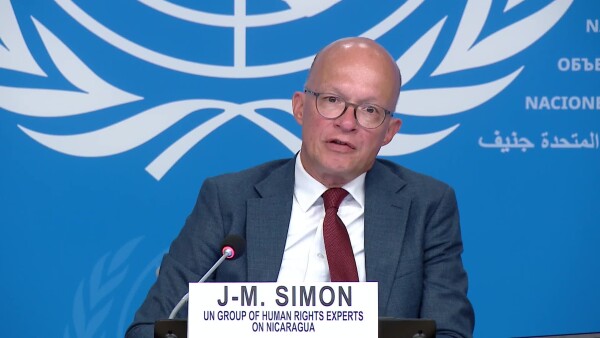
Press conference on the situation of human rights in Nicaragua by the UN Group of Human Rights Experts