

The United Nations Office at Geneva
Multimedia Newsroom
Press Conferences | IOM , OHCHR , UN WOMEN , WHO , WFP
UN Geneva Press Briefing - 17 July 2026
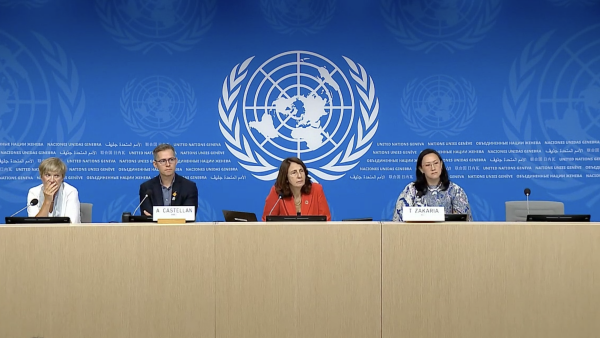
Alessandra Vellucci, Director of the United Nations Information Service in Geneva, chaired a hybrid press briefing, which was attended by the spokespersons and representatives of the World Food Programme, the International Organization for Migration, the World Health Organization, the Office of the High Commissioner for Human Rights, and UN Women.
Humanitarian and food security situation in El Obeid
Abdallah Alwardat, World Food Programme (WFP) Sudan Country Director, connecting from Kosti, stated that El Obeid, normally a city of over half a million people, now had almost double that population, filled with internally displaced people. It was a crowded city, with open camps and many more living with host communities. The city was very stressed, with food, water and fuel all being a big concern. WFP had been providing food assistance to over 100,000 people in the camps inside the city, but there were many more IDPs in the city who needed urgent assistance. Mr. Alwardat said that there were sources of hope, with El Obeid generously hosting so many IDPs, but many more resources were urgently needed. While WFP had been able to bring in food and work with partners on the ground, over the last few days some of them had not been able to bring food closer to the beneficiaries. Even reduced food rations were being shared among families, in a striking sign of solidarity. Mr. Alwardat gave an example of an elderly woman at one of the distribution centres, who had told him that the WFP food distribution was her only source of subsistence, and even that was not sufficient. Millions of people in Sudan were food insecure, of whom WFP was supporting three to five million. While communities were trying to cope with overwhelming situations, without further support the situation would be getting worse, concluded Mr. Alwardat.
Answering questions from the media, Mr. Alwardat said that as long as there was necessary financial support, WFP would be able to continue delivering food. Flexible funding from donors would make a scale-up feasible, he added. WFP now had resources for next two to three months. The road from Kosti to El Obeid, which Mr. Alwardat had crossed the previous day, was functional, he said.
Ebola outbreak in East, South and Horn of Africa regions
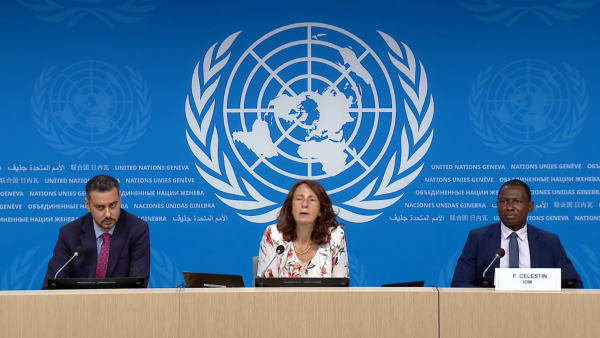
Frantz Celestin, International Organization for Migration (IOM) Regional Director for East, Horn and Southern Africa, said that the Ebola outbreak was unfolding against the backdrop of a triple crisis in the Democratic Republic of Congo, in communities already affected by insecurity, repeated displacement, and limited access to essential services. As of 14 July, more than 2,000 cases and 700 deaths had been reported across the affected countries of DRC and Uganda. The outbreak had grown by approximately 70 per cent in just two weeks, with an average of more than 40 new cases reported each day. Particularly concerning, said Mr. Celestin, was the fact that nearly 66 per cent of reported deaths had occurred in communities, highlighting continued challenges in early detection, surveillance, and timely access to care. At the same time, constraints on humanitarian access and challenges in building community trust underscored the need to place affected populations at the centre of IOM’s response.
Displaced populations remained particularly vulnerable. The outbreak's expansion into two new provinces of Haut-Uele and Tshopo showed the importance of managing the mobility dimensions of public health risks. Strengthening surveillance at points of entry, land and riverine communities along the Congo river, held the key to effectively preventing further spread, not just within DRC, but also across borders. IOM continued to support governments and partners to scale preparedness and response efforts and ensure safe mobility. Mr. Celestin stressed that strengthened partnerships with governments, humanitarian partners, frontline health workers, and affected communities were the backbone of this response in building community trust. Almost two-thirds of IOM’s total ask of USD 55.8M for its Regional Ebola Preparedness and Response remained unfunded. He warned that the risk of regional spillover was real, with Uganda having reported epidemiologically linked cases since the beginning of the outbreak, and cases emerging in DRC closer to the South Sudan border.
Responding to questions, Mr. Celestin said that most of IOM’s work went to supporting the governments in monitoring and screening movements in the DRC and other countries across the region, at over 200 points of entry and control. IOM was focused on the mobility aspect of the outbreak, he stressed, providing an incentive to the governments to keep the borders open. IOM was providing capacity building, equipment and surveillance support to the governments. On another question, Mr. Celestin said that this strain of the virus was moving faster than those before. He emphasized the importance of building trust among communities.
Christian Lindmeier, for the World Health Organization (WHO), explained that four out of five contacts was now being followed up, which was good but still not sufficient. The challenges remained huge, but progress was being made, with staff training, prophylaxis arriving and lab capacities being expanded. Challenges came from uncontrolled movements and persuading everybody on the ground that movements of dead bodies and dignified burials had to be done in an organized, safe manner.
Andrew Mbala, IOM Crisis Manager speaking from Nairobi, added that the organization had mandates to monitor mobility across the continent and coordinate and manage displaced people’s camps. There had been a lot of movements of dead bodies across internal points of control within DRC, which IOM was surveying. All tests conducted on those bodies had come back positive. Since the beginning of the outbreak, two-thirds of the recorded deaths had been within communities, added Mr. Mbala.
Unrest in Pakistan-Administered Kashmir
Jeremy Laurence, for the Office of the High Commissioner for Human Rights (OHCHR), said that UN Human Rights Chief Volker Türk appealed for calm in Pakistan-Administered Kashmir amid a wave of unrest ahead of regional elections at the end of the month. Dozens of people, mostly protesters but also law enforcement personnel, had reportedly been killed since June ahead of the vote for the Legislative Assembly on 27 July. OHCHR called for prompt, thorough and impartial investigations into all deaths that had occurred due to the unrest. The Joint Awami Action Committee (JAAC), a movement behind the protests comprising traders, transporters, students, lawyers, activists and others, had been banned under anti-terrorism laws for allegedly threatening public order and security. The criminalization of a civil society organization and imposition of strict limitations on gatherings raised serious concerns about infringements on the rights to freedom of expression, peaceful assembly and association.
Mr. Laurence stressed that detained JAAC leaders had to have access to legal representation and their families. Their rights to due process and fair trial had to be fully guaranteed. Restrictions in the area on access to the Internet were also concerning, as they disproportionately restricted the enjoyment of the right to freedom of expression, including freedom to seek, receive and impart information at a time when tensions are running high. OHCHR urged the authorities to ensure full Internet access throughout the territory and called for meaningful and inclusive political dialogue to address the underlying issues and grievances of the local population.
Women on the move in Europe and Central Asia
Belén Sanz Luque, UN Women Regional Director for Europe and Central Asia, speaking from Istanbul, said that UN Women, along with the International Organization for Migration, was today launching a report called “Women on the Move in Europe and Central Asia”, which offered a unique window into realities of those women. Women represented 54 percent of all migrants hosted in the region and of those born in the region who had moved away. Whatever the reason for women to move, the common thread was the migration was not gender neutral. The report shed light on diverse experiences of women along their migration journeys. For too long, women had been invisible in migration data. Education and employment were under the main reasons women emigrated from the region, the report revealed. Labour migration often left women less protected. Conflict and displacement were reshaping women’s migration journeys, said Ms. Sanz Luque. Human trafficking remained one of the most hidden forms of exploration. Climate change was emerging as a major driver of women’s movement across Europe and Central Asia, with projections that it would only grow further. The report told stories about human rights, protection, and opportunities, stressed Ms. Sanz Luque. UN Women was hoping that the report would help governments and partners create adequate migration policies. Migration had the face of women, and it was high time this was acknowledged.
Answering questions, Ms. Sans Luque explained that the report was being launched today and would be shared shortly. It looked at the period of the last four years and used national data sets provided by governments.
Announcements
Alessandra Vellucci, for the United Nations Information Service (UNIS), informed that 18 July was the Nelson Mandela Day, on which occasion the Secretary-General’s video message had been shared.
WFP Abdallah Alwardat, Sudan Country Director (From Kosti)
· WFP preparing for mass displacement from El Obeid as food stocks run low
IOM Frantz Celestin, IOM Regional Director for East, Horn and Southern Africa
· Ebola outbreak in the East, Horn and Southern Africa region
OHCHR Jeremy Laurence
· Wave of unrest in Pakistan-Administered Kashmir
UN WOMEN Belén Sanz Luque, UN Women Regional Director for Europe and Central Asia (From Istanbul)
· Launch of a new report: Women on the Move in Europe and Central Asia
Similar Stories
1
1
1
Statements , Press Conferences | OHCHR
1
1
1
Press Conferences | UNHCR , UNICEF , IFRC , OHCHR , UN WOMEN , IOM , OCHA , WHO
UNHCR – ExCom Meeting, UNICEF – Nepal Recovery, IFRC – Flash Floods, WHO – Mental Health, IOM – South Sudan Floods, OCHA – DRC Humanitarian aid, UNHCR – Sahel Displacement, UNICEF – Yemen Update, IOM – Gaza Shelter, UN Women – Gaza Women, OHCHR – Arrests and detentions of Syrians by Israeli force
2
1
2
Press Conferences | UNCTAD
Presentation of the Trade and Developement Report 2026
Embargoed until 9 October 2026 at 11 a.m. (Geneva Time)
UNCTAD: UNCTAD’s flagship report finds that governments increasingly use industrial, trade, financial and technology policies to pursue economic and national security objectives. Market access and the ability to move into higher-value activities now depend more heavily on technology, finance and geopolitics.
1
1
1
Press Conferences | UPU
Release of the State of the Postal Sector Report 2026
1
1
1
Press Conferences | IOM , ITU , UNECE , UNICEF , WHO , WMO
UNICEF: Ebola, DRC - children orphans or separating them from parents and caregivers; IOM: Humanitarian needs in Djibouti amid arrivals from Yemen and increased migrant movements; WHO: Darfur, scale of health needs far exceeds available resources; WMO co-sponsored Global Heat Forum, Bangkok, monthly Global Seasonal Climate Update; UNECE: UN Forum of Mayors; ITU Plenipotentiary Conference 2026; WHO: child and adolescent obesity guidelines and new global roadmap to tackle pregnancy hypertension, a leading cause of maternal mortality
1
1
1
Press Conferences | OCHA , UN WOMEN , UNHCR , WFP , WHO , WTO , UNEP
OCHA – $160M CERF allocation to 12 underfunded crises; UNHCR – 5.8M refugee children remain out of school amid funding cuts; UN Women – Middle East escalation and food security among women/girls; WHO – Gaza supplies and overall situation; WFP – Yemen food insecurity and impact on global hunger ; UNEP - First International Conference of the Global Framework on Chemicals in Geneva | 16-20 November 2026
1
1
1
Press Conferences | UNHCR , WHO
Yemen's health system nears collapse amid conflict, causing rising casualties and medicine shortages.
1
1
1
Press Conferences | HRC
Update by the Expert Mechanism to Advance Racial Justice and Equality in Law Enforcement
1
1
1
Press Conferences | WIPO , WHO , UNICEF , UNHCR , IOM , WFP , FAO
WIPO Global Innovation Index 2026 launch and press conference, WHO Composition of influenza vaccines for the 2027 Southern Hemisphere flu season, UNICEF Yemen hunger and malnutrition; UNHCR Sudan displacement into Chad; IOM Ebola and population movements in DRC; WFP emergency food assistance in Nepal; and FAO food loss and waste.
2
1
2
Press Conferences | UNCTAD
Gaza reconstruction needs reach $71.5 billion as Palestinian economy and public finances face severe strain. Latest UNCTAD report documents the loss of decades of development gains, economic collapse in Gaza and tightening economic constraints in the West Bank.
The report identifies three immediate priorities: transferring withheld Palestinian revenues, safeguarding the banking system and aligning reconstruction support with the documented scale of damage and economic losses.
1
1
1
Press Conferences | HRC
Press conference on the situation of human rights in Nicaragua by the UN Group of Human Rights Experts
1
1
1
Press Conferences | ITU , UNHCR , WHO , WMO
YEMEN - UNHCR: Escalating conflict in Yemen could fuel more displacement, refugee movement
CLIMATE - WHO / WMO: Health and Climate impact of El Niño