

The United Nations Office at Geneva
Multimedia Newsroom
Press Conferences | IFRC , UNHCR , UNICEF , UNIDIR , WHO
UN Geneva Press Briefing - 16 June 2026
UN INFORMATION SERVICE GENEVA PRESS BRIEFING
16 June 2026
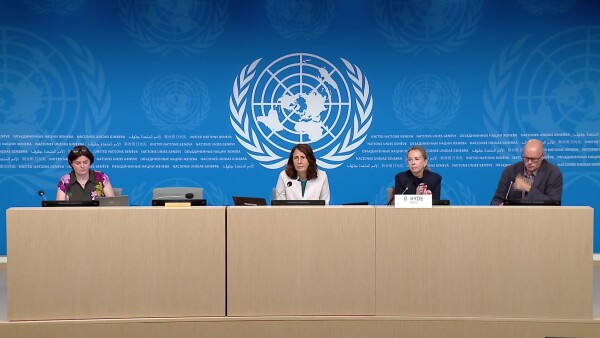
Alessandra Vellucci, Director of the United Nations Information Service in Geneva, chaired a hybrid press briefing, which was attended by the spokespersons and representatives of the United Nations Children’s Fund, the United Nations Refugee Agency, the United Nations Institute for Disarmament Research, the International Federation of Red Cross and Red Crescent Societies, and the World Health Organization.
UNHCR calls to expand refugee resettlement lifeline
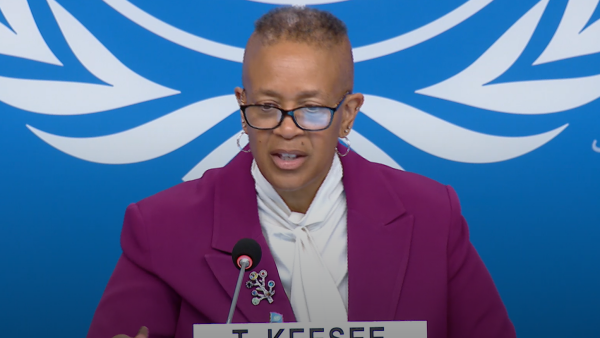
Jackie Keegan, Deputy Director of Durable Solutions and Protection Support at the United Nations Refugee Agency (UNHCR), stated that urgent expansion of refugee resettlement was needed as new UNHCR projections highlighted a continued gap between global needs and available places, according to the latest Projected Global Resettlement Needs report. UNHCR forecast that some 2.4 million refugees around the world would require resettlement in 2027, as they still faced protection risks in their country of asylum and were unable to safely return home. While this figure represented a 6 per cent decline compared to 2026 and continued a downward trend since 2025, the reduction reflected specific developments in certain contexts – some promising, others challenging.
In Syria, for example, the change of government in December 2024 had opened a possibility for return for some. In contrast, the lower predicted resettlement needs for Afghan refugees in Iran and Pakistan were linked to returns under adverse circumstances, and Afghans remained the largest group in need of resettlement, informed Ms. Keegan. Regionally, resettlement needs remained highest in eastern and southern Africa. In 2025, some 37,000 refugees had been resettled with the help of UNHCR, a significant drop from the year before. Many countries had introduced more strict admission criteria, while low- and middle-income countries hosted 68 percent of all refugees in the world. Resettlement was a key pillar of the High Commissioner’s drive to lower the number of refugees in protracted situations dependent on humanitarian aid. UNHCR called for recommitting to finding durable solutions. Expanding resettlement was urgent and achievable, stressed Ms. Keegan. It was not charity but a durable solution. UNHCR thanked the resettlement countries which continued to lead by example.
Full briefing note is available here.
Responding to questions from the media, Ms. Keegan provided examples from early in her career of women who had worked as sex slaves for militias in Guinea, who had later been resettled to the United Kingdom. They had been able to start again and provide for themselves and their children. Chronic patients, especially those who needed cold-chain medication, were now among those selected to resettle due to their immediate, pressing needs. Over one million Rohingya refugees in Bangladesh were all registered, and it was known who was in the need of most immediate help.
Searching for adequate resettlement countries willing to accept them was an arduous, painstaking process. The Middle East had taken in refugees through resettlement programmes; Germany was now more focusing on those people already in the country rather than accepting new refugees. In the 1950s, there had been as many as 37 countries accepting refugees from Europe, reminded Ms. Keegan. Countries that had long been resettlement countries had signaled that they would reduce their quotas. With such a drop in numbers, UNHCR had to be even more careful to select those most in need. One had to be aware of the global housing shortage as well. While a number of countries were also considering rejoining the resettlement programme, there was a need for many more places to accept resettled refugees. On another question, Ms. Keegan stressed that those in need of international protection had to find a place in which they would be safe from forced return. In 2025, the largest resettlement countries were Canada, Australia, the United Nations, France, and New Zealand. In 2026, there were 17 countries offering resettlement.
UNICEF Children’s Climate Risk Report 2026
Tom Slaymaker, Chief of the WASH, Climate and Environment Data unit at the United Nations Children’s Fund (UNICEF), calling from Florence, said today, UNICEF had launched a new analysis that showed just how widespread the reality of climate change on children had become. Almost every child in the world was now exposed to at least one climate hazard, such as floods, droughts, storms, or extreme heat. But one of the biggest concerns globally was that many children were facing multiple overlapping threats at once. The data showed that nearly half of the world’s children – or 1.1 billion – were exposed to at least three climate hazards, and in some parts of the world, children were facing as many as six climate hazards. These multiple overlapping shocks were building on top of each other and reshaping children’s lives, stressed Mr. Slaymaker.
This was a warning of what was to come. It was a recognition of our current reality, and an acknowledgement of how much worse it could get for children. When climate hazards overlapped, the impacts compounded. A drought could leave children hungry and malnourished. A flood that followed can contaminate water supplies and spread diseases like cholera. Each shock made the next one more dangerous. Children could not always recover from shocks before the next one hits. Mr. Slaymaker emphasized that no country was untouched by climate risks but children in conflict-affected places, such as the Central African Republic, Chad, Haiti, or Sudan, were particularly vulnerable because they had much lower access to essential services, such as health care, nutrition, or water and sanitation, even a moderate flood or drought could put their life at risk. Today, 634 million children globally still lacked safe drinking water and 1 billion lacked safe sanitation. Climate hazards were making these already fragile conditions worse. At least 242 million children had their schooling disrupted by climate hazards in 2024, and many more children have been displaced from their homes, increasing the risk of family separation, violence, exploitation, and childhood trauma. Without urgent, child-focused climate action, the shocks they faced today would only intensify, but with the right investment and political will, we could reduce risks, strengthen systems, and give children the chance to survive and thrive.
Full report can be accessed here.
The report estimated a number of children exposed to each of the climate hazards, as well as to various combined climate hazards, explained Mr. Slaymaker responding to a question. Those exposed to multiple risks were considered to be most vulnerable.
Ebola outbreak
Bruno Michon, Operations Manager for the Ebola outbreak at the International Federation for Red Cross and Red Crescent Societies (IFRC), speaking from Bunia in the Democratic Republic of the Congo, said that the Ebola outbreak was not only a medical crisis, but also a crisis of trust. Since the beginning, IFRC had been supporting the Congolese Red Cross to adequately local population. This strain of Ebola presented a particular challenge as there was currently no approved vaccine and no specific treatment for Bundibugyo Ebola virus disease. This made early detection, early care, community engagement, infection prevention and Safe and Dignified Burials even more critical. However, a recent IFRC community feedback report, based on what our volunteers are hearing directly from communities, showed that some people still questioned whether the disease was real. Some believed the outbreak had been invented to attract foreign money, while others saw Safe and Dignified Burials as an attack on culture and tradition, rather than a measure to protect families and communities.
In recent days, DRC Red Cross volunteers had faced verbal abuse, threats and even physical attacks while carrying out their work. These volunteers were local people, coming from the same communities they were trying to protect. They were doing difficult and sometimes dangerous work with courage and commitment. This was why trust was not a secondary activity in an Ebola response; trust was central. Without trust, cases could not be detected early, safe burials could not be ensured, families could not be protected, and transmission could not be stopped. IFRC and partners took the time to explain to local people facts about the virus and measures related to it. Mr. Michon stated that communities were essential for the response: Ebola started in communities and it would end there. To stop the outbreak, it was not only medical response that mattered, but building trust and connecting with local communities. That was not optional – it was life-saving.
Replying to questions, Mr. Michon said that the epidemics moved faster than the response, and in Bunia the peak of the epidemics had likely not been reached yet. People were afraid to go to Ebola treatment centres out of fear of being contaminated. Thus, many people did not report their symptoms but tended to stay at home. There was a lot of stigmatization around the virus, and people were ashamed to tell their families that they were sick. It was difficult to tell when the peak would be reached, said Mr. Michon. It could take as long as one year before the epidemics was stopped.
Tarik Jašarević, for the World Health Organization (WHO), responding to a question, explained that in the DRC there was a decentralized laboratory strategy, with current testing capacities in six locations. All elements of the response had to be in place; right now, there were still blind spots, with some transmission chains likely undetected.
Global Conference on AI, Security and Ethics
Giacomo Persi Paoli, Head of the Security and Technology Programme at the United Nations Institute for Disarmament Research (UNIDIR), spoke about UNIDIR’s Global Conference on AI, Security and Ethics 2026, which would take place on 18 and 19 June at the Palais des Nations and online. Artificial intelligence was no longer a future or abstract policy issue; it was already shaping security environments and the relationship between States and private technology actors. Issues such as AI-enabled drones on the battlefield or intelligence-analysis for target identification, deepfakes and AI disinformation, AI-powered cyber-attacks on critical infrastructure were becoming increasingly common features of modern conflict, and the debate on human control in terms both of morality and accountability was increasingly central. For policymakers, said Mr. Persi Paoli, the question was how to govern AI development and use in ways that are consistent with international law, responsible practice, and civilian protection.
The purpose of the conference, he explained, was to bring together communities that did not always speak to each other enough: diplomats and policymakers, military and defense experts, civil society, human rights experts, international organizations, academia, research laboratories, and industry. The aim was to help Member States and stakeholders move from general concern to more concrete understanding, more informed decision-making and more practical governance options. The conference was not designed as a platform for political debate and consensus-building; instead, it was designed as a forum for serious, if sometimes difficult, multistakeholder dialogue. AI in the security domain raised questions that were technically complex, politically sensitive and ethically consequential. They could not be answered by avoiding difficult perspectives. UNIDIR hoped that that the conference would contribute to a more informed global conversation about AI, security and ethics — one that was grounded in international law, attentive to risks, open to innovation, and focused on practical steps that could support responsible governance.
More information about the conference is available here.
Responding to questions, Mr. Persi Paoli said that there would be a wide range of speakers and participants who would help a better understanding on how this technology was being developed and used. A conference report would summarize main findings and a potential way forward, he explained. The conference was supported by FAGI, Microsoft, and a number of Member States; the full list was available on the conference page.
Announcements
Alessandra Vellucci, for the UN Information Service (UNIS), informed that on 18 June at 9:30 am, the Director-General of the International Atomic Energy Agency (IAEA), Rafael Mariano Grossi, would hold a press conference in the Press Room.
18 June at 12 noon, UN Special Rapporteur on the right to freedom of opinion and expression, Irene Khan, would hold a press conference on freedom of expression in new frontiers: big tech and regulation of digital spaces.
On 19 June at 12:30 pm, there would be a press conference by the Special Rapporteur on the right to health, Tlaleng Mofokeng, on her report to the Human Rights Council focused on health as an enabler of dignity.
On 18 June at 6:30 pm, the next Ciné-ONU event would feature the filming of the movie “Lost Land” about two children, Rohingya refugees, to be followed by a discussion on the right to seek safety.
Finally, on 18 June we would mark the fifth International Day for Countering Hate Speech, on which occasion the Secretary-General’s message had been distributed.
TOPICS
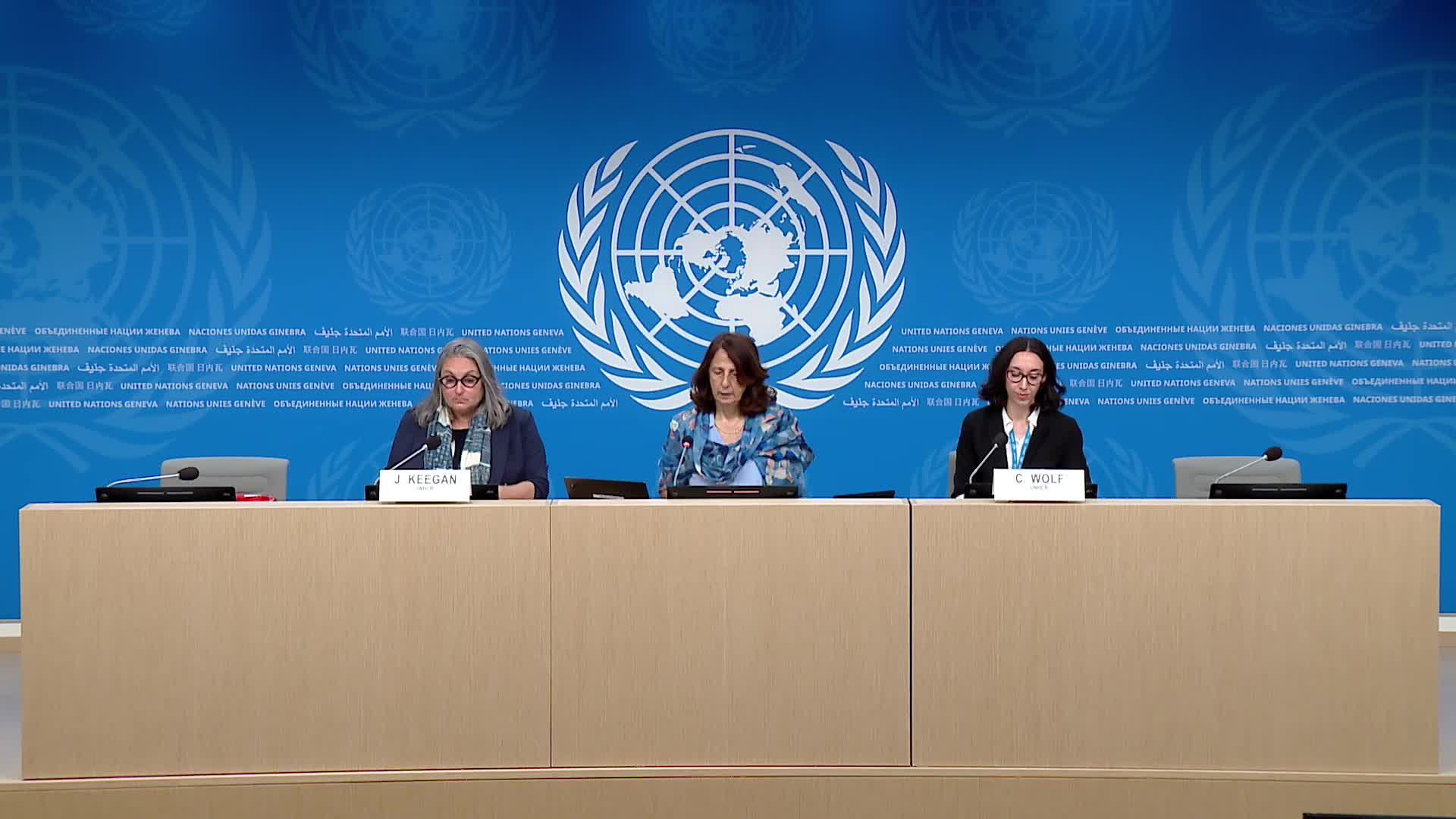
UNHCR Carlotta Wolf (PR) with Jackie Keegan, UNHCR’s Deputy Director of Durable
Solutions and Protection Support, Division of International Protection and Solutions
(PR)
UNHCR calls to expand refugee resettlement lifeline as part of global solutions drive
UNICEF Ricardo Pires (Zoom) with Tom Slaymaker, Chief of the WASH, Climate and
Environment Data unit (From Florence)
Children’s Climate Risk Report 2026.
IFRC Paolo Cravero (PR) with Bruno Michon, Operations Manager for the Ebola
outbreak (From DRC)
Building community trust is key to stopping the Ebola outbreak in the Democratic
Republic of Congo.
UNIDIR Claudia Marquina (Zoom) with Giacomo Persi Paoli, Head of the Security and
Technology Programme (PR)
Global Conference on AI, Peace and Security taking place at the Palais on 18-19
June.
Similar Stories
1
1
1
Press Conferences | IOM , UNDRR
UN stresses importance of household preparedness for disaster risk reduction.
1
1
1
Statements , Press Conferences | OHCHR
1
1
1
Press Conferences | UNHCR , UNICEF , IFRC , OHCHR , UN WOMEN , IOM , OCHA , WHO
UNHCR – ExCom Meeting, UNICEF – Nepal Recovery, IFRC – Flash Floods, WHO – Mental Health, IOM – South Sudan Floods, OCHA – DRC Humanitarian aid, UNHCR – Sahel Displacement, UNICEF – Yemen Update, IOM – Gaza Shelter, UN Women – Gaza Women, OHCHR – Arrests and detentions of Syrians by Israeli force
2
1
2
Press Conferences | UNCTAD
Presentation of the Trade and Developement Report 2026
Embargoed until 9 October 2026 at 11 a.m. (Geneva Time)
UNCTAD: UNCTAD’s flagship report finds that governments increasingly use industrial, trade, financial and technology policies to pursue economic and national security objectives. Market access and the ability to move into higher-value activities now depend more heavily on technology, finance and geopolitics.
1
1
1
Press Conferences | UPU
Release of the State of the Postal Sector Report 2026
1
1
1
Press Conferences | IOM , ITU , UNECE , UNICEF , WHO , WMO
UNICEF: Ebola, DRC - children orphans or separating them from parents and caregivers; IOM: Humanitarian needs in Djibouti amid arrivals from Yemen and increased migrant movements; WHO: Darfur, scale of health needs far exceeds available resources; WMO co-sponsored Global Heat Forum, Bangkok, monthly Global Seasonal Climate Update; UNECE: UN Forum of Mayors; ITU Plenipotentiary Conference 2026; WHO: child and adolescent obesity guidelines and new global roadmap to tackle pregnancy hypertension, a leading cause of maternal mortality
1
1
1
Press Conferences | OCHA , UN WOMEN , UNHCR , WFP , WHO , WTO , UNEP
OCHA – $160M CERF allocation to 12 underfunded crises; UNHCR – 5.8M refugee children remain out of school amid funding cuts; UN Women – Middle East escalation and food security among women/girls; WHO – Gaza supplies and overall situation; WFP – Yemen food insecurity and impact on global hunger ; UNEP - First International Conference of the Global Framework on Chemicals in Geneva | 16-20 November 2026
1
1
1
Press Conferences | UNHCR , WHO
Yemen's health system nears collapse amid conflict, causing rising casualties and medicine shortages.
1
1
1
Press Conferences | HRC
Update by the Expert Mechanism to Advance Racial Justice and Equality in Law Enforcement
1
1
1
Press Conferences | WIPO , WHO , UNICEF , UNHCR , IOM , WFP , FAO
WIPO Global Innovation Index 2026 launch and press conference, WHO Composition of influenza vaccines for the 2027 Southern Hemisphere flu season, UNICEF Yemen hunger and malnutrition; UNHCR Sudan displacement into Chad; IOM Ebola and population movements in DRC; WFP emergency food assistance in Nepal; and FAO food loss and waste.
2
1
2
Press Conferences | UNCTAD
Gaza reconstruction needs reach $71.5 billion as Palestinian economy and public finances face severe strain. Latest UNCTAD report documents the loss of decades of development gains, economic collapse in Gaza and tightening economic constraints in the West Bank.
The report identifies three immediate priorities: transferring withheld Palestinian revenues, safeguarding the banking system and aligning reconstruction support with the documented scale of damage and economic losses.
1
1
1
Press Conferences | HRC
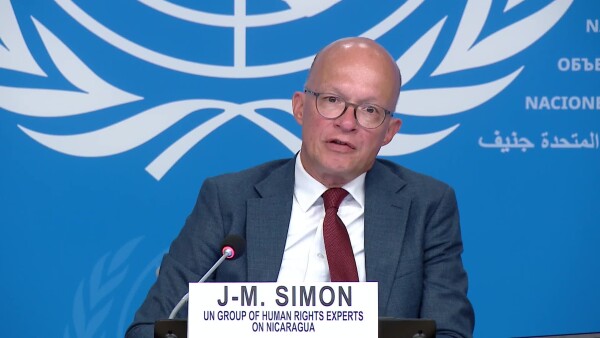
Press conference on the situation of human rights in Nicaragua by the UN Group of Human Rights Experts