

The United Nations Office at Geneva
Multimedia Newsroom
UN INFORMATION SERVICE GENEVA PRESS BRIEFING
31 March 2026
Syrian refugee returns from Lebanon
Aseer Al-Madaien, United Nations Refugee Agency (UNHCR) acting Representative in Syria, speaking from Damascus, stated that nearly a month after the renewed hostilities in Lebanon, Syria had seen a sharp rise of people crossing from Lebanon: more than 200,000 people had entered Syria through the three official crossing points. The vast majority, some 180,000 of them, were Syrians, including Syrian refugees who had earlier sought safety in Lebanon. Some 28,000 Lebanese had also crossed into Syria, fleeing intense Israeli bombardments. Movements had been heaviest through the Masnaa–Jdeidet Yabous and Al Qaa–Joussieh crossings, now operating around the clock. The Arida crossing had reopened on 7 March but remained limited to pedestrian traffic due to a damaged bridge, informed Ms. Al-Madaien. Some returnees planned to stay in Syria permanently, others intended to go back to Lebanon once the situation had stabilized.
Immediate needs included food, shelter, healthcare, livelihoods and support with documentation. In close collaboration with the Syrian authorities, UNHCR had scaled up its presence at the three border crossings, and its teams remained on the ground, working together with partners and leveraging its network of active community centres. UNHCR had already provided legal assistance to hundreds of families in need of documents and gave essential relief items to many families. It was working with partners to install solar streetlights at the crossings to increase safety in those zones. Ms. Al-Madaien further explained that UNHCR’s community centres remained the backbone of the support, providing mental health support, among other services. So far, more than 20,000 returnees had received support in governorates across the country. Many returning families were describing the feeling of anxiety and uncertainty. UNHCR had supported over three million Syrian refugees and internally displaced persons who had returned home since December 2024, reminded Ms. Al-Madaien. UNHCR Syria operation was less than 30 per cent funded against the nearly USD 324 million requirements in 2026, and more urgent support was needed.
Full briefing note is available here.
Alessandra Vellucci, for the United Nations Information Service (UNIS), said that the Secretary-General had condemned the killing in Lebanon of the peacekeepers from Indonesia and the injuring of others. She also referred to the statement of the UN Special Representative for Lebanon. “Tactical military gains may produce short-term wins, on and off the battlefield. But they risk irrevocable, long-term damage to the stability and prosperity both Lebanese and Israelis deserve. It is time to think in the long-term; it is time to move towards a process which builds, rather than destroys,” read the latter’s statement. The Security Council would meet on the situation in Lebanon and the Middle East today at 4 pm Geneva time, following the killing of three Indonesian peacekeepers serving in UNIFIL.
Replying to questions from the media, Ms. Al-Madaien said that UNHCR had a contingency plan in place and was prepared for 300-350,000 returnees from Lebanon. The Syrian Government was also putting in place a contingency plan in case more Lebanese were to come to Syria. UNHCR was preparing for an influx of both Syrian returnees and Lebanese refugees.
Supply chain disruptions
Corinne Fleischer, World Food Programme (WFP) Director of Supply Chain, connecting from Rome, said that right now the world was experiencing the most significant disruption of supply chains since the COVID-19 pandemic and the start of the war in Ukraine. WFP did not have vessels in the Strait of Hormuz, she explained, but was impacted by the ripple effect of what was happening there, with numerous vessels stuck there. It was the whole disruption of the global supply chains which, in the case of COVID-19, had taken several months to stabilize. The carriers were not using the Red Sea and the Suez Canal, and had to go all around Africa, which added 25 to 30 days of shipping and significantly increased expenses. WFP, the only UN agency with its own shipping department, was asking carriers for priority cargo for humanitarian operations and trying to minimize the cost increases. It had negotiated a waiver of surcharges implemented by certain shipping companies of USD 2,000 per container, saving over USD 1.5 million so far. WFP was also rerouting cargo: Ms. Fleischer gave an example of Afghanistan where 17 million people were food insecure and would move supplies from Iran to Afghanistan by trucks, crossing multiple countries. This would add costs and extra time for transport, she warned.
Ms. Fischer said that WFP was concerned about the long-term impact of the ongoing conflict and disruptions on many people’s ability to put food on their tables. WFP’s projections were that by June some 45 million people around the world would become acutely hungry, at a time when humanitarian operations received less funding than before. The needs were high, the funding was limited, and the costs of transport were increasing, which all translated into higher food prices everywhere.
Answering questions, Ms. Fleischer said that WFP bought supplies, whenever possible, in local markets at competitive prices. However, prices in local markets would be increasing as well, she warned. She said that WFP was concerned about all its big operations, where it might not be able to support as many people as it used to because of the rising prices; those crises included Sudan, South Sudan, and Somalia, among others. The financing of humanitarian operations had not been where it should have been in recent years, she reminded, and in the current context pipeline disruptions would have very adverse consequences. Ms. Fischer explained that if freight charges increased by 10 to 20 percent, it would have a massive impact on WFP’s shipping operations. WFP’s volume of operations was too high not to be affected by the rising costs; operations around the world were impacted, including Gaza and Myanmar. WFP was not shipping food into the Gulf or taking food out of the Gulf, she explained. In Dubai, WFP was getting a priority for air shipments, she said.
Sudan Response Plan
Kennedy Omondi Okoth, for the International Organization for Migration (IOM), stated that more than 9 million people remained internally displaced in Sudan today, while an estimated 3.8 million people had begun returning to their areas of origin. These overlapping movements of displacement and return were shaping one of the most complex humanitarian crises in the world today. For families still displaced, daily life often meant limited access to shelter, food, clean water and health services. For those returning, the situation could be equally difficult. Many communities to which they returned had damaged infrastructure, limited livelihoods and disrupted services. In some areas, unexploded ordnance continued to pose serious risks. As a result, both displaced and returning populations faced urgent humanitarian needs. At the peak of the conflict, reminded Mr. Okoth, more than 12 million people had been displaced inside the country. While displacement continued in areas such as Darfur, Kordofan and Blue Nile states, returns were also taking place in locations including Gedaref, Khartoum and River Nile states. Some families returned because security conditions appeared to have improved. Others were driven by economic pressure, family separation or the lack of services in displacement sites.
In response to growing needs, today IOM was appealing for USD 277 million to support the most vulnerable people affected by displacement and conflict in Sudan and neighbouring countries in 2026. The appeal focused on strengthening the systems that sustain humanitarian operations. This included improving data and mobility tracking, expanding humanitarian hubs and supply routes, and strengthening cross border operations. One priority was expanding assistance through the humanitarian hub in Farchana in eastern Chad, which helped deliver aid into hard-to-reach areas of Darfur and Kordofan, explained Mr. Okoth.
Announcements
Alessandra Vellucci, for the UN Information Service (UNIS), informed that the Human Rights Council would closing today its sixty-first session.
The second part of the annual session of the Conference on Disarmament would officially begin on 11 May.
Finally, Ms. Vellucci informed that the Palais des Nations would be closed on 3 and 6 April due to the Easter holidays.
***
TOPICS
UNHCR Babar Baloch (PR) with Aseer Al-madaien, UNHCR’s acting Representative in
Syria (From Damascus)
Syrian refugee returns from Lebanon since the start of the conflict.
WFP Corinne Fleischer, Director of Supply Chain (From Rome)
Impact of supply chain disruptions on WFP's delivery of life‑saving food
assistance to its frontline operations.
IOM Omondi Okoth (PR)
Sudan Response Plan and Appeal
Similar Stories
1
1
1
Statements , Press Conferences | OHCHR
1
1
1
Press Conferences | UNHCR , UNICEF , IFRC , OHCHR , UN WOMEN , IOM , OCHA , WHO
UNHCR – ExCom Meeting, UNICEF – Nepal Recovery, IFRC – Flash Floods, WHO – Mental Health, IOM – South Sudan Floods, OCHA – DRC Humanitarian aid, UNHCR – Sahel Displacement, UNICEF – Yemen Update, IOM – Gaza Shelter, UN Women – Gaza Women, OHCHR – Arrests and detentions of Syrians by Israeli force
2
1
2
Press Conferences | UNCTAD
Presentation of the Trade and Developement Report 2026
Embargoed until 9 October 2026 at 11 a.m. (Geneva Time)
UNCTAD: UNCTAD’s flagship report finds that governments increasingly use industrial, trade, financial and technology policies to pursue economic and national security objectives. Market access and the ability to move into higher-value activities now depend more heavily on technology, finance and geopolitics.
1
1
1
Press Conferences | UPU
Release of the State of the Postal Sector Report 2026
1
1
1
Press Conferences | IOM , ITU , UNECE , UNICEF , WHO , WMO
UNICEF: Ebola, DRC - children orphans or separating them from parents and caregivers; IOM: Humanitarian needs in Djibouti amid arrivals from Yemen and increased migrant movements; WHO: Darfur, scale of health needs far exceeds available resources; WMO co-sponsored Global Heat Forum, Bangkok, monthly Global Seasonal Climate Update; UNECE: UN Forum of Mayors; ITU Plenipotentiary Conference 2026; WHO: child and adolescent obesity guidelines and new global roadmap to tackle pregnancy hypertension, a leading cause of maternal mortality
1
1
1
Press Conferences | OCHA , UN WOMEN , UNHCR , WFP , WHO , WTO , UNEP
OCHA – $160M CERF allocation to 12 underfunded crises; UNHCR – 5.8M refugee children remain out of school amid funding cuts; UN Women – Middle East escalation and food security among women/girls; WHO – Gaza supplies and overall situation; WFP – Yemen food insecurity and impact on global hunger ; UNEP - First International Conference of the Global Framework on Chemicals in Geneva | 16-20 November 2026
1
1
1
Press Conferences | UNHCR , WHO
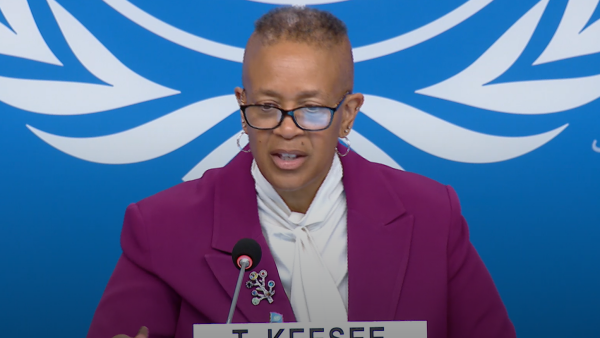
Yemen's health system nears collapse amid conflict, causing rising casualties and medicine shortages.
1
1
1
Press Conferences | HRC
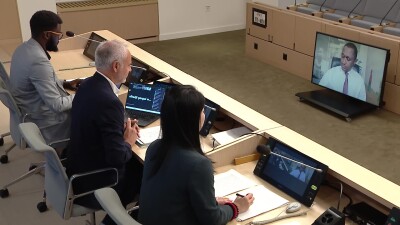
Update by the Expert Mechanism to Advance Racial Justice and Equality in Law Enforcement
1
1
1
Press Conferences | WIPO , WHO , UNICEF , UNHCR , IOM , WFP , FAO
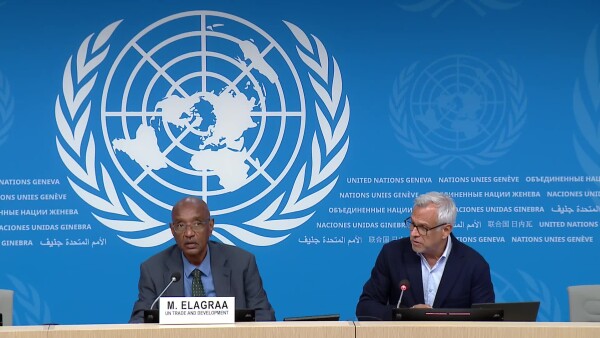
WIPO Global Innovation Index 2026 launch and press conference, WHO Composition of influenza vaccines for the 2027 Southern Hemisphere flu season, UNICEF Yemen hunger and malnutrition; UNHCR Sudan displacement into Chad; IOM Ebola and population movements in DRC; WFP emergency food assistance in Nepal; and FAO food loss and waste.
2
1
2
Press Conferences | UNCTAD
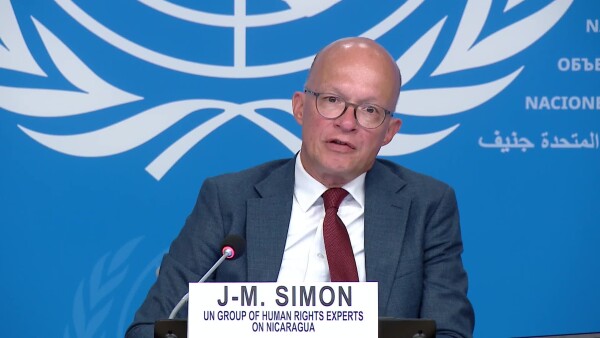
Gaza reconstruction needs reach $71.5 billion as Palestinian economy and public finances face severe strain. Latest UNCTAD report documents the loss of decades of development gains, economic collapse in Gaza and tightening economic constraints in the West Bank.
The report identifies three immediate priorities: transferring withheld Palestinian revenues, safeguarding the banking system and aligning reconstruction support with the documented scale of damage and economic losses.
1
1
1
Press Conferences | HRC
Press conference on the situation of human rights in Nicaragua by the UN Group of Human Rights Experts
1
1
1
Press Conferences | ITU , UNHCR , WHO , WMO
YEMEN - UNHCR: Escalating conflict in Yemen could fuel more displacement, refugee movement
CLIMATE - WHO / WMO: Health and Climate impact of El Niño