

The United Nations Office at Geneva
Multimedia Newsroom
Press Conferences | HRC , ILO , OHCHR , UNHCR , WHO
UN Geneva Press Briefing - 24 March 2026
UN GENEVA PRESS BRIEFING
24 March 2026
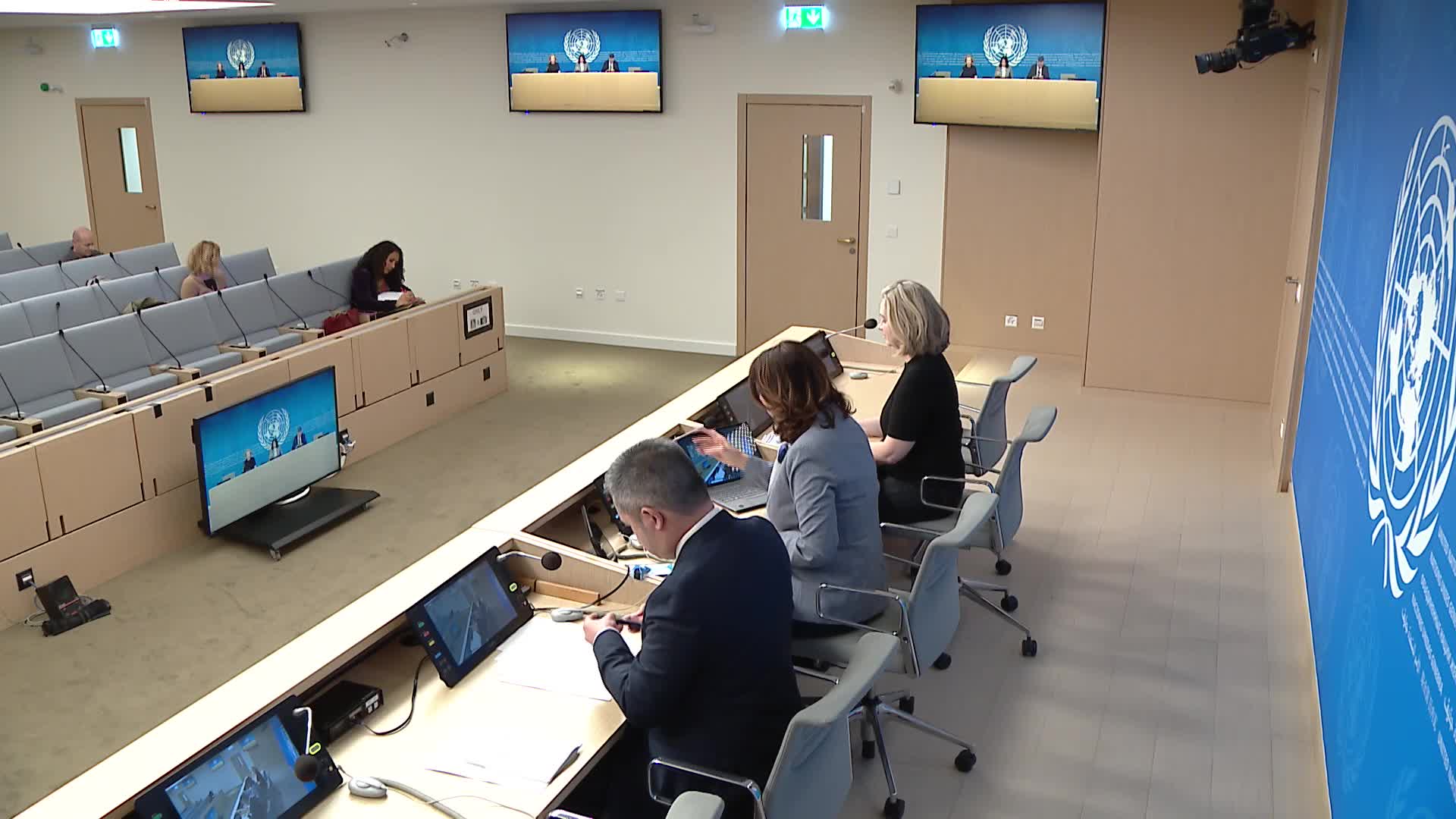
Alessandra Vellucci, Director of the United Nations Information Service (UNIS) in Geneva, chaired the hybrid briefing, which was attended by spokespersons and representatives from the United Nations Refugee Agency, the World Health Organization, the Office of the High Commissioner for Human Rights, the Human Rights Council and the International Labour Organization.
UNHCR: Urgent support needed as 32,000 Congolese refugees return home from Burundi
Ali Mahamat, United Nations Refugee Agency (UNHCR) Head of Office in Goma (Democratic Republic of Congo), said more than 33,000 Congolese refugees had spontaneously returned from Burundi to eastern Democratic Republic of the Congo (DRC) in a month. Most returnees were crossing through the Kavimvira border point, near Uvira in South Kivu Province. They had fled to Burundi in December 2025, when fighting between the Armed Forces of the Democratic Republic of the Congo (FARDC) and the M23 armed group had forced thousands to flee Uvira and surrounding areas. Around 30 percent of returnees had been living in Burundi Busuma refugee sites, where funding shortfalls meant overcrowding and limited water, sanitation, medicine and shelter, despite the best efforts of authorities, UNHCR and partners. Nearly 4,500 people remained in transit centres awaiting relocation. As of 23 March 2026, Burundi still hosted about 109,000 Congolese refugees, including around 67,000 in Busuma.
Conditions in many areas of return in the DRC remained fragile, with acute humanitarian needs. Many families returned to find their homes destroyed and belongings looted. UNHCR and partners were increasing protection monitoring and urgent humanitarian assistance. Teams were deployed at border points and in return areas to monitor risks and identify vulnerable individuals. UNHCR was providing the returnees with emergency tarpaulins, blankets, soap and protection services, as well as hot meals, registration and screening.
Answering questions from journalists, Mr. Mahamat said refugees were returning to very fragile areas given the recent conflict, schools and health facilities having been destroyed. UNHCR needed additional support to improve the living condition in the areas of return.
UNHCR’s response to the needs of refugees, returnees and internally displaced people in the DRC was 34 percent funded, against total requirements of USD 145 million; UNHCR's support for Congolese refugees in Burundi was only 20 percent funded, against requirements of USD 100 million. These appeals eeded to be fully and urgently funded to support the life-saving needs of these families, both those who had returned and those who remained displaced.
Babar Baloch, for the United Nations Refugee Agency (UNHCR), said that after the conflict in South Kivu in December 2025, half a million people had been displaced internally, while nearly 240,000 Congolese had left to neighbouring countries, the majority to Burundi.
Hala Khudari, Deputy World Health Organization (WHO) Representative a.i. and WHO Health Emergency Lead in Sudan, said Al Daein Teaching Hospital, in East Darfur’s capital, had been struck on 20 March 2026. Initial reports indicated 64 deaths and 89 injuries; following search efforts, the number of deaths had risen to 70, including 7 women and 13 children. There were 146 injured people, including patients and family members. One doctor and 2 nurses had lost their lives, 8 other health care workers being injured. The hospital had sustained severe damage, particularly to the outpatient and emergency departments.
Al Daein Teaching Hospital served as a referral hospital for over 2 million people across Al Daein city and neighbouring localities in East Darfur. Patients requiring specialized services may had to travel over 150 kilometres to reach the next referral hospital. This significantly reduced access to essential health care in a region that had been severely affected by prolonged conflict since 2023.
WHO, partners and health authorities had immediately coordinated alternative facilities to continue care. Medical supplies sufficient to support approximately 40,000 people over three months, that had been pre-positioned in Al Daein, were being used to respond to urgent needs following the attack. Health facilities were being supported to expand services and absorb the increased demand. Additional trauma kits were being mobilized urgently from WHO warehouses in Abéché (Chad).
Challenges remained: the health system was under severe strain, access was limited and funding shortfalls were constraining the response. The health response for 2026 was currently funded at barely 6 percent. Stronger financial support was critical for the health emergency response, but above all, the violence had to stop: since April 2023, WHO had verified 213 attacks on health care in Sudan, resulting in 2,042 deaths and 784 injuries. In 2025, Sudan accounted for 82 percent of deaths from attacks on health care reported in the WHO attacks verification system, which gathered data from 26 countries and territories.
WHO called on all parties to the conflict to respect international humanitarian law, which prohibits attacks on civilians and civilian infrastructure, including health care. Increased diplomatic efforts were urgently needed to de-escalate the conflict and ensure the protection of civilians, health workers, and humanitarian workers.
Marta Hurtado, for the Office of the High Commissioner for Human Rights (OHCHR), reported a sharp increase in the use of drones to conduct airstrikes in Sudan, underlining the devastating impact of high tech and relatively cheap weapons in populated areas. Over 500 civilians had been killed in such strikes from 1 January to 15 March, the majority in the Kordofan region. Deadly attacks had continued in the past week, as the holy month of Ramadan had ended. On 21 March, further drone strikes on a convoy of commercial transportation vehicles in El Daein had reportedly killed 23 people.
On 20 March, in Ad Dabbah in Northern state – an area controlled by the Sudanese Armed Forces – drone attacks had impacted civilian infrastructure, including an electricity substation and an engineering college. Six people had reportedly been killed, and power completely cut to the locality. This attack had happened on the same day as the attack on El Daein Teaching Hospital, which was in an area controlled by the Rapid Support Forces.
The UN Human Rights Office continued to document attacks on markets, energy and water infrastructure and health facilities. Health care facilities and health workers were specifically protected against attack; continued patterns of attacks striking civilians and destroying civilian infrastructure could amount to war crimes.
Widening drone attacks were spilling across Sudan’s borders, with serious risk of escalation carrying regional consequences. The Office urged all States, particularly those with influence, to do all in their power to end arms transfers that were fuelling the conflict and being used in manifest disregard of the obligation to protect civilians in conflict.
Answering questions from journalists, Ms. Hurtado said that while the Office had not identified who had committed the attacks, it noted that both parties in conflict were using drones extensively. The High Commissioner had called for both parties to stop immediately using this type of weaponry. There was an embargo in place on arms in Darfur, but clearly it was not being applied.
Ms. Khudari said that WHO teams on the ground were working closely with the health authorities to verify the numbers of victims. The Office did not report on the type of artillery or weaponry used, nor on perpetrators; it focused on the impact of attacks on health, healthcare workers and patients.
Attacks on healthcare were on the rise not only in the Darfur, but also in other parts of Sudan. Functionality of the Sudanese health facilities had been reduced by 50 or even 70 percent in some of areas. These attacks undermined facilities that had been previously supported or even rehabilitated: efforts over many years were thus wasted.
Alessandra Vellucci quoted UN Secretary-General’s spokesperson Stéphane Dujarric calling, during his daily press briefing on 23 March, “for an immediate end to attacks on civilians and civilian infrastructure, respect for international humanitarian law, the protection of healthcare and humanitarian personnel, a cessation of hostilities, and rapid, safe and unhindered access for humanitarian goods and workers”.
Haiti: Persistent deadly violence by gangs
Marta Hurtado, for the Office of the High Commissioner for Human Rights (OHCHR), said a UN Human Rights Office report published on Tuesday detailed the human rights impacts of the expanding reach of gangs in Haiti. At least 5,519 people had been killed in Haiti and 2,608 injured between 1 March 2025 and 15 January 2026. Violence perpetrated by gangs had resulted in at least 1,424 people killed; operations against gangs led by security forces at least 3,497 people killed; attacks against gangs by self-defence groups at least 598 people killed. Gangs terrorized the population by killing and kidnapping people, trafficking children, stealing at illegal checkpoints, extorting money from businesses, and destroying public and private properties.
Gangs were also using sexual violence to spread fear among, subjugate, and punish the population. Between 1 March 2025 and 31 December 2025, at least 1,571 women and girls had been victims of sexual violence, mostly gang rape. Others, including children, were coerced into so-called “sentimental relationships” with gang members and subjected to prolonged sexual exploitation and abuse.
The report further documented instances of unnecessary or disproportionate use of force by police. Between 1 March 2025 and 15 January 2026, it identified 247 instances of actual or attempted summary executions of suspected gang members, resulting in the deaths of 196 people.
Since March 2025, a private military company hired by the Haitian Government had taken part in security operations, including using drone strikes and helicopter gunfire. Some, or even most, of these drone strikes and helicopter operations could be described as targeted killings. No investigation appeared to have been opened by the judicial authorities to establish the legality of these operations. States were accountable for the actions of private military and security companies they employed to perform security functions on their behalf.
The report also detailed violence perpetrated by self-defence groups and mobs engaging in so-called popular justice. Some killings had been, allegedly, encouraged or facilitated by police elements. “It is essential for authorities to provide security while fully upholding human rights,” said UN High Commissioner for Human Rights Volker Türk.
Answering questions from journalists, Ms. Hurtado said the private company hired by the Haitian Government was from the United Stated. Police or military involved must act according to the law, she stressed. The Office was cooperating in efforts to create standards and an accountability program, to sanction any misbehaviour. It was necessary to fight impunity, which was a longstanding problem in Haiti.
Announcements
Pascal Sim, for the Human Rights Council, said the Council would hold, tomorrow Wednesday, 25 March, at 9 a.m., an urgent debate to “discuss the recent military aggression launched by Iran against Bahrain, Jordan, Kuwait, Oman, Qatar, Saudi Arabia and the United Arab Emirates on the 28th of February 2026, targeting civilians and civilian infrastructures, which has resulted in the loss of innocent lives”.
Also, the President of the Human Rights Council had received a letter from the Permanent Representative of the Islamic Republic of Iran requesting the convening of another urgent debate that would be entitled “Protection of children and educational institutions in international armed conflicts: the aerial attack on Shajareh Tayyebeh Girls’ School in Minam, Iran, as a grave breach of international humanitarian law and international human rights”.
Isabel Piquer Hubert, for the International Labour Organization (ILO), said the 356th session of the ILO Governing Body had opened yesterday at ILO headquarters in Geneva and would run through 2 April. The session's agenda included discussions on the ILO's role in a changing multilateral environment, with a focus on improving the Organization's effectiveness. The Governing Body would also consider the ILO's Development Cooperation Strategy for 2026–29, which set out the Organization's approach to partnerships in support of decent work priorities. In addition, the session would country cases under the ILO's supervisory procedures. Documentation, agendas and related materials were available on the ILO website.
Ms. Vellucci, for the United Nations Information Service, said the Committee on the Rights of Persons with Disabilities (CRPD) would conclude its 34th session next Thursday, 26 March, at 5 p.m.. The Committee would then issue its concluding observations on reports submitted by Lesotho, Pakistan, Samoa, Marshall Islands and Liberia.
The date of the next public plenary meeting of the Conference on Disarmament would be announced at a later stage.
Ms. Vellucci quoted a press release issued yesterday by United Nations Office for Project Services (UNOPS) Executive Director Jorge Moreira da Silva, concerning the situation in the Middle East. “The escalation in the Middle East continues to have a devastating toll on civilians and livelihoods with global ripple effects”, Mr. Moreira da Silva wrote, before giving many figures on the humanitarian effects of the war and concluding that “There is no military solution. The only way to end this mayhem and people’s suffering is through a diplomatic and peaceful solution and the implementation of all UN Security Council resolutions”.
Ms. Vellucci invited journalists to the next screening of Ciné-ONU, on Thursday, 26 March, at Cinérama (rue de Carouge, Geneva, 6:30 p.m.). The UN Information Service would present the movie Muganga: Celui qui Soigne (“He Who Heals”), dedicated to Nobel Peace Prize laureate Denis Mukwege, the celebrated doctor treating survivors of sexual violence and advocating for human rights and dignity in the conflict in the Democratic Republic of Congo.
The film would be followed by video messages from Dr. Mukwege and the film's director, Marie-Hélène Roux, as well as a panel discussion on “Healing the Survivors – Sexual Violence: Care, Recovery, and Justice”, featuring Esther Dingemans, Executive Director of the Global Survivors Fund; Professor Jasmine Abdulcadir, obstetrician and gynecologist at the Geneva University Hospital; Professor Guy-Bernard Cadière, a surgeon and colleague of Dr. Mukwege at Panzi Hospital in DRC; and Sophia Calltrop, Director of UN Women Office in Geneva.
International days to be celebrated
24 March: World Tuberculosis Day, and International Day for the Right to the Truth Concerning Gross Human Rights Violations and for the Dignity of Victims.
25 March: International Day of Remembrance of the Victims of Slavery and the Transatlantic Slave Trade, and International Day of Solidarity with Detained and Missing Staff Members. [Statements by the Secretary-General regarding these two celebrations have already been sent.]
TOPICS
OHCHR Marta Hurtado
· Haiti: Persistent deadly violence by gangs
· Sudan: Sharp increase in civilian deaths as a result of growing warfare
WHO Tarik Jašarević with Dr Hala Khudari, Acting Deputy WHO Representative to Sudan (From Port Sudan)
· Attacks on healthcare in Sudan
UNHCR Babar Baloch with Ali Mahamat, UNHCR Head of Office in Goma – DRC (From Goma)
· Urgent support needed as 32,000 Congolese refugees return home from Burundi in a month
ANNOUNCEMENTS
HRC Pascal Sim
· Human Rights Council’s 61st session – Update.
ILO Isabel Piquer Hubert
· Governing Body meeting.
Similar Stories
1
1
1
Press Conferences | IOM , UNDRR
UN stresses importance of household preparedness for disaster risk reduction.
1
1
1
Statements , Press Conferences | OHCHR
1
1
1
Press Conferences | UNHCR , UNICEF , IFRC , OHCHR , UN WOMEN , IOM , OCHA , WHO
UNHCR – ExCom Meeting, UNICEF – Nepal Recovery, IFRC – Flash Floods, WHO – Mental Health, IOM – South Sudan Floods, OCHA – DRC Humanitarian aid, UNHCR – Sahel Displacement, UNICEF – Yemen Update, IOM – Gaza Shelter, UN Women – Gaza Women, OHCHR – Arrests and detentions of Syrians by Israeli force
2
1
2
Press Conferences | UNCTAD
Presentation of the Trade and Developement Report 2026
Embargoed until 9 October 2026 at 11 a.m. (Geneva Time)
UNCTAD: UNCTAD’s flagship report finds that governments increasingly use industrial, trade, financial and technology policies to pursue economic and national security objectives. Market access and the ability to move into higher-value activities now depend more heavily on technology, finance and geopolitics.
1
1
1
Press Conferences | UPU
Release of the State of the Postal Sector Report 2026
1
1
1
Press Conferences | IOM , ITU , UNECE , UNICEF , WHO , WMO
UNICEF: Ebola, DRC - children orphans or separating them from parents and caregivers; IOM: Humanitarian needs in Djibouti amid arrivals from Yemen and increased migrant movements; WHO: Darfur, scale of health needs far exceeds available resources; WMO co-sponsored Global Heat Forum, Bangkok, monthly Global Seasonal Climate Update; UNECE: UN Forum of Mayors; ITU Plenipotentiary Conference 2026; WHO: child and adolescent obesity guidelines and new global roadmap to tackle pregnancy hypertension, a leading cause of maternal mortality
1
1
1
Press Conferences | OCHA , UN WOMEN , UNHCR , WFP , WHO , WTO , UNEP
OCHA – $160M CERF allocation to 12 underfunded crises; UNHCR – 5.8M refugee children remain out of school amid funding cuts; UN Women – Middle East escalation and food security among women/girls; WHO – Gaza supplies and overall situation; WFP – Yemen food insecurity and impact on global hunger ; UNEP - First International Conference of the Global Framework on Chemicals in Geneva | 16-20 November 2026
1
1
1
Press Conferences | UNHCR , WHO
Yemen's health system nears collapse amid conflict, causing rising casualties and medicine shortages.
1
1
1
Press Conferences | HRC
Update by the Expert Mechanism to Advance Racial Justice and Equality in Law Enforcement
1
1
1
Press Conferences | WIPO , WHO , UNICEF , UNHCR , IOM , WFP , FAO
WIPO Global Innovation Index 2026 launch and press conference, WHO Composition of influenza vaccines for the 2027 Southern Hemisphere flu season, UNICEF Yemen hunger and malnutrition; UNHCR Sudan displacement into Chad; IOM Ebola and population movements in DRC; WFP emergency food assistance in Nepal; and FAO food loss and waste.
2
1
2
Press Conferences | UNCTAD
Gaza reconstruction needs reach $71.5 billion as Palestinian economy and public finances face severe strain. Latest UNCTAD report documents the loss of decades of development gains, economic collapse in Gaza and tightening economic constraints in the West Bank.
The report identifies three immediate priorities: transferring withheld Palestinian revenues, safeguarding the banking system and aligning reconstruction support with the documented scale of damage and economic losses.
1
1
1
Press Conferences | HRC
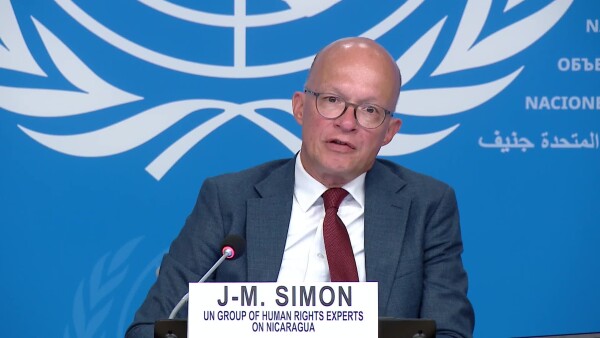
Press conference on the situation of human rights in Nicaragua by the UN Group of Human Rights Experts