

The United Nations Office at Geneva
Multimedia Newsroom
Press Conferences | HRC , IOM , UNFPA , UNHCR , UNIFIL
UN Geneva Press Briefing - 13 March 2026
Conflict in Lebanon
Kandice Ardiel, for the United Nations Interim Force in Lebanon (UNIFIL), speaking from Naqoura, said that since 2 March, when Hezbollah had claimed responsibility for an attack on Israel, the situation in south Lebanon had greatly deteriorated. UNIFIL was seeing daily rocket, missile, and drone attacks on Israel and the occupied Golan from Lebanon, and artillery fire, air and drone strikes, and ground incursions up to seven kilometers into Lebanon by Israeli forces. Each of these acts represented a violation of resolution 1701 and a further step toward escalation. Following repeated messages from the Israel Defense Forces telling people to evacuate, Lebanese authorities estimated that half a million people had now been displaced from their homes in UNIFIL’s area of operations south of the Litani river. As of 12 March afternoon, Lebanese authorities reported that almost seven hundred people had been killed, with almost 1,800 injured.
Seeing the rapid and intense escalation of violence, UNIFIL was deeply concerned that the situation would deteriorate further. In this environment, UNIFIL had had to adapt; over 7,500 peacekeepers remained on the ground and continue to monitor and report what they saw. Due to the volatile and dangerous security situation, UNIFIL’s movements were heavily restricted. Ms. Ardiel informed that UNIFIL continued movements to resupply its bases with fuel, food, and water, although in some cases roadblocks erected by the Israel Defense Forces had restricted access. UNIFIL continued to facilitate humanitarian access, supporting missions by UN and international organizations and daily missions by the Lebanese Red Cross to bring essential assistance to people in need. When asked, UNIFIL had also facilitated the safe movement of around 100 civilians wanting to leave dangerous areas, including children, the elderly, and persons with disabilities.
Ms. Ardiel stressed that UNIFIL continued to maintain close contact with both Lebanese and Israeli authorities, passing information to avoid misunderstandings that could exacerbate the already tense situation, and urging restraint and de-escalation to avoid putting peacekeepers and civilians at further risk. UNIFIL Head of Mission and Force Commander continued to maintain an open channel of communication with the parties, encouraging them to fully recommit to resolution 1701 and return to the cessation of hostilities.
Answering questions from the media, Ms. Ardiel said that peacekeepers had very restricted freedom of movement, but physical presence of Israeli troops on the Lebanese territory was visible, up to seven kilometers at one location. The 2024 ceasefire had been violated over 15,000 times by both parties, mostly by the IDF, specifically through air violations and air strikes. On another question, Ms. Ardiel said that no peacekeepers had been withdrawn, while the number of peacekeepers had been cut down from 10,000 to 7,500 due to the overall UN liquidity crisis. She reminded of the Security Council resolution that UNIFIL would withdraw by the end of 2026, and the mission would continue to carry on its work until the end of the year. The incident in which a projectile had hit a UNIFIL base recently was under investigation, she said responding to another question. In an escalation two nights earlier, over 100 projectiles had been fired from the Lebanese territory into Israel, leading to over 100 projectiles into Lebanon and Israeli air strikes.
Christian Lindmeier, for the World Health Organization (WHO), informed that the latest casualty figures of the Ministry of Health showed that there were 634 deaths and at least 1,586 injuries, of whom 53 had been treated in emergency rooms. Most injuries and deaths had happened in Nabatiyeh. Health facilities were increasingly overstretched as numerous trauma cases were coming for treatment.
Anandita Philipose, United Nations Population Fund (UNFPA) Lebanon Representative, connecting from Beirut, said that the situation was escalating dramatically across the country. Some 55 hospitals and clinics had been forcibly closed because of the damage to them, or due to evacuation orders. Today in Lebanon there were more than 11,600 pregnant women affected by the escalating crisis, 4,000 of whom were expected to deliver in the coming three months. Many of these women had been forced from their homes, cut off from essential health facilities and forced to give birth in dangerous conditions. Ms. Philipose said that women and girls faced serious protection risks when they were displaced from their homes and communities. Rates of gender-based violence, including sexual violence, exploitation, harassment and trafficking increased.
This was a population that had already endured a devastating conflict in 2024, one in which dozens of health facilities and hospitals had been destroyed in shelling and bombing, leaving the healthcare system fragile and in need of rebuilding. Now civilians were being forced through violence once again. For many families in Lebanon, displacement was no longer a temporary disruption; it had become a recurring reality. UNFPA was deploying mobile clinics and teams in areas where displaced people were congregating, to provide essential healthcare, medical treatment for gender-based violence survivors, and mental health care support to people who have fled their homes. UNFPA was also providing essential supplies and equipment to primary healthcare facilities; distributing dignity kits and baby kits; and deploying its networks of midwives and social workers to help wherever they can. UNFPA’s response was hampered by severe funding shortages; its modest appeal that prioritized the most urgent lifesaving needs was currently just 12 percent funded.
Zoe Brennan, for the International Organization for Migration (IOM), stated that the Middle East was facing a rapidly deteriorating humanitarian crisis as escalating conflict in both Lebanon and Iran drover widespread displacement, civilian casualties, and severe disruptions to daily life. More than 820,000 people had been displaced in Lebanon alone, while thousands of families in Iran had fled damaged urban areas, placing immense pressure on shelters and humanitarian services. Migrants and other vulnerable groups faced heightened risks, often falling outside formal assistance systems and relying on overstretched community support.
Mathieu Luciano, International Organization for Migration (IOM) Chief of Mission in Lebanon, also connecting from Beirut, said that the people of Lebanon were bearing the brunt of a new war. In just days, nearly a million had been displaced. Since the escalation began, nearly 700 people had been killed and more than 1,700 injured. Civilians had to be protected; they had to be able to flee safely and receive humanitarian assistance wherever they settled. Humanitarians had to have unhindered access. From the outset, said Mr. Luciano, IOM had been working with the Government of Lebanon and partners to deliver food, clothing, blankets, mattresses, and medical care to those in collective shelters and beyond.
As of 11 March, he informed, 822,600 individuals had registered as displaced on the Government’s platform, with 128,200 sheltering in government‑run collective shelters. Close to 600 shelters were now active, many of them full or very close to capacity. Lebanon hosted some 200,000 migrants who were particularly vulnerable, working in construction, agriculture or domestic help. The crisis had left many of them without support. At least 30,000 migrants were now internally displaced and currently outside of displacement facilities. IOM had activated its displacement matrix, was providing mental and psychosocial support and other aid. IOM was launching a flash appeal of USD 19 million for next three months, aligned with the broader interagency appeal to be launched today. Humanitarian needs were raising faster than the response, and predictable, flexible funding was needed. IOM called for all parties to cease hostilities and to respect international law. The international community was urged to act decisively.
Rolando Gómez, for the United Nations Information Service (UNIS), informed that the UN Secretary-General had just arrived in Beirut for a visit of solidarity with the people of Lebanon. “They did not choose this war. They were dragged into it. The UN and I will spare no effort in striving for the peaceful future that Lebanon and this region so richly deserve,” the Secretary-General wrote in his post on X.
Answering questions, Mr. Luciano, for IOM, said that some 30,000 migrants were estimated to be currently displaced in Lebanon, some of whom were reaching out to IOM. Not many flights were operating out of Beirut, so it was difficult to repatriate those migrants who wanted to leave. The appeal being launched today would cover evacuations of migrants. At least eight casualties had been reported in Israeli air strike on displaced people who were sleeping on Corniche in Beirut. IOM Chief had condemned this attack. There were no plans to evacuate people by sea, said Mr. Luciano in response to another question. Palestinian refugees in Lebanon, who were under the purview of UNRWA, also had to follow evacuation orders, and they also needed protection and assistance. IOM’s flash appeal would be part of a broader inter-agency appeal to be launched later today. David John, Director of Movement, Resettlement and Labour Pathways at IOM, added that there were many logistical challenges, primarily airspace restrictions. It was expected that more requests for repatriation would arrive in the coming days.
Conflict in Iran
Zoe Brennan, for the International Organization for Migration (IOM), stated that since 28 February, the escalating conflict in Iran had severely disrupted civilian life. Across Tehran and other highly affected cities, families were waking up to destroyed homes, damaged streets, and growing uncertainty about what tomorrow would bring. While comprehensive displacement data remained limited, the signs were unmistakable. Thousands of families had been forced to flee, and nearly 22,000 civilian structures had been damaged, including more than 17,000 residential units. In Tehran alone, many families were now sheltering in hotels, emergency and community centers. Recent movement data also indicated significant population shifts to safer areas in the north, with more than 400,000 vehicle entries recorded in the Caspian Sea provinces in early March from the hardest hit locations.
IOM was closely monitoring these developments and mobilizing humanitarian supplies to reach people in greatest need. De-escalation remained critical to preventing further human suffering, and the protection of civilians had to be an absolute priority. IOM maintained established operational capacity to support organized movements, including transportation, temporary accommodation, medical escorts, pre departure procedures, and support with exit permit formalities. Several governments had already requested such assistance. With adequate funding, these systems could be rapidly scaled to facilitate safe, dignified returns, reintegration, or family reunification for stranded migrants.
Responding to questions, David John, for IOM, said IOM had already helped some migrants to return home from Iran, but the biggest obstacle right now was resources. It was a complicated process not without risk, and cooperation from neighbouring countries was needed. There were hundreds of requests for evacuation as of today, mostly from Tehran, but the numbers were increasing rapidly. Right now, airline tickets were expensive, and USD 600-700,000 would be needed to evacuate 200 people. It was difficult to estimate how many more requests would come, likely thousands. The ripple effects were more serious and extensive than just evacuations, stressed Mr. John. For many migrants, it was a tough decision to return home given the loss of income connected to it. Ms. Brennan added that there were 30 million migrant workers in the Gulf region.
Babar Baloch, for the United Nations Refugee Agency (UNHCR), said that UNHCR had not observed high numbers of people leaving Iran, with numbers consistent with figures before the conflict. Humanitarian workers were in a difficult situation across the region, as they were also heavily affected by the intensifying conflict. Essential relief items had been prepositioned across the region, said Mr. Baloch, and UNHCR’s seven global stockpiles had been mobilized, enough to support up to one million people forced to flee. More than 100,000 people had crossed from Lebanon into Syria, majority of them Syrians.
Announcements
Pascal Sim, for the Human Rights Council (HRC), said that on 16 March in the morning, the HRC would discuss the human rights situation in Iran, holding a dialogue with both the fact-finding mission and the special rapporteur. Both mandates had been extended, reminded Mr. Sim.
On 17 March at 9:30 am, the Independent International Fact-Finding Mission on the Islamic Republic of Iran would hold a press conference.
On 19 March at 10 am, State of the Global Climate 2025 report would be presented, under embargo until 5 am on 23 March. Speakers would be Ko Barrett, WMO Deputy Secretary-General; John Kennedy, Scientific officer; and Claire Ransom, Associate scientific officer.
Rolando Gómez, for the United Nations Information Service (UNIS), informed that the Human Right Committee would review on 17 March, at 4:30 pm the Progress report of the Special Rapporteur on concluding observations.
The Committee on Enforced Disappearances would conclude this afternoon its review of the additional information provided by Ecuador under article 29(4) of the Convention.
The Committee on the Rights of Persons with Disabilities was concluding this morning its review of the report of Samoa.
Mr. Gómez also noted that Sunday, 15 March, was the International Day to Combat Islamophobia, for which a message from the Secretary-General was available.
***
ANNOUNCEMENTS
HRC Pascal Sim
HRC update on Iran
TOPICS
UNIFIL Kandice Ardiel, UNIFIL Spokesperson (From Naqoura)
Update on the situation in South Lebanon
UNFPA Anandita Philipose, UNFPA's Lebanon Representative (From Beirut)
The impact of the crisis on women and girls and our response deploying mobile health clinics and supporting safe spaces for women and girls.
IOM Zoe Brennan with Mathieu Luciano, IOM Chief of Mission in Lebanon (From Beirut)
Situation in Lebanon
Zoe Brennan with Salvador Gutierrez, IOM Chief of Mission in Iran (From Teran)
Situation in Iran
Listening / available for questions but not briefing:
FAO KiJung Min (Zoom)
IOM David John (PR)
UNHCR Babar Baloch (PR)
WHO Christian Lindmeier (Zoom)
WMO Clare Nullis (Zoom)
Similar Stories
1
1
1
Press Conferences | IOM , UNDRR
UN stresses importance of household preparedness for disaster risk reduction.
1
1
1
Statements , Press Conferences | OHCHR
1
1
1
Press Conferences | UNHCR , UNICEF , IFRC , OHCHR , UN WOMEN , IOM , OCHA , WHO
UNHCR – ExCom Meeting, UNICEF – Nepal Recovery, IFRC – Flash Floods, WHO – Mental Health, IOM – South Sudan Floods, OCHA – DRC Humanitarian aid, UNHCR – Sahel Displacement, UNICEF – Yemen Update, IOM – Gaza Shelter, UN Women – Gaza Women, OHCHR – Arrests and detentions of Syrians by Israeli force
2
1
2
Press Conferences | UNCTAD
Presentation of the Trade and Developement Report 2026
Embargoed until 9 October 2026 at 11 a.m. (Geneva Time)
UNCTAD: UNCTAD’s flagship report finds that governments increasingly use industrial, trade, financial and technology policies to pursue economic and national security objectives. Market access and the ability to move into higher-value activities now depend more heavily on technology, finance and geopolitics.
1
1
1
Press Conferences | UPU
Release of the State of the Postal Sector Report 2026
1
1
1
Press Conferences | IOM , ITU , UNECE , UNICEF , WHO , WMO
UNICEF: Ebola, DRC - children orphans or separating them from parents and caregivers; IOM: Humanitarian needs in Djibouti amid arrivals from Yemen and increased migrant movements; WHO: Darfur, scale of health needs far exceeds available resources; WMO co-sponsored Global Heat Forum, Bangkok, monthly Global Seasonal Climate Update; UNECE: UN Forum of Mayors; ITU Plenipotentiary Conference 2026; WHO: child and adolescent obesity guidelines and new global roadmap to tackle pregnancy hypertension, a leading cause of maternal mortality
1
1
1
Press Conferences | OCHA , UN WOMEN , UNHCR , WFP , WHO , WTO , UNEP
OCHA – $160M CERF allocation to 12 underfunded crises; UNHCR – 5.8M refugee children remain out of school amid funding cuts; UN Women – Middle East escalation and food security among women/girls; WHO – Gaza supplies and overall situation; WFP – Yemen food insecurity and impact on global hunger ; UNEP - First International Conference of the Global Framework on Chemicals in Geneva | 16-20 November 2026
1
1
1
Press Conferences | UNHCR , WHO
Yemen's health system nears collapse amid conflict, causing rising casualties and medicine shortages.
1
1
1
Press Conferences | HRC
Update by the Expert Mechanism to Advance Racial Justice and Equality in Law Enforcement
1
1
1
Press Conferences | WIPO , WHO , UNICEF , UNHCR , IOM , WFP , FAO
WIPO Global Innovation Index 2026 launch and press conference, WHO Composition of influenza vaccines for the 2027 Southern Hemisphere flu season, UNICEF Yemen hunger and malnutrition; UNHCR Sudan displacement into Chad; IOM Ebola and population movements in DRC; WFP emergency food assistance in Nepal; and FAO food loss and waste.
2
1
2
Press Conferences | UNCTAD
Gaza reconstruction needs reach $71.5 billion as Palestinian economy and public finances face severe strain. Latest UNCTAD report documents the loss of decades of development gains, economic collapse in Gaza and tightening economic constraints in the West Bank.
The report identifies three immediate priorities: transferring withheld Palestinian revenues, safeguarding the banking system and aligning reconstruction support with the documented scale of damage and economic losses.
1
1
1
Press Conferences | HRC
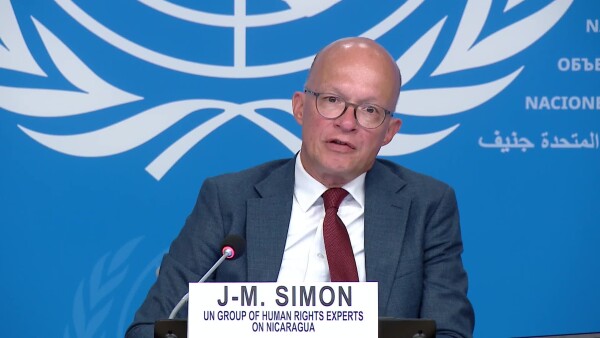
Press conference on the situation of human rights in Nicaragua by the UN Group of Human Rights Experts