

The United Nations Office at Geneva
Multimedia Newsroom
Press Conferences | OCHA , UNHCR , UNICEF , UNOG
UN Geneva Press Briefing - 24 February 2026
UN GENEVA PRESS BRIEFING
24 February 2026
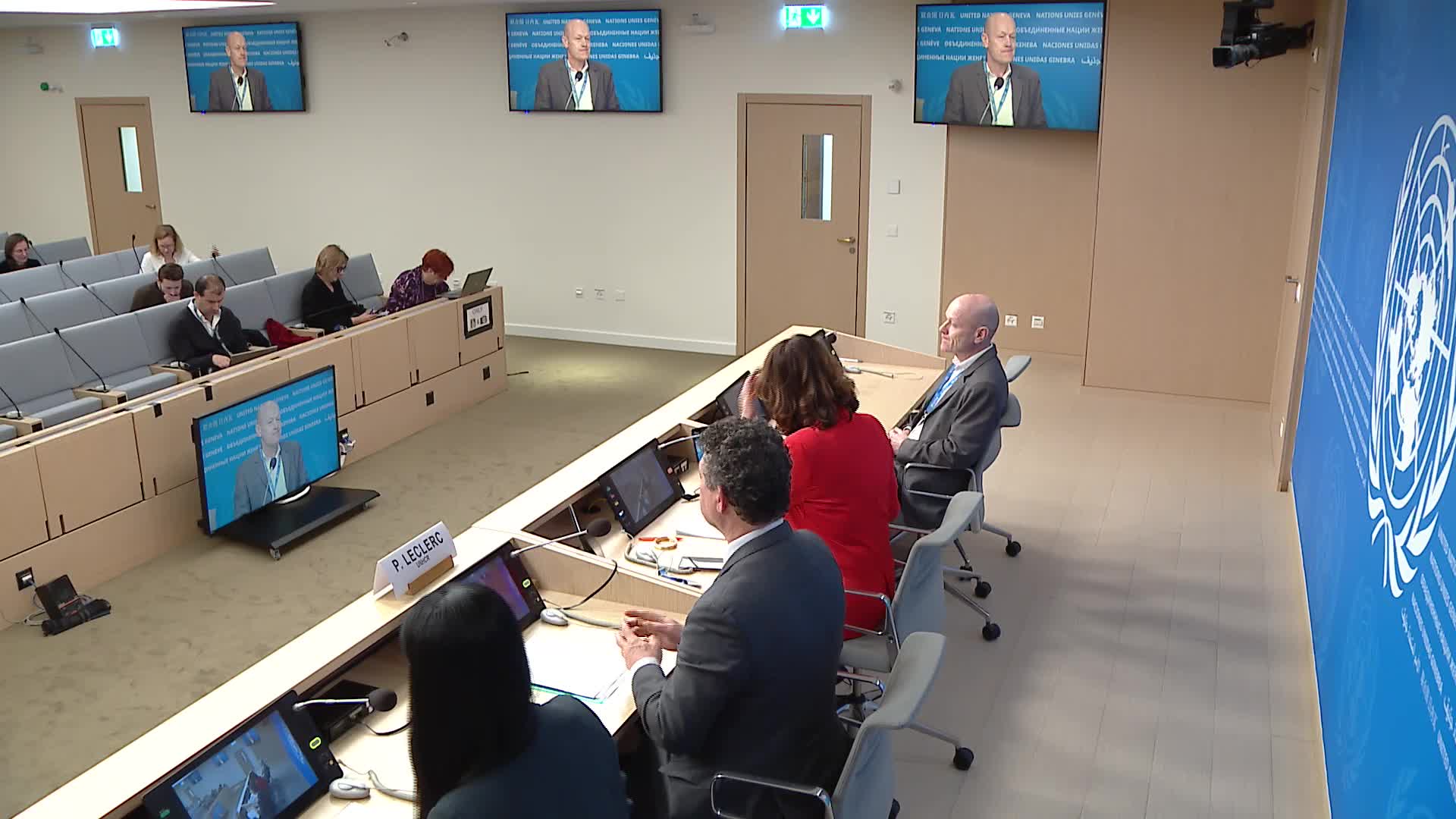
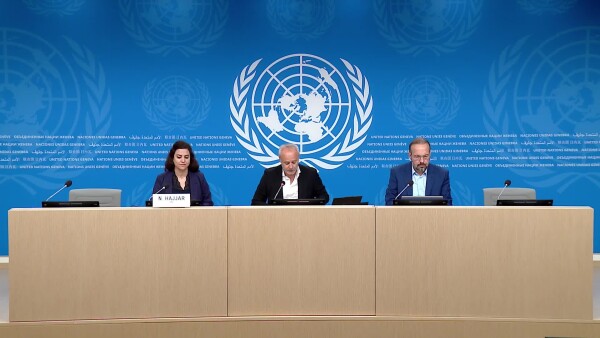
Alessandra Vellucci, Director of the United Nations Information Service (UNIS) at Geneva, chaired a hybrid press briefing, which was attended by the President of the General Assembly, and spokespersons and representatives of the United Nations Office for the Coordination of Humanitarian Affairs, the United Nations High Commissioner for Refugees, and the United Nations Children’s Fund.
Briefing from the President of the General Assembly
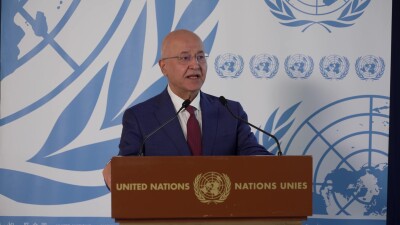
Annalena Baerbock, President of the General Assembly, briefed the Geneva press corps at the beginning of the regular press briefing, covering topics which included the Human Rights Council and priorities for the remainder of the 80th session of the General Assembly; the UN80 reform initiative; the selection and appointment process of the next United Nations Secretary-General; and defending the United Nations Charter. The full transcript can be viewed here.
Four years since the Russian Federation’s full-scale invasion of Ukraine
Alessandra Vellucci, Director of the United Nations Information Service (UNIS) at Geneva, read the statement of the Secretary-General, which declared that today marked four years since the Russian Federation launched its full-scale invasion of Ukraine, in violation of the United Nations Charter and international law. Civilians bore the brunt of this conflict, with 2025 witnessing the largest number of civilians killed in Ukraine. This was unacceptable, and the Secretary-General called for an immediate, full and unconditional ceasefire as a first step towards a just, lasting and comprehensive peace.
Matthias Schmale, Assistant Secretary-General, Resident and Humanitarian Coordinator in Ukraine, speaking from Kyiv, said entering the fifth year since the full-scale invasion, and the thirteenth year since its onset, the war in Ukraine continued to inflict immeasurable human suffering, putting millions at risk and generating grave humanitarian needs, while compounding the challenges and costs of recovery. Yesterday, together with the Government, the World Bank and the European Union, OCHA launched the fifth Rapid Damage and Needs Assessment report. It was now estimated that the cost of recovery was US$590 billion over ten years, which amounted to three times Ukraine’s GDP last year. It was also estimated that over 10.8 million people required humanitarian assistance, including up to one million people in territories occupied by the Russian Federation.
2025 was the deadliest year for civilians since the start of the full-scale invasion in 2022, with at least 2,500 civilians killed and over 12,000 injured; more than a 30 per cent increase compared with 2024. Ukraine was among the most mined countries in the world, with almost one quarter of its territory, an area four times the size of Switzerland, potentially contaminated. The devastating impact of systematic attacks on energy infrastructure had disrupted electricity, heating and water supplies across the country, in some cases leaving entire towns without electricity and water for weeks. In Kyiv, more than 3,000 high-rise buildings were now un-inhabitable for the rest of the winter, putting the most vulnerable at serious risk.
With the generous support of the international community, OCHA had been able to respond to humanitarian needs at scale, reaching five million people last year. By the end of December, winter response activities reached around 1.5 million people, mainly along the front lines. However, this did not fully cover the emergency caused by energy disruptions, particularly in cities. Mr. Schmale concluded his address referring to a couple had had met in the Kharkiv region who were caring for their son with a serious disability. Despite the uncertainty they faced, they were not giving up. The international community owed it to these people and to all Ukrainians, to continue to provide solidarity through humanitarian and recovery support.
Philippe Leclerc, Regional Director for Europe and Refugee Regional Coordinator for Ukraine for the United Nations Children’s Fund, said Ukrainians needed a just and lasting peace, as had been stated by the Secretary-General and the President of the General Assembly. As long as the war continued, Ukrainians needed humanitarian assistance. Mr. Leclerc had recently returned from a visit to Ukraine, meeting all those who were victims of the shell and drone attacks, as well as the extraordinarily cold winter which Ukraine was facing. They had seen elderly people who were staying at their homes under difficult conditions, and those who had been forced to abandon their home with few belongings. In regions including Kharkiv and others, 18 bunker schools had been developed. This showed the extraordinary will of the Ukrainian people under adverse conditions.
It was important to ensure the people of Ukraine were supported, especially those close to the frontline and in areas facing attacks. Today, war was the daily life for most Ukrainians. The humanitarian response involving many United Nations agencies was present every day, complimenting the Government response and working with non-governmental organisations. Due to the war, 5.9 million refugees remained outside of Ukraine, with 5.7 of these being in Europe alone. The solidarity shown to these Ukrainians from European States was appreciated. Despite four years of an atrocious war, more than 60 per cent of refugees were envisaged to return to Ukraine. It was important that social cohesion was ensured for the reconstruction. Mental health issues were growing. Even when peace arrived, asylum states were asked to ensure that the most vulnerable could remain before returning. UNHCR counted on the continuous support of donors for programmes enabling the Ukrainian people to stand on their feet, in times of war and in the future.
Responding to questions from the media, Mr. Leclerc said 25 per cent of refugees in Europe originated from the four oblasts occupied by the Russian Federation. This needed to be taken into context. UNHCR were working on looking at an alternative legal status for Ukrainians to keep. Refugees were not always a burden. 80 per cent of refugees in Poland were working and contributing to society. UNHCR insisted that states hosting large numbers of Ukrainians needed to focus on vulnerable individuals. Those who could, would be encouraged to contribute to the recovery of Ukraine. In response to another question, Mr. Leclerc said UNHCR did not observe high levels of people moving the occupied part of Ukraine; there were few opportunities to travel through the frontlines.
Responding to a question, Mr. Schmale said the case of abducted children remained a top priority for the Government of Ukraine. A few hundred had returned, and some actors had been involved in this return process, including the International Committee of the Red Cross. The UN helped with the reintegration of children into society, including UNICEF. Mr. Leclerc said of the 20,000 identified as missing at least 2,000 had been returned to their families.
In response to another question, Mr. Schmale said he did not have precise figures on the number of amputees. The key concern was that there were up to a million veterans who needed to be reintegrated into society, with many of them suffering amputees and disabilities. Responding to an additional question, Mr. Schmale said priority areas for the Government included critical infrastructure, energy, transportation, housing, and employment.
Situation in Mexico
Responding to a question from the media, Jens Laerke, for the United Nations Office for the Coordination of Affairs (OCHA), said OCHA was aware of the situation in Mexico which was dramatic. He had not seen any determination that international humanitarian law regulating the conduct in armed conflict came into play at this current time. In the case where the Government of Mexico requested the coordination of international humanitarian support, OCHA stood ready to assist.
Highlights of the results of the Gaza We Want initiative
Jonathan Crickx, United Nations Children’s Fund (UNICEF) Chief of Communication in the State of Palestine, speaking from Jerusalem, said for the past two years, Gaza’s children had been spoken about extensively. However, what was less visible was their own voices. For this reason, UNICEF launched the “Gaza We Want initiative”, which captured children’s perspectives on recovery and reconstruction in the Gaza strip, addressing the critical gap of what they wanted for their own futures. These initiatives helped to inform child-centred recovery and policy planning. With partners, UNICEF had engaged more than 11,000 children aged five to 14, in a structured questionnaire and creative activities. It was voluntary, with children asked to express themselves in the forms they preferred, including drawings, models, poems and letters. This was data which showed that children wanted their childhoods back. According to the study, children’s top priorities were secure shelters; real schools; safe hospitals; and safe places to play. This was a recovery roadmap written by children who understood loss and hope. A recovery plan which ignored children’s voices would fail them and Gaza. Listening to children was not optional but was the minimum standard for recovery in Gaza.
Announcements
Alessandra Vellucci, Director of the United Nations Information Service (UNIS) at Geneva, said on Thursday, 26 February 2026 at 1 p.m. a press conference would be held by the Office of the High Commissioner for Human Rights, on attacks against the UN system, Special Procedures and the Special Rapporteur on the situation of human rights in the occupied Palestinian territories. Speakers included : Nicolas Levrat, Special Rapporteur on Minority Issues (in person); Richard Bennett, Special Rapporteur on the situation of human rights in Afghanistan (in person); George Katrougalos, Independent Expert on the promotion of a democratic and equitable international order (online); Francesca Albanese, Special Rapporteur on the situation of human rights in the occupied Palestinian territories (online); and Fernanda Hopenhaym, Member of the Working Group on Business and Human Rights (online).
There would also be another Press Conference on Friday 27 February 2026 at 12 p.m. with the Special Rapporteur on the situation of human rights in Afghanistan. Speakers included: Richard Bennett, Special Rapporteur on the situation of human rights in Afghanistan; Nazifa Jalali, Director of Dialogue Hub and steering committee member of Human Rights Defenders Plus; and Suraya Dalil, former Minister of Public Health of Afghanistan and former Ambassador of Afghanistan to the United Nations Office at Geneva.
Ms. Vellucci also said the Human Rights Council was continuing the high-level segment of its sixty-first session (23 February-31 March).
Further, the Committee on Economic, Social and Cultural Rights would close its 79th session tomorrow, Wednesday 25 February, at 5.30pm.
***
TOPICS
OCHA Jens Laerke (PR) with ASG Matthias Schmale, RC/HC in Ukraine (From
Kyiv)
- Ukraine: four years since the Russian Federation’s full-scale invasion of Ukraine, the
devastating impact on civilians continue.
UNHCR Eujin Byun (PR) with Philippe Leclerc, UNHCR’s Regional Director for Europe
and Refugee Regional Coordinator for Ukraine (PR)
- After a brutal winter, millions of Ukrainians face deepening displacement and
uncertainty
UNICEF Ricardo Pires (Zoom) with Jonathan Crickx, UNICEF Chief of Communication in
the State of Palestine (From Jerusalem)
- Highlights of the results of the Gaza We Want initiative.
Similar Stories
1
1
1
Press Conferences | UN WOMEN , WFP , WHO
UN WOMEN: Sudan Women and girls one year after the fall of El Fasher; increasing drone attacks across the country; WFP: DRC - Ebola spreads to eighth DRC province as WFP delivers food, builds treatment centres and keeps supplies moving; WHO - Update on Ebola (Bundibugyo Virus Disease)
1
12
1
1
Press Conferences , Images | UNOG
Closing Press Conference following the Sixth Consultative Meeting on Enhancing Coordination of Peace Initiatives and Efforts in Sudan

2
17
1
2
Edited News , Press Conferences , Images | OCHA , WMO
Two UN agencies teamed up on Wednesday to issue an appeal for immediate assistance to help communities already being impacted by the strongest El Niño on record.
1
1
1
Press Conferences | CITES
Wildlife trade and conservation policy discussions at the 81st meeting of the CITES Standing Committee (SC81)
1
1
1
Press Conferences | UNHCR , UNCTAD , WMO , OCHA , UNICEF , WHO
UNHCR Hungary’s 1956 Refugee Crisis: 70 Years On, UNCTAD World Investment Forum 2026, Doha, WMO Greenhouse Gas Bulletin and Climate Update for COP31, OCHA Afghanistan: Malnutrition, Girls’ Education and Recovery, UNICEF Yemen: Child Malnutrition and Unsafe Water in Taiz, WHO Inequalities in Noncommunicable Diseases and Risk Factors
1
1
1
Press Conferences | UNHCR
End of UNHCR's 77th Annual Executive Committee (ExCom) meeting week
1
1
1
Press Conferences | UNICEF , IOM , UNHCR
UN Special Assistant to the Personal Envoy Office (SUDAN): Peace Initiatives and Efforts in Sudan; UNICEF: Dire situation of children in Gaza; IOM: Damaged Homes and Energy Attacks Risk Displacing Ukrainians for this winter; UNHCR: update on EXCOM week

1
1
1
Press Conferences | IOM , UNDRR
UN stresses importance of household preparedness for disaster risk reduction.

1
1
1
Statements , Press Conferences | OHCHR

1
1
1
Press Conferences | UNHCR , UNICEF , IFRC , OHCHR , UN WOMEN , IOM , OCHA , WHO
UNHCR – ExCom Meeting, UNICEF – Nepal Recovery, IFRC – Flash Floods, WHO – Mental Health, IOM – South Sudan Floods, OCHA – DRC Humanitarian aid, UNHCR – Sahel Displacement, UNICEF – Yemen Update, IOM – Gaza Shelter, UN Women – Gaza Women, OHCHR – Arrests and detentions of Syrians by Israeli force

2
1
2
Press Conferences | UNCTAD
Presentation of the Trade and Developement Report 2026
Embargoed until 9 October 2026 at 11 a.m. (Geneva Time)
UNCTAD: UNCTAD’s flagship report finds that governments increasingly use industrial, trade, financial and technology policies to pursue economic and national security objectives. Market access and the ability to move into higher-value activities now depend more heavily on technology, finance and geopolitics.

1
1
1
Press Conferences | UPU
Release of the State of the Postal Sector Report 2026