

The United Nations Office at Geneva
Multimedia Newsroom
Press Conferences | UNOG , UNICEF , WHO , OCHA , OHCHR
UN Geneva Press Briefing - 10 February 2026
UN INFORMATION SERVICE GENEVA PRESS BRIEFING
10 February 2026
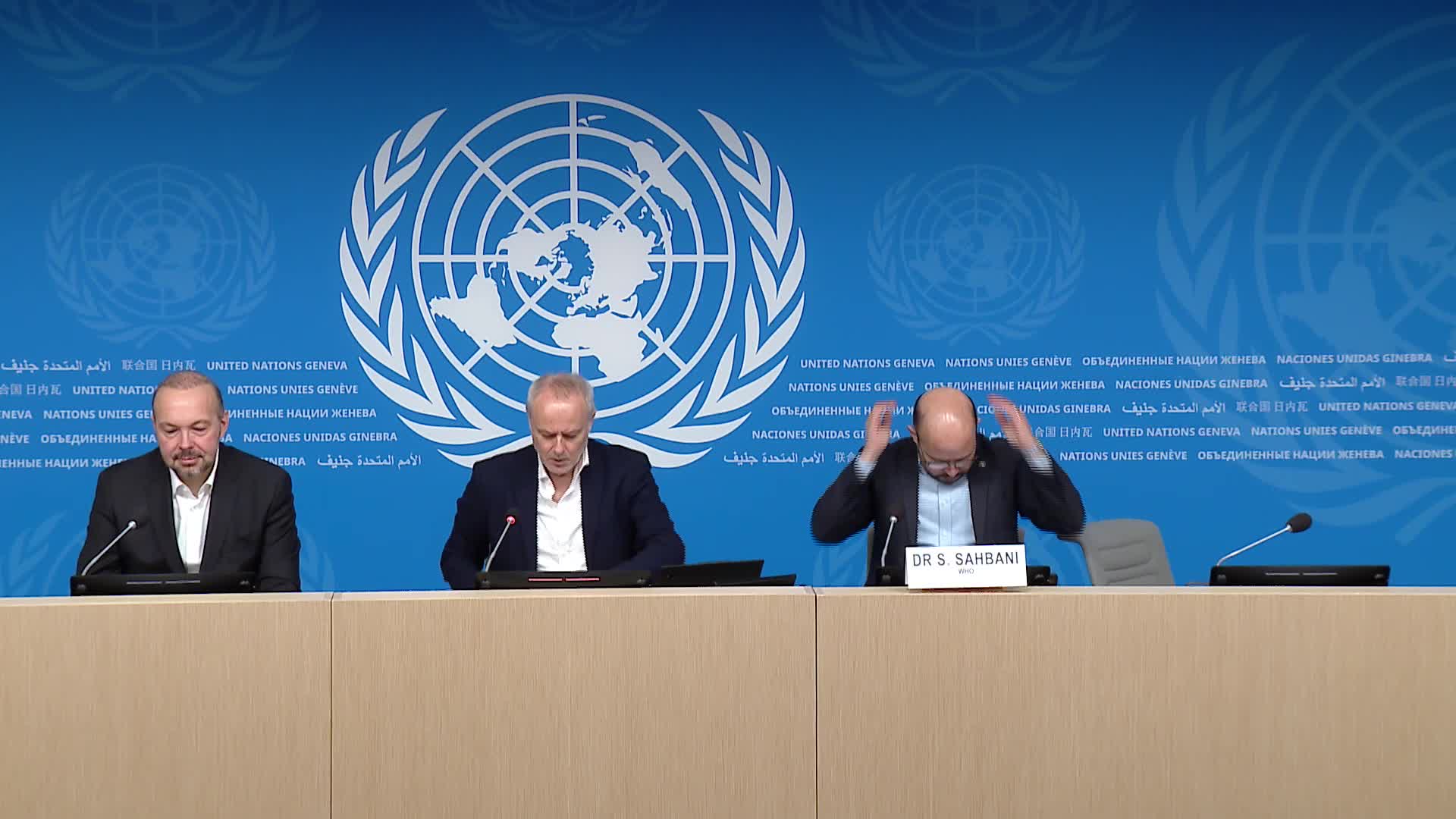
Rolando Gómez, Chief of the Press and External Relations Section at the United Nations Information Service in Geneva, chaired a hybrid press briefing, which was attended by the spokespersons and representatives of the United Nations Children’s Fund, the World Health Organization, and the Office of the High Commissioner for Human Rights.
Dire health situation in Sudan
Ricardo Pires, for the United Nations Children’s Fund (UNICEF), said that no children on the planet were facing what Sudan's children were facing right now. They were at the epicentre of the world's largest humanitarian catastrophe, which was getting worse by the day. In parts of North Darfur, more than half of all children were acutely malnourished. New IPC data released the previous week from three localities — Um Baru, Kernoi, and At Tina — showed catastrophic malnutrition rates: in Um Baru, Global Acute Malnutrition stood at 53 per cent, one of the highest ever recorded anywhere; in Kernoi, 34 per cent; in At Tina, 20 per cent.
Since the fall of Al Fasher in October 2025, more than 127,000 people had fled into these already desperate areas. Now, fresh fighting had erupted, and children were caught in what was possibly the final battle for Darfur. The time to prevent significant loss of life was running out, emphasized Mr. Pires. Across Sudan today, 33.7 million people needed humanitarian assistance, half of them children. 825,000 children were projected to suffer severe wasting this year. Seventy per cent of health facilities were non-functional. In late January, UNICEF had screened 85,000 children across the three impacted localities, identifying over 5,400 children with severe acute malnutrition. UNICEF was running 25 therapeutic feeding programmes, operating mobile clinics, and delivering supplies cross-border from Chad through one of the last remaining lifelines into North Darfur. But access was shrinking, funding was desperately short, and the fighting was intensifying. Mr. Pires concluded by stressing that the violence had stop; humanitarian access had to be granted, and the world had to stop looking away from Sudan's children.
Dr. Shible Sahbani, World Health Organization (WHO) representative in Sudan, stated that in two months from now, the war in Sudan would pass a three-year point. The war had caused the largest humanitarian crisis in the world, with violence, displacement, hunger, disease and, inevitably, death. Over 33.7 million people – two-thirds of the population – required humanitarian assistance, and about 21 million people required health assistance. The health system had been ravaged by attacks, loss and damage of equipment and supplies, a shortage of health workforce, and operational funds.
Dr. Sahbani informed that since the start of the war, WHO had verified 205 attacks on healthcare, which had led to 1,924 recorded deaths and 529 injuries. Each year, the attacks on healthcare grew deadlier. Such attacks deprived communities of care for years to come, instilling terror in patients and health workers and creating insurmountable barriers to life-saving treatment. Meanwhile, WHO was supporting the response to disease outbreaks through disease surveillance, deployment of rapid response teams, strengthening case management, infection prevention and control, improving access to water and hygiene, water quality testing and vector control, community mobilization, and vaccinations. In 2025, WHO had reached millions of people with supported health interventions. More than 12 million people had been protected with oral cholera vaccines. Malaria vaccines introduced in two states in 2024 had been scaled up to two more states and additional localities to protect close to 220,000 children from severe malaria. WHO and partners provided care to up to six million people at hospitals, primary health care facilities and mobile clinics. WHO was on the ground in all accessible states, responding to the most pressing needs, but it still faced severe access constraints and funding shortfalls. WHO called for attacks on health care to stop, and on humanitarian and development partners and donors to stand with Sudan. Peace was long overdue for Sudan, concluded Dr. Sahbani.
Replying to questions from the media, Mr. Pires, for UNICEF, said that access for humanitarian actors remained constrained. Areas that used not to be at risk of malnutrition were now showing signs of distress, including the Kordofans. Dr. Sahbani, for WHO, said that WHO was concerned about access to Al Fasher, and kept asking that it be allowed to reach the population there. WHO was also calling for humanitarian access to the Kordofans, but most of all the country needed peace. Attacks on health care were part of the attacks against humanitarian workers, who were also regularly targeted and detained. Sudan was a huge country, consisting of 18 states, with needs everywhere. When it came to medical care, bringing supplies in was not enough; medical workers had to be protected, so that they could do their work. Both access and protection were of paramount importance.
On another question, Dr. Sahbani said that WHO was focused on Tawila, where most of those displaced from Al Fasher currently lived. Services were being moved to where the population was. He stressed the importance of coordination between Sudan and Chad when it came to handling the cholera outbreak, as diseases knew no borders. More than one third of health facilities in Sudan were not functioning at all, and another third were only partially functioning. Both peace and access were needed to restore health care; this had been possible in Khartoum because both conditions were met there.
On another question, Ravina Shamdasani, for the Office of the High Commissioner for Human Rights (OHCHR), said that the OHCHR report on Al Fasher was expected to be published at the end of this week.
Situation in Tigray
Ravina Shamdasani, for the Office of the High Commissioner for Human Rights (OHCHR), stated that UN High Commissioner for Human Rights Volker Türk called on all parties to take urgent steps towards de-escalation, amid the precarious situation in the Tigray region of Ethiopia. Recent fighting between the Ethiopian army and regional forces had highlighted the risk of a deepening human rights crisis in the north of the country. The situation remained highly volatile, and there was a fear it would further deteriorate, worsening the region’s already precarious human rights and humanitarian situation.
There had to be concerted and sustained efforts by all parties, with the help of the international community, to de-escalate tensions before it became too late. Political dialogue and confidence-building measures were urgently needed. Civilians were once again caught in between escalating tensions, with both TSF and ENDF reportedly carrying out arrests for perceived affiliation with the opposing side. The exact death toll remained unclear, with widely differing estimates from different sources. Both sides had to step back from the brink and work to resolve their differences through political means. Alleged serious violations or abuses needed to be promptly and independently investigated, irrespective of the perpetrators. OHCHR was also concerned at recent tensions between Ethiopia and neighbouring Eritrea, warning that they risked exacerbating the already serious human rights and humanitarian challenges in both countries, and across the wider Horn of Africa.
OHCHR’s full statement is available here.
Answering questions from the media, Ms. Shamdasani said that the violations included violence against civilians, displacement, arrests of civilians for their perceived affiliation with one side or another, as well as use of drones and heavy artillery. OHCHR was concerned that the situation was so tense and volatile that clashes could erupt again at any point. Both parties were called upon to adhere to the Pretoria Agreement. The Ethiopian and Eritrean governments were called upon to resolve their disputes through a political dialogue to avoid a repeat of the recent conflict in which two million people had been displaced and large, still unknown, numbers killed. There were reports that Eritrean troops were present in Tigray, but OHCHR had not been able to verify those reports. OHCHR had a presence in Ethiopia, including two offices in the Tigray region, confirmed Ms. Shamdasani.
Israeli announcement on the occupied West Bank
Rolando Gómez, for the UN Information Service (UNIS), read the statement by the UN Spokesperson from the previous day, which said that the Secretary-General was gravely concerned by the reported decision of the Israeli security cabinet to authorize a series of administrative and enforcement measures in Areas A and B of the occupied West Bank. The Secretary-General warned that the current trajectory on the ground, including this decision, was eroding the prospect of the two-State solution.
Violence in South Sudan
Rolando Gómez, for the UN Information Service (UNIS), referred to a statement issued by the UN Spokesperson over the weekend, in which the Secretary-General strongly condemned the escalating violence in South Sudan, where some 10 million people were in need of life-saving humanitarian assistance. In the statement, he called on all parties to halt military operations, de-escalate tensions through dialogue, uphold international law, protect civilians, and ensure safe and sustained humanitarian access, as well as the security of aid workers and UN peacekeeping personnel and their assets.
Question on Venezuela
Replying to a question on Venezuela, Ravina Shamdasani, for the Office of the High Commissioner for Human Rights (OHCHR), said that the OHCHR had recently deployed a team to Venezuela, and on 26 January the High Commissioner had spoken to the Venezuelan leader Delcy Rodriguez. The OHCHR’s team was in Caracas, where it had met with civil society groups, human rights defenders, and family members of detained individuals. Talks were continuing regarding the reopening of the OHCHR’s office in the country. The amnesty law, while welcome, needed to be in line with international standards, said Ms. Shamdasani.
Question on Iran
Answering a question on Iran, Ravina Shamdasani, for the Office of the High Commissioner for Human Rights (OHCHR), stated that the OHCHR did not have further information on the number of people killed. The Office continued to insist on accountability for all alleged human rights violations. Ricardo Pires, for the United Nations Children’s Fund (UNICEF), reminded of UNICEF’s recent statement on the situation of children in Iran and across the Middle East. UNICEF strongly advocated with the authorities for the protection of children and their release from arbitrary arrest. Rolando Gómez, for the UN Information Service (UNIS), informed that Iran would feature prominently in the upcoming Human Rights Council session.
Question on the United States of America
On another question, Ravina Shamdasani, for the Office of the High Commissioner for Human Rights (OHCHR), said that the High Commissioner had recently issued a statement on the crackdown of migrants in the US. UN Special Procedures had also issued a statement in this regard, she added. Processes of drafting and issuing statements by the Special Procedures took time, and as they were independent from the OHCHR, it was difficult to predict when possible further statements on this matter might be issued.
Announcements
Rolando Gómez, for the UN Information Service (UNIS), informed that the Committee on the Elimination of Discrimination against Women was reviewing today the report of Argentina.
The Committee on Economic, Social and Cultural Rights was concluding this morning the review of the report of Kenya and would begin this afternoon the review of the report of Uruguay.
Mr. Gómez also informed that 11 February would be the International Day of Women and Girls in Science, and 12 February the International Day for the Prevention of Violent Extremism as and when Conducive to Terrorism. The Secretary-General’s messages on both days had been shared.
TOPICS
OHCHR Ravina Shamdasani (PR)
Ethiopia: Situation in Tigray
UNICEF Ricardo Pires (PR)
Alarming levels of hunger and malnutrition deepen in Sudan impacting children in
North Darfur and South Kordofan States.
WHO Tarik Jašarević (PR) with Dr Shible Sahbani, WHO representative in Sudan (PR)
Update on health situation in Sudan
Similar Stories

1
1
1
Statements , Press Conferences | OHCHR

1
1
1
Press Conferences | UNHCR , UNICEF , IFRC , OHCHR , UN WOMEN , IOM , OCHA , WHO
UNHCR – ExCom Meeting, UNICEF – Nepal Recovery, IFRC – Flash Floods, WHO – Mental Health, IOM – South Sudan Floods, OCHA – DRC Humanitarian aid, UNHCR – Sahel Displacement, UNICEF – Yemen Update, IOM – Gaza Shelter, UN Women – Gaza Women, OHCHR – Arrests and detentions of Syrians by Israeli force

2
1
2
Press Conferences | UNCTAD
Presentation of the Trade and Developement Report 2026
Embargoed until 9 October 2026 at 11 a.m. (Geneva Time)
UNCTAD: UNCTAD’s flagship report finds that governments increasingly use industrial, trade, financial and technology policies to pursue economic and national security objectives. Market access and the ability to move into higher-value activities now depend more heavily on technology, finance and geopolitics.
1
1
1
Press Conferences | UPU
Release of the State of the Postal Sector Report 2026
1
1
1
Press Conferences | IOM , ITU , UNECE , UNICEF , WHO , WMO
UNICEF: Ebola, DRC - children orphans or separating them from parents and caregivers; IOM: Humanitarian needs in Djibouti amid arrivals from Yemen and increased migrant movements; WHO: Darfur, scale of health needs far exceeds available resources; WMO co-sponsored Global Heat Forum, Bangkok, monthly Global Seasonal Climate Update; UNECE: UN Forum of Mayors; ITU Plenipotentiary Conference 2026; WHO: child and adolescent obesity guidelines and new global roadmap to tackle pregnancy hypertension, a leading cause of maternal mortality
1
1
1
Press Conferences | OCHA , UN WOMEN , UNHCR , WFP , WHO , WTO , UNEP
OCHA – $160M CERF allocation to 12 underfunded crises; UNHCR – 5.8M refugee children remain out of school amid funding cuts; UN Women – Middle East escalation and food security among women/girls; WHO – Gaza supplies and overall situation; WFP – Yemen food insecurity and impact on global hunger ; UNEP - First International Conference of the Global Framework on Chemicals in Geneva | 16-20 November 2026
1
1
1
Press Conferences | UNHCR , WHO
Yemen's health system nears collapse amid conflict, causing rising casualties and medicine shortages.
1
1
1
Press Conferences | HRC
Update by the Expert Mechanism to Advance Racial Justice and Equality in Law Enforcement
1
1
1
Press Conferences | WIPO , WHO , UNICEF , UNHCR , IOM , WFP , FAO
WIPO Global Innovation Index 2026 launch and press conference, WHO Composition of influenza vaccines for the 2027 Southern Hemisphere flu season, UNICEF Yemen hunger and malnutrition; UNHCR Sudan displacement into Chad; IOM Ebola and population movements in DRC; WFP emergency food assistance in Nepal; and FAO food loss and waste.
2
1
2
Press Conferences | UNCTAD
Gaza reconstruction needs reach $71.5 billion as Palestinian economy and public finances face severe strain. Latest UNCTAD report documents the loss of decades of development gains, economic collapse in Gaza and tightening economic constraints in the West Bank.
The report identifies three immediate priorities: transferring withheld Palestinian revenues, safeguarding the banking system and aligning reconstruction support with the documented scale of damage and economic losses.
1
1
1
Press Conferences | HRC
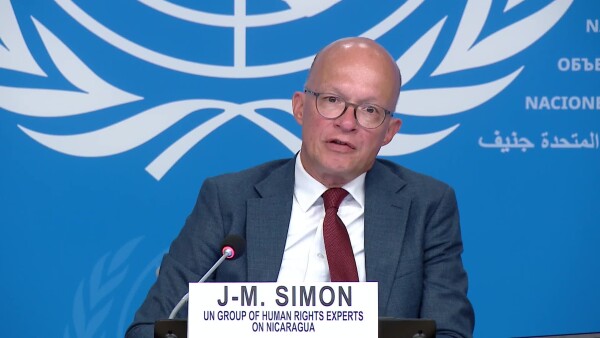
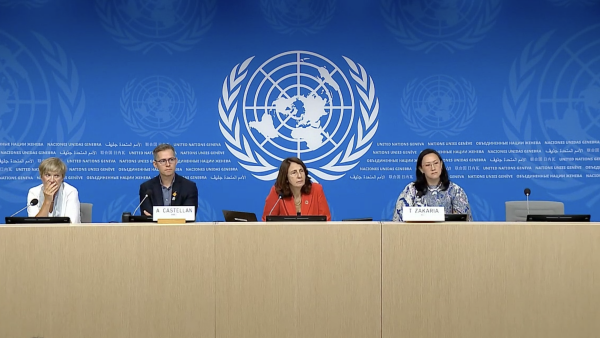
Press conference on the situation of human rights in Nicaragua by the UN Group of Human Rights Experts
1
1
1
Press Conferences | ITU , UNHCR , WHO , WMO
YEMEN - UNHCR: Escalating conflict in Yemen could fuel more displacement, refugee movement
CLIMATE - WHO / WMO: Health and Climate impact of El Niño