

The United Nations Office at Geneva
Multimedia Newsroom
Press Conferences | IFRC , IOM , UNOPS , UNRWA , WHO
UN Geneva Press Briefing - 23 January 2026
UN INFORMATION SERVICE GENEVA PRESS BRIEFING
23 January 2026
Gaza: UN compound demolition, UNRWA operations, and immediate humanitarian needs
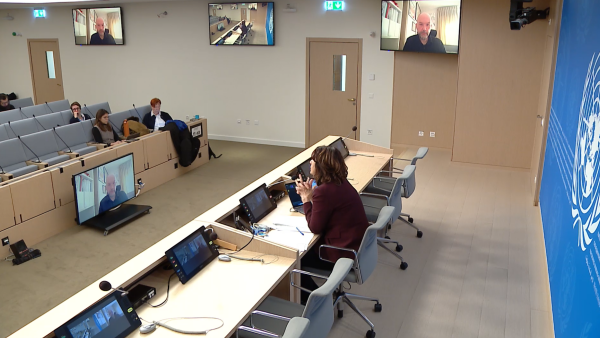
Mr. Jonathan Fowler for the United Nations Relief and Works Agency for Palestine Refugees in the Near East (UNRWA) (from Amman) reported on UNRWA operations and the storming and demolition of UNRWA’s East Jerusalem compound. He stressed that this is a United Nations compound protected by UN privileges and immunities and described the action as “a new level of open and deliberate defiance of international law,” with potential implications beyond UNRWA and for the United Nations globally. He recalled that, as recently as October, the International Court of Justice stressed that Israel is obliged to facilitate, not hinder or prevent, UNRWA’s operations, and said the latest events fly against that. He rejected assertions that Israeli authorities own or have sovereign rights over the land in East Jerusalem, noting repeated UN positions on the illegality of the occupation and lack of sovereign title. Mr. Fowler voiced concern that the next step could be the seizure of the UNRWA vocational training centre in East Jerusalem, which would deprive hundreds of students of their right to education.
He also updated on UNRWA’s broader operations: in the northern West Bank, around 33,000 people remain displaced one year after an Israeli military operation, with camps progressively demolished; UNRWA is providing health care, cash for rent, and schooling for 4,600 children from these camps. In Gaza, UNRWA has 65,000 children in temporary learning spaces and nearly 300,000 receiving digital learning, but warned of a lost generation if children do not return to school soon.
Asked what could reverse the demolition and prevent further seizures, Mr. Fowler said there had been widespread international condemnation, but action was required to stop such incidents. He stressed that this was an attack on the United Nations and on international law, creating a dangerous precedent, and underlined that UNRWA would continue to fulfil its UN General Assembly mandate. He appealed for urgent financial support, noting UNRWA’s service‑delivery model require about USD 880 million to function. He also noted that only about USD 570 million were received last year, forcing reductions in service‑delivering, which meant less health care and education for Palestine refugees.
Asked about the vocational training centre, Mr. Fowler said it served about 350 male students from across the West Bank. The site had faced incursions and has been slated for expropriation for settlement construction. If closed, there is no educational alternative, making this a social‑justice issue and an attack on the right to education.
Asked about UNRWA’s future role, Mr. Fowler said UNRWA is the largest UN entity operating in Gaza, has the trust of the community and a UN General Assembly mandate, and must remain part of the reconstruction effort.
On journalists killed during the ceasefire, Alessandra Vellucci, Director of the United Nations Information Service (UNIS), recalled the UN’s constant position on freedom of the press and the need to protect journalists. Mr. Fowler added that Gaza is the most dangerous place in the world for journalists and humanitarians, noting nearly 400 UNRWA colleagues have been killed in Gaza since October 2023 — unprecedented in UN history.
Ms. Juliette Touma for the United Nations Office for Project Services (UNOPS), speaking about the UNOPS Executive Director’s recent visit to Gaza, said the Executive Director went to meet UNOPS teams on the ground around 100 days into the ceasefire, noting that people continue to be killed. She underlined UNOPS’ role in delivering fuel daily, which is critical for services that still function — UNRWA operations, bakeries, clinics, hospitals, waste‑water facilities, and electricity grids. She described the severe winter storm and shortages of basic winter items amid persistent obstacles to bringing aid at scale.
Ms. Touma highlighted the Jordan corridor providing direct aid line from Jordan to Gaza, which has not operated for four months following a mid‑September incident at the King Hussein/Allenby Bridge. She said UN‑purchased supplies (including winter items) are stuck in warehouses in Amman, and the Executive Director called for reopening the corridor and all other crossings, increasing the flow of basic supplies, and reducing the so‑called “dual‑use” restrictions that delay essential items. She stressed the need to rapidly restore basic services— fuel, primary health care, water pumps, waste‑water stations, electricity repairs — saying people in Gaza cannot wait, even as reconstruction plans are discussed.
Asked about reports that the Rafah crossing could soon open in both directions, Ms. Touma said any additional opening was literally life‑saving and reiterated the call that all crossings must reopen.
In response to a question about access to Gaza, Tarik Jašarević for the World Health Organization (WHO) reiterated that WHO needed more crossings to be opened in order to bring medical supplies into the Gaza Strip. He highlighted that clearance procedures and dual‑use restrictions continue to delay the access of certain medical equipment, including laboratory devices and other essential items, and stressed that opening additional routes is particularly important for medical evacuations. He added that WHO hopes to have a colleague from Gaza available on Tuesday to provide further updates on the health situation and supply needs.
Mozambique: Widespread flooding and multi‑agency emergency response
Mr. Omondi Okoth for the International Organization for Migration (IOM) introduced the situation, noting weeks of heavy rainfall had triggered widespread flooding in southern and central Mozambique, with Mozambique Gaza Province among the hardest hit. Mr. Andrew Peter Obat for International Organization for Migration, speaking from Gaza Province, said IOM/DTM data indicated that nearly 600,000 people had been affected and over 73,000 people had been displaced across 71 accommodation centres, with numbers rising. The Gaza Province hosted significant concentrations of displaced people, including Chiaquelene and Xilembene. He described acute shortages of shelter and essential household items, overcrowded centres, limited access to safe water, sanitation and hygiene, rising waterborne‑disease risks, and severe constraints on food and basic services as roads/bridges are damaged and access is limited. The Government’s nationwide Red Alert issued on 16 January requested international support to provide air assets for search and rescue, logistics and technical assistance, and life‑saving supplies.
IOM is tracking displacement and priority needs through Displacement Tracking Matrix
(DTM) to guide targeted, coordinated response, and is deploying teams to improve centre conditions and mobilise services where access permits. It is supporting evacuations, delivering shelter and essential household kits, distributing water‑purification supplies, scaling up real‑time DTM, and channelling short‑term sub‑grants to vetted Mozambican NGOs to reach hard‑to‑access communities. Access remains the key bottleneck, with roads washed out and ongoing rains hampering movement. Given escalating needs, IOM will appeal for up to US$20 million to reinforce life‑saving assistance, strengthen WASH, and deploy mobile health, protection and MHPSS teams where feasible.
Mr. John Roche for the International Federation of Red Cross and Red Crescent Societies (IFRC), speaking from Nairobi, Kenya, said flooding now affected 10 of Mozambique’s 11 provinces, with over half a million people impacted and many displaced, though the true scale would only emerge as access improves. He described homes washed away, crops submerged weeks before harvest, and roads cut, isolating communities. He warned this was just the beginning of the disaster season, with dams at near capacity raising risks. The Mozambique Red Cross, supported by IFRC, had reached more than 400,000 people with early warnings, and is supporting evacuations in Zambézia, Gaza and Maputo, with anticipatory actions in Zambézia and Sofala. Volunteers were providing first aid, basic health services and evacuation, and distributing pre‑positioned household and hygiene items across seven provinces and Maputo City, as access and resources allowed. Priorities included emergency shelter, safe water and sanitation, health services, and livelihood support. He underscored the need for investment in early warning systems, climate‑resilient infrastructure and locally led preparedness.
Asked whether people displaced by conflict in the north were returning to unsafe areas due to the floods, Mr. Roche said the current focus was on evacuations to safer locations. Mr. Obat added there was no clear evidence of such returns at present; most displaced were in centres or with host communities on higher ground. Asked about fatalities, Mr. Roche said preliminary reports indicated between 50 and 60 deaths, a figure likely to rise as waters receded and access improved; Mr. Obat noted more accurate data were expected next week.
Questions to WHO on U.S. statement and flag issue
Mr. Tarik Jašarević for the World Health Organization (WHO) responded to questions regarding the recent statement on the organization issued by the United States authorities. He said that the matter would be discussed by the WHO Executive Board, beginning in the first week of February, noting that the WHO Secretariat will act in accordance with advice and guidance from Member States.
Asked about the lowering of the United States flag at WHO headquarters, Mr. Jašarević said the flag issue was part of that same Executive Board’s discussion. He underscored that these questions fell within governance processes, referring journalists to the Executive Board agenda item EB 158/45 regarding WHO’s collaboration with UN system entities and intergovernmental partners.
Announcements
Ms. Vellucci said the Committee on the Rights of the Child (100th session, 12-30 January, Palais Wilson) was concluding this morning its review of the report of Malaysia.
The Human Rights Council would hold this afternoon, at 2pm, in the Assembly Hall a special session (39th special session) to address the deteriorating human rights situation in the Islamic Republic of Iran.
***
TOPICS
UNRWA Jonathan Fowler (from Amman)
· UNRWA's operations and the Israeli storming of its East Jerusalem compound
UNOPS Juliette Touma (from Copenhagen)
· UNOPS Executive Director visit to Gaza
IOM Omondi Okoth with Andrew Peter Obat, Head of IOM’s Sub-Office in Pemba,
Mozambique and the Lead in the Flood response in the Gaza Province (from Gaza Province)
· Flooding in Mozambique
IFRC Scott Craig with s John Roche, IFRC Head of Delegation for Mozambique and Angola (from Nairobi)
· IFRC's response to the flooding in Mozambique
Similar Stories

1
1
1
Press Conferences | UNHCR
End of UNHCR's 77th Annual Executive Committee (ExCom) meeting week

1
1
1
Press Conferences | UNICEF , IOM , UNHCR
UN Special Assistant to the Personal Envoy Office (SUDAN): Peace Initiatives and Efforts in Sudan; UNICEF: Dire situation of children in Gaza; IOM: Damaged Homes and Energy Attacks Risk Displacing Ukrainians for this winter; UNHCR: update on EXCOM week

1
1
1
Press Conferences | IOM , UNDRR
UN stresses importance of household preparedness for disaster risk reduction.

1
1
1
Statements , Press Conferences | OHCHR

1
1
1
Press Conferences | UNHCR , UNICEF , IFRC , OHCHR , UN WOMEN , IOM , OCHA , WHO
UNHCR – ExCom Meeting, UNICEF – Nepal Recovery, IFRC – Flash Floods, WHO – Mental Health, IOM – South Sudan Floods, OCHA – DRC Humanitarian aid, UNHCR – Sahel Displacement, UNICEF – Yemen Update, IOM – Gaza Shelter, UN Women – Gaza Women, OHCHR – Arrests and detentions of Syrians by Israeli force

2
1
2
Press Conferences | UNCTAD
Presentation of the Trade and Developement Report 2026
Embargoed until 9 October 2026 at 11 a.m. (Geneva Time)
UNCTAD: UNCTAD’s flagship report finds that governments increasingly use industrial, trade, financial and technology policies to pursue economic and national security objectives. Market access and the ability to move into higher-value activities now depend more heavily on technology, finance and geopolitics.
1
1
1
Press Conferences | UPU
Release of the State of the Postal Sector Report 2026
1
1
1
Press Conferences | IOM , ITU , UNECE , UNICEF , WHO , WMO
UNICEF: Ebola, DRC - children orphans or separating them from parents and caregivers; IOM: Humanitarian needs in Djibouti amid arrivals from Yemen and increased migrant movements; WHO: Darfur, scale of health needs far exceeds available resources; WMO co-sponsored Global Heat Forum, Bangkok, monthly Global Seasonal Climate Update; UNECE: UN Forum of Mayors; ITU Plenipotentiary Conference 2026; WHO: child and adolescent obesity guidelines and new global roadmap to tackle pregnancy hypertension, a leading cause of maternal mortality
1
1
1
Press Conferences | OCHA , UN WOMEN , UNHCR , WFP , WHO , WTO , UNEP
OCHA – $160M CERF allocation to 12 underfunded crises; UNHCR – 5.8M refugee children remain out of school amid funding cuts; UN Women – Middle East escalation and food security among women/girls; WHO – Gaza supplies and overall situation; WFP – Yemen food insecurity and impact on global hunger ; UNEP - First International Conference of the Global Framework on Chemicals in Geneva | 16-20 November 2026
1
1
1
Press Conferences | UNHCR , WHO
Yemen's health system nears collapse amid conflict, causing rising casualties and medicine shortages.
1
1
1
Press Conferences | HRC
Update by the Expert Mechanism to Advance Racial Justice and Equality in Law Enforcement
1
1
1
Press Conferences | WIPO , WHO , UNICEF , UNHCR , IOM , WFP , FAO
WIPO Global Innovation Index 2026 launch and press conference, WHO Composition of influenza vaccines for the 2027 Southern Hemisphere flu season, UNICEF Yemen hunger and malnutrition; UNHCR Sudan displacement into Chad; IOM Ebola and population movements in DRC; WFP emergency food assistance in Nepal; and FAO food loss and waste.