

The United Nations Office at Geneva
Multimedia Newsroom
Press Conferences | HRC , UNICEF , IFRC , WFP , WHO , UNHCR
UN Geneva Press Briefing - 16 January 2026
UN GENEVA PRESS BRIEFING
16 January 2026
Ukraine endures the harshest winter of war this year
Munir Mammadzade, United Nations Children’s Fund (UNICEF) Country Representative in Ukraine, said children in Ukraine were under fire and freezing, enduring the hardest winter of the war. What had been feared for almost four years was now a reality in Ukraine; strikes and increased attacks on infrastructure coupled with extreme sub-zero temperature, down to minus 18 in some parts of the country, was creating an environment of extreme concern. Many of families across the country were enduring days without heating, with children and families in constant survival mode; it was a crisis within a crisis. Previously, humanitarian efforts had been on the frontline areas, but this focus had now shifted to urban areas and the capital. Mr. Mammadzade recounted the story of a woman on the left bank of Kyiv who had no heating or electricity for almost three days and was doing her best to care for her daughter. Families had resorted to stuffing their windows with soft toys to protect against the cold. Ukrainian State emergency services had set up spaces outside residential areas to help families survive, providing hot food, charging devices, and access to psychological support. UNICEF had been supporting these efforts.
UNICEF was concerned that darkness and freezing temperatures intensified stress and exacerbated the physical and mental health of children and families. Hypothermia for newborn babies was also a major concern. It was a race against time to restore services; UNICEF was assisting 1.65 million people including 470,000 children through the Winter Response, which began a month ago. UNICEF planned to procure 79 high-capacity generators to ensure there was no shutdown of essential lifesaving services, and was implementing a winter cash assistance programme, covering 183,000 people, including 86,000 children in frontline regions; cash support would also be provided to 1,500 schools and kindergartens. Since the start of the full-scale invasion by Russia, 3,200 children had been killed or injured in Ukraine government-controlled areas. UNICEF called for an end to attacks on civilian areas and on the infrastructure on which children relied.
Jaime Wah, International Federation of the Red Cross (IFRC) Deputy Head of Delegation for Ukraine, speaking from Kyiv, said this was the harshest winter since the escalation of the conflict. Extreme cold, combined with widespread damage to heating and energy infrastructure was leaving millions without heat or electricity after years of violence and economic strain. In Kyiv alone, around 200,000 people had been without heating and power for over a week as temperatures dropped to minus 18°C, with similar conditions across the country. The consequences were severe. Lack of heat increased the risk of hypothermia and illness, while power cuts disrupted water, healthcare, transport, and communication, isolating the most vulnerable, including older people, children, people with disabilities, and those with chronic illnesses. Many families were forced to leave their homes, while others had exhausted their capacity to cope. Seven in ten people had no savings, and rising prices were forcing impossible choices between heating, food, and healthcare.
The Ukrainian Red Cross Society, supported by the IFRC network, continued to provide lifesaving assistance, including heating points, hot meals, phone charging, and psychosocial support. Nearly half a million people nationwide received winterisation support to restore heat, water, and energy. Yet as needs grew, funding was declining. The IFRC appeal for 2026–2027 was only 13 percent funded, leaving a CHF 262 million gap. Without urgent and sustained support, millions risked being left without lifesaving assistance during the coldest months of the year.
Responding to questions from the media, Mr. Mammadzade said there were no reported cases of hypothermia at this stage. The social infrastructure had been prioritised by the Ukrainian authorities, and support was targeted to ensure basic life savings services were uninterrupted. Flexible and predictable funding was vital for UNICEF to be able to handle the situation better, starting from solarisation and looking for sustainable solutions for infrastructure. Unfortunately, UNICEF did not foresee a return to normalcy anytime soon and therefore needed to look ahead and understand how to better prepare for the future, particularly in areas like Kyiv with large high-rise apartment buildings.
Mr. Mammadzade said UNICEF was requesting 350 million USD for Ukraine, and were primarily focusing on the Winter Response Plan, which had been recently revised. The Plan requested 100 million USD and was currently 60 percent funded. This request may need to be revised as it had been issued before the large-scale blackouts. UNICEF was aiming to prioritise lifesaving interventions.
Ms. Wah, responding to media questions, said there were many prepositioned items and IFRC had been stockpiling items in case of emergency, which had been tapped into due to regional emergencies. Funding would help replenish the stocks, which were less than in previous months. Heating was the biggest concern, as was having flexible funding, to ensure the replacement of generators and continue early preparations and the existing response.
Ms. Wah said winterisation stocks were currently not fully funded and the IFRC did not have the level of generators they needed. The IFRC was working closely with the State emergency services in Ukraine and was working to support their volunteers. In many regions only one room could be heated instead of the whole office, which was an example of the level of funding not being where they wanted it and was representative of the situations of many people in Ukraine.
Responding to further questions, Mr. Mammadzade said people had been suffering since the start of the war. Frontline regions were somewhat better prepared to cope as they had received sustained support. UNICEF was now shifting its focus to areas like Odesa and Kyiv, to focus on how to handle the situation there. Several residential urban areas including Kharkiv were also being regularly attacked, causing cuts to electricity. It was expected the Government would declare a nationwide emergency in relation to winter on top of the war situation.
Ms. Wah said the Kyiv region was currently in urgent need. The exacerbating factors was due to power and heating outages for many days. Kyiv was facing a situation of sustained outages and a higher population affected because of it.
Responding to another question, Ms. Wah said the emergency stockpiles consisted of two mechanisms, including the emergency pool funds by the Ukrainian Red Cross, and prepositioned stock, to respond quickly to large emergencies. The funds were currently around 50 percent depleted. IFRC had been requiring using the prepositioned stocks in recent weeks due to a lack of resources. The regional emergency appeal for Ukraine was 13 percent funded, with a funding deficit of 200 million.
Mr. Mammadzade said UNICEF was prioritising water and heating facilities and social infrastructure which children relied on, and was closely working with the national emergency services, with plans to distribute 79 generators. They aimed to provide key utilities like water and heating companies with adequate support. On the funding situation, UNICEF was seeing both a reduction in funding and an increase in earmarked contributions, which limited its ability to react agilely to the situation on the ground. Multisectoral and predictable funding was key to enabling the organization to respond more effectively on the ground.
Rising food insecurity in West and Central Africa
Jean Martin Bauer, World Food Programme (WFP) Director of Food Security and Nutrition Analysis, speaking from Rome, said according to the latest Integrated Food Security Phase Classification (IPC) data, 55 million people would be facing acute food insecurity in the upcoming lean season. There were five phases of food insecurity: phase one being normal and phase five being catastrophe. About three million people were facing emergency conditions in phase four, a number which had roughly doubled over the past five years. Unfortunately, for the first time there was a population in IPC 5 facing catastrophic conditions in northeast Nigeria, indicating a very stressed food security situation. This was a group that was one step away from famine.
The last rainy season in West Africa had been relatively favourable, and the crops were doing well in the region. Vulnerabilities were mainly due to violence and from large funding cuts. Last year WFP had stopped providing assistance to around 300,000 children in Nigeria because of funding cuts, and in Cameroon would potentially need to cut half a million people off beneficiaries due to a lack of resources. WFP had been able to work with communities to improve the situation, and work on the root causes through resilience programmes, school feeding programmes, and working with government on social protection programmes. WFP had been able to rehabilitate over 300,000 hectares of degraded landed, protecting 3 million people from climate stressors. Over the next six months, the WFP needed 453 million USD to implement its programme of work in the region.
Responding to questions, Mr. Bauer said about 13 million children were at risk in the region of 2026, meaning malnutrition programmes needed to be prioritised. IPC 5 meant people were dying and people were starving. It was vital to ensure that funding reached the most vulnerable. The funding situation had gotten so bad that there was a humanitarian vacuum, with agencies totally withdrawing from the area. WFP needed 453 million USD and if these programmes were not funded, there would be a quick decline at the household level and children’s dietary diversity would also decline.
Iran
Responding to questions from the media on Iran, Rolando Gómez for the UN Information Service said the Security Council held an urgent meeting yesterday, with the UN Assistant Secretary-General Martha Pobee expressing alarm over public statements suggesting possible military strikes in the country. The Secretary-General remained convinced that diplomacy and dialogue was the best course of action and urged maximum restraint from all actors. The crackdown of the protests was a deeply concerning and the situation remained very fluid situation. UN staff remained in Iran who were provide firsthand information about the conditions on the ground.
Matthew Saltmarsh, for the United Nations High Commissioner for Refugees (UNHCR), in response to requestions, said there was not a lot of information at this stage. The situation was incredible fluid and UNHCR echoed calls for calm and dispelling tensions. The Commission was not aware of any impact so far on the refugees in the country. Offices in the country remained open and the organisation was interacting with refugees and displaced people on the ground. Communications had been difficult, and the organisation had not been able to record any significant movements so far.
United States Withdrawal from WHO
Responding to questions from the media, Christian Lindmeier, for the World Health Organization (WHO), said when the United States joined WHO it reserved its right to withdraw on a one-year notice. However, financial organisations needed to be met in full for the organisation’s current fiscal year. This matter was on the agenda of the upcoming Executive Board meeting and the Secretariat would act on the advice of governing bodies accordingly. WHO would provide an update when they had further information.
Responding to another question, Mr. Lindmeier said the United States had currently not paid its invoiced amounts for assessed contributions for 2024 to 2025. The information for assessed contributions could be found on the WHO website.
Announcements
Rolando Gómez, Chief of Section, Public Information, said the Secretary-General had addressed the General Assembly, outlining his priorities for the year, prior to the end of his mandate at the end of the year. The statement outlined three priorities: to uphold the UN Charter, to foster peace between nations and with nature, and unity in the age of division.
Mr. Gómez said the Secretary-General was currently in London to attend events marking the 80th anniversary of the first General Assembly and that tomorrow (17 January) he would deliver a keynote address at the UNA-UK conference to mark the occasion.
Afterwards, the Secretary-General would travel to Switzerland, where he would hold a retreat with his personal envoys, before moving on to Davos for the World Economic Forum (WEF) Annual Meeting. On Wednesday (21 January), he would deliver a special address at the WEF meeting, held under the theme “A Spirit of Dialogue.
Mr. Gómez also reminded the media of two recent statements from the Secretary-General which had been shared: the launch of the phase two of President Trump's 20 point plan for Gaza and a statement on the unauthorised entry into the United Nations Jerusalem Health Center on the 12th of January.
Mr. Gómez also said the 51st session of the Human Rights Council’s Universal Periodic Review would start next week, reviewing the following States including Mauritania, Nauru, Rwanda, Nepal, Saint Lucia, Oman, Austria, Australia, Saint Kitts and Nevis, Georgia and Sao Tome and Principe.
Additionally, the Committee on the Rights of the Child would conclude its review of Pakistan this morning.
Finally, Mr. Gómez said on Thursday 22 January at 10 am there would be a press conference to introduce the new members of the Commission of Inquiry on the Occupied Palestinian Territory, including East Jerusalem, and in Israel. Speakers would include Srinivasan Muralidhar, Chair of the Commission; Florence Mumba, Commissioner; and Chris Sidoti, Commissioner and returning member.
***

Similar Stories
1
1
1
Statements , Press Conferences | OHCHR
1
1
1
Press Conferences | UNHCR , UNICEF , IFRC , OHCHR , UN WOMEN , IOM , OCHA , WHO
UNHCR – ExCom Meeting, UNICEF – Nepal Recovery, IFRC – Flash Floods, WHO – Mental Health, IOM – South Sudan Floods, OCHA – DRC Humanitarian aid, UNHCR – Sahel Displacement, UNICEF – Yemen Update, IOM – Gaza Shelter, UN Women – Gaza Women, OHCHR – Arrests and detentions of Syrians by Israeli force
2
1
2
Press Conferences | UNCTAD
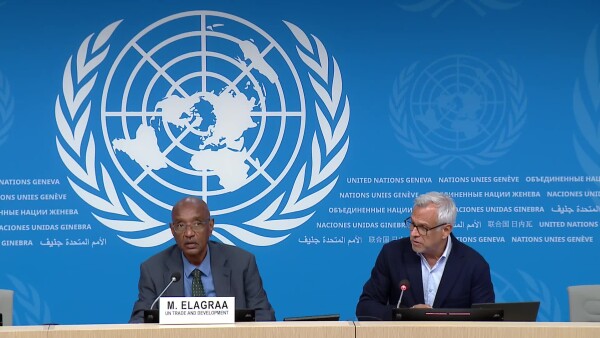
Presentation of the Trade and Developement Report 2026
Embargoed until 9 October 2026 at 11 a.m. (Geneva Time)
UNCTAD: UNCTAD’s flagship report finds that governments increasingly use industrial, trade, financial and technology policies to pursue economic and national security objectives. Market access and the ability to move into higher-value activities now depend more heavily on technology, finance and geopolitics.
1
1
1
Press Conferences | UPU
Release of the State of the Postal Sector Report 2026
1
1
1
Press Conferences | IOM , ITU , UNECE , UNICEF , WHO , WMO
UNICEF: Ebola, DRC - children orphans or separating them from parents and caregivers; IOM: Humanitarian needs in Djibouti amid arrivals from Yemen and increased migrant movements; WHO: Darfur, scale of health needs far exceeds available resources; WMO co-sponsored Global Heat Forum, Bangkok, monthly Global Seasonal Climate Update; UNECE: UN Forum of Mayors; ITU Plenipotentiary Conference 2026; WHO: child and adolescent obesity guidelines and new global roadmap to tackle pregnancy hypertension, a leading cause of maternal mortality
1
1
1
Press Conferences | OCHA , UN WOMEN , UNHCR , WFP , WHO , WTO , UNEP
OCHA – $160M CERF allocation to 12 underfunded crises; UNHCR – 5.8M refugee children remain out of school amid funding cuts; UN Women – Middle East escalation and food security among women/girls; WHO – Gaza supplies and overall situation; WFP – Yemen food insecurity and impact on global hunger ; UNEP - First International Conference of the Global Framework on Chemicals in Geneva | 16-20 November 2026
1
1
1
Press Conferences | UNHCR , WHO
Yemen's health system nears collapse amid conflict, causing rising casualties and medicine shortages.
1
1
1
Press Conferences | HRC
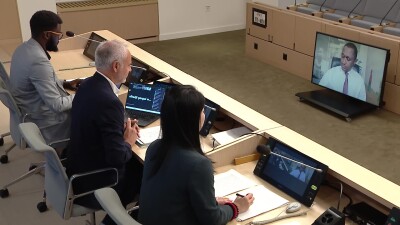
Update by the Expert Mechanism to Advance Racial Justice and Equality in Law Enforcement
1
1
1
Press Conferences | WIPO , WHO , UNICEF , UNHCR , IOM , WFP , FAO
WIPO Global Innovation Index 2026 launch and press conference, WHO Composition of influenza vaccines for the 2027 Southern Hemisphere flu season, UNICEF Yemen hunger and malnutrition; UNHCR Sudan displacement into Chad; IOM Ebola and population movements in DRC; WFP emergency food assistance in Nepal; and FAO food loss and waste.
2
1
2
Press Conferences | UNCTAD
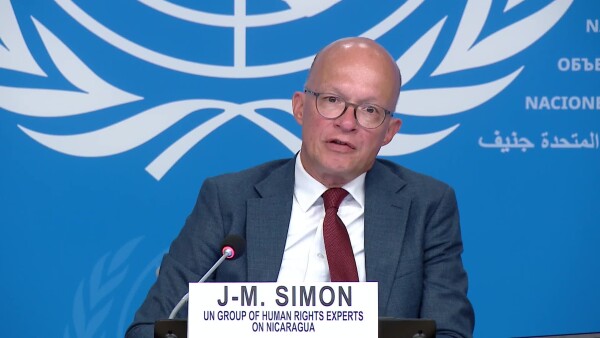
Gaza reconstruction needs reach $71.5 billion as Palestinian economy and public finances face severe strain. Latest UNCTAD report documents the loss of decades of development gains, economic collapse in Gaza and tightening economic constraints in the West Bank.
The report identifies three immediate priorities: transferring withheld Palestinian revenues, safeguarding the banking system and aligning reconstruction support with the documented scale of damage and economic losses.
1
1
1
Press Conferences | HRC
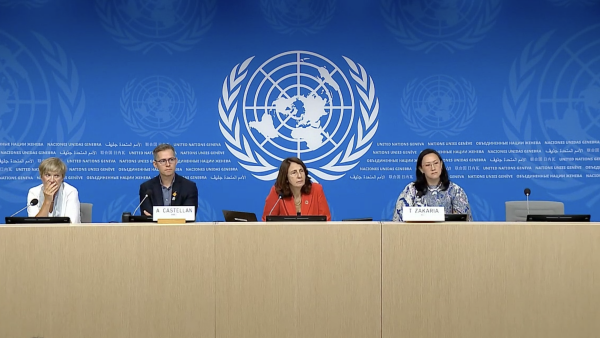
Press conference on the situation of human rights in Nicaragua by the UN Group of Human Rights Experts
1
1
1
Press Conferences | ITU , UNHCR , WHO , WMO
YEMEN - UNHCR: Escalating conflict in Yemen could fuel more displacement, refugee movement
CLIMATE - WHO / WMO: Health and Climate impact of El Niño