

The United Nations Office at Geneva
Multimedia Newsroom
Press Conferences | UNHCR , IOM , FAO , WHO , OCHA , UNICEF
UN Geneva Press Briefing - 19 December 2025
UN INFORMATION SERVICE GENEVA PRESS BRIEFING
19 December 2025
Escalating Violence in Eastern DR Congo Deepens Humanitarian Crisis in Burundi
Eujin Byun, for the UN Refugee Agency (UNHCR), said that the escalating violence in South Kivu – a province in the east of the Democratic Republic of Congo (DRC) – had already displaced some 500,000 people internally, while others had crossed the border into Burundi, where they faced a dire humanitarian situation.
Brigitte Mukanga-Eno, UNHCR Representative in Burundi, speaking from Bujumbura, explained that the worsening humanitarian situation in Burundi had reached a critical point following the rapid influx of refugees and asylum-seekers fleeing violence in the Democratic Republic of Congo. Since early December, over 84,000 people fleeing clashes in South Kivu had crossed into Burundi. This had significantly increased the number of Congolese refugees and asylum-seekers in Burundi, to more than 200,000.
In Burundi, transit centres and informal sites where new arrivals were hosted had far surpassed capacity, in some cases by nearly 200 percent, leaving hundreds of families in untenable conditions. Acute water and sanitation shortages were increasing the risk of outbreaks of life-threatening diseases, including cholera and Mpox. Immediate supplies, especially more shelters, latrines, water, food and medical stocks, were critical.
The Government had provided a new site for refugees, away from the borders with the DRC: so far about 21,000 people had already been transferred to this site. It was still under development and lacked some essential services that the refugees needed. UNHCR did not have the necessary shelters for all the newly arrived.
For Burundi, the situation was overwhelming, as the number of refugees was high compared to the capacity of the country. The Government of Burundi, the humanitarian coordinator and all UN agencies had launched an international call for solidarity, to the tune of USD 35 million, to provide the necessary protection and assistance not only to the new arrivals in Burundi, but also to the communities that hosted them.
UNHCR was also seeking USD 47.2 million over the next four months to assist 500,000 internally displaced people in the DRC and up to 166,000 refugees in Burundi, Rwanda, and other neighbouring countries to which Congolese were likely to flee.
Answering questions, Ms. Mukanga-Eno explained that the border with the DRC was officially closed but that a corridor remained opened to let in refugees fleeing Congo.
For the refugees, the conditions were very difficult. There was no sanitation. Children and women were queuing for hours to get water, shelter and food, the World Food Programme being out of resources.
The situation was also overwhelming for Burundi, because this was the second time it faced a large influx of refugees, so its resources were overstretched. It had to cope with another pressure due to the return of thousands of Burundians from Tanzania and other neighboring countries.
The funding was the major issue for both UNHCR and other humanitarian actors, who had been experiencing a very difficult financial situation in 2025.
Sudan: Situation in El Fasher (Darfur) and Kadugli (South Kordofan)
Reporting from Port-Sudan, Mohamed Refaat, International Organization for Migration (IOM) Chief of Mission in Sudan, said the country continued to face one of the largest displacement crises in the world, with Kordofan and Darfur at the heart of the crisis. IOM estimated that Sudan hosted some 9,3 million internally displaced persons (IDPs), down from 11,9 million earlier this year.
IOM still had challenges in understanding what exactly had happened in El Fasher. Since 25 October, through its displacement tracking metrics, IOM had counted more than 109,000 people who had managed to flee the city and its surrounding villages. Many were still stuck in the neighboring villages, not able to go further because of logistics and security issues.
An estimated 50,000 individuals had also been displaced across the Kordofan (North, South, and West regions) since 25 October, half of those new displacements being children, which was alarming for the future of Sudan. IOM was very worried by the risk of this displacement escalating into another El Fasher situation. This was to be avoided first by silencing the guns, second by being ready on the humanitarian and protection side. It was critical that conflict did not extend into areas where people were attempting to return, rebuild, and restore their lives in a peaceful and stable environment.
Several member States had reduced their external contribution or were reviewing it, including the United States. More non-traditional donors were coming. Today, IOM had received a shipment of more than 30,000 tents from the Turkish Government.
Answering questions, Mr. Refaat explained UNHCR had lost USD 83 million of funding for Sudan in 2025. The Agency had to choose which lives to save and which support to stop; it had to let go of 200 colleagues.
In Kadugli, IOM estimated there were around 90,000 to 100,000 people that would be displaced if the fighting continued. Furthermore, there were concerning trends in attacks and hostilities, even against UN infrastructures.
Mr. Avand Azeez Agha, also for the IOM, said there was a general trend in declining funding from many member States. The Organization, facing similar financial challenges in other countries, including Libya and Yemen, would have to prioritize even within groups that were the most vulnerable.
Mrs. Vellucci, for the United Nations Information Service in Geneva, said the humanitarian response plan for Sudan was only 36 percent funded, with 1.5 billion received out of the 4.2 billion required. The UN urgently called on donors to step up support, to close the funding gap and to sustain life-saving assistance
Mrs. Vellucci also noted that on 18 December, the Office of the Higher Commission for Human Rights had published a report in which it called for an impartial investigation into the attack on the Zamzam internally displaced persons camp, in April. The report detailed widespread killings, rape and other form of sexual violence, torture, abductions committed during the three-day offensive. High Commissioner Volker Türk said those responsible for serious violations of international law must be held accountable through fair proceedings.
Drought in the Horn of Africa
Speaking from Nairobi, Cyril Ferrand, Food and Agriculture Organization (FAO) Resilience Team Leader for Eastern Africa, said the Horn of Africa was facing a severe drought following the near-total failure of the October–December 2025 rainy season. Large parts of Somalia, eastern Kenya, and southern Ethiopia had received less than 60 percent of average rainfall, with the worst-affected areas having received under 30 percent and some experiencing almost no effective rain. In several locations, it would be the driest season on record since 1981. The situation was particularly alarming as many communities were still recovering from the prolonged 2020–2023 drought.
Immediate impacts on food security were widespread crop failure, with eastern and central Kenya expecting very low yields. Livestock conditions were also deteriorating, milk production had declined, and livestock deaths were anticipated. More than 185,000 people had been displaced by drought in Somalia, including over 55,800 who had crossed into Ethiopia.
Food insecurity, already at high levels across the region, was likely to deteriorate during the first half of 2026. At current estimates, 2.1 million people were highly food insecure in Kenya and 4.4 million highly food insecure in Somalia. However, these analyses preceded evidence of how severely the rainy season had failed. Other risks were a rise in malnutrition, the spread of livestock disease, increases in gender-based violence and resource-based conflicts, and increased displacement.
To mitigate these impacts, livelihood support measures must be taken with no delay, such as maintaining food production by families, reducing losses of livestock and providing money for people to buy food. Using its own internal funds (USD 4 million), FAO had already begun implementing such anticipatory actions in response to the forecasted drought in Ethiopia, Kenya, and Somalia. But there remained a critical funding gap, as FAO’s Somalia 2025 humanitarian plan was only 24 percent funded. It was necessary to act now before the situation further deteriorated into a multifaceted humanitarian crisis.
Answering questions, Mr. Ferrand stressed that there was still, theoretically, an opportunity, during the next few months, to slow down the deterioration of the situation, by making sure, among others, that children had milk. However, it was clear that financing was not sufficient to pay for such anticipatory actions, and that the situation risked deteriorating during the next three months.
Situation in Gaza
Journalists raised questions on the number of medical evacuations, the effects of hypothermia and a cholera outbreak in Gaza.
Tarik Jašarević, for the World Health Organization (WHO), said persons who were awaiting evacuation had sustained trauma injuries due to explosions or bullets, and chronic diseases. There had been an increase in the number of medical evacuations; still, more than 18,500 patients, including 4100 children, needed medical evacuation. According to the Palestinian Ministry of Health, according to the Ministry of Health, more than 1000 patients had died while awaiting medical evacuation between July 2024 and November 2025. WHO was calling for countries to accept patients from Gaza and for medical evacuations – or referrals – to the West Bank, including East Jerusalem, to be restored.
At least ten people had reportedly died last week due to heavy rains, underscoring the life-threatening conditions that families were facing in Gaza.
Mr. Jašarević added that he did not have information about potential cholera cases. When people did not have access to clean water, there was a risk of waterborne diseases, hepatitis and respiratory diseases, he noted. WHO had put in place, in January 2024, an early warning alert and response system against these diseases.
Ricardo Pires, for United Nations Children's Fund (UNICEF), said UNICEF had seen reports that, in December, three children had died of hypothermia in Gaza, including a 29-month-old baby, in a context of cold temperatures and lack of medical infrastructure and medicine.
Venezuela
Journalists asked whether the UN agencies had made contingency plans considering the present situation around Venezuela.
Jens Laerke, for the Office for the Coordination of Humanitarian Affairs (OCHA), said OCHA, without reference to any current development, was constantly monitoring the geopolitical and economic situation everywhere in the world, including in Latin America, and was preparing accordingly. However, the humanitarian community had taken a hit and that had hit Latin America also. Therefore, several countries which previously had response plans would not have that next year. This could change with developing situations.
Ms. Byun, for the UN Refugee Agency, said that, in case a displacement situation happened in the region, UNHCR would be ready to support governments hosting displaced populations.
Other matters
Mrs. Vellucci, for the United Nations Information Service in Geneva, said the last issue of the podcast ONU Info Genève (in French) contained an interesting recap of the year 2025.
Mrs. Vellucci finally reminded that UNIS press briefings would resume on 6 January 2026.
***
- UNHCR, Eujin Byun with Brigitte Mukanga-eno, UNHCR’s Representative in Burundi - Escalating violence in eastern DR Congo deepens humanitarian crisis in Burundi
- IOM, Mohamed Refaat, Chief of Mission in Sudan - Situation in El Fasher (Darfur) and Kadugli (South Kordofan), including rising humanitarian needs and displacement figures
- FAO, KiJung Min with Cyril Ferrand, FAO Resilience Team leader for Eastern Africa - Poor rainfall season in the Horn of Africa escalates severe food security risk in the region
Similar Stories

1
1
1
Press Conferences | IOM , UNDRR
UN stresses importance of household preparedness for disaster risk reduction.

1
1
1
Statements , Press Conferences | OHCHR

1
1
1
Press Conferences | UNHCR , UNICEF , IFRC , OHCHR , UN WOMEN , IOM , OCHA , WHO
UNHCR – ExCom Meeting, UNICEF – Nepal Recovery, IFRC – Flash Floods, WHO – Mental Health, IOM – South Sudan Floods, OCHA – DRC Humanitarian aid, UNHCR – Sahel Displacement, UNICEF – Yemen Update, IOM – Gaza Shelter, UN Women – Gaza Women, OHCHR – Arrests and detentions of Syrians by Israeli force

2
1
2
Press Conferences | UNCTAD
Presentation of the Trade and Developement Report 2026
Embargoed until 9 October 2026 at 11 a.m. (Geneva Time)
UNCTAD: UNCTAD’s flagship report finds that governments increasingly use industrial, trade, financial and technology policies to pursue economic and national security objectives. Market access and the ability to move into higher-value activities now depend more heavily on technology, finance and geopolitics.
1
1
1
Press Conferences | UPU
Release of the State of the Postal Sector Report 2026
1
1
1
Press Conferences | IOM , ITU , UNECE , UNICEF , WHO , WMO
UNICEF: Ebola, DRC - children orphans or separating them from parents and caregivers; IOM: Humanitarian needs in Djibouti amid arrivals from Yemen and increased migrant movements; WHO: Darfur, scale of health needs far exceeds available resources; WMO co-sponsored Global Heat Forum, Bangkok, monthly Global Seasonal Climate Update; UNECE: UN Forum of Mayors; ITU Plenipotentiary Conference 2026; WHO: child and adolescent obesity guidelines and new global roadmap to tackle pregnancy hypertension, a leading cause of maternal mortality
1
1
1
Press Conferences | OCHA , UN WOMEN , UNHCR , WFP , WHO , WTO , UNEP
OCHA – $160M CERF allocation to 12 underfunded crises; UNHCR – 5.8M refugee children remain out of school amid funding cuts; UN Women – Middle East escalation and food security among women/girls; WHO – Gaza supplies and overall situation; WFP – Yemen food insecurity and impact on global hunger ; UNEP - First International Conference of the Global Framework on Chemicals in Geneva | 16-20 November 2026
1
1
1
Press Conferences | UNHCR , WHO
Yemen's health system nears collapse amid conflict, causing rising casualties and medicine shortages.
1
1
1
Press Conferences | HRC
Update by the Expert Mechanism to Advance Racial Justice and Equality in Law Enforcement
1
1
1
Press Conferences | WIPO , WHO , UNICEF , UNHCR , IOM , WFP , FAO
WIPO Global Innovation Index 2026 launch and press conference, WHO Composition of influenza vaccines for the 2027 Southern Hemisphere flu season, UNICEF Yemen hunger and malnutrition; UNHCR Sudan displacement into Chad; IOM Ebola and population movements in DRC; WFP emergency food assistance in Nepal; and FAO food loss and waste.
2
1
2
Press Conferences | UNCTAD
Gaza reconstruction needs reach $71.5 billion as Palestinian economy and public finances face severe strain. Latest UNCTAD report documents the loss of decades of development gains, economic collapse in Gaza and tightening economic constraints in the West Bank.
The report identifies three immediate priorities: transferring withheld Palestinian revenues, safeguarding the banking system and aligning reconstruction support with the documented scale of damage and economic losses.
1
1
1
Press Conferences | HRC
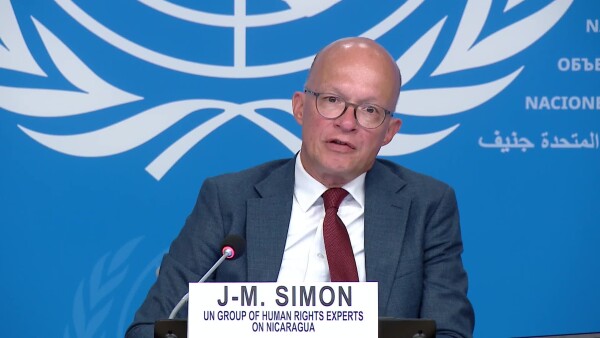
Press conference on the situation of human rights in Nicaragua by the UN Group of Human Rights Experts