

The United Nations Office at Geneva
Multimedia Newsroom
Syrian Constitutional Committee
Jenifer Fenton, for the Office of the United Nations Special Envoy for Syria, said the Small Body of the Syrian Constitutional Committee was meeting at the Palais again today, having arrived a short while ago. The intention was that they would also meet again tomorrow, Saturday. They should arrive tomorrow at roughly the same time that they arrived today to begin around 10 a.m. As the Special Envoy had noted, there was a clear agenda for this session, the discussions had been constructive and useful points had been raised. The Special Envoy mentioned that he would try to provide an update on the work of the Constitutional Committee to the media when possible.
In response to questions, Ms. Fenton said she did not yet have a schedule for media activities for today or tomorrow, but she would let journalists know. She had the schedule for the meeting of the Constitutional Committee until tomorrow but beyond that she had no scheduling information. For the four persons of the Constitutional Committee who had tested positive for COVID-19, information was only released as deemed necessary for public health or other critical measures. The nature of the meeting was confidential, but Mr. Pederson had noted that it was constructive and that important points had been raised.
Ms. Vellucci said she would take the necessary measures to let temporarily accredited journalists enter the Palais des Nations tomorrow Saturday, should a press event be held.
UNHCR/COVID-19 and Nicaraguan Refugees in Costa Rica
Shabia Mantoo, for the UN Refugees Agency (UNHCR), said that more than three quarters of Nicaraguan refugees and asylum seekers in Costa Rica were going hungry, eating only once or twice a day as a result of the socio-economic impact of the COVID-19 pandemic. UNHCR was concerned that this could drive returns in adverse conditions. Before the pandemic hit, and thanks to effective local integration initiatives in Costa Rica, only three per cent of refugees were eating once a day or less. Now, this had more than quadrupled to 14 per cent. This was according to a humanitarian assessment conducted by UNHCR in July and August aimed at supporting Costa Rican authorities address the needs of more than 81,000 Nicaraguans who had sought international protection in the country. Refugee hosting communities were facing similar conditions and the economic contraction in these countries would make it even more difficult for refugees and their hosts to recover.
Ms. Mantoo said Costa Rica generously hosted nearly 80 per cent of all refugees and asylum seekers from Nicaragua, or some 81,000 people. It was among 10 countries worldwide that received most of the new asylum claims last year. With a large proportion of forcibly displaced people in Latin America reliant on the informal economy, especially as they began their integration into the communities that hosted them, COVID- related quarantine measures were now impacting livelihoods and driving food insecurity. Hardships faced by Nicaraguan refugees and asylum seekers, including loss of livelihoods, eviction and hunger, had also been reported elsewhere in the region, including in Panama, Guatemala and Mexico. More than 3,000 asylum claims in Costa Rica had also been withdrawn to date, principally by Nicaraguan nationals.
Since the start of the pandemic, UNHCR had stepped-up its cash assistance programmes throughout Central America to support forcibly displaced people in vulnerable conditions. But a severe lack of funding was hampering the ability to address urgent humanitarian needs. UNHCR’s operation in Costa Rica, whose financial requirements for 2020 stood at USD 26.9 million, was only 46 per cent funded to date.
The full briefing note was available here
Democratic Republic of the Congo
Rupert Colville, for the Office of the High Commissioner for Human Rights, said the United Nations High Commissioner for Human Rights Michelle Bachelet today expressed deep concern over the death threats directed at the Congolese human rights defender and Nobel Prize laureate Dr. Denis Mukwege, and was calling for swift action to investigate who was behind the threats and bring them to justice. Dr. Mukwege, who founded and ran the Panzi hospital in Bukavu, had won international recognition, including the 2018 Nobel Peace Prize, for his decades of work helping thousands of women victims of sexual and gender-based violence in the eastern Democratic Republic of Congo. He was a determined advocate against the use of rape as a weapon of war, and for increased protection of women. He was also a strong and consistent voice calling for those responsible for sexual violence to be brought to justice. Dr. Mukwege had received deaths threats in the past and survived a major assassination attempt in October 2012, when five armed men invaded his home, killed his body guard and friend, and held his family at gunpoint.
Mr. Colville said the recent alarming surge of threats against Dr Mukwege, which had been conveyed via social media and in direct phone calls to him and his family, followed his condemnation of the continued killing of civilians in eastern Democratic Republic of Congo and his renewed calls for accountability for human rights violations and abuses. His life seemed to be as serious risk. The High Commissioner welcomed the public commitment of President Tshisekedi to ensure Dr. Mukwege’s security, and called for him and his team to be provided with comprehensive protection by the Congolese authorities so that the indispensable work they performed day in, day out, at Panzi hospital could be guaranteed. In order to tackle the problem in the longer term, she urged the Congolese authorities to adopt the draft law on the protection and regulation of the activity of human rights defenders in a form that was fully consistent with international standards. Attacks on human rights defenders are an endemic problem in the Democratic Republic of the Congo.
The full press release was available in English here and in French here.
In response to questions, Mr. Colville said it was difficult to say at this point who was behind these death threats, but it seemed that they might be connected to the conflict in the High Plateau of South Kivu, involving multiple armed groups, both local and foreign. The DRC President had spoken out publicly in support of Mr. Muwege, who did have protection, but the issue was how effective this protection was.
Madagascar
Turning to the situation in Madagascar, Rupert Colville, for the Office of the High Commissioner for Human Rights (OHCHR) said that the Office was very concerned by reports of excessive use of force by security forces at a Madagascar jail on 23 August when 22 inmates were killed and eight injured during a mass escape. The prison breakout occurred amid concerns that the country’s squalid and overcrowded detention facilities were a hotbed for the spread of COVID-19. Security forces opened fire on inmates attempting to escape from the Farafangana prison in the country’s south-east. Reports said 88 inmates out of 380 escaped; 41 inmates were re-captured and 25 remained on the run.
OHCHR reminded the Malagasy authorities that the use of force must strictly comply with the principles of legality, necessity, proportionality and non-discrimination. This was the seventh prison outbreak in the country since the outbreak of the pandemic. As with many other jails, the conditions at Farafangana were deeply troubling. The prison was overcrowded, conditions were generally unhygienic, the food was poor and inmates lacked proper access to healthcare. OHCHR would continue to work with authorities in Madagascar to ensure that they conducted thorough, prompt, independent and impartial investigations into the circumstances of the killings of these 22 people and the injuries during the prison escape, including allegations of excessive use of force violations by state security forces.
Wisconsin
In response to a question on the latest events in Wisconsin, specifically on the issue of the self-styled militia groups whose call for arms appeared to have spurred the killing of demonstrators, Rupert Colville, for the Office of the High Commissioner for Human Rights (OHCHR) said that, taking a step back, the shooting of Jacob Blake was a painful reminder of how African Americans continued to be exposed to differentiated and heightened risk when engaging with law enforcement bodies in the United States. This tragic episode reaffirmed the need for urgent action to eradicate linkages between structural racism and policing. From the images available, the police appeared to use force against Jacob Blake that seemed to be excessive. It did not appear that the law enforcement officers abided by the international standards for the intentional use of lethal force with a firearm. It also seemed highly possible that the force used against him could be discriminatory in nature.
Alessandra Vellucci, for the United Nations Information Service, recalled that the Spokesperson for the UN Secretary-General yesterday said that it was important for the case to be fully investigated.
On the issue of vigilante groups and the 17-year-old who had been arrested and charged with the killing of two persons and injuring others, Rupert Colville, for the Office of the High Commissioner for Human Rights (OHCHR) said that this was yet another example of the insufficient and lax gun control measures in the United States, which the Office of the High Commissioner had spoken about several times before.
Brazil
A journalist said that last weekend the Brazilian President had told a journalist that he wanted to punch him in the face, after he asked about suspicious payments into the bank account of the wife of the President, and asked Rupert Colville, for the Office of the High Commissioner for Human Rights (OHCHR), to comment. Mr. Colville said threats of violence by leaders, even if they were not carried out in reality, could unfortunately lead to real violence by their supporters. All important leaders, including President Bolsonaro, were urged to be careful of what they said. Journalists were entitled to ask penetrating questions and must be protected under international law.
Another journalist said that Article 19 had reported over 21 incidents of attacks on the press by President Bolsonaro in only three months, and asked if this was a violation by the Brazilian President. Mr. Colville said this issue was alive in countries other than Brazil, and OHCHR had addressed it for example in the United States. Journalists were not perfect and it was legitimate to criticize the media, but there should be limits to that. Incitement to violence or hatred were prohibited under international law.
Media Freedom
Alessandra Vellucci, for the United Nations Information Service, said that High Commissioner Bachelet would be joining forces with the President of the Swiss Confederation to speak at an event on the freedom of the press as a prologue to the forthcoming UN General Assembly. The event would be held on Tuesday, 1 September from 11 a.m. to 1 p.m. in room XX, and would be titled “Journalists at risk: let us protect media freedom”. Journalists were invited to attend, but it was mandatory to register their presence if they wanted to be in the room. Journalists should have received information on this with the link to the registration. Otherwise, they could follow the discussion on webtv.un.org, through a live webcast.
Hurricane Laura Hits the United States
Clare Nullis, for the World Meteorological Organization (WMO), said the Gulf Coast of the United States was assessing the devastation inflicted by Hurricane Laura, which intensified within 24 hours from a category 1 to a strong category 4 hurricane. It made landfall of maximum sustained winds of 241 km/h. In terms of wind speed, it was the strongest storm (tied) to hit Louisiana since 1856. Laura was the first major hurricane in the Gulf of Mexico during August since Harvey in 2017. Harvey had stuck around for quite a long time, while Laura hit and dissipated quite rapidly. Laura had generated more Accumulated Cyclone Energy than all of the other Atlantic named storms during August so far. It was the seventh named storm to landfall on the United States this season and was by far the most intense and dangerous hurricane. It was important to note that they had only just entered what was traditionally the most intense period of the season. The forecasts issued by the United States National Hurricane Centre were extremely accurate. That, together with what seemed to be a very effective disaster management response, seemed to have limited the death toll. Around 20 people died from this storm in the Dominican Republic and Haiti, before it developed into a hurricane. The storm had now weakened to a tropical depression, but there was still widespread flooding left behind.
Ms. Nullis said WMO’s newly issued El Niño/La Niña Update said there was a 60 per cent chance of a La Niña forming between September and November 2020. The absence of El Niño – which tended to suppress hurricane activity – was one of the factors in this very active season, but it was not the only factor. It was difficult to link any individual tropical cyclone to climate change, but they did expect to see more powerful storms in future as a result of global warming, and that was basically the laws of physics. Storms fed on warm water; also, higher water temperatures led to higher sea levels, which in turn increased the risk of flooding during high tides. Warmer air also held more atmospheric water vapour, which enabled tropical storms to strengthen and unleash more heavy rainfall. There was no clear evidence that climate change was going to increase the overall number of tropical cyclones, hurricanes, but what was expected from climate change scenarios was that the intensity of these storms was likely to increase, according to the Intergovernmental Panel on Climate Change.
In response to a question on La Niña and the heat and wildfires in California and elsewhere, Ms. Nullis said La Niña had not yet developed. There was a 60 per cent change of it developing between September and November and it would be weak. It did have a cooling impact. There were several reasons for the wildfires in California. There had been very high temperatures and very dry soil, and what triggered them was a lot of dry lightning, which meant there was no rain to extinguish the flames. The new norm was that any naturally occurring event that was seen now, such as El Niño/La Niña, had to be set against the backdrop of climate change.
Chad
Paul Dillon, for the International Organization for Migration (IOM), said over 360,000 people were now internally displaced in the area that Chad bordered Cameroon, Nigeria and Niger, according to new figures published by IOM’s Displacement Tracking Matrix, a 22 per cent increase in the number of displaced persons since April. Amidst COVID-19, the Lake Chad region was facing a double security and environmental crisis. Since 2015, the region had been the target of repeated attacks by non-State armed groups conducting an insurgency in the Lake Chad basin, which included Cameroon, Nigeria and Niger. This had forced millions of people in those countries to flee their homes. Repeated attacks promoted the Chadian Government in March to declare two of Lake Chad’s borderland departments as war zones. Complicating the forced displacement in response to the security issues was the fact that the Lake Chad region had been experiencing the highest rainfall in nearly 30 years. Roughly 400 millimetres of rainfall had been recorded, which was sparking flash floods. The displacement was recurrent, protracted due to the deterioration of security and the environmental situation, and involved large numbers of people. IOM in Chad was providing emergency humanitarian assistance to vulnerable populations. More was needed immediately, especially for families now facing heavy rainfall and without proper housing. This was a serious and ongoing situation.
Announcements
Alessandra Vellucci, for the United Nations Information Service, said that on Monday, 31 August at 2 p.m., the UN Refugee Agency in a hybrid press conference was going to launch a report on refugee education titled “Coming together for refugee education”. This was strictly embargoed until 0.00 GMT on 3 September.
On Tuesday, 1 September, the regular press briefing would be exceptionally held in Room III at 11 a.m. instead of 10:30 as usual.
Also on Tuesday, 1 September, at 3 p.m. there would be a hybrid press conference by the World Intellectual Property Organization for the launch of their Global Innovation Index 2020, titled “who will finance innovation?”. There was an embargo on it until Wednesday, 2 September at 11 a.m. CEST.
The Conference on Disarmament was holding its next plenary on Tuesday, 8 September at 10 a.m. to discuss new types of weapons of mass destruction.
Tomorrow, 29 August, was the International Day against Nuclear Tests. The message of the Secretary-General had been sent to journalists.
On 30 August, the international community celebrated the International Day of the Victims of Enforced Disappearances and the message of the Secretary-General had also been sent to journalists.
Similar Stories

1
1
1
Statements , Press Conferences | OHCHR
1
1
1
Press Conferences | UNHCR , UNICEF , IFRC , OHCHR , UN WOMEN , IOM , OCHA , WHO
UNHCR – ExCom Meeting, UNICEF – Nepal Recovery, IFRC – Flash Floods, WHO – Mental Health, IOM – South Sudan Floods, OCHA – DRC Humanitarian aid, UNHCR – Sahel Displacement, UNICEF – Yemen Update, IOM – Gaza Shelter, UN Women – Gaza Women, OHCHR – Arrests and detentions of Syrians by Israeli force
2
1
2
Press Conferences | UNCTAD
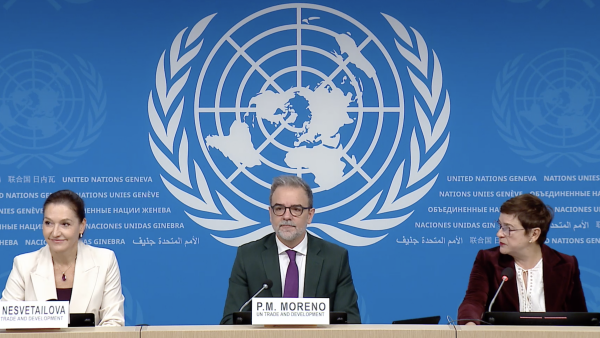
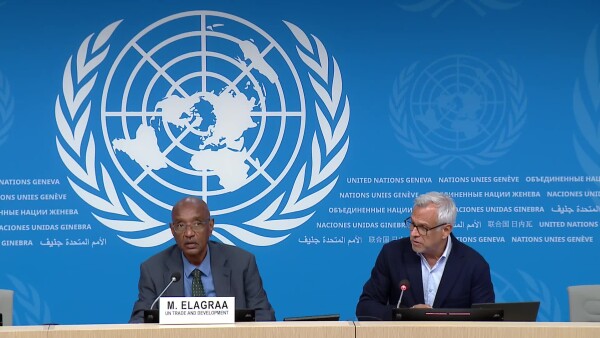
Presentation of the Trade and Developement Report 2026
Embargoed until 9 October 2026 at 11 a.m. (Geneva Time)
UNCTAD: UNCTAD’s flagship report finds that governments increasingly use industrial, trade, financial and technology policies to pursue economic and national security objectives. Market access and the ability to move into higher-value activities now depend more heavily on technology, finance and geopolitics.
1
1
1
Press Conferences | UPU
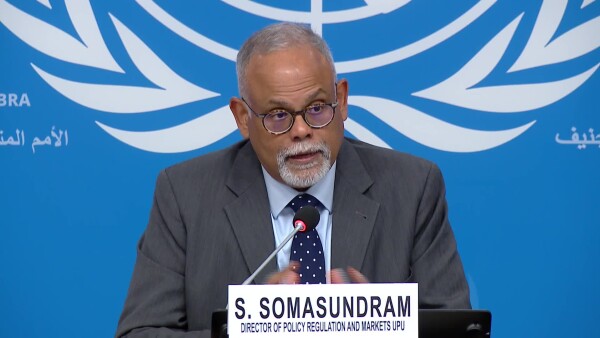
Release of the State of the Postal Sector Report 2026
1
1
1
Press Conferences | IOM , ITU , UNECE , UNICEF , WHO , WMO
UNICEF: Ebola, DRC - children orphans or separating them from parents and caregivers; IOM: Humanitarian needs in Djibouti amid arrivals from Yemen and increased migrant movements; WHO: Darfur, scale of health needs far exceeds available resources; WMO co-sponsored Global Heat Forum, Bangkok, monthly Global Seasonal Climate Update; UNECE: UN Forum of Mayors; ITU Plenipotentiary Conference 2026; WHO: child and adolescent obesity guidelines and new global roadmap to tackle pregnancy hypertension, a leading cause of maternal mortality
1
1
1
Press Conferences | OCHA , UN WOMEN , UNHCR , WFP , WHO , WTO , UNEP
OCHA – $160M CERF allocation to 12 underfunded crises; UNHCR – 5.8M refugee children remain out of school amid funding cuts; UN Women – Middle East escalation and food security among women/girls; WHO – Gaza supplies and overall situation; WFP – Yemen food insecurity and impact on global hunger ; UNEP - First International Conference of the Global Framework on Chemicals in Geneva | 16-20 November 2026
1
1
1
Press Conferences | UNHCR , WHO
Yemen's health system nears collapse amid conflict, causing rising casualties and medicine shortages.
1
1
1
Press Conferences | HRC
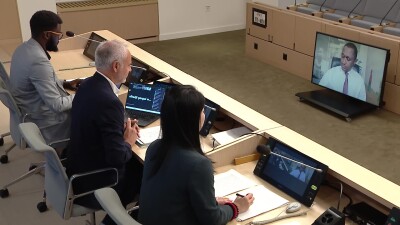
Update by the Expert Mechanism to Advance Racial Justice and Equality in Law Enforcement
1
1
1
Press Conferences | WIPO , WHO , UNICEF , UNHCR , IOM , WFP , FAO
WIPO Global Innovation Index 2026 launch and press conference, WHO Composition of influenza vaccines for the 2027 Southern Hemisphere flu season, UNICEF Yemen hunger and malnutrition; UNHCR Sudan displacement into Chad; IOM Ebola and population movements in DRC; WFP emergency food assistance in Nepal; and FAO food loss and waste.
2
1
2
Press Conferences | UNCTAD
Gaza reconstruction needs reach $71.5 billion as Palestinian economy and public finances face severe strain. Latest UNCTAD report documents the loss of decades of development gains, economic collapse in Gaza and tightening economic constraints in the West Bank.
The report identifies three immediate priorities: transferring withheld Palestinian revenues, safeguarding the banking system and aligning reconstruction support with the documented scale of damage and economic losses.
1
1
1
Press Conferences | HRC
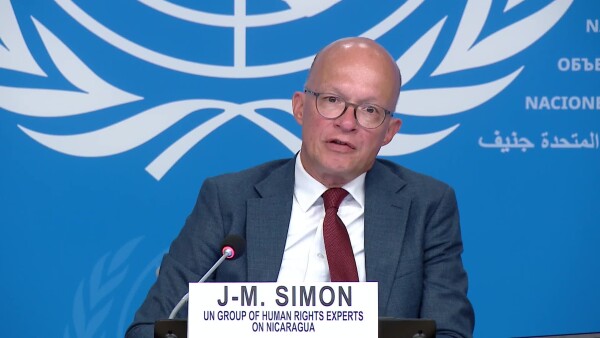
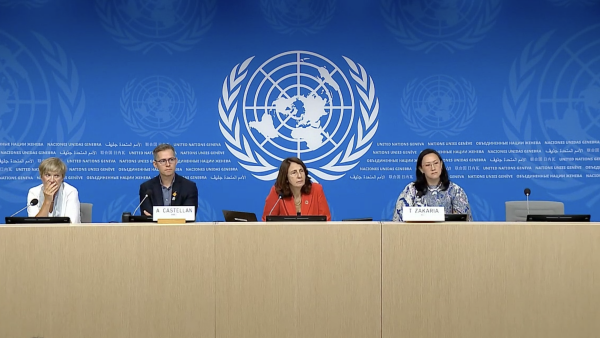
Press conference on the situation of human rights in Nicaragua by the UN Group of Human Rights Experts
1
1
1
Press Conferences | ITU , UNHCR , WHO , WMO
YEMEN - UNHCR: Escalating conflict in Yemen could fuel more displacement, refugee movement
CLIMATE - WHO / WMO: Health and Climate impact of El Niño