

The United Nations Office at Geneva
Multimedia Newsroom
Press Conferences | UNOG , UNICEF , WHO , UNHCR , HRC , UNCTAD
UN Geneva Press Briefing - 20 June 2025
20 June 2025
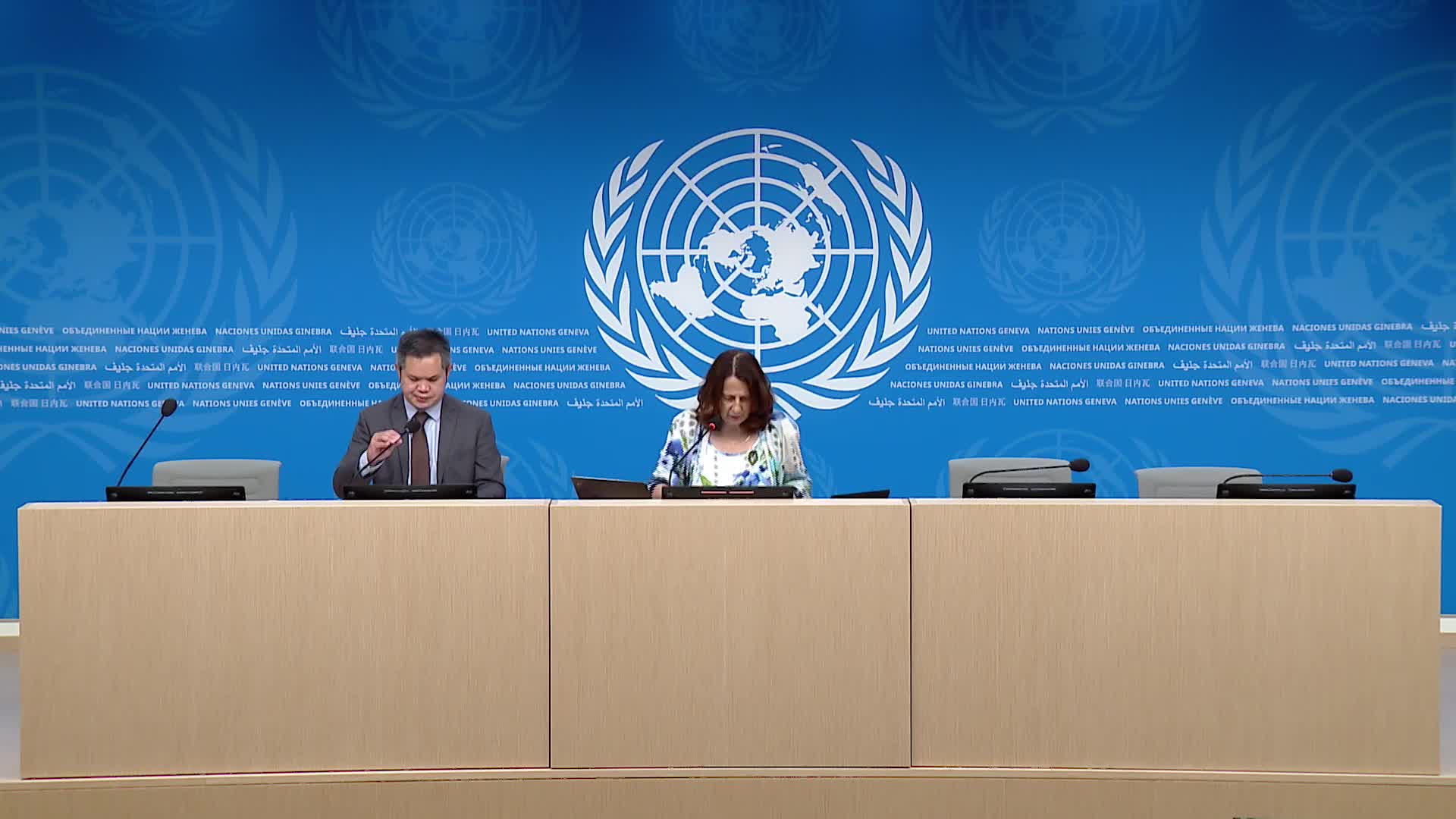
Alessandra Vellucci of the United Nations Information Service (UNIS) in Geneva, chaired the hybrid briefing, attended by spokespersons and representatives of the United Nations Children’s Fund, the World Health Organization, the United Nations High Commissioner for Refugees, the Office of the High Commissioner for Human Rights and the United Nations Trade and Development.
Update on the situation in Gaza
James Elder, for the United Nations Children’s Fund (UNICEF), speaking from Amman, said that currently, just 40 percent of drinking facilities in Gaza remained operational, and without fuel, these would be cut in a matter of weeks. If the current, more than 100-day blockade of fuel coming into Gaza did not end, children would begin to die of thirst. UNICEF had reported a 50 percent increase in children admitted for treatment, for malnutrition from April to May. Gaza was facing a man-made drought. However, because it was manmade, it could be stopped. None of these problems were logistical or technical; they were political. If there was the political will, then the water crisis could be solved overnight. Fuel meant that water could flow from hundreds of ground water wells and supply could be restored within a day. But time was running out. On the streets, people were carrying anything they could to try and gather water. Donkeys were being used instead of trucks due to the lack of fuel, but there was barely enough food to keep the donkeys alive. Fuel was holding Gaza's devastated health care system together. Denying fuel cut off survival. Mr. Elder said people had learned to live without so much; their loved ones, their homes, and even food, but they could not live without water. UNICEF was clear this was Gaza's most critical moment since the war on children began.
Responding to questions from the media, Mr. Elder clarified that 40 percent of drinking water production facilities remained operational, but these would cease to function within a couple of weeks. This did not include the three lines coming from Israel which supplied drinking water, the levels of which were determined by Israel. Two needed repairs, but the northern line could take more water depending on political will. The repairs were also a matter of political will. The levels of drinking water in Gaza were currently way below emergency standards.
Also answering questions, Mr. Elder said the Gaza Humanitarian Foundation was making a desperate situation worse. Two months ago, during the cease fire, between 500 and 600 trucks were entering Gaza daily and 400 aid distribution points had been established. This resulted in malnutrition and disease rates falling and access to medication increasing. Now, there were just a handful of distribution sites, meaning half a million starving people were being forced into small pockets, which were also combat sites. Children were killed at these sites. Mr. Elder had met a young boy wounded by tank shell at one of the sites, who had since passed away. The lack of equity was critical. On the ground, Mr. Elder spoke to a grandmother in tears who was unable to access the sites. Aid could not be distributed in a militarized zone. Humanitarian aid was so much more than food in a box; it was hygiene packs, medicines, and incubators, which the United Nations was providing just a few months ago. Mass casualty events were increasing due to the level of desperation, as well as confusion by the population around sites’ opening hours. There had been times when people had received information that a site was open, but then missed information that they were closed. They had gone to the sites and were deemed to be entering combat zones, and subsequently were attacked.
Responding to further questions, Mr. Elder said most children with severe acute malnutrition died of a common illness. Nasser hospital was now the only fully functioning hospital in the south, servicing over half a million people. Many people on oxygen had left due to fear of attack, which meant they would die in a matter of time. Mr. Elder would do his best to ascertain the number of children who had passed away from severe acute malnutrition this year, but it would likely be a gross underestimate. Mr. Elder said children were dying from a range of issues beyond bombardments and trauma. Fuel, which was synonymous with the desalination, treatment and production of water, had been blocked for more than 100 days from going into Gaza. This could be fixed with the stroke of a pen. Water was now at its lowest levels since October 7, 2023.
Answering questions, Alessandra Vellucci, for the United Nations Information Service (UNIS), said a WHO team had visited the Nasser Medical Complex two days ago, and could provide further information.
Also answering questions, Christian Lindmeier, for the World Health Organization (WHO), said malnutrition was complex; children typically died of the diseases hitting their weak body. 610 patients had been admitted to hospital due to severe malnutrition, which meant in a way they were the lucky ones. There were many who were too weak to leave, or who could not reach health facilities due to road closures or bombings. Malnutrition was just a small indicator of a starving population. The result was a dying population.
Responding to further questions, Mr. Lindmeier said it was extremely difficult to make accurate estimations on those suffering from acute malnutrition, and it was the same for the number of deaths. The 610 people were the figures reaching the hospitals, but they were a gross underrepresentation of the number of people suffering.
Responding to further questions Mr. Elder said sidelining an extensive humanitarian system would only exacerbate the situation. Many people, even strong men, had visited the sites several times and had not been able to access them, let alone single mothers, the wounded or elderly people. This was what the United Nations had warned against, and now a situation was occurring beyond their worst imagination. When UNICEF was providing aid, no civilians were being killed at any point. Mr. Elder confirmed that there had been mass casualty events around the aid sites when they had been closed. There had been contradictory statements made, which to a population entering a combat zone, could be lethal.
World faced with a health financing emergency
Kalipso Chalkidou, Director for Health Financing and Economics, for the World Health Organization, said the world was facing a health financing emergency. The decision by the Government of the United States to freeze or discontinue aid programmes, coupled with announcements by European governments to reduce aid, had created a significant disruption in the aid ecosystem and national health systems. Health aid was projected to decline by 35 to 40 percent in 2025 compared to the 2023 baseline, decreasing by 10 billion USD from 25.2 billion USD in 2023. This was important because external aid still played a significant role in the financing of health systems in several sub-Saharan countries. In several countries, the US Development Assistance for Health was the main source of external aid, representing up to 30 percent of the current health expenditure in countries like Malawi, or 25 percent in Mozambique or Zimbabwe. Since 2006, per capita external aid in low-income countries had consistently surpassed domestic public spending on health, which sat at around 8 USD per person, per year. Given the exploding debt burdens of many sub-Saharan African countries, it would not be as simple as saying that health should have a greater priority in government budgets. African governments spent twice as much on servicing their debt and Africa was now the biggest net creditor to the world.
WHO were advising countries on how to tackle this issue, including to address aid dependency. Aid was more than money; the gap left behind was also about capabilities and visibility. It was also important to protect the poorest, who would likely be the hardest hit by the cuts. WHO were also advising countries to mobilise new revenue, through better taxation, including health taxes like tobacco and alcohol, to generate efficiencies, and to work with multilateral banks to encourage concessional lending targeting the most cost-effective investments. It was critical that the issue of health financing would be addressed on a global level at the fourth International Conference on Financing for Development in Seville. WHO would attend and hoped to come away with tangible commitments.
Responding to questions from the media, Ms. Chalkidou said the 10 billion USD figure referred to a reduction in aid for health for this year. They were largely made up by US cuts, but she could not provide the exact figures. Some important estimates were expected to be published next week from OECD. Ms. Chalkidou clarified that the total amount spent in 2023 for aid health was around over 25 billion USD, and the 10 billion reduction for 2025 would bring the figure down to the lowest amount in the past decade.
World Refugee Day
Alessandra Vellucci, for the United Nations Information Service, said that today was World Refugee Day. In his message for World Refugee Day, which had been shared with the media, the UN Secretary-General highlighted the suffering of the refugees, the growing global xenophobia and the unfair burden placed on developing host countries. Despite limited support, the refugees continued to show resilience and contribute positively to society. The Secretary-General urged the international community to move beyond words and act through increased aid, protection, asylum rights, refugee participation and long-term integration efforts.
Olga Sarrado, for the United Nations High Commissioner for Refugees (UNHCR), said that World Refugee Day was a time to honour the courage and strength of millions of people around the globe who had been forced to flee their homes due to persecution, war, or violence. It was also a time to advocate for their right to seek safety and call for a world where refugees were welcomed, protected and valued. This year, World Refugee Day was marked with a heavy heart, as civilians remained under attack in many parts of the world. The recent escalation between Israel and Iran was the latest sign of alarm and all civilians must be spared. Last week, UNHCR released their Global Trends report, which showed there were 122.1 million people forcibly displaced by the end of April 2025. This amounted to one in every 67 people worldwide forced from their homes, equivalent to the population of Japan. One-third originated from just four countries: Sudan, Syria, Afghanistan and Ukraine.
While needs were growing, brutal funding cuts were dismantling the support systems refugees relied on, with UNHCR and partners forced to make difficult decisions, including scaling back operations in several locations, with critical programmes already affected. Today, the United Nations High Commissioner for Refugees, Filippo Grandi was in Syria to mark World Refugee Day, where two million Syrians had now returned home after more than a decade displaced. Their journeys were only made possible by support provided over the years by neighbouring countries, communities and generous donors. On World Refugee Day, UNHCR called on governments, organizations, the private sector and the public to come together in solidarity to build solutions for those forced to flee, allowing them to rebuild in dignity and return home. Increased financial support was critical to support both refugees and their host communities.
Ms. Sarrado said in honour of World Refugee Day, UNHCR were selling bracelets made by refugees across the world, with proceeds also providing a small donation to UNHCR so they could continue their life saving work.
Human Rights Council Update
Pascal Sim, for the Human Rights Council, said there had been a change to the programme of the Human Rights Council. Today at 3 p.m., Abbas Araghchi, the Minister of Foreign Affairs for the Islamic Republic of Iran, would intervene in person at the beginning of the Council’s afternoon meeting. The Council would then continue with its regular programme of work. The meeting would be webcast live.
Alessandra Vellucci, for the United Nations Information Service (UNIS), said at 2:30pm today, a press stakeout would be held with Daniel Meron, Ambassador and Permanent Representative of Israel to the United Nations Office at Geneva, in the stakeout area behind Room XX. The stakeout would not be broadcast.
Announcements
Catherine Huissoud for the United Nations trade and development (UNCTAD), said UNCTAD was participating in the AI for Good Global Summit, taking place from July 7 to July 11 and would hold a background briefing on Thursday 26 June at 10 a.m, with artificial intelligence experts.
Alessandra Vellucci, for the United Nations Information Service (UNIS), said the Security Council meeting on Threats to International Peace and Security was confirmed for 10am today, New York time. It would likely be webcast on UN Web TV.
On Monday 23 June 2025 at 1 p.m, a press conference would be held by the UN Special Rapporteur on the right to health, Tlaleng Mofokeng, who will address her thematic report to the Human Rights Council focused on health and care workers as defenders of the right to health; the press conference would include the screening of a video message by Dr. Tedros Adhanom Ghebreyesus, Director-General of the World Health Organisation.
Also on Monday, at 3.pm, an off-the-record briefing about the UN 80 initiative of the Secretary-General would be held by Guy Ryder, United Nations Under-Secretary-General for UNOG accredited journalists. Mr. Ryder would connect from New York, but for technical reasons, the connection could only be made in the room. Journalists were required to be physically present, as the briefing was not accessible online.
On Tuesday, 24 June at 2.30 p.m, a press conference would be held by Cecilia Bailliet, the UN Independent Expert on human rights and international solidarity, where she would address the normalization of violence and arctic militarization risks through indigenous peoples’ examples, including insights from her visit to Denmark and Greenland.
On Tuesday at 3 p.m., Geneva time, the UN Secretary-General would set out a compelling and evidence-backed case for why the renewables revolution was now inevitable. This would be accompanied by the release of a special technical report prepared by the Secretary-General's Climate Action Team. The speech would be live streamed into the State of Climate Politics Forum event, at the London Climate Action Week, and would also be live streamed on UN web TV (webcast link).
Ms. Vellucci also said that today, the Committee on the Elimination of Discrimination against Women would review the report of Ireland. On Monday, 23 June, at 3 p.m., the Committee would meet with civil society organizations from the countries whose reports were to be reviewed next week: Afghanistan, San Marino, Chad and Botswana.
Also on Monday, the Human Rights Committee would open its 144th session at 10 a.m. During this session, the Committee would review reports submitted by seven State parties to the International Covenant on Civil and Political Rights: Kazakhstan, Guinea Bissau, North Macedonia, Latvia, Spain, Haiti, and Vietnam.
***
The webcast for this briefing is available here: https://webtv.un.org/en/asset/k1d/k1dth2cpiz
The audio for this briefing is available here:
https://www.unognewsroom.org/share/l9avljLdG1
ANNOUNCEMENTS
UNCTAD Catherine Huissoud
• UN trade and development : Background briefing on A.I. and digital economy
Thusrday 26 June at 10 am in press conference room
HRC Pascal Sim (PR)
• Human Rights Council update
TOPICS
UNICEF James Elder (from Amman)
• Update on the situation in Gaza
WHO Christian Lindmeier (PR) with Dr Kalipso CHALKIDOU, Director for Health
Financing & Economics, WHO (PR)
• The world is faced with a health financing emergency
UNHCR Olga Sarrado
• World Refugee Day: Finding solidarity as conflicts rage
Similar Stories
1
1
1
Press Conferences | IOM , UNDRR
UN stresses importance of household preparedness for disaster risk reduction.
1
1
1
Statements , Press Conferences | OHCHR
1
1
1
Press Conferences | UNHCR , UNICEF , IFRC , OHCHR , UN WOMEN , IOM , OCHA , WHO
UNHCR – ExCom Meeting, UNICEF – Nepal Recovery, IFRC – Flash Floods, WHO – Mental Health, IOM – South Sudan Floods, OCHA – DRC Humanitarian aid, UNHCR – Sahel Displacement, UNICEF – Yemen Update, IOM – Gaza Shelter, UN Women – Gaza Women, OHCHR – Arrests and detentions of Syrians by Israeli force
2
1
2
Press Conferences | UNCTAD
Presentation of the Trade and Developement Report 2026
Embargoed until 9 October 2026 at 11 a.m. (Geneva Time)
UNCTAD: UNCTAD’s flagship report finds that governments increasingly use industrial, trade, financial and technology policies to pursue economic and national security objectives. Market access and the ability to move into higher-value activities now depend more heavily on technology, finance and geopolitics.
1
1
1
Press Conferences | UPU
Release of the State of the Postal Sector Report 2026
1
1
1
Press Conferences | IOM , ITU , UNECE , UNICEF , WHO , WMO
UNICEF: Ebola, DRC - children orphans or separating them from parents and caregivers; IOM: Humanitarian needs in Djibouti amid arrivals from Yemen and increased migrant movements; WHO: Darfur, scale of health needs far exceeds available resources; WMO co-sponsored Global Heat Forum, Bangkok, monthly Global Seasonal Climate Update; UNECE: UN Forum of Mayors; ITU Plenipotentiary Conference 2026; WHO: child and adolescent obesity guidelines and new global roadmap to tackle pregnancy hypertension, a leading cause of maternal mortality
1
1
1
Press Conferences | OCHA , UN WOMEN , UNHCR , WFP , WHO , WTO , UNEP
OCHA – $160M CERF allocation to 12 underfunded crises; UNHCR – 5.8M refugee children remain out of school amid funding cuts; UN Women – Middle East escalation and food security among women/girls; WHO – Gaza supplies and overall situation; WFP – Yemen food insecurity and impact on global hunger ; UNEP - First International Conference of the Global Framework on Chemicals in Geneva | 16-20 November 2026
1
1
1
Press Conferences | UNHCR , WHO
Yemen's health system nears collapse amid conflict, causing rising casualties and medicine shortages.
1
1
1
Press Conferences | HRC
Update by the Expert Mechanism to Advance Racial Justice and Equality in Law Enforcement
1
1
1
Press Conferences | WIPO , WHO , UNICEF , UNHCR , IOM , WFP , FAO
WIPO Global Innovation Index 2026 launch and press conference, WHO Composition of influenza vaccines for the 2027 Southern Hemisphere flu season, UNICEF Yemen hunger and malnutrition; UNHCR Sudan displacement into Chad; IOM Ebola and population movements in DRC; WFP emergency food assistance in Nepal; and FAO food loss and waste.
2
1
2
Press Conferences | UNCTAD
Gaza reconstruction needs reach $71.5 billion as Palestinian economy and public finances face severe strain. Latest UNCTAD report documents the loss of decades of development gains, economic collapse in Gaza and tightening economic constraints in the West Bank.
The report identifies three immediate priorities: transferring withheld Palestinian revenues, safeguarding the banking system and aligning reconstruction support with the documented scale of damage and economic losses.
1
1
1
Press Conferences | HRC
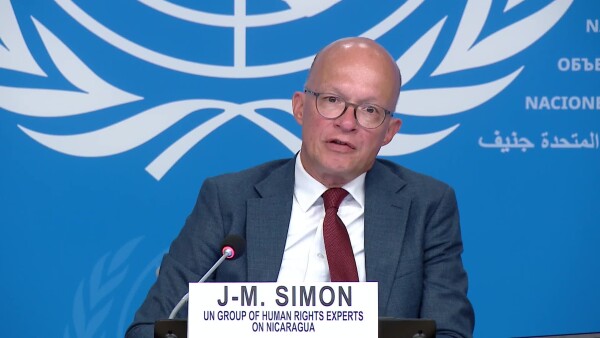
Press conference on the situation of human rights in Nicaragua by the UN Group of Human Rights Experts