

The United Nations Office at Geneva
Multimedia Newsroom
Press Conferences | OHCHR , UNHCR , IFRC , UNECE , UNESCO
UN Geneva Press Briefing - 18 February 2025
UN GENEVA PRESS BRIEFING
18 February 2025
Entrenched impunity fueling violations in Sudan
Ravina Shamdasani, for the Office of the High Commissioner for Human Rights (OHCHR), stated that entrenched impunity was fuelling gross human rights violations and abuses in Sudan as fighting spread to more parts of the country and involved additional armed actors. New OHCHR report called for a broader international effort towards accountability and to stem the flow of arms. The report detailed attacks on densely populated areas, as well as IDP camps, health facilities, markets, and schools. It also documented ethnically motivated summary executions and highlighted a sustained pattern of attacks on medical facilities.
“The continued and deliberate attacks on civilians and civilian objects, as well as summary executions, sexual violence and other violations and abuses, underscore the utter failure by both parties to respect the rules and principles of international humanitarian and human rights law,” said UN High Commissioner for Human Rights Volker Türk. “Some of these acts may amount to war crimes. They must be investigated promptly and independently, with a view to bringing those responsible to justice,” he added.
Since the beginning of the conflict in April 2023, the conflict had triggered the world’s largest displacement crisis and an unprecedented food security situation, with half the population facing acute food insecurity and with famine conditions confirmed in at least five locations. The conflict had also undermined the rights to health and education, with 70 to 80 per cent of health facilities rendered non-functional and over 90 per cent of school-age children left with no access to formal education. In all, throughout 2024, the Office had documented more than 4,200 civilian killings in the context of hostilities. The total number of civilian casualties was likely much higher, given the significant security, access and telecommunications challenges. Ms. Shamdasani stressed that accountability, regardless of the rank and affiliation of the perpetrators, was critical to breaking the recurring cycle of violence and impunity in Sudan.
Li Fung, Head of the OHCHR office in Sudan, speaking from Port Sudan, said that the report highlighted the extension of the conflict and detailed the impact of the conflict on the enjoyment of human rights. OHCHR had documented multiple attacks on civilian objects, including deliberate attacks on health facilities, said Ms. Fung. Thousands of civilian lives had been lost as a result of hostilities and targeted attacks against civilians, as well as summary executions. Some 152 incidents of conflict-related sexual violence had been recorded as of the end of 2024; this deplorable tactic was consistently used as a weapon of war by a growing number of actors. Multiple cases of disappearances and missing persons had also been recorded. The report recorded various violations of the international humanitarian law; the entrenched impunity was still prevalent, which was why accountability was as necessary as ever. Civilians continued to bear the brunt of the hostilities. OHCHR was particularly concerned over Rapid Support Forces (RSF) repeated attacks on Zamzam IDP camp in Al Fasher. OHCHR had also received reports about threats against humanitarian volunteers and was particularly troubled by the growing ethnically based nature of the conflict. Kassab Camp, for example, was hosting hundreds of thousands of internally displaced persons, many of whom had been displaced multiple times. Ms. Fung was working on reinitiating dialogue with the authorities, at a time when it was important to bring the focus back to the Sudan crisis. It was critical to allow that humanitarian aid be allowed to reach those in need.
Full OHCHR report is available here.
Alessandra Vellucci, for the United Nations Information Service (UNIS), said that the previous day, the United Nations and partners had launched the 2025 humanitarian and refugee response plans for Sudan, appealing for a combined USD six billion to assist nearly 26 million people inside the country and in the region.
Responding to questions from the media, Ms. Fung, for the OHCHR, said that it was difficult to obtain comprehensive figures on ethnically motivated attacks in Al Jazeera, Khartoum, and North Kordofan, but they were generally retaliatory in nature against civilians perceived as being associated with the RSF. Multiple recorded cases of rape were also believed to be ethnically motivated. Weapons continued to flow into Sudan, said Ms. Shamdasani, also for the OHCHR, replying to another question. The arms embargo currently in place on Darfur ought to be respected and expanded to the whole country, as those arms were regularly used to breach international humanitarian law. Countries with influence, in particular, were urged to act in this regard. Violations had been recorded by both the Sudanese Armed Forces and the Rapid Support Forces. This was a protection crisis, which was driving a massive humanitarian crisis, stressed Ms. Fung. Speaking for UNIS, Ms. Vellucci reminded of the Secretary-General’s participation at the African Union Summit in Addis Ababa, where had primarily focused on the conflicts in Sudan and the Democratic Republic of the Congo.
Three years of full-scale invasion of Ukraine
Philippe Leclerc, Director of the Regional Bureau for Europe for the United Nations Refugee Agency (UNHCR), said that, three years on, the full-scale war on Ukraine had taken thousands of lives, caused untold destruction, torn families apart, inflicted significant psychological trauma and devastated the country’s economy and infrastructure. In the last six months alone, more than 200,000 people had fled their homes in eastern Ukraine as attacks increased. As human suffering continues, providing immediate life-saving assistance to those most affected as well as opportunities to recover is more needed than ever.
UNHCR estimated that 10.6 million Ukrainians were displaced – almost a quarter of its pre-war population: 3.7 million inside Ukraine and 6.9 million refugees. More than two million homes across Ukraine – ten per cent of the housing stock – had been damaged or destroyed. Repeated attacks on energy infrastructure continued to plunge people into cold and darkness, while further disrupting strained local services. Many of the most vulnerable people continued to find safety in collective sites. The impact on mental health had also been profound amid the incessant threat of missiles and drones, long periods of family separation, and cumulative trauma; children were particularly vulnerable, with 1.5 million at risk of long-term mental health consequences.
Mr. Leclerc stressed that funding had long been a challenge, and it was now more uncertain than ever. For the last three years, Ukraine’s neighbours had shown compassion and commitment by including refugees in their national systems. Refugees had also worked hard to rebuild their lives in their new communities. International support for refugees and their hosts was crucial to sustain hope. UNHCR and its partners would continue working to make sure that effective and sustainable humanitarian aid reaches those most in need.
Full UNHCR statement can be found here.
Alessandra Vellucci, for the United Nations Information Service (UNIS), informed that the 2025 humanitarian response plan for Ukraine was currently only 12.7 percent funded.
Birgitte Bischoff Ebbesen, Regional Director for Europe at the International Federation of Red Cross and Red Crescent Societies (IFRC), who had just come from Ukraine, spoke of witnessing people living in the constant shadow of the conflict. Relentless air raids were part of daily lives, taking their toll on people’s mental health. While staying abroad for many Ukrainians was no longer sustainable, returning home was also bringing a different kind of uncertainty. Nearly 80 percent of returnees to frontline areas spoke of unmet humanitarian needs; at the same time, since October 2024, prices in Ukraine had increased by 50 percent. Ms. Ebbesen spoke of the resilience of people she had met in border areas, who were determined to stay and carry on.
She explained how Ukrainian Red Cross first responders were going into the areas when everyone else was fleeing in the opposite direction. Communities in Ukraine were finding ways to rebuild and help themselves recover, often by using innovative solutions. Whether there was a peace agreement or not, massive humanitarian needs would continue long after the fighting had ended. The Red Cross network continued to provide all the support it could, along with the Ukrainian Red Cross. As policies in some host countries in Europe were changing, Ukrainian refugees were often left with impossible choices; it was as important as ever for host countries and donors to continue with their generosity.
Answering questions from the media, Mr. Leclerc, for UNHCR, thanked all European countries which continued to provide support to more than six million Ukrainian refugees. The temporary protective measures in the EU were confirmed to continue until at least March 2026. He stressed that all parts of Ukraine continued to be hit regularly, and there were no “safe” oblasts, which was why temporary protection ought to continue for as long as the war in Ukraine had not stopped. Sustainable peace was the key factor in a potential future return of Ukrainian refugees. Some refugees were moving back and forth, he said, keeping their ties to their homeland while living abroad.
Dire situation in the Democratic Republic of the Congo
Ravina Shamdasani, for the Office of the High Commissioner for Human Rights (OHCHR), stated that the situation in the eastern Democratic Republic of the Congo was deteriorating sharply, resulting in serious human rights violations and abuses, such as summary executions, including of children, and conflict-related sexual and gender-based violence. There had also been attacks on hospitals and humanitarian warehouses, as well as threats against the judiciary. The Rwanda-backed M23 advance to South Kivu had plunged the region into a complex security and humanitarian crisis, provoking population displacement.
OHCHR had confirmed cases of summary execution of children by M23 after they had entered the city of Bukavu the previous week. OHCHR called on Rwanda and M23 to ensure that human rights and international humanitarian law are respected. Following the prison break from Kabare and Bukavu central prisons on 14 February, OHCHR had received protection requests from victims and witnesses, who feared retaliation from escapees. OHCHR had also received reports that journalists, human rights defenders and members of civil society organisations had been threatened and forced to leave the area.
UN Human Rights Chief Volker Türk called on Rwanda and M23 to protect all individuals in territories under their control. The risks of this spilling over into an even deeper and wider conflict were frighteningly real and will have even more devastating consequences for civilians, concluded Ms. Shamdasani. OHCHR statement is available here.
Matthew Saltmarsh, for the United Nations Refugee Agency (UNHCR), informed that between 10,000 and 15,000 people had crossed into Burundi over the last few days, fleeing escalating tension and violence in the Democratic Republic of the Congo. Most of those arriving were Congolese, mainly from the Bukavu area in South Kivu province, where the situation continued to deteriorate. A smaller number of Burundian nationals had also returned to their country fleeing clashes. People were mainly arriving at the Gatumba border post close to the capital Bujumbura, exhausted and traumatized, many separated from their families with little information on their whereabouts. Teams from UNHCR and its partners were present to ensure people arriving in search of safety received the support they needed as they awaited registration and further reception procedures.
There were also reports of thousands arriving through unofficial border points including along the Rusizi River near Rugombo, with reports of several individuals drowning. Conditions in the communities near the border were extremely dire, with a lack of shelter, water and sanitation facilities. National authorities in Burundi, with UNHCR support, were verifying and screening new arrivals to identify those in need of international protection and informing new arrivals on available services. In collaboration with the Government of Burundi, UNHCR and partners were working to ensure that refugees can access the assistance and protection they needed. Mr. Saltmarsh reminded that the new influx joined the 91,000 refugees and asylum-seekers Burundi currently hosted, mainly from the DRC, and many of whom had been in the country for decades.
UNHCR statement is available here.
Answering questions, Ms. Shamdasani, for the OHCHR, said that the situation on the ground was very chaotic and some reports were difficult to confirm. There were videos of children in their early teens using abandoned uniforms and weapons; in one recorded incident, three of those children had been summarily executed by M23 forces. UNICEF had recently issued a very strong press release on violence against children, including sexual violence. There was unfortunately history of such violence in this part of the country. Since the fall of Goma, many reports of sexual violence had been received. Ms. Vellucci, for UNIS, referred to a statement by the UN Secretary-General, who had stressed that there was no military solution to the conflict, which risked spilling over across the region. Mr. Saltmarsh, for the UNHCR, spoke of a number of informal border crossings between the DRC and Burundi, some of which had seen hundreds of daily crossings. UNHCR’s 2025 appeal for the DRC was currently ten percent funded, while its 2024 appeal for Burundi had been 40 percent funded.
Persecution of opponents and activists in Tunisia
Thameen Al-Kheetan, for the Office of the High Commissioner for Human Rights (OHCHR), stated that the Tunisian authorities had to bring an end to the pattern of arrests, arbitrary detentions and imprisonment of dozens of human rights defenders, lawyers, journalists, activists and politicians. Many of them were being held in pre-trial detention, facing broad and vague accusations apparently following the exercise of their rights and freedoms. This raised concerns with respect to violations of their right to freedom of expression, as well as fair trial and due process rights. For example, Abderrazak Krimi, project director of the Tunisian Refugee Council, was now entering his third week on hunger strike in detention; he was accused of illegally sheltering sub-Saharan migrants. Former Truth and Dignity Commission President Sihem Bensedrine, 75 years old, remained in prison, awaiting trial. The previous month, the authorities had extended her detention for four more months; Ms. Bensedrine had been taken to hospital recently after being on hunger strike for two weeks.
UN High Commissioner for Human Rights Volker Türk called on the Tunisian authorities to cease all forms of persecution of political opponents, and to respect the rights to freedom of opinion and expression. He also appealed for the immediate release, on compassionate grounds, of those who are of an advanced age and those who suffer from health problems. All those arbitrarily detained had to be immediately and unconditionally released. Those charged with offences ought to be guaranteed fair trial and due process.
OHCHR statement can be read here.
Road safety
Jovana Miočinović, for the Economic Commission for Europe (UNECE), stated that wearing quality helmets reduced the risk of death for drivers and passengers of powered two- and three-wheelers by over six times and reduced the risk of brain injury by up to 74 percent. UN regulation No. 22 had provided countries with the blueprint to legislate the use of tested and certified helmets for over 50 years. Already applied in 43 countries, millions of lives could be saved through the worldwide application of this standard. As governments and stakeholders met for the 4th Ministerial Conference on Road Safety in Marrakech on 18-20 February, UNECE and the UN Secretary-General’s Special Envoy for Road Safety, Jean Todt, were launching a call for widespread enforcement of UN Regulation 22.
Over the past decades, two- and three-wheeler use had grown rapidly as many low-and -middle-income countries had motorized over the last 20-30 years. Motorcycles comprised nearly 70 percent of the national vehicle fleet in countries like India, Indonesia, the Philippines and China. However, the lack of a widespread, systematic approach to ensuring safety had led to a huge increase in deaths and injuries. According to the 2023 Global Road Safety report of the World Health Organization, motorcyclists and other powered two- and three-wheeler riders represented 30 percent, or 357,000 deaths of the 1.19 million global road traffic deaths every year. In order to make safe helmets available to many more road users in developing countries, Special Envoy Todt had launched the Safe and Affordable Helmets Initiative in 2020. The initiative promoted safe helmet use and the development and mass production of UN-certified helmets in developing countries themselves. As a result, producers in India, Indonesia, Spain, and South Korea had already started manufacturing UN-certified helmets for retail at around USD 20, and more than 40,000 helmets financed by partners of the initiative were distributed in some 17 countries.
Announcements
Francesca Lualdi, for the United Nations Educational, Scientific and Cultural Organization (UNESCO), said that the proclamation of 2025 as the International Year of Quantum Science and Technology called on the global community to come together to explore the transformative potential of quantum technologies, raise public awareness, and address future challenges and opportunities. As part of this initiative, the UNESCO Liaison Office in Geneva, in collaboration with OQI, was organizing the Inauguration of the International Year of Quantum Science and Technology. The event was to take place on 21 February at the Conservatoire de Genève, with the possibility of hybrid participation.
Alessandra Vellucci, for the United Nations Information Service (UNIS), informed that the President of the UN Human Rights Council, Jürg Lauber, would hold a press conference on 19 February at 10 am to speak about the upcoming 58th session of the Human Rights Council.
The Committee on the Elimination of Discrimination Against Women was going to close its 90th session on 21 February, and issue its concluding observations on the reports of the eight countries reviewed: Democratic Republic of the Congo, Nepal, Belarus, Luxembourg, Belize, Congo, Sri Lanka, and Liechtenstein.
The Committee on Economic, Social and Cultural Rights was finishing this morning its review of the report of Rwanda.
The Conference on Disarmament would hold a public plenary meeting on 20 February at 10 am.
***
Similar Stories
1
12
1
1
Press Conferences , Images | UNOG
Closing Press Conference following the Sixth Consultative Meeting on Enhancing Coordination of Peace Initiatives and Efforts in Sudan

2
17
1
2
Edited News , Press Conferences , Images | OCHA , WMO
Two UN agencies teamed up on Wednesday to issue an appeal for immediate assistance to help communities already being impacted by the strongest El Niño on record.
1
1
1
Press Conferences | CITES
Wildlife trade and conservation policy discussions at the 81st meeting of the CITES Standing Committee (SC81)
1
1
1
Press Conferences | UNHCR , UNCTAD , WMO , OCHA , UNICEF , WHO
UNHCR Hungary’s 1956 Refugee Crisis: 70 Years On, UNCTAD World Investment Forum 2026, Doha, WMO Greenhouse Gas Bulletin and Climate Update for COP31, OCHA Afghanistan: Malnutrition, Girls’ Education and Recovery, UNICEF Yemen: Child Malnutrition and Unsafe Water in Taiz, WHO Inequalities in Noncommunicable Diseases and Risk Factors
1
1
1
Press Conferences | UNHCR
End of UNHCR's 77th Annual Executive Committee (ExCom) meeting week
1
1
1
Press Conferences | UNICEF , IOM , UNHCR
UN Special Assistant to the Personal Envoy Office (SUDAN): Peace Initiatives and Efforts in Sudan; UNICEF: Dire situation of children in Gaza; IOM: Damaged Homes and Energy Attacks Risk Displacing Ukrainians for this winter; UNHCR: update on EXCOM week
1
1
1
Press Conferences | IOM , UNDRR
UN stresses importance of household preparedness for disaster risk reduction.
1
1
1
Statements , Press Conferences | OHCHR
1
1
1
Press Conferences | UNHCR , UNICEF , IFRC , OHCHR , UN WOMEN , IOM , OCHA , WHO
UNHCR – ExCom Meeting, UNICEF – Nepal Recovery, IFRC – Flash Floods, WHO – Mental Health, IOM – South Sudan Floods, OCHA – DRC Humanitarian aid, UNHCR – Sahel Displacement, UNICEF – Yemen Update, IOM – Gaza Shelter, UN Women – Gaza Women, OHCHR – Arrests and detentions of Syrians by Israeli force
2
1
2
Press Conferences | UNCTAD
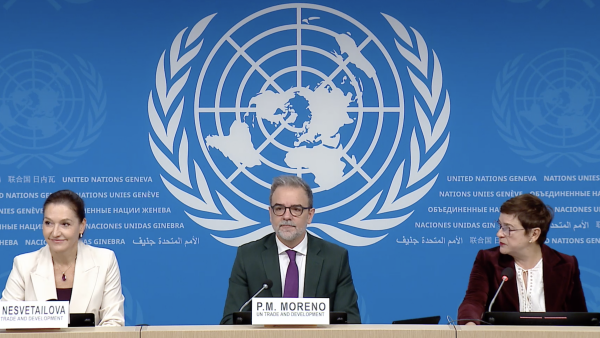
Presentation of the Trade and Developement Report 2026
Embargoed until 9 October 2026 at 11 a.m. (Geneva Time)
UNCTAD: UNCTAD’s flagship report finds that governments increasingly use industrial, trade, financial and technology policies to pursue economic and national security objectives. Market access and the ability to move into higher-value activities now depend more heavily on technology, finance and geopolitics.
1
1
1
Press Conferences | UPU
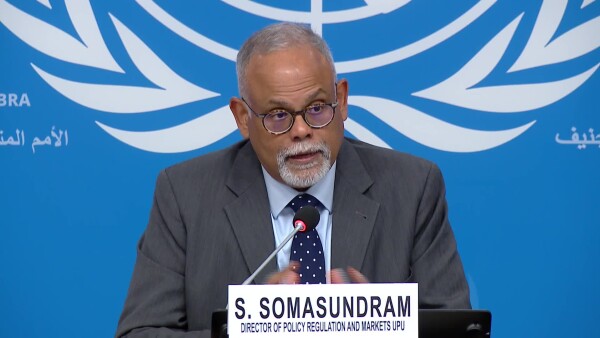
Release of the State of the Postal Sector Report 2026