

The United Nations Office at Geneva
Multimedia Newsroom
24 January 2025
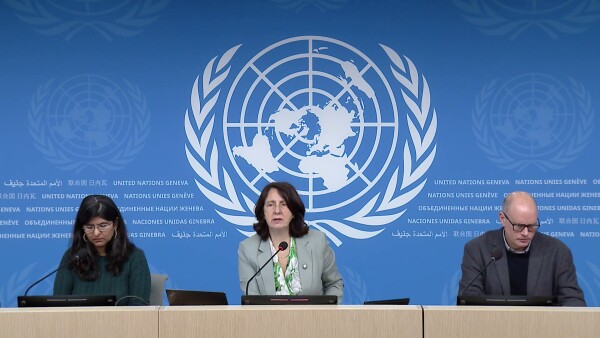
Alessandra Vellucci, Director of the United Nations Information Service in Geneva, chaired a hybrid press briefing, which was attended by the spokespersons of the Office of the High Commissioner for Human Rights, the United Nations Refugee Agency, the Office for the Coordination of Humanitarian Affairs, and the World Health Organization.
Deteriorating situation in eastern Democratic Republic of the Congo
Alessandra Vellucci, for the United Nations Information Service, read a statement by the Spokesperson of the UN Secretary-General about the deteriorating situation in eastern Democratic Republic of the Congo (DRC). The Secretary-General was alarmed by the resumption of hostilities in eastern DRC. He condemned, in the strongest terms, the renewed offensive launched by the 23 March Movement (M23) since the beginning of the year and its expansion into North Kivu and South Kivu, including the recent seizure of Sake, which increased the threat to the town of Goma. This offensive had a devastating toll on the civilian population and heightened the risk of a broader regional war.
The Secretary-General further called on the M23 to immediately cease its offensive, withdraw from all occupied areas and abide by the 31 July 2024 ceasefire agreement. He was deeply troubled by the most recent report of the Group of Experts established pursuant to Security Council Resolution 1533, concerning the presence of Rwandan troops on Congolese soil and continued support to the M23. He called on all actors to respect the sovereignty and territorial integrity of the Democratic Republic of the Congo and to put an end to all forms of support to armed groups, whether Congolese or foreign.
It was imperative for the M23 to lay down their weapons and abide by the peace process, stressed the UN peacekeeping mission in the country, MONUSCO.
The full statement can be accessed here.
Matthew Saltmarsh, for the United Nations Refugee Agency (UNHCR), said that the UNHCR was gravely concerned about the safety and security of civilians and internally displaced people (IDPs) in the eastern Democratic Republic of the Congo, as conflict further intensified across South and North Kivu Provinces. The number of people displaced had now surged to more than 400,000 this year alone, almost double the number reported just previous week. Bombs had fallen on IDP sites: on 20 January, explosions at Kitalaga site in South Kivu had killed two children, while on 21 January, five makeshift shelters had been destroyed in Nzuolo and just the previous day, Bushagara site had been heavily impacted, causing panic and new waves of forced displacement.
Violence had also escalated in South Kivu’s Minova and Kalehe territories, displacing an additional 178,000 people as intense clashes led to non-state armed groups taking control of the town of Minova and the locality of Kalungu. At least 80 per cent of the population had fled towards the city of Goma. Meanwhile, fighting had also intensified in the North Kivu town of Saké, approximately 25 kilometres from Goma, culminating in non-state armed groups seizing control. Heavy bombardments had caused families from at least nine displacement sites on the periphery of Goma to flee into the city to seek safety and shelter. Many had spent the previous night sleeping on the streets and in green spaces across the city. UNHCR echoed the UN Secretary-General’s call to uphold human rights and international humanitarian law, and to ensure immediate and unrestricted access to populations in need of humanitarian assistance. UNHCR also urged all parties to prioritize the protection of civilians, respect the civilian nature of IDP sites and refrain from using explosives and heavy weapons in overcrowded civilian environments.
UNHCR’s statement can be read here.
Ravina Shamdasani, for the Office of the High Commissioner for Human Rights (OHCHR), stated that the OHCHR was deeply alarmed at the heightened risk of an attack by the M23 armed group on Goma, the capital of North Kivu, in the eastern DRC. The M23 had recently taken control of the city of Sake following fighting with the DRC armed forces. Recent hostilities between the M23, the DRC army and other armed groups in the village of Bweremana, about 50 km from Goma, had left at least 18 civilians dead.
Some 400,000 people had been displaced in North and South Kivu since the beginning of this year alone. Any such attack on Goma risked catastrophic impacts on hundreds of thousands of civilians, putting them at heightened exposure to human rights violations and abuses. The High Commissioner for Human Rights was calling on all parties to the conflict to de-escalate tensions and, consistent with their obligations and responsibilities under international human rights and humanitarian law, to ensure that civilians are unharmed. They had to respect the principles of distinction, precaution, and proportionality, and ensure those in need have safe and unfettered access to humanitarian aid.
The full statement is available here.
Answering questions from the journalists, Mr. Saltmarsh, for the UNHCR, said that the options for the displaced people were currently very limited. They could go to displacement camps, but many remained in the areas occupied by armed groups to which humanitarians did not have access. The crisis in the DRC was largely forgotten; current UNHCR’s appeal was only ten percent funded, reminded Mr. Saltmarsh. UNHCR had no information on people having crossed into Rwanda or Uganda but was continuing to monitor the situation. It should not be forgotten that the DRC was hosting over half a million refugees from other countries. Ms. Vellucci, for UNIS, informed that the 2025 Humanitarian Response Plan for the DRC asked for USD 2.54 billion. Ms. Shamdasani, for the OHCHR, stressed that sexual violence was a horrific component of this conflict; many women and girls had been raped and killed, and the cases were certainly underreported. Responding to further questions, Ms. Shamdasani said that M23 was quite well-funded. The High Commissioner for Human Rights had already called for States to stop their support for this armed group.
Israeli operations in the occupied West Bank
Thameen Al-Kheetan, for the Office of the High Commissioner for Human Rights (OHCHR), stated that the OHCHR was deeply concerned by the use of unlawful lethal force in Jenin, in the occupied West Bank. The deadly Israeli operations in recent days raised serious concerns about unnecessary or disproportionate use of force, including methods and means developed for war fighting, in violation of international human rights law, norms and standards applicable to law enforcement operations. This included multiple airstrikes and apparently random shooting at unarmed residents attempting to flee or find safety.
Israel, as the occupying power, had the responsibility to protect the population in the territory it occupies. As UN High Commissioner for Human Rights Volker Türk had stressed, Israel had to adopt and enforce rules of engagement that are fully in line with applicable human rights norms and standards. OHCHR had verified that at least 12 Palestinians had been killed and 40 injured by Israeli security forces this week, most of them reportedly unarmed. Among the injured were a doctor and two nurses, according to the Palestinian Red Crescent.
All killings in a law enforcement context had to be thoroughly and independently investigated and those responsible for unlawful killings must be held to account. By persistently failing, over the years, to hold accountable members of its security forces responsible for unlawful killings, Israel was not only violating its obligations under international law, but risked encouraging the recurrence of such killings.
OHCHR called for an immediate end to the violence in the West Bank. OHCHR also called on all parties, including third States with influence, to do everything in their power to ensure peace is achieved in the region.
Full statement is available here.
Alessandra Vellucci, for the UN Information Service, referred to the statement by the UN Secretary-General to the Security Council on 20 January, in which he said that the situation in the West Bank continued to worsen, with clashes, airstrikes, and unabated illegal settlement expansion and demolitions.
Answering questions, Ms. Al-Kheetan stressed that it was concerning that the violence in the West Bank could have repercussions on the ceasefire in Gaza, which had to hold. He reminded that the presence of settlements in the West Bank was illegal and ought to be ended. All States should use their leverage to help end the presence of the illegal settlements, in line with the opinions of the International Court of Justice.
2025 Nigeria Humanitarian Response Plan
Jens Laerke, for the Office for the Coordination of Humanitarian Affairs (OCHA), said that OCHA had just launched the 2025 response plan for Nigeria which again focused on the troubled north-eastern states of Borno, Adamawa and Yobe where conflict, climate shocks and economic instability were exacting a heavy toll on civilians. The aim was to reach a total of 3.6 million people in the north-east with health services; food; water, sanitation, and hygiene; nutrition for children; protection; education and other vital support. The appeal asked for USD 910 million in funding. This plan, explained Mr. Laerke, aimed at further enhancing the efficiency in aid delivery, to make scarce resources go further.
The 2025 appeal overview can be read here, and the press release is available here.
US policy on migrants and refugees
Responding to questions related to recent US executive orders about migrants and refugees, Ravina Shamdasani, for the Office of the High Commissioner for Human Rights (OHCHR), said that the OHCHR engaged with all States, civil society interlocutors and other players involved in human rights. OHCHR reminded that, while States were entitled to exercise jurisdiction along their sovereign borders, they also had to respect their international human rights obligations. States ought to enlarge both availability and accessibility of pathways towards asylum.
Matthew Saltmarsh, for the United Nations Refugee Agency (UNHCR), answering a question, said that the UNHCR had been working very closely with the United States for many decades and would continue to work with the US to help people who were forced to flee. The US had for a long time been a global leader in assisting those fleeing conflict, violence, and persecution. UNHCR was currently studying the substance of this week’s executive orders and was not able to comment on them yet. UNHCR’s position on asylum, however, was well-known: asylum seekers had to have access to fair and efficient procedures to hear their claims. They should not be returned to places where they were facing harm. Refugee resettlement was a crucial measure to help those most at risk, such as women and children. UNHCR was ready to continue working with the new US administration, including through following up on the issue of refugee resettlements. There was agreed international law on refugee protection, along with national laws, which ought to be respected. On another question, Mr. Saltmarsh said that Mexico had for a long time been a champion of refugee rights through its asylum system. That would be of great value in the times ahead. The Mexican government said it was prepared to respond to potential deportations from the US, including setting up collective centres in the north of Mexico and relocating people to other parts of the country. UNHCR stood ready to assist in the months ahead, as needed.
Ms. Shamdasani added that migrants, especially undocumented migrants, were among the most vulnerable categories. Humane and human rights considerations had to be at the centre of any government actions. OHCHR had an office in Mexico, continued to monitor the situation and maintained contact with national authorities.
United States and the World Health Organization
In a response to questions, Cristian Lindmeier, for the World Health Organization (WHO), said that the WHO regretted the announcement by the United States of America (USA) that it would withdraw from the Organization and hoped that this decision would be reconsidered. WHO worked everywhere, he reminded, and its work also helped protect the US, by assessing and reporting health situations around the world in real time. The USA’s withdrawal would be more of a concern for global health than for the WHO itself. People of the world and global health would lose out. On another question, Mr. Lindmeier said that climate change and health would remain among the priorities for the WHO.
Over the past seven years, the WHO had implemented the most serious reforms in its history, which had made it more cost-effective and efficient. The announced USA’s withdrawal was now being taken into consideration for making future decisions related to human resources, procurement, and operations in Geneva and globally. WHO had collaborative relationships around the world, but for the WHO to have teams on the ground, that would need to be approved by a host country. Through this and other networks, as well as international health regulations, the WHO was in a regular contact with the Member States about outbreaks. If this chain of communication with the USA were to be broken, it would have repercussions for both US citizens and citizens of other countries. The USA had not yet paid its 2024 assessed contribution of some USD 130 million, due in January 2024. The WHO had not yet received the 2025 assessed contribution either. Both arrears would have to be paid in full before the USA could finalize its withdrawal. On the other hand, voluntary contributions could be cut at any time, explained Mr. Lindmeier answering to a final question.
Situation in Syria
Replying to a question, Ravina Shamdasani, for the Office of the High Commissioner for Human Rights (OHCHR), reminded that the High Commissioner had recently visited Syria, during which time he had met with civil society representatives, including women. Women’s participation was a key to ensuring a successful transition. The OHCHR continued to closely monitor the situation in the country; both men and women had been victims of killings, abductions and looting incidents, and it was difficult to ascertain whether women had been targeted because of their gender.
Alessandra Vellucci, for the United Nations Information Service, said that ensuring women’s rights was essential. No society could flourish without giving equal opportunities to everyone. UN urged the Syrian authorities to ensure that women’s rights were fully respected and that women were given an equal voice in deciding the future of the country.
Matthew Saltmarsh, for the United Nations Refugee Agency (UNHCR), informed that the High Commissioner, Filippo Grandi, was traveling to Damascus to meet the new administration, and would then go on to Türkiye to discuss responsible returns in line with international standards.
Announcements
Matthew Saltmarsh, for the United Nations Refugee Agency (UNHCR), informed that today, the UNHCR would issue a press release on the global emergencies it had addressed in 2024. In total, the UNHCR had assisted with 43 emergencies in 2024, one-third of which had been linked to climate change-related disasters.
Alessandra Vellucci, for the United Nations Information Service (UNIS), informed that on 27 January, UN Geneva would host a solemn ceremony to commemorate the Holocaust Remembrance Day. This Day marked the anniversary of the liberation of the Auschwitz concentration camp – the 80th, this year. The event, to be held in Room XVIII from 1 pm, would be webcast live at UNTV and UN Geneva’s Facebook page. More information about the event is available here.
The Committee on the Rights of the Child was going to conclude this afternoon its review of the report of Ecuador.
Finally, Ms. Vellucci informed that on 30 January at 4:30 pm Geneva time, the Secretary-General would hold a press conference in New York to present his 2025 priorities. Journalists in Geneva could follow it on UN Web TV.
***
Similar Stories
1
12
1
1
Press Conferences , Images | UNOG
Closing Press Conference following the Sixth Consultative Meeting on Enhancing Coordination of Peace Initiatives and Efforts in Sudan

2
17
1
2
Edited News , Press Conferences | OCHA , WMO
Two UN agencies teamed up on Wednesday to issue an appeal for immediate assistance to help communities already being impacted by the strongest El Niño on record.
1
1
1
Press Conferences | CITES
Wildlife trade and conservation policy discussions at the 81st meeting of the CITES Standing Committee (SC81)
1
1
1
Press Conferences | UNHCR , UNCTAD , WMO , OCHA , UNICEF , WHO
UNHCR Hungary’s 1956 Refugee Crisis: 70 Years On, UNCTAD World Investment Forum 2026, Doha, WMO Greenhouse Gas Bulletin and Climate Update for COP31, OCHA Afghanistan: Malnutrition, Girls’ Education and Recovery, UNICEF Yemen: Child Malnutrition and Unsafe Water in Taiz, WHO Inequalities in Noncommunicable Diseases and Risk Factors
1
1
1
Press Conferences | UNHCR
End of UNHCR's 77th Annual Executive Committee (ExCom) meeting week
1
1
1
Press Conferences | UNICEF , IOM , UNHCR
UN Special Assistant to the Personal Envoy Office (SUDAN): Peace Initiatives and Efforts in Sudan; UNICEF: Dire situation of children in Gaza; IOM: Damaged Homes and Energy Attacks Risk Displacing Ukrainians for this winter; UNHCR: update on EXCOM week
1
1
1
Press Conferences | IOM , UNDRR
UN stresses importance of household preparedness for disaster risk reduction.
1
1
1
Statements , Press Conferences | OHCHR
1
1
1
Press Conferences | UNHCR , UNICEF , IFRC , OHCHR , UN WOMEN , IOM , OCHA , WHO
UNHCR – ExCom Meeting, UNICEF – Nepal Recovery, IFRC – Flash Floods, WHO – Mental Health, IOM – South Sudan Floods, OCHA – DRC Humanitarian aid, UNHCR – Sahel Displacement, UNICEF – Yemen Update, IOM – Gaza Shelter, UN Women – Gaza Women, OHCHR – Arrests and detentions of Syrians by Israeli force
2
1
2
Press Conferences | UNCTAD
Presentation of the Trade and Developement Report 2026
Embargoed until 9 October 2026 at 11 a.m. (Geneva Time)
UNCTAD: UNCTAD’s flagship report finds that governments increasingly use industrial, trade, financial and technology policies to pursue economic and national security objectives. Market access and the ability to move into higher-value activities now depend more heavily on technology, finance and geopolitics.
1
1
1
Press Conferences | UPU
Release of the State of the Postal Sector Report 2026
1
1
1
Press Conferences | IOM , ITU , UNECE , UNICEF , WHO , WMO
UNICEF: Ebola, DRC - children orphans or separating them from parents and caregivers; IOM: Humanitarian needs in Djibouti amid arrivals from Yemen and increased migrant movements; WHO: Darfur, scale of health needs far exceeds available resources; WMO co-sponsored Global Heat Forum, Bangkok, monthly Global Seasonal Climate Update; UNECE: UN Forum of Mayors; ITU Plenipotentiary Conference 2026; WHO: child and adolescent obesity guidelines and new global roadmap to tackle pregnancy hypertension, a leading cause of maternal mortality