

The United Nations Office at Geneva
Multimedia Newsroom
UN GENEVA PRESS BRIEFING
14 January 2025
Increasing displacement in Haiti
Alessandra Vellucci, for the United Nations Information Service (UNIS), reminded that on 12 January, the global community had marked fifteen years since the devastating 2010 earthquake in Haiti. The Secretary-General remembered the victims of the earthquake and continued to honour their legacy through the United Nations work in the country. He also paid tribute to the 102 UN colleagues, who had died on that day, including the Head of the Mission at the time, Hédi Annabi.
Kennedy Okoth Omondi, for the International Organization for Migration (IOM), stated that more than a million people were now believed to be internally displaced in Haiti. Children bore the greatest burden of displacement, making up over half of the displaced population. This marked a threefold increase in displacement within a year, rising from 315,000 in December 2023 to over a million. In the capital alone, displacement had nearly doubled, rising by 87 per cent fueled by relentless gang violence, the collapse of essential services - particularly healthcare, and worsening food insecurity. The majority of the displaced originated from the metropolitan area of Port-au-Prince. Many were seeking refuge in Haiti’s provinces, overwhelming host communities and straining limited resources.
Compounding this crisis, 200,000 Haitians had been deported back to Haiti in 2024, further placing an even greater strain on the country’s already overwhelmed social services. Displacement sites, particularly concentrated in the capital, had surged in number, increasing from 73 to 108 within a year. Those sites were severely overcrowded and lacked adequate access to essential services such as food, clean water, sanitation, and education. Despite the challenges, IOM was delivering critical support to those in need. Access remained a major challenge, stressed Mr. Okoth Omondi. IOM reiterated the need for continued humanitarian assistance and unobstructed access. Those efforts are essential to breaking the cycles of violence and displacement, fostering stability in communities, and restoring hope for recovery.
Full statement is available here.
Ms. Vellucci informed that the USD 673.8 million Haiti Humanitarian Response Plan was currently only 42.5 per cent funded.
Most deportations in 2024 had come from the Dominican Republic, said Mr. Okoth Omondi responding to a question. People should not be deported to unsafe, unfavorable environments. Haiti was currently experiencing the largest levels of internal displacement, he stressed. The police force was making an effort to restore stability in Haiti, but it needed more support. Mr. Okoth Omondi also spoke of the crumbling social services in the country. Also answering a question, Ms. Vellucci said that some 750 security personnel had been deployed from Kenya, Guatemala, Jamaica, Bahamas, El Salvador, and Belize for the Multinational Security Support Mission in Haiti; and Kenya was planning to deploy further police officers. However, this was just a portion of the 2500 personnel initially planned for deployment. The trust fund to support this mission was currently underfunded.
Ongoing death and maiming of children in Syria due to unexploded ordnance
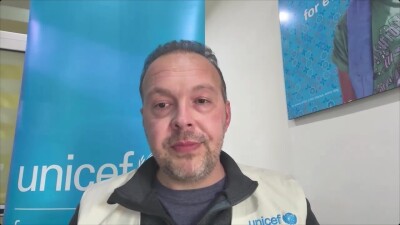
Ricardo Pires, for the United Nations Children’s Fund (UNICEF), speaking from Damascus, said that Syrian children continued to suffer the brutal impact of unexploded ordnance (UXO) at an alarming rate. In December 2024 alone, UNICEF had received reports of 116 children killed or injured by UXO, an average of nearly four per day. This was believed to be an underestimate given the fluidity of the humanitarian situation on the ground. Over the past nine years, said Mr. Pires, at least 422,000 incidents involving UXO had been reported in 14 Governorates across the country, with half estimated to have ended in tragic child casualties. As reconstruction efforts continued to be discussed, and the international community prepared to help Syria pave a new path for children, it was imperative that immediate investment take place to ensure the ground was safe and clear of explosives.
Over a decade of devastating conflict had left an estimated 324,000 pieces of unexploded ordnance across the country. This danger affected approximately five million children living in areas contaminated with UXO and landmines, which had become the leading cause of child casualties in Syria. Mr. Pires shared a story of several boys playing football at the outskirts of Hama and being killed and injured by an UXO. Life-changing injuries and disabilities often meant that they could not return to school or might find it harder to access proper healthcare. UNICEF and partners would continue to push for increased humanitarian demining efforts to remove the deadly remnants of war and make communities safe again. Mine-risk education would need to be expanded so children could recognize and avoid UXO, while comprehensive support for survivors, including medical care, rehabilitation, and psychosocial services, had to be provided so that they could regain their dignity and rebuild their lives. There was no hope for reconstruction in Syria when there was so much destruction still lying in wait on the ground. Syria could not move past this horrific war if children remained at risk of walking outside their doors and being blown up by explosives, concluded Mr. Pires.
Answering questions from the media, Mr. Pires said that the areas in Aleppo, Homs, and rural Damascus were particularly at risk. UNICEF’s role was to advocate for demining and ordnance clearing efforts. UNICEF was also educating children and their families about potential risks. The new authorities were urged to address the issue of UXOs without delay. Mr. Pires could not provide any information on new mines being potentially planted but reminded that with the fall of the previous government on 8 December, a lot of weapons and ammunition had been left behind. James Elder, also for UNICEF, added that tens of millions of USD were needed for demining efforts to save thousands of lives, which would help Syria return to being a stable, middle-income country.
Launch of the 2025 Humanitarian and Refugee Response Plans for Ukraine
Alessandra Vellucci, for the United Nations Information Service (UNIS), said that the Under-Secretary-General for Humanitarian Coordination and the High-Commissioner for Refugees, in collaboration with the Government of Ukraine and humanitarian partners, would jointly launch the 2025 Humanitarian Needs and Response Plan and the Regional Refugee Response Plan for Ukraine in the morning of 16 January. The two plans aimed to ensure the continuation of critical assistance for people affected by the humanitarian crisis in Ukraine, where over 12.7 million people required aid, and for the more than 6.8 million Ukrainian refugees worldwide. A press conference would be given by the heads of UNHCR and OCHA in Kyiv on 16 January at 1 pm Geneva time. Accredited media in Geneva and New York could submit questions in advance to huguenin@un.org. The press conference would be webcast on UN Web TV.
Babar Baloch, for the United Nations Refugee Agency (UNHCR), added that all the details of the two plans with updated figures would be shared in an embargoed press release expected on 15 January. Responding to a question, Mr. Baloch stressed it was the time to keep supporting people affected by the crisis in Ukraine, both inside the country and abroad.
Transition in Syria
Responding to questions from the journalists, Jenifer Fenton, for the Office of the Special Envoy for Syria (OSE), said that the Envoy, Geir Pedersen, had returned to Geneva from Riyadh. He had held a series of constructive meetings with the Syrian Foreign Minister and a number of other interlocutors. UN stood ready to assist Syria and its people. He would be ready to visit Syria again in the nearest future, while Deputy Envoy Najat Rochdi remained in Damascus. UNSC resolution 2254 (2015) could not be applied in a literal manner given the change of the context; there was a wide consensus that there would need to be a transparent, Syrian-led and inclusive transition, which would inspire public confidence. A new, credible constitution and free and fair elections were also needed, which were elements of the resolution which remained relevant, stressed Ms. Fenton. She reminded that the Special Envoy had last briefed the Security Council on 8 January and was expected to do it again soon.
Announcements
Alessandra Vellucci, for the United Nations Information Service (UNIS), informed that the first World Congress on Enforced Disappearances would take place in Geneva on 15 and 16 January. The event, to be held at be held at the Geneva International Conference Centre (CICG), would feature panel discussions on topics such as international responsibility for the forcibly disappeared, strengthening search procedures, and protecting victims, rights defenders, lawyers, and journalists. Onsite registration at the venue would be possible, and the meeting was open to the press.
The Committee on the Rights of the Child was concluding this morning its review of the report of Slovakia, begun the previous day. The Committee would also review Eritrea, Honduras, St Kitts and Nevis, Peru, Gambia, and Ecuador.
The 31st high-level meeting organized by the Nizami Ganjavi International Center and the United Nations Office at Geneva would be held in Room V of the Palais des Nations on 16 and 17 January. The event, focused on implementing the Pact for the Future and COP29 commitments, would be open to journalists.
On 17 January, the UNHCR, along with the Permanent Missions of Italy and the Holy See, would host at UNOG a screening of the movie “Cabrini” on Catholic missionary Francesca Cabrini. The lead actress, Cristiana Dell'Anna, would be at the screening to participate in the preceding panel. More information is available here.
***
ANNOUNCEMENTS:
- UNHCR, Babar Baloch: Ukraine and the Region: Joint Launch of the Humanitarian and Refugee ResponsePlans for 2025 (UNHCR and OCHA)
TOPICS:
- UNICEF, James Elder with Ricardo Pires, UNICEF’s Communication Manager for Emergencies: Ongoing death and maiming of children in Syria due to unexploded ordonances (UXOs).
- IOM Kennedy Okoth Omondi_ Increasing Displacement in Haiti and the Worsening Humanitarian Situation
Similar Stories
1
1
1
Press Conferences | UN WOMEN , WFP , WHO
UN WOMEN: Sudan Women and girls one year after the fall of El Fasher; increasing drone attacks across the country; WFP: DRC - Ebola spreads to eighth DRC province as WFP delivers food, builds treatment centres and keeps supplies moving; WHO - Update on Ebola (Bundibugyo Virus Disease)
1
12
1
1
Press Conferences , Images | UNOG
Closing Press Conference following the Sixth Consultative Meeting on Enhancing Coordination of Peace Initiatives and Efforts in Sudan

2
17
1
2
Edited News , Press Conferences , Images | OCHA , WMO
Two UN agencies teamed up on Wednesday to issue an appeal for immediate assistance to help communities already being impacted by the strongest El Niño on record.
1
1
1
Press Conferences | CITES
Wildlife trade and conservation policy discussions at the 81st meeting of the CITES Standing Committee (SC81)
1
1
1
Press Conferences | UNHCR , UNCTAD , WMO , OCHA , UNICEF , WHO
UNHCR Hungary’s 1956 Refugee Crisis: 70 Years On, UNCTAD World Investment Forum 2026, Doha, WMO Greenhouse Gas Bulletin and Climate Update for COP31, OCHA Afghanistan: Malnutrition, Girls’ Education and Recovery, UNICEF Yemen: Child Malnutrition and Unsafe Water in Taiz, WHO Inequalities in Noncommunicable Diseases and Risk Factors
1
1
1
Press Conferences | UNHCR
End of UNHCR's 77th Annual Executive Committee (ExCom) meeting week
1
1
1
Press Conferences | UNICEF , IOM , UNHCR
UN Special Assistant to the Personal Envoy Office (SUDAN): Peace Initiatives and Efforts in Sudan; UNICEF: Dire situation of children in Gaza; IOM: Damaged Homes and Energy Attacks Risk Displacing Ukrainians for this winter; UNHCR: update on EXCOM week
1
1
1
Press Conferences | IOM , UNDRR
UN stresses importance of household preparedness for disaster risk reduction.
1
1
1
Statements , Press Conferences | OHCHR
1
1
1
Press Conferences | UNHCR , UNICEF , IFRC , OHCHR , UN WOMEN , IOM , OCHA , WHO
UNHCR – ExCom Meeting, UNICEF – Nepal Recovery, IFRC – Flash Floods, WHO – Mental Health, IOM – South Sudan Floods, OCHA – DRC Humanitarian aid, UNHCR – Sahel Displacement, UNICEF – Yemen Update, IOM – Gaza Shelter, UN Women – Gaza Women, OHCHR – Arrests and detentions of Syrians by Israeli force
2
1
2
Press Conferences | UNCTAD
Presentation of the Trade and Developement Report 2026
Embargoed until 9 October 2026 at 11 a.m. (Geneva Time)
UNCTAD: UNCTAD’s flagship report finds that governments increasingly use industrial, trade, financial and technology policies to pursue economic and national security objectives. Market access and the ability to move into higher-value activities now depend more heavily on technology, finance and geopolitics.
1
1
1
Press Conferences | UPU
Release of the State of the Postal Sector Report 2026