

The United Nations Office at Geneva
Multimedia Newsroom
Press Conferences | OCHA , UNECE , UNHCR , UNITED NATIONS , OSES
UN Geneva Press Briefing - 10 December 2024
UN GENEVA PRESS BRIEFING
10 December 2024
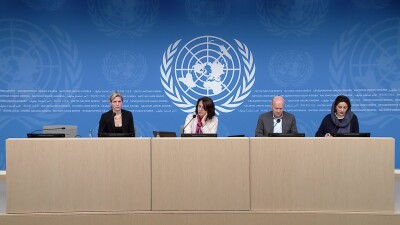
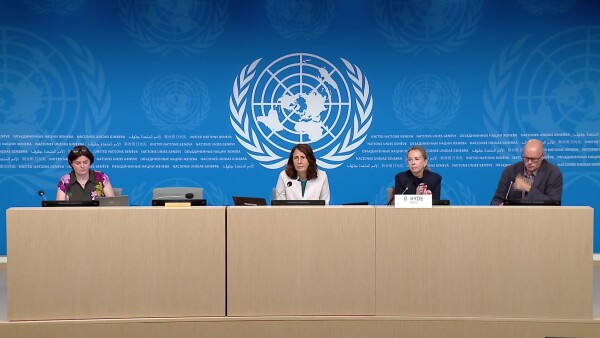
Alessandra Vellucci, Director of the United Nations Information Service in Geneva, chaired a hybrid briefing, which was attended by the Special Envoy for Syria and the spokespersons of the Office of the Special Envoy, the Office for the Coordination of Humanitarian Affairs, the United Nations Refugee Agency, and the United Nations Economic Commission for Europe.
Geir Pedersen, Special Envoy of the United Nations Secretary-General for Syria, said that what had happened in Syria in recent days could not have been foreseen by anyone. Even the armed groups now in control of Damascus were surprised at the speed of the regime’s fall, which was a watershed moment in Syria’s history following an extraordinary military offensive. The Assad regime’s military had collapsed, and the situation was still fast evolving. Syria was at the crossroads, with great opportunities but also great risks. Hayat Tahrir al-Sham (HTS) was now the dominant group in control of Damascus, but they were not the only armed group there. Following the fall of Aleppo, a wide range of armed groups had been mobilized, including the Southern Front and the Türkiye-backed Syrian National Army.
Mr. Pedersen emphasized that the rebel-controlled Syria was under the control of a patchwork of groups which were not formally united. It was important that no conflict erupted among those groups. Reassuring statements had been issued by the HTS and other groups, but there were still some challenges with law and order, which ought to be handled. The conflict in the northeast was not over, with the clashes continuing between the Syrian Democratic Forces and the Syrian National Army. Concerningly, Israel continued to bomb the Syrian territory, which also had to stop. Protection of civilians was of paramount importance, and Mr. Pedersen had appealed to the armed actors to protect civilians in line with international law, and to preserve public institutions. HTS and other groups had repeatedly reassured civilians that they wanted to be inclusive. Work had to continue on the de-escalation, with a stop to the Israeli strikes and the conflict in the northeast. Finally, Mr. Pedersen stressed the need for a credible, orderly, effective transitional arrangements in Damascus, which had to be inclusive and represent the broadest possible spectrum of various Syrian parties. If this did not happen, there would be a risk of a new conflict in Syria. Mr. Pedersen expressed hope that if the Syrian parties and communities were brought together, this could be a beginning of something new for Syria, and the international community would be more likely to support the Syrian transition, which would be followed by an economic recovery, accountability and justice, and return of Syrian refugees. All of this required support of both international and Syrian actors.
Replying to numerous questions from the journalists, Mr. Pedersen said that it was nine years since the Security Council’s decision to declare Jabhat al-Nusra as a terrorist organization. Its successor Hayat Tahrir al-Sham (HTS) and other groups had been sending messages of inclusiveness, and some steps on the ground had been reassuring. Challenges remained, including looting and robberies. The most important test would now be how transitional arrangements in Damascus would be organized and implemented. They ought to be inclusive of all different communities and groups in Syria. In Doha a few days earlier, Mr. Pedersen had met with Turkish, Russian, Iranian, and several Arab Foreign Ministers, who had all agreed that what the HTS was saying had to be implemented on the ground. No foreign actor, including Israel, should impede the transitional process in Syria. The situation in the country was still fluid, but many displaced Syrians wanted to go back. There were livelihood challenges in Syria, with a collapsed economy and massive humanitarian needs. Answering to further questions, Mr. Pedersen said that there was a need for justice in Damascus, but there was also a need to keep the state institutions. While Mr. Pedersen was not in contact with the Israelis, UN peacekeepers in the Golan Heights were. It was clear what Israel was doing was a violation of the 1974 disengagement agreement.
Jenifer Fenton, for the Office of the Special Envoy for Syria, informed that the Deputy Special Envoy, Najat Rochdi, was convening a humanitarian task force. Ms. Fenton also said that the Office had observed an increase in media freedoms in Syria, which should be further supported and expanded. Responding to questions, Ms. Fenton confirmed that the Office had been in contact with all relevant parties, including HTS. The Special Envoy would continue to work with all relevant parties, in line with the international framework. De-escalation by all actors, including Israel, was needed immediately, she stressed. The United Nations Security Council Resolution 2254 (2015) remained pivotal, but it was also essential to recognize how the context had changed since then. The resolution underscored that the future of Syria was up to the Syrian people to decide.
Jens Laerke, for the Office for the Coordination of Humanitarian Affairs (OCHA), said that the situation in Syria was highly fluid. All humanitarian actors in Idlib and northern Aleppo had resumed their operations, and the three border-crossing from Türkiye remained open. In Aleppo, partners were providing support, and in the northeast aid was being provided to displaced people in reception centres. However, after nearly 14 years, the needs were enormous. Before the recent events, nearly 17 million people had needed humanitarian assistance; since 28 November, more than one million people – mostly women and children – had been displaced across Idlib, Aleppo, Hama, and Homs. There were reports that the health facilities were currently overwhelmed and without sufficient staff, medicine, and supplies. Many border crossings had been closed, which interrupted supply chains, pushing the prices upwards. The humanitarian needs were growing, stressed Mr. Laerke, and a scaled-up response was needed. The humanitarian response appeal for 2024 was currently only one-third funded. Mr. Laerke expressed hope that, moving forward, the situation would change and the Syrians themselves would decide on their future, with a life of dignity and prosperity.
Answering questions, Ms. Fenton said that any returns to Syria had to be voluntary. Those wishing to return needed to be supported, especially the vulnerable categories amongst them. Mr. Laerke said that a robust humanitarian infrastructure had been in place in Syria; currently, the particular focus was on the newly displaced, for whom urgent, immediate life-saving response was needed. An active USD 4 billion appeal was 32 percent funded; any willing donor could support this appeal at any time.
Shabia Mantoo, for the United Nations Refugee Agency (UNHCR), replying to questions, said that the situation was very fluid, and it was difficult to provide specific numbers. Every return ought to be voluntary, safe, and dignified. All refugees had the right to return to their country of origin at a time of their choosing. Ms. Mantoo referred to a statement by the High Commissioner from the previous day, in which he said that there was a remarkable opportunity for Syria to move towards peace and for its people to begin returning home. Patience and vigilance were both necessary when it came to returns to Syria. The Lebanese authorities had announced measures to facilitate the return of displaced Syrians to their country; Syrian refugees were also continuing to return to Syria from Türkiye. The events were rapidly evolving in Syria, reiterated Ms. Mantoo, and any Syrian still asking for international protection ought to be allowed to access the asylum procedure and be assessed individually, in line with the international standards. Syrian asylum seekers who were waiting for the resolution of their cases should be provided the same treatment as other asylum seekers. Non-refoulement remained a paramount principle, emphasized Ms. Mantoo.
Alarm over new arrivals in South Sudan
Olga Sarrado, for the United Nations Refugee Agency (UNHCR), stated that the UNHCR was alarmed by the recent surge of people arriving in South Sudan in need of protection and assistance, with tens of thousands of people fleeing fresh violence in border areas of Sudan.
More than 20,000 Sudanese from border villages crossed into South Sudan the previous week – tripling the number of daily arrivals compared to the weeks before. Since 7 December, there had been an additional estimated 7,000 – 10,000 new arrivals each day, including more South Sudanese refugees leaving the camps in White Nile State where they had been residing in Sudan. The majority of those displaced were women and children, underscoring the impact of the conflict on vulnerable populations.
Inside Sudan, hostilities around refugee camps and areas hosting displaced Sudanese posed grave and worrying risks to civilians, including refugees and displaced people. The continuation of violence threatened the ability of UNHCR and partners to deliver life-saving protection and assistance to refugees and displaced Sudanese. UNHCR called for the respect of international humanitarian law and the civilian nature of refugee camps, which had to remain safe havens for those fleeing violence, with humanitarian assets and supplies safeguarded.
Ms. Sarrado said that the UNHCR remained on the ground in Sudan and neighbouring countries, working with its partners to support millions of people affected by the crisis. UNHCR urgently called for an immediate cessation of hostilities to protect civilian lives and ensure the continuation of humanitarian assistance. Financial resources to support refugees leaving Sudan remain scarce, with the Regional Refugee Response Plan only 30 per cent funded.
Full statement is available here.
UNHCR was following developments in Sudan closely, said Ms. Sarrado in a response to a question. Arrivals had tripled in recent weeks. The situation was extremely worrying in terms of response; only 30 percent of the regional refugee response plan was currently funded. More funds were particularly needed to expand the existing transit centres.
45 years of the Air Convention
Thomas Croll-Knight, for the United Nations Economic Commission for Europe (UNECE), started by saying that in Europe life expectancy was one year greater than it would have been without a treaty on air pollution called the UNECE Air Convention. This week at the Palais des Nations, countries from across the pan-European region and North America gathered to mark 45 years since the adoption of this Convention. He reminded that it had been at the height of the Cold War in 1979 that 32 states from both sides of the Iron Curtain, including the Soviet Union, the majority of Western European countries, the US and Canada, had come together to sign the UNECE Convention on Long-range Transboundary Air Pollution, known as the Air Convention.
After proving its success through the recovery of the region’s forests, the Air Convention had developed into a highly successful, legally binding regional framework that linked science and policy to reduce damage by air pollution to human health, the environment, and the economy.
The achievements of the 51 Parties to the Convention over the last 45 years had been no less than remarkable: emissions reductions by 50-80 percent since 1990, and 600,000 lives saved annually. Tackling some pollutants that were both bad for air quality and contribute to climate change - such as black carbon and ground-level ozone precursors - at the same time, the Convention was also supporting integrated approaches for clean air and climate action.
However, many more challenges still remained to be tackled to reduce air pollution in the region. A report on the effectiveness of the Convention’s most recent protocol, the Protocol to Abate Acidification, Eutrophication and Ground-level Ozone or Gothenburg Protocol, showed that while emission reductions had been achieved, damage to health, ecosystems and materials (such as limestone and metals of historical monuments and buildings) remained. The latest research by Air Convention scientists on the cost of inaction on air pollution had shown the importance of investing in clean air policies, demonstrating that business as usual is up to 25 times more expensive than additional clean air policies. Mr. Croll-Knight further said that seven million people died worldwide due to air pollution, according to WHO. The associated high costs of damage – both to health and the environment – had become an economic issue affecting economies everywhere. “The Air Convention shows what countries can achieve when we set aside differences and work together. Because air pollution does not stop at borders and action for clean air pays off by saving both lives and money, the political case for cooperation has never been stronger”, highlighted UNECE Executive Secretary Tatiana Molcean in a statement.
Announcements
Alessandra Vellucci, for the United Nations Information Service (UNIS), informed that on 11 December at 10:30 am, there would be a launch of the ILO Social Dialogue Report 2024: Peak-level Social Dialogue for Economic Development and social progress. The report would be presented by Manuela Tomei, ILO Assistant Director-General for Governance, Rights and Dialogue, and Konstantinos Papadakis, ILO Senior Specialist and co-author of the report.
On 11 December at 1:30 pm, a press conference would be held on human rights violations in Gaza and across the occupied Palestinian territory. There would be four speakers: Francesca Albanese, Special Rapporteur on the situation of human rights in the Palestinian Territory occupied since 1967, Margaret Satterthwaite, Special Rapporteur on the independence of judges and lawyers, Ben Saul, Special Rapporteur on the promotion and protection of human rights and fundamental freedoms while countering terrorism, and George Katrougalos, Special Rapporteur on the promotion of a democratic and equitable international order.
On 13 December at 9:15 am, the Committee on the Elimination of Racial Discrimination was scheduled to present its findings on Armenia, Ecuador, Greece, Kenya, Monaco, and Saudi Arabia, the countries reviewed during its 114th session. The Committee on the Elimination of Racial Discrimination would then conclude its session at 3 pm.
The Committee on the Protection of the Rights of All Migrant Workers and Members of their Families was set to conclude its 39th session on 13 December at 5:30 pm and issue its concluding observations on the reports of the four countries reviewed during the session: Benin, Egypt, Peru, and Seychelles.
Speaking on behalf of the World Trade Organization (WTO), Ms. Vellucci informed that the annual WTO overview of global trade developments, covering the period from October 2023 to October 2024, would be published on the WTO website at 4 pm on 11 December. The report would provide up-to-date information on global trends in trade measures and trade policy making by WTO members.
WTO, the World Health Organization, and the World Intellectual Property Organization were to hold on 13 December, at WTO headquarters the 11th Trilateral Technical Symposium on “Strengthening Manufacturing Capacities to Respond to the Non-Communicable Diseases Burden”. The event would start at 10 am and would be attended by the Directors-General of the three agencies. Journalists could attend in person, and the event would also be livestreamed on WTO's YouTube channel.
***
The webcast for this briefing is available here: https://webtv.un.org/en/asset/k13/k13e5zmldf
The audio for this briefing is available here: https://www.unognewsroom.org/share/4QbYv3Adzq
TOPICS:
- OCHA Jens Laerke
- Humanitarian update on Syria
- UNHCR Olga Sarrado
- UNHCR Raises Alarm on Surge of New Arrivals in South Sudan
- UNECE Thomas Croll-Knight
- UNECE Air Convention marks 45 years of cooperation to tackle air pollution
Similar Stories
1
1
1
Press Conferences | CITES
Wildlife trade and conservation policy discussions at the 81st meeting of the CITES Standing Committee (SC81)
1
1
1
Press Conferences | UNHCR , UNCTAD , WMO , OCHA , UNICEF , WHO
UNHCR Hungary’s 1956 Refugee Crisis: 70 Years On, UNCTAD World Investment Forum 2026, Doha, WMO Greenhouse Gas Bulletin and Climate Update for COP31, OCHA Afghanistan: Malnutrition, Girls’ Education and Recovery, UNICEF Yemen: Child Malnutrition and Unsafe Water in Taiz, WHO Inequalities in Noncommunicable Diseases and Risk Factors
1
1
1
Press Conferences | UNHCR
End of UNHCR's 77th Annual Executive Committee (ExCom) meeting week
1
1
1
Press Conferences | UNICEF , IOM , UNHCR
UN Special Assistant to the Personal Envoy Office (SUDAN): Peace Initiatives and Efforts in Sudan; UNICEF: Dire situation of children in Gaza; IOM: Damaged Homes and Energy Attacks Risk Displacing Ukrainians for this winter; UNHCR: update on EXCOM week
1
1
1
Press Conferences | IOM , UNDRR
UN stresses importance of household preparedness for disaster risk reduction.
1
1
1
Statements , Press Conferences | OHCHR
1
1
1
Press Conferences | UNHCR , UNICEF , IFRC , OHCHR , UN WOMEN , IOM , OCHA , WHO
UNHCR – ExCom Meeting, UNICEF – Nepal Recovery, IFRC – Flash Floods, WHO – Mental Health, IOM – South Sudan Floods, OCHA – DRC Humanitarian aid, UNHCR – Sahel Displacement, UNICEF – Yemen Update, IOM – Gaza Shelter, UN Women – Gaza Women, OHCHR – Arrests and detentions of Syrians by Israeli force
2
1
2
Press Conferences | UNCTAD
Presentation of the Trade and Developement Report 2026
Embargoed until 9 October 2026 at 11 a.m. (Geneva Time)
UNCTAD: UNCTAD’s flagship report finds that governments increasingly use industrial, trade, financial and technology policies to pursue economic and national security objectives. Market access and the ability to move into higher-value activities now depend more heavily on technology, finance and geopolitics.
1
1
1
Press Conferences | UPU
Release of the State of the Postal Sector Report 2026
1
1
1
Press Conferences | IOM , ITU , UNECE , UNICEF , WHO , WMO
UNICEF: Ebola, DRC - children orphans or separating them from parents and caregivers; IOM: Humanitarian needs in Djibouti amid arrivals from Yemen and increased migrant movements; WHO: Darfur, scale of health needs far exceeds available resources; WMO co-sponsored Global Heat Forum, Bangkok, monthly Global Seasonal Climate Update; UNECE: UN Forum of Mayors; ITU Plenipotentiary Conference 2026; WHO: child and adolescent obesity guidelines and new global roadmap to tackle pregnancy hypertension, a leading cause of maternal mortality
1
1
1
Press Conferences | OCHA , UN WOMEN , UNHCR , WFP , WHO , WTO , UNEP
OCHA – $160M CERF allocation to 12 underfunded crises; UNHCR – 5.8M refugee children remain out of school amid funding cuts; UN Women – Middle East escalation and food security among women/girls; WHO – Gaza supplies and overall situation; WFP – Yemen food insecurity and impact on global hunger ; UNEP - First International Conference of the Global Framework on Chemicals in Geneva | 16-20 November 2026
1
1
1
Press Conferences | UNHCR , WHO
Yemen's health system nears collapse amid conflict, causing rising casualties and medicine shortages.