

The United Nations Office at Geneva
Multimedia Newsroom
Press Conferences | OHCHR
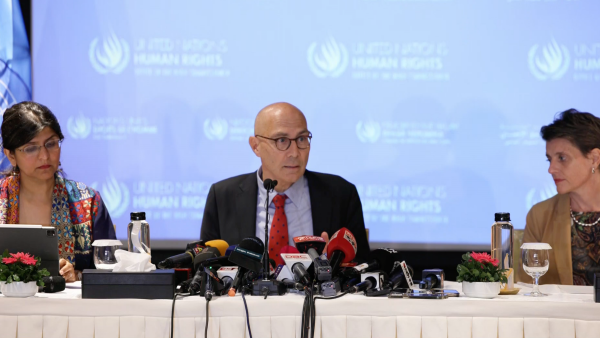
OHCHR Press conference: UN Human Rights Chief Volker Türk in Bangladesh - 30 October 2024
Press conference on the occasion UN Human Rights Chief Volker Türk visits Bangladesh
UN High Commissioner for Human Rights Volker Türk visits Bangladesh from 29 to 30 October 2024, holds a number of meetings with senior officials and civil society representatives, among others.
During his visit, the High Commissioner met with Chief Adviser Muhammad Yunus, a number of advisers for different ministries, the Chief Justice, the army chief and the heads of several reform commissions.
Türk also made an address at the University of Dhaka, where he met with students involved in the recent protest movement.
He held meetings with UN agencies and members of diplomatic missions in Bangladesh.
For more information and media requests:
Traveling with the High Commissioner: Ravina Shamdasani: +41 22 917 9169 / ravina.shamdasani@un.org
In Dhaka: Nadim Farhad: +880 1716454233 / nadim.farhad@un.org
In Geneva: Liz Throssell: +41 22 917 9296 / elizabeth.throssell@un.org and Jeremy Laurence: +41 22 917 9383 / jeremy.laurence@un.org
Tag and share
X @UNHumanRights
Facebook unitednationshumanrights
Instagram @unitednationshumanrights
STORY: UN High Commissioner for Human Rights Volker Türk concludes official visit to Bangladesh
TRT:03:11
SOURCE: OHCHR
RESTRICTIONS: NONE
LANGUAGE: English/NATS
ASPECT RATIO: 16:9
DATELINE: 30 October 2024 DHAKA, BANGLADESH
SHOTLIST
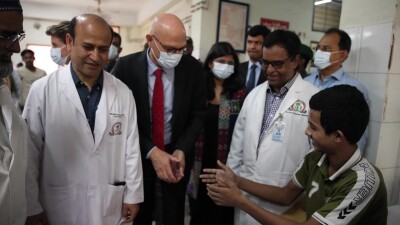
- Interior shots: various shots HC visiting the Nitol Hospital, where some of the students shot while participating in July’s protests.
- Exterior shot: Dhaka streets
- Interior shots: HC meeting with the with Heads of Reform Commissions
- Interior shot: wide shot press conference
- SOUNDBITE (English)— Volker Türk, UN High Commissioner for Human Rights: “This unique, unprecedented moment in the history of Bangladesh is the result of young women and men having taken to the streets – at great personal risk – to express that they had had enough of being ignored and marginalized,”
- Cut away: press conference
- SOUNDBITE (English)— Volker Türk, UN High Commissioner for Human Rights: “An inclusive approach, where every voice is heard and valued irrespective of class, gender, race, political ideology, identity or religion, will be key – reflecting the aspirations and diversity of the movement that sparked this transition,”
- Exterior shot: Traveling shot arriving at Chief Advisor office
- Interior shots: Türk meeting with Dr. Muhammad Yunus Bangladesh’s Chief Advisor
- Interior shot: press conference
- SOUNDBITE (English)— Volker Türk, UN High Commissioner for Human Rights: “Women are at the heart of social justice movements, including the protests in July. They must be at the forefront during the transition and beyond. Women need to be visible, particularly in leadership and decision-making positions. The participation of ethnic and religious minorities in the reform structures, as well as Indigenous Peoples, is also crucial.”
- Interior shot: press conference
- SOUNDBITE (English)— Volker Türk, UN High Commissioner for Human Rights: “Criminal justice is key, but it is crucial to ensure that charges are not brought in haste, and that due process and fair trial standards are upheld throughout,”
- Interior shot: press conference
- SOUNDBITE (English)— Volker Türk, UN High Commissioner for Human Rights: “It is a priority for my Office to support this dynamic, diverse country and its people through this period of transition, and to do everything we can to help ensure the protection and promotion of human rights for all in Bangladesh. ”
SCRIPT
Bangladesh’s interim government has inherited massive challenges on all fronts, including economic, development, social and political, UN High Commissioner for Human Rights Volker Türk said on Wednesday as he wrapped up a two-day official mission to the country.
“This unique, unprecedented moment in the history of Bangladesh is the result of young women and men having taken to the streets – at great personal risk – to express that they had had enough of being ignored and marginalized,” Türk told a news conference in Dhaka.
“An inclusive approach, where every voice is heard and valued irrespective of class, gender, race, political ideology, identity or religion, will be key – reflecting the aspirations and diversity of the movement that sparked this transition,” he stressed.
“Women are at the heart of social justice movements, including the protests in July. They must be at the forefront during the transition and beyond. Women need to be visible, particularly in leadership and decision-making positions. The participation of ethnic and religious minorities in the reform structures, as well as Indigenous Peoples, is also crucial.”
On Wednesday, Türk met Bangladesh’s Chief Advisor Dr. Muhammad Yunus. Türk welcomed the Chief Advisor’s statements that reinforce Bangladesh’s commitment to human rights, social justice, and accountability, that acknowledge the need for comprehensive reforms in various institutions, including law enforcement, as well as the need to address economic inequalities.
The pursuit of justice for the brutal violence against protesters and other people – including children – killed and seriously wounded in July and August is a priority, Türk flagged, noting that earlier on Wednesday he had visited Nitol Hospital, where some of the students shot while participating in July’s protests are still undergoing treatment, often requiring multiple surgeries.
“Criminal justice is key, but it is crucial to ensure that charges are not brought in haste, and that due process and fair trial standards are upheld throughout,” he said.
Türk also expressed support and solidarity for Bangladesh in hosting Rohingya refugees, noting that the situation in Rakhine State is growing worse. It is important to take a flexible and humanitarian approach, and to ensure non-refoulement and the protection of new arrivals, he stressed.
The High Commissioner said that his Office’s fact-finding mission is investigating allegations of attacks against minorities between 5 and 15 August. He said it was vital that the authorities respond quickly to any incidents reported, by conducting thorough investigations and holding perpetrators accountable. He also said that his Office, through a strengthened presence in Bangladesh, will continue to accompany and support the transition process.
“It is a priority for my Office to support this dynamic, diverse country and its people through this period of transition, and to do everything we can to help ensure the protection and promotion of human rights for all in Bangladesh, ” the High Commissioner said.
ENDS
For more information and media requests, please contact
Ravina Shamdasani – travelling with the High Commissioner - ravina.shamdasani@un.org
Liz Throssell + 41 22 917 9296 / elizabeth.throssell@un.org
Thameen Al-Kheetan - + 41 76 223 77 62 / thameen.alkheetan@un.org
Tag and share –
Twitter: @UNHumanRights
Facebook: unitednationshumanrights
Instagram: @unitednationshumanrights
Similar Stories
1
1
1
Press Conferences | UN WOMEN , WFP , WHO
UN WOMEN: Sudan Women and girls one year after the fall of El Fasher; increasing drone attacks across the country; WFP: DRC - Ebola spreads to eighth DRC province as WFP delivers food, builds treatment centres and keeps supplies moving; WHO - Update on Ebola (Bundibugyo Virus Disease)
1
12
1
1
Press Conferences , Images | UNOG
Closing Press Conference following the Sixth Consultative Meeting on Enhancing Coordination of Peace Initiatives and Efforts in Sudan

2
17
1
2
Edited News , Press Conferences , Images | OCHA , WMO
Two UN agencies teamed up on Wednesday to issue an appeal for immediate assistance to help communities already being impacted by the strongest El Niño on record.
1
1
1
Press Conferences | CITES
Wildlife trade and conservation policy discussions at the 81st meeting of the CITES Standing Committee (SC81)
1
1
1
Press Conferences | UNHCR , UNCTAD , WMO , OCHA , UNICEF , WHO
UNHCR Hungary’s 1956 Refugee Crisis: 70 Years On, UNCTAD World Investment Forum 2026, Doha, WMO Greenhouse Gas Bulletin and Climate Update for COP31, OCHA Afghanistan: Malnutrition, Girls’ Education and Recovery, UNICEF Yemen: Child Malnutrition and Unsafe Water in Taiz, WHO Inequalities in Noncommunicable Diseases and Risk Factors
1
1
1
Press Conferences | UNHCR
End of UNHCR's 77th Annual Executive Committee (ExCom) meeting week
1
1
1
Press Conferences | UNICEF , IOM , UNHCR
UN Special Assistant to the Personal Envoy Office (SUDAN): Peace Initiatives and Efforts in Sudan; UNICEF: Dire situation of children in Gaza; IOM: Damaged Homes and Energy Attacks Risk Displacing Ukrainians for this winter; UNHCR: update on EXCOM week
1
1
1
Press Conferences | IOM , UNDRR
UN stresses importance of household preparedness for disaster risk reduction.
1
1
1
Statements , Press Conferences | OHCHR
1
1
1
Press Conferences | UNHCR , UNICEF , IFRC , OHCHR , UN WOMEN , IOM , OCHA , WHO
UNHCR – ExCom Meeting, UNICEF – Nepal Recovery, IFRC – Flash Floods, WHO – Mental Health, IOM – South Sudan Floods, OCHA – DRC Humanitarian aid, UNHCR – Sahel Displacement, UNICEF – Yemen Update, IOM – Gaza Shelter, UN Women – Gaza Women, OHCHR – Arrests and detentions of Syrians by Israeli force
2
1
2
Press Conferences | UNCTAD
Presentation of the Trade and Developement Report 2026
Embargoed until 9 October 2026 at 11 a.m. (Geneva Time)
UNCTAD: UNCTAD’s flagship report finds that governments increasingly use industrial, trade, financial and technology policies to pursue economic and national security objectives. Market access and the ability to move into higher-value activities now depend more heavily on technology, finance and geopolitics.
1
1
1
Press Conferences | UPU
Release of the State of the Postal Sector Report 2026