

The United Nations Office at Geneva
Multimedia Newsroom
UN GENEVA PRESS BRIEFING
6 August 2024
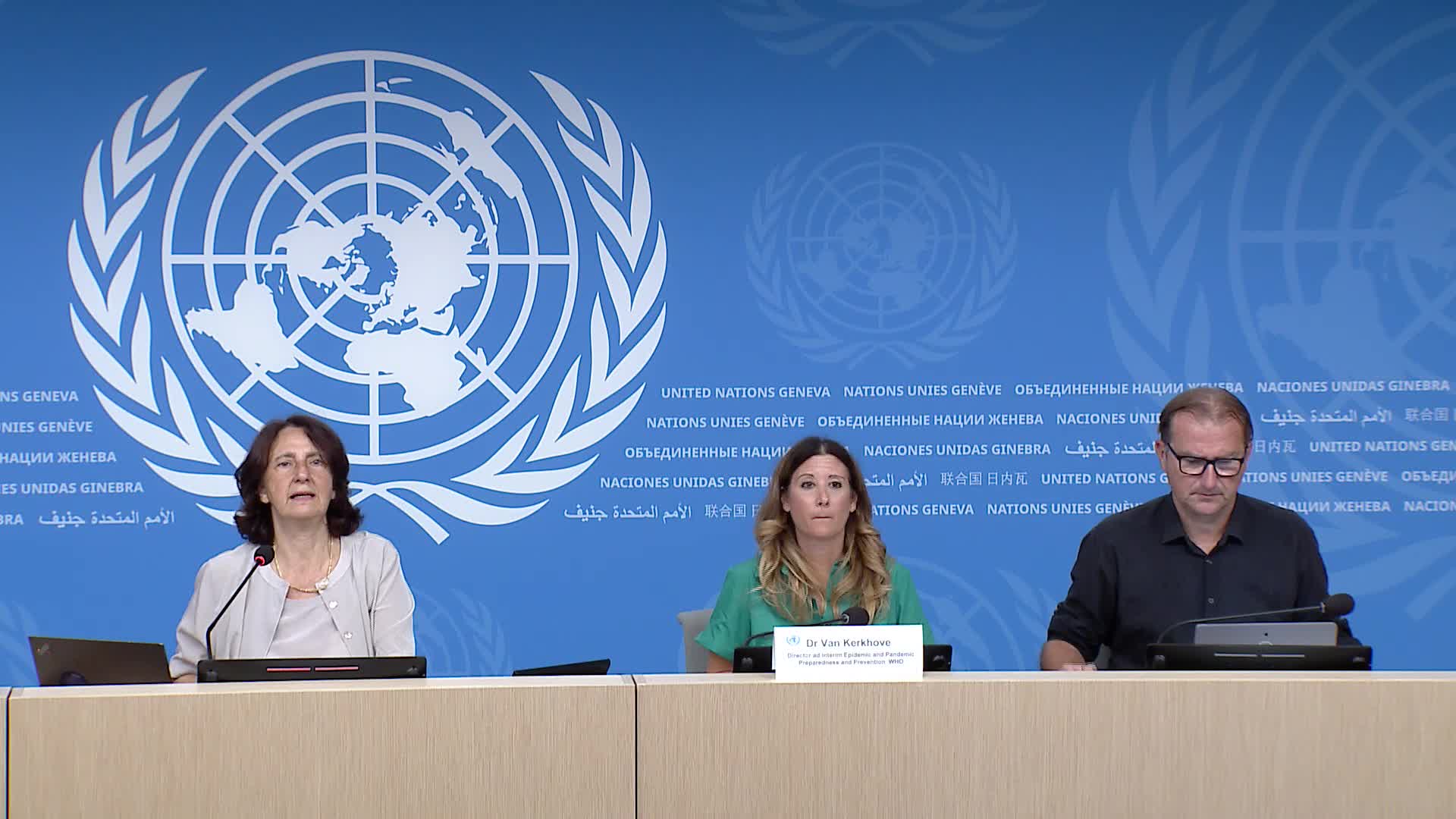
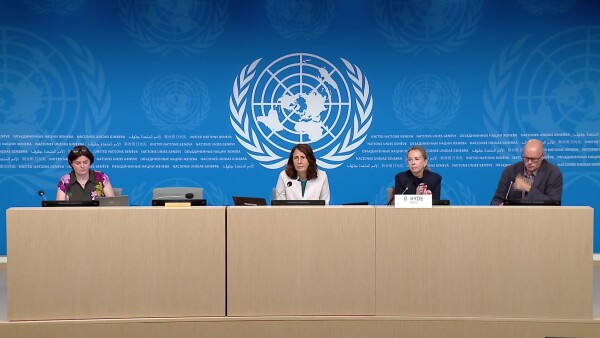
Alessandra Vellucci, Director of the United Nations Information Service in Geneva, chaired a hybrid briefing, which was attended by the spokespersons and representatives of the World Health Organization, the International Labour Organization, the World Meteorological Organization, and the International Federation of Red Cross and Red Crescent Societies.
COVID-19 update
Dr. Maria Van Kerkhove, Director of Epidemic and Pandemic Preparedness & Prevention at the World Health Organization (WHO), stressed that COVID-19 was still very much with us and was circulating in all countries. Data from WHO’s sentinel-based surveillance system across 84 countries reported that the percent of positive tests for SARS-CoV-2 had been rising for several weeks. Overall, test positivity was above 10 percent, but this fluctuated per region. In Europe, for example, percent positivity was above 20 percent. In recent months, regardless of the season, many countries had experienced surges, including at the Olympics, where at least 40 athletes had been tested positive. Governments needed to continue to invest and support a global understanding of circulation and impact and provide their populations with the tools to protect themselves and care for people suffering from acute and long-term effects of COVID-19, including post COVID-19 condition. Regular and robust risk assessments, improved ventilation, and high vaccination coverage were among recommendations to governments around the world, said Dr. Van Kerkhove. Countries were urged to share more genetic sequences and regularly report data on hospitalizations, ICU admissions, and deaths. WHO urged more financial support to study post-COVID long term conditions. Finally, as individuals, we all needed to take steps to reduce the risk of infection. Billions of COVID-19 vaccines had been administered around the world, preventing millions of deaths. The highest-risk groups should receive their new COVID-19 vaccines within 12 months of their last dose, said Dr. Van Kerkhove. Governments ought to secure adequate supplies of both COVID-19 and influenza vaccines, ahead of the cold season in the northern hemisphere, stressed Dr. Van Kerkhove.
Responding to questions from the media, Dr. Van Kerkhove said that at the Olympics in Paris, the authorities, in cooperation with the WHO, had taken a number of measures to prevent spread of infectious diseases. More people than before were wearing masks at the Olympic Games. The levels of COVID-19 impact were different now, compared to 2020-2022. Governments needed to make sure that their at-risk populations were vaccinated at least once in 12 months; those vaccines should be given along with influenza vaccines. The critical question was when the last dose had been administered, especially for people over 60 and vulnerable groups. Dr. Van Kerkhove said that the WHO looked at trends from month to month. Hospitalization rates had increased in the Americas, Europe, and the Pacific; only 35 countries or territories were providing relevant information with the WHO.
The true toll of COVID-19 deaths was still unknown. Some six percent of all COVID-19 cases had gone on to develop post-COVID symptoms, which meant many millions of people were now suffering from long COVID. Vaccines needed to be made available to populations, especially those at risk. Regarding the availability of vaccines, there was clearly a decrease in demand, but the virus was not gone, said Dr. Van Kerkhove. There was a large section of the population that required vaccines on a regular basis, so there could be no talk that there was no “market” for the vaccines. WHO could not put COVID-19 on the back burner as much as we might wish to do so personally.
Also answering questions, Dr. Van Kerkhove said that a lot of work had been happening to encourage technology transfer to African countries. There had been a significant attempt to increase MRNA vaccine production capacities on all continents. Work had also been done to increase the capacity for regulatory approval of vaccines, and also to address misinformation and disinformation.
WHO did not operate on fear but on various scenarios, for all of which preparedness was necessary. Individuals needed to understand and minimize their own risk. Any approved vaccine would help prevent severe stress and death, stressed Dr. Van Kerkhove.
Answering a question on mpox, Dr. Van Kerkhove said that the Director-General of WHO was considering calling an emergency meeting to discuss the rising numbers in the Democratic Republic of the Congo and surrounding countries. There were several licensed vaccines, which should be made available to vulnerable groups. The decision to call an emergency meeting rested with Dr. Tedros.
July – a month of extreme heat
Clare Nullis, for the World Meteorological Organization (WMO), said that extreme heat had hit hundreds of millions of people throughout July, with a domino effect felt right across society. The world’s hottest day on recent record, 22 July 2024, had been recently registered. This was another unwelcome indication of the extent that greenhouse gases from human activities are changing our climate. Global average temperatures for 13 consecutive months (from June 2023 to June 2024) had set new monthly records and the data for July - from WMO-recognized datasets - would confirm whether this exceptional streak continues for yet another month. It underlined the urgency of the Call to Action on Extreme Heat issued by UN Secretary-General António Guterres, who said that “Earth is becoming hotter and more dangerous for everyone, everywhere.”
Widespread, intense, and extended heatwaves had hit every continent in the past year. At least ten countries had recorded daily temperatures of more than 50° C in more than one location. Death Valley in California had registered a record average monthly temperature of 42.5 °C, possibly a new record observed for anywhere in the world. Even the remote frozen ice sheets of Antarctica have been feeling the heat. Ms. Nullis stressed the importance of adaptation. Recent estimates produced by the WMO and the World Health Organization indicated that the global scale-up of heat health-warning systems for 57 countries alone had the potential to save an estimated 98,000 lives per year, which was one of the priorities of the Early Warnings For All initiative. Climate adaptation alone was not enough. Root causes had to be tackled.
Alvaro Silva, climate expert at the World Meteorological Organization (WMO), speaking from Lisbon, said that globally, 22 July had been the hottest day, and 23 July had been a virtual tie, in the reanalysis dataset from the European Union’s Copernicus Climate Change Service. According to the Copernicus Climate Change Service, one of the contributing factors was much above-average temperatures over large parts of Antarctica, with anomalies of more than 10°C above average in some areas, and above average temperatures in parts of the Southern Ocean. In Asia, past July was the warmest on record. In Africa, temperature records had been broken in Morocco, while southern and southeastern Europe had also experienced extreme, record-breaking heat. Heat was becoming more persistent in many parts of the world; Las Vegas, for example, had experienced more than 40 days of temperatures over 40 degrees.
Replying to questions, Ms. Nullis explained that a lot of adaptation could be done through early warnings. Many cities in India had introduced heatwave contingency plans, which included adjusting working hours. Air conditioning had a heavy carbon footprint and could not be considered a solution. Temperatures in heavily built-up urban areas were notably higher in greener areas, so planting trees in cities was one simple yet effective way to act. It was difficult to get accurate statistics at the time, as extreme heat was still rather underreported as a cause of death. It was nearly impossible to have real-time estimates of heat-caused deaths, added Mr. Silva. Early warning against incoming heatwaves was one of the best ways to protect the population; however, people were still sometimes not aware of the risks, or were not taking adequate action.
More information is available here.
Zeina Awad, for the International Labour Organization (ILO), reminded of the ILO’s report on the effect of heat on the world of work.
Landslides in Ethiopia
Paula Fitzgerald, Head of Country Cluster Delegation for Ethiopia and Djibouti at the International Federation of Red Cross and Red Crescent Societies (IFRC), speaking from Addis Ababa, said that 30 pregnant and lactating women had been among more than 240 people who had died in landslides in south Ethiopia at the end of July. Heavy rains between 21 and 22 July had triggered successive landslides in the remote mountainous regions of southern Ethiopia, causing significant loss of life and devastation. Some 3,600 people had moved to safer areas. The Ethiopian Red Cross Society had sent an assessment team to Gofa, witnessing families torn apart and parents who had lost their children, and vice versa.
There were reports of another landslide event in southern Ethiopia just overnight, said Ms. Fitzgerald. The rough terrain had made rescue more difficult. Malaria and measles cases had been reported. Despite the challenges, the Red Cross had mobilized quickly and worked with the authorities to provide necessary support. Needs were immense, as large swathes of population were affected. On 2 August, an emergency CHF 6 million appeal had been launched to support and provide early recovery activities in the affected zones. IFRC was committed to a long-term approach and would focus on recovery, cash-assistance, and general resilience. This comprehensive multisectoral approach should help communities recover beyond the emergency stage.
More details are available here.
Some 15,500 people had been affected in total, said Ms. Fitzgerald in response to a question. Landslides happened every year, but this one was particularly tragic.
Announcements
Zeina Awad, for the International Labour Organization (ILO), informed that on 6 August at 10:30 am, report Global Employment Trends for Youth 2024 would be launched. Speakers at the press conference, under embargo until 12 August, would be Gilbert Houngbo, ILO Director-General; Mia Seppo, ILO Assistant Director-General for Jobs and Social Protection; and Sara Elder, Head of the Employment Analyses & Economic Policies Unit. Employment trends would be segregated by region and gender. The report would also be looking at the NEET rate: young people not in education, employment, or training. This was the twentieth anniversary of the report, said Ms. Awad.
Alessandra Vellucci, for the United Nations Information Service (UNIS), informed that the Committee on the Elimination of Racial Discrimination, which had opened its one hundred and thirteenth session on 5 August, would begin this afternoon the review of the report of Venezuela.
Similar Stories
1
1
1
Press Conferences | CITES
Wildlife trade and conservation policy discussions at the 81st meeting of the CITES Standing Committee (SC81)
1
1
1
Press Conferences | UNHCR , UNCTAD , WMO , OCHA , UNICEF , WHO
UNHCR Hungary’s 1956 Refugee Crisis: 70 Years On, UNCTAD World Investment Forum 2026, Doha, WMO Greenhouse Gas Bulletin and Climate Update for COP31, OCHA Afghanistan: Malnutrition, Girls’ Education and Recovery, UNICEF Yemen: Child Malnutrition and Unsafe Water in Taiz, WHO Inequalities in Noncommunicable Diseases and Risk Factors
1
1
1
Press Conferences | UNHCR
End of UNHCR's 77th Annual Executive Committee (ExCom) meeting week
1
1
1
Press Conferences | UNICEF , IOM , UNHCR
UN Special Assistant to the Personal Envoy Office (SUDAN): Peace Initiatives and Efforts in Sudan; UNICEF: Dire situation of children in Gaza; IOM: Damaged Homes and Energy Attacks Risk Displacing Ukrainians for this winter; UNHCR: update on EXCOM week
1
1
1
Press Conferences | IOM , UNDRR
UN stresses importance of household preparedness for disaster risk reduction.
1
1
1
Statements , Press Conferences | OHCHR
1
1
1
Press Conferences | UNHCR , UNICEF , IFRC , OHCHR , UN WOMEN , IOM , OCHA , WHO
UNHCR – ExCom Meeting, UNICEF – Nepal Recovery, IFRC – Flash Floods, WHO – Mental Health, IOM – South Sudan Floods, OCHA – DRC Humanitarian aid, UNHCR – Sahel Displacement, UNICEF – Yemen Update, IOM – Gaza Shelter, UN Women – Gaza Women, OHCHR – Arrests and detentions of Syrians by Israeli force
2
1
2
Press Conferences | UNCTAD
Presentation of the Trade and Developement Report 2026
Embargoed until 9 October 2026 at 11 a.m. (Geneva Time)
UNCTAD: UNCTAD’s flagship report finds that governments increasingly use industrial, trade, financial and technology policies to pursue economic and national security objectives. Market access and the ability to move into higher-value activities now depend more heavily on technology, finance and geopolitics.
1
1
1
Press Conferences | UPU
Release of the State of the Postal Sector Report 2026
1
1
1
Press Conferences | IOM , ITU , UNECE , UNICEF , WHO , WMO
UNICEF: Ebola, DRC - children orphans or separating them from parents and caregivers; IOM: Humanitarian needs in Djibouti amid arrivals from Yemen and increased migrant movements; WHO: Darfur, scale of health needs far exceeds available resources; WMO co-sponsored Global Heat Forum, Bangkok, monthly Global Seasonal Climate Update; UNECE: UN Forum of Mayors; ITU Plenipotentiary Conference 2026; WHO: child and adolescent obesity guidelines and new global roadmap to tackle pregnancy hypertension, a leading cause of maternal mortality
1
1
1
Press Conferences | OCHA , UN WOMEN , UNHCR , WFP , WHO , WTO , UNEP
OCHA – $160M CERF allocation to 12 underfunded crises; UNHCR – 5.8M refugee children remain out of school amid funding cuts; UN Women – Middle East escalation and food security among women/girls; WHO – Gaza supplies and overall situation; WFP – Yemen food insecurity and impact on global hunger ; UNEP - First International Conference of the Global Framework on Chemicals in Geneva | 16-20 November 2026
1
1
1
Press Conferences | UNHCR , WHO
Yemen's health system nears collapse amid conflict, causing rising casualties and medicine shortages.