

The United Nations Office at Geneva
Multimedia Newsroom
UN GENEVA PRESS BRIEFING
26 July 2024
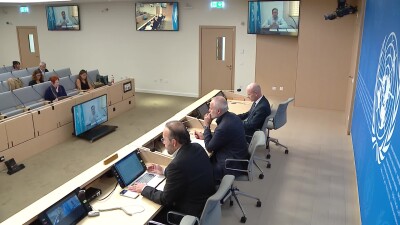
Rolando Gómez, Chief of the Press and External Relations Section at the United Nations Information Service in Geneva, chaired a hybrid briefing, which was attended by the spokespersons of the United Nations Refugee Agency and the Office for the Coordination of Humanitarian Affairs.
Response to landslides in Ethiopia
Jens Laerke, for the Office for the Coordination of Humanitarian Affairs (OCHA), said that OCHA staff were leading rapid assessment teams on the ground in Gofa Zone, South Ethiopia Region, which had been devastated by deadly landslides and heavy rainfall earlier in the week. At least 257 people had died, according to local authorities who warned that the death toll could rise to up to 500 people. Search and rescue operations were ongoing, led by local authorities with the support from the Ethiopian Red Cross Society and community. UN agencies and non-governmental partners were dispatching assistance, including food, nutrition, health, and other critical supplies. Authorities said that more than 15,500 people had been affected and those people they remained at high risk of further landslides and needed to be evacuated to safe zones immediately.
Rolando Gómez, for the United Nations Information Service (UNIS), reminded of the Secretary-General’s statement, in which he said he was deeply saddened by the loss of more than 200 lives and extended his sincere condolences to the families of the victims and to the people and Government of Ethiopia.
Typhoon in the Philippines
Replying to a question on the typhoon in the Philippines, Jens Laerke, for the Office for the Coordination of Humanitarian Affairs (OCHA), informed that a second flash update had been issued. Super Typhoon Gaemi had been downgraded to a typhoon as it had crossed Taiwan and exited the Philippine Area of Responsibility on 25 July. The storm, combined with the effects of the southwest monsoon, had brought heavy rainfall to the western section of Luzon, including Metro Manila. Flooding incidents had been reported in Metro Manila and nearby provinces. As of previous night, 13 casualties had been reported. UN stood ready to support the response by the national authorities, concluded Mr. Laerke.
UNHCR urges action after tragic shipwreck off Mauritania
Shabia Mantoo, for the United Nations Refugee Agency (UNHCR), said that the UNHCR was deeply saddened by the tragic shipwreck reported on 22 July that had resulted in the deaths and disappearances of numerous people off the coast of Mauritania. The vessel, which had been following the West Atlantic route, capsized near Nouakchott, claiming the lives of at least 15 individuals, with many others still missing. According to reports, approximately 300 people had been on board the vessel, which had departed from Gambia. The Mauritanian Coast Guard had rescued 120 survivors, most originally from Senegal and Gambia, while search and rescue operations continued to locate missing people. Around 165 people remained unaccounted for. This was the second deadly shipwreck in the region this month, with another reported at the start of July.
Ms. Mantoo stressed that these tragic incidents underscore the extreme perils faced by desperate individuals who resorted to risky sea journeys, in the absence of safer pathways, to reunite with family, seek better opportunities, or to escape extreme violence, human rights violations, and dire conditions in their home countries. According to data from the International Organization for Migration (IOM), between 1 January and 15 July 2024, over 19,700 refugees and migrants had disembarked in the Canary Islands, compared to 7,590 during the same period in 2023, a 160 per cent increase. The West Atlantic route was one of the deadliest routes in the world with thousands of migrants and refugees drowning in recent years after departing the coast of West Africa for Spain’s Canary Islands. Ms. Mantoo said that concrete, routes-based protection responses were needed to save lives and reduce suffering, in addition to addressing the root causes of displacement and the drivers of irregular movements.
Responding to questions from the media, Ms. Mantoo said that information on the incident was still coming in. There had been some 300 people on board, of whom 15 had died, 120 had been rescued, and over 160 had been unaccounted for, but those numbers were still fluid. Most people on board were reportedly from Senegal and Gambia. Such movements were usually taken by extremely vulnerable people, who undertook those journeys out of desperation. The boat had departed from Gambia and the survivors had been rescued off the Mauritania coast, informed Ms. Mantoo.
Full statement is available here.
Seventy-three years of the Refugee Convention
Shabia Mantoo, for the United Nations Refugee Agency (UNHCR), informed that 28 July would mark the 73rd anniversary of the 1951 Refugee Convention, the cornerstone of refugee protection which had saved and protected the lives of millions of people around the world fleeing war, violence, persecution, and human rights violations. The Refugee Convention and its 1967 Protocol established the internationally recognized definition of a refugee and the rights and assistance they were entitled to while displaced. Millions of people around the world continued to receive protection owing to the principles these treaties enshrine.
Ms. Mantoo said that, to date, 149 States worldwide had acceded to the Refugee Convention and/or its 1967 Protocol. They were set out in a new Refugee Treaty and Legislation Dashboard (RTLD), recently launched by the UNHCR, which captured developments on international and regional refugee instruments and national legislation. Ahead of the anniversary, UNHCR, as the guardian of the Refugee Convention, was urging the remaining 46 UN Member and Observer States to accede to it. With 43.4 million refugees currently protected in countries across the world, today’s global displacement situation was testament to the enduring relevance of the Refugee Convention and regional refugee law. As long as new conflicts continued to erupt, prolonged ones failed to end, and people continued to be persecuted, there would be a need for these legal instruments. In addition to promoting universal accession of the Refugee Convention, the UNHCR was calling on all States to give effect to the principles of refugee law, including to protect the fundamental right of all people to seek and enjoy asylum, and to uphold and protect the human rights of those forced to flee.
Full statement can be found here.
Answering questions, Ms. Mantoo stressed that the millions of people who had managed to find safety in other countries were a testament to the enduring value of the Refugee Convention, which continued to save so many lives. While there had been attempts by some to evade some of the responsibilities, international reaction by both States and civil society had been very vocal. Many of the world’s refugees were hosted in the poorest regions in the world; it was fair for this burden to be shared, said Ms. Mantoo.
Announcements
Rolando Gómez, for the United Nations Information Service (UNIS), informed that the Secretary-General would attend the opening ceremony of the 2024 Summer Olympics in Paris tonight. His video message had been shared. The Secretary-General would hold several bilateral meetings, including with Thomas Bach, President of the International Olympic Committee.
Mr. Gómez reminded that in his press conference the previous day the Secretary-General had issued a call to action regarding extreme heat, following the ILO report on heat and the world of work, and the three warmest days ever recorded. The Call for Action called for an urgent and concerted effort to enhance international cooperation to address extreme heat in four critical areas: caring for the vulnerable; protecting workers; boosting resilience of economies and societies using data and science; and limiting temperature rise to 1.5°C by phasing out fossil fuels and scaling up investment in renewable energy.
Committee against Torture had closed today its eightieth session during it had reviewed the reports of Ecuador, Republic of Korea, Côte d’Ivoire, and Türkiye. The Committee would issue its concluding observations on the four reports the following week.
The Conference on Disarmament would start the third and last part of its session on 29 July under the presidency of Ireland. The date of the first public plenary had not been announced yet.
***
The webcast for this briefing is available here:
https://www.unognewsroom.org/story/en/2278 /un-geneva-press-briefing-26-july-2024/0/WjnegYbwZ1
The audio for this briefing is available here: https://www.unognewsroom.org/share/oQeZVnvepZ
Similar Stories
1
1
1
Press Conferences | UN WOMEN , WFP , WHO
UN WOMEN: Sudan Women and girls one year after the fall of El Fasher; increasing drone attacks across the country; WFP: DRC - Ebola spreads to eighth DRC province as WFP delivers food, builds treatment centres and keeps supplies moving; WHO - Update on Ebola (Bundibugyo Virus Disease)
1
12
1
1
Press Conferences , Images | UNOG
Closing Press Conference following the Sixth Consultative Meeting on Enhancing Coordination of Peace Initiatives and Efforts in Sudan

2
17
1
2
Edited News , Press Conferences , Images | OCHA , WMO
Two UN agencies teamed up on Wednesday to issue an appeal for immediate assistance to help communities already being impacted by the strongest El Niño on record.
1
1
1
Press Conferences | CITES
Wildlife trade and conservation policy discussions at the 81st meeting of the CITES Standing Committee (SC81)
1
1
1
Press Conferences | UNHCR , UNCTAD , WMO , OCHA , UNICEF , WHO
UNHCR Hungary’s 1956 Refugee Crisis: 70 Years On, UNCTAD World Investment Forum 2026, Doha, WMO Greenhouse Gas Bulletin and Climate Update for COP31, OCHA Afghanistan: Malnutrition, Girls’ Education and Recovery, UNICEF Yemen: Child Malnutrition and Unsafe Water in Taiz, WHO Inequalities in Noncommunicable Diseases and Risk Factors

1
1
1
Press Conferences | UNHCR
End of UNHCR's 77th Annual Executive Committee (ExCom) meeting week

1
1
1
Press Conferences | UNICEF , IOM , UNHCR
UN Special Assistant to the Personal Envoy Office (SUDAN): Peace Initiatives and Efforts in Sudan; UNICEF: Dire situation of children in Gaza; IOM: Damaged Homes and Energy Attacks Risk Displacing Ukrainians for this winter; UNHCR: update on EXCOM week

1
1
1
Press Conferences | IOM , UNDRR
UN stresses importance of household preparedness for disaster risk reduction.

1
1
1
Statements , Press Conferences | OHCHR

1
1
1
Press Conferences | UNHCR , UNICEF , IFRC , OHCHR , UN WOMEN , IOM , OCHA , WHO
UNHCR – ExCom Meeting, UNICEF – Nepal Recovery, IFRC – Flash Floods, WHO – Mental Health, IOM – South Sudan Floods, OCHA – DRC Humanitarian aid, UNHCR – Sahel Displacement, UNICEF – Yemen Update, IOM – Gaza Shelter, UN Women – Gaza Women, OHCHR – Arrests and detentions of Syrians by Israeli force

2
1
2
Press Conferences | UNCTAD
Presentation of the Trade and Developement Report 2026
Embargoed until 9 October 2026 at 11 a.m. (Geneva Time)
UNCTAD: UNCTAD’s flagship report finds that governments increasingly use industrial, trade, financial and technology policies to pursue economic and national security objectives. Market access and the ability to move into higher-value activities now depend more heavily on technology, finance and geopolitics.

1
1
1
Press Conferences | UPU
Release of the State of the Postal Sector Report 2026