

The United Nations Office at Geneva
Multimedia Newsroom
Press Conferences | FAO , HRC , IFRC , OHCHR , UNAIDS , UNCTAD , UNICEF
UN Geneva Press Briefing - 07 March 2024
UN GENEVA PRESS BRIEFING
8 March 2024
Rolando Gómez, Chief of the Press and External Relations Section at the United Nations Information Service in Geneva, chaired a hybrid briefing, which was attended by spokespersons and representatives of the United Nations Children’s Fund, the Office of the High Commissioner for Human Rights, the Food and Agricultural Organization, the United Nations Conference on Trade and Development, UNAIDS, the Human Rights Council, the United Nations Refugee Agency, the World Health Organization, and the International Federation of Red Cross and Red Crescent Societies.
Situation in Gaza
Jeremy Laurence, for the Office of the High Commissioner for Human Rights (OHCHR), said that today marked the start of the sixth month of a brutal conflict that had destroyed the lives and homes of countless Palestinians, as well as Israelis. It was feared that this already catastrophic situation might slide deeper into the abyss as many Palestinians marked the holy month of Ramadan should Israel launch its threatened military offensive into Rafah, where 1.5 million people had been displaced in deplorable sub-human conditions.
Any ground assault on Rafah would incur massive loss of life and would heighten the risk of further atrocity crimes, and it should not be allowed to happen. It was also feared that further Israeli restrictions on access by Palestinians to East Jerusalem and Al Aqsa Mosque during Ramadan could further inflame tensions. The UN High Commissioner for Human Rights repeated that there had to be an immediate end to this conflict, and that the killing and destruction needed to stop. The hostages, who had now endured over 150 days of suffering and torment, had to be released unconditionally and returned to their distraught families.
Israel, as the occupying power, had to fully comply with its obligations under international humanitarian law to provide the increasingly desperate civilian population of Gaza with the necessary food and medical supplies, or, if it is unable to do so, ensure that the population have access to critical life-saving humanitarian assistance commensurate with their needs. Border crossings and corridors had to be fully opened and steps had to be taken to ensure the free and secure movement of aid convoys to civilians wherever they were located within the Gaza strip if wider starvation and needless suffering were to be averted.
Full statement can be found here.
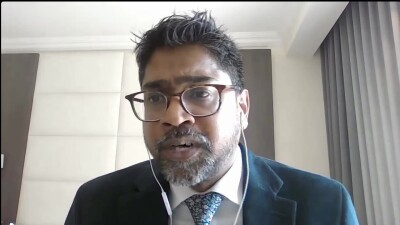
Ajith Sunghay, Head of the OHCHR Office for the Occupied Palestinian Territory, speaking from East Jerusalem, informed that today the OHCHR was publishing a report on the Israeli settlements in occupied West Bank, detailing the drastic acceleration in settlement building alongside oppression, violence, and discrimination against Palestinians. Just this week, there were reports that Israel was planning to build a further 3,476 settler homes in the illegal settlements of Maale Adumim, Efrat and Kedar in further violation of international law.
The UN Human Rights Office report highlighted the dramatic increase in the intensity, severity and regularity of Israeli settler and State violence against Palestinians in the occupied West Bank, including East Jerusalem, particularly since 7 October 2023. This violence was accelerating Palestinians’ displacement from their land. The report found that the policies of the current Israeli Government appeared to be aiming at expanding long-term Israeli control over the West Bank, including East Jerusalem, and the steady integration and annexation of occupied territory into the State of Israel.
OHCHR reminded Israel that the transfer of the population of an occupying power into occupied territory, or the forcible transfer of the population within or from occupied territory, or the annexation of territory by use of force were all strictly prohibited, and officials and others involved in such conduct risked individual criminal liability. As the High Commissioner has repeatedly stressed, Israel’s unlawful actions against the Palestinian population in the West Bank had to cease immediately.
Full press release can be read here and the report is available here.
Rolando Gómez, for the UN Information Service (UNIS) informed that the UN's Special Coordinator for the Middle East peace process, Tor Wennesland, had stated the day before that all settlements were illegal under international law, and they were a driver of conflict in the occupied West Bank. The Special Coordinator urged Israel to cease all settlement activity and refrain from provocative actions.
Responding to questions, Mr. Sunghay, for the OHCHR, explained that the OHCHR had already used the term “atrocity crimes” and it had already indicated that war crimes and crimes against humanity might have been committed. In its statements on 16 December and 19 January, the OHCHR had addressed detention conditions of Gazans inside Israel. There were mentions of sleep deprivation, use of loud noises, food and water deprivation, torture, and sexual violence. Any effort to scale up humanitarian assistance was welcomed, but air and sea deliveries were not a substitute for land deliveries, said Mr. Gómez, for UNIS, in response to another question. Mr. Sunghay, for the OHCHR, said that medical staff, including doctors, had also been detained. Tarik Jašarević, for the World Health Organization (WHO), specified that 118 health workers remained in detention, and the WHO was calling for their release. What was really important for the WHO was to have access to hospitals. Delivering aid within Gaza remained a challenge, he emphasized.
Displacement of children amid escalating violence in Mozambique
Guy Taylor, for the United Nations Children’s Fund (UNICEF), speaking from Maputo, stated that in the past month, attacks and fear of attacks in Cabo Delgado, northern Mozambique, had triggered the displacement of almost 100,000 people, including more than 60,000 children. Children separated from their families were at risk of violence and exploitation, including recruitment and use by armed groups. More than 100 schools in Cabo Delgado and Nampula provinces had to close due to insecurity, affecting the learning of over 50,000 children.
Without access to nutrition services, displaced children experiencing severe acute malnutrition were at serious risk. The psychological impact on children and families was also tremendous. UNICEF was working closely with UN and civil society partners in supporting the operation of cholera treatment centres; deploying mobile health brigades to deliver immunization and other essential health services; bringing clean water to those displaced through water trucking and provision of water treatment supplies; constructing emergency latrines and sanitation infrastructure; setting up child-friendly spaces where children can play and receive psychosocial support. Mr. Taylor concluded by saying that UNICEF estimated that USD 5 million was urgently needed to meet the immediate needs of 90,000 people over the next 90 days. No additional resources had been mobilized so far, leaving the response under capacity, and overstretched.
William Spindler, for the United Nations Refugee Agency (UNHCR), said that the High Commissioner for Refugees, Filippo Grandi, had just returned from the northern provinces of Capo Delgado, and a press release would be issued shortly. Mr. Spindler said that, ever since 2017, Mozambique had been facing significant challenges from violence stemming from non-state armed groups, in addition to climate change related challenges. Some 1.2 million people had been displaced as a result of the two factors. While many displaced had returned home, over 780,000 were still displaced. The UN needed USD 400 million to help people in Mozambique this year alone and had received pledges for just 5 per cent of that so far.
Humanitarian needs in the Democratic Republic of the Congo
Pierre Kremer, Deputy Regional Director of the International Federation of Red Cross and Red Crescent Societies (IFRC) for Africa, connecting from Nairobi, spoke of the immense crisis in the Democratic Republic of the Congo (DRC), which definitely had not captured global attention as it should. Mr. Kremer had visited DRC the previous week, witnessing firsthand harsh realities of affected people. The situation of people in makeshift shelters was dire, explained Mr. Kremer. In one camp he had visited, there were only several toilets for thousands of people, increasing risks of infectious diseases, including cholera, which was already emerging in other camps. Signs of resilience were encouraging, as people were striving to establish resemblance of normalcy amidst very difficult conditions, but swift international support was urgently needed.
In DRC, Mr. Kremer said, there was an alarming escalation in North Kivu, which was also affecting South Kivu. Since March 2022, over 1.6 million people had been displaced in the region. Despite the challenges, the DRC Red Cross, with its 50,000 volunteers in the region, had been at the forefront of humanitarian response and played a critical role in addressing the crisis with impressive dedication. Some of the Red Cross volunteers had been displaced themselves, said Mr. Kremer. People were living in very precarious conditions; while aid reached people in need in Goma, it was far from enough. Efforts had to be scaled up, and Mr. Kremer appealed to donors, partners, and the media to stand up for people of the DRC and ensure that they would not be forgotten. Together with the DRC Red Cross, the IFRC had launched an Emergency Appeal for CHF 50 million to urgently assist 500,000 of the most vulnerable internally displaced persons and their host communities.
Six months since the Morocco earthquake
Sami Fakhouri, head of the International Federation of Red Cross and Red Crescent Societies (IFRC) in Morocco, speaking from Morocco, said that, amidst the resilience over the past six months, since the devastating earthquake in the Moroccan High Atlas Mountains, thousands were still grappling with the loss of their homes, the scarcity of clean water, and the absence of basic sanitation facilities. The journey towards recovery had unfolded with both strides and stumbles. The Moroccan Red Crescent, with the unwavering support of over 8,500 volunteers, had been at the forefront of addressing these challenges. From rehabilitating water points to distributing hygiene kits and ensuring access to emergency shelters, their tireless efforts had reached over 60,300 people in need, said Mr. Fakhouri.
The landscape of need had evolved, but the essence of the IFRC mission remained unchanged. The critical need for ongoing support had never been more apparent. The IFRC's Emergency Appeal for CHF 75 million had secured only securing 35 per cent of its goal. In closing, Mr. Fakhouri appealed to everyone to stand in solidarity with people of Morocco and to act.
Human Rights Council
Pascal Sim, for the Human Rights Council (HRC), informed that the Independent International Fact-Finding Mission on the Islamic Republic of Iran had issued today its first report, as mandated by the Human Rights Council. In the report, the Mission found that the violent repression of peaceful protests and pervasive institutional discrimination against women and girls had led to serious human rights violations by the Government of Iran, many amounting to crimes against humanity. The report to the Human Rights Council said violations and crimes under international law committed in the context of the “Woman, Life, Freedom” protests that had begun on 16 September 2022 included extra-judicial and unlawful killings and murder, unnecessary and disproportionate use of force, arbitrary deprivation of liberty, torture, rape, enforced disappearances, and gender persecution. The Mission would present its report to the Council on 15 March and hold a press conference on 18 March. Press release and report can be found here.
Mr. Sim informed that Alice Jill Edwards, UN Special Rapporteur on Torture, would hold a press conference at 1 :15 pm today to present its report.
Finally, he stated that this morning, the Council was holding a panel on countering religious hatred and human rights; at 12 noon, the Special Rapporteur on Torture would present her reports; and around 4 pm today, a panel on the right to social security was scheduled to start. On 11 March, on the agenda would be rights of persons with disabilities and foreign debt. Mr. Sim said that from 11 March until 5 April, during the period of Ramadan, the Council would hold its meetings from 9:30 am to 12:30 pm and from 2:30 pm to 5:30 pm.
Food Price Index
Monika Tothova, Senior Economist at the Food and Agriculture Organization (FAO), speaking from Rome, informed that the FAO Food Price Index stood at 117.3 points in February, down 0.9 points from its revised January level, as decreases in the price indices for cereals and vegetable oils slightly more than offset increases in those for sugar, meat, and dairy products. The index was down 13.8 points from its corresponding value one year ago.
The FAO Cereal Price Index averaged 113.8 points in February, down 6.1 points from January and as much as 32.9 points below its February 2023 value. The FAO Vegetable Oil Price Index averaged 120.9 points in February, down 1.6 points from January and standing 15 points below its year-ago level. The FAO Dairy Price Index averaged 120 points in February, up 1.3 points from January, but stood 18.6 points below its value in the corresponding month last year. Ms. Tothova said that the FAO Meat Price Index averaged 112.4 points in February, up by 2 points from January, reversing the seven months of consecutive drops, and standing 0.9 points below its corresponding value a year ago. Finally, the FAO Sugar Price Index averaged 140.8 points in February, up 4.4 points from January, marking the second consecutive monthly increase, and standing 15.6 points above its value a year ago.
Ms. Tothova said that so far in 2024, food commodity markets continued to sustain their relative calmness, despite the presence of external shocks including shipping disruptions. Wheat and maize export prices declined further, reaching their lowest levels over the past two years. She informed that FAO had also released a new Cereal Supply and Demand Brief, in which it offered its preliminary forecast for global wheat production in 2024, pegging it at 797 million tons, a one per cent increase from 2023.
More details are available here.
International Women’s Day
Charlotte Sector, for UNAIDS, stated that UNAIDS as calling for the protection of women’s rights to protect their health. The injustices faced by women were not natural disasters to prepare for, like hurricanes or storms. They were man-made, and, as such, they could be unmade. Like justice, health is never given, it is won. Some 3,100 women and girls get infected with HIV every week in sub-Saharan Africa, reminded Ms. Sector. Full statement is available here.
Jeremy Laurence, for the Office for the High Commissioner for Human Rights (OHCHR), said that the High Commissioner for Human Rights, in his statement to the Human Rights Council today, stressed that without women at the table, there could be no peace. At the grassroots level, courageous women peacebuilders spurred social transformation. At the negotiating table, however, the voices of women and girls remained marginal, at best. Peace could be built only with women as part of the process, stressed the High Commissioner for Human Rights.
Catherine Huissoud, for the United Nations Conference on Trade and Development (UNCTAD), informed about the new episode of UNCTAD’s Weekly Tradecast, in which UNCTAD Secretary-General Rebeca Grynspan spoke about the importance of investing in women. Women and girls made up nearly half of humanity but still lacked equal opportunities in societies and economies, which meant that they often got less access to education and healthcare, were paid less than men and were more likely to leave work to care for families.
Rolando Gómez, for the for the United Nations Information Service, reminded the media about today’s event “Peace Begins with Her” at UniMail in Geneva dedicated to women in peace and security. An “Inside Out” photo activation was happening from 11:15 to 5:45 pm, to be followed by a panel discussion at 6:15 pm.
Finally, he informed about UN Women’s new position paper, “Placing Gender Equality at the Heart of the Global Digital Compact”, released this week to support the preparation of the Summit of the Future next September. In 2023, the 67th session of the Commission on the Status of Women had brought to our attention that progress towards gender equality in technology and innovation continued to be far too slow, across all indicators. And yet, the challenges that underpinned the gender digital divide continued to be treated as a side topic in discussions on digitalization. The paper showed that women represented only 20 per cent of employees in technical roles in major machine learning companies, 12 per cent of AI researchers and 6 per cent of professional software developers.
Announcements
William Spindler, for the United Nations Refugee Agency (UNHCR), informed that on 12 March a joint appeal for the Rohingya humanitarian crisis would be launched. Funding appeal for one million refugees and 340,000 people from host communities in Bangladesh. A press release would be issued on the day, and the event would be livestreamed on UNTV.
Rolando Gómez, for the for the United Nations Information Service, said that the Human Rights Committee was concluding this morning the review of the report of Somalia.
The Committee on the Rights of Persons with Disabilities was concluding this morning its review of the report of Bahrain.
The Conference on Disarmament would hold at 3 pm today a plenary public meeting, still under the presidency of Indonesia.
Similar Stories

1
1
1
Press Conferences | IOM , UNDRR
UN stresses importance of household preparedness for disaster risk reduction.

1
1
1
Statements , Press Conferences | OHCHR

1
1
1
Press Conferences | UNHCR , UNICEF , IFRC , OHCHR , UN WOMEN , IOM , OCHA , WHO
UNHCR – ExCom Meeting, UNICEF – Nepal Recovery, IFRC – Flash Floods, WHO – Mental Health, IOM – South Sudan Floods, OCHA – DRC Humanitarian aid, UNHCR – Sahel Displacement, UNICEF – Yemen Update, IOM – Gaza Shelter, UN Women – Gaza Women, OHCHR – Arrests and detentions of Syrians by Israeli force

2
1
2
Press Conferences | UNCTAD
Presentation of the Trade and Developement Report 2026
Embargoed until 9 October 2026 at 11 a.m. (Geneva Time)
UNCTAD: UNCTAD’s flagship report finds that governments increasingly use industrial, trade, financial and technology policies to pursue economic and national security objectives. Market access and the ability to move into higher-value activities now depend more heavily on technology, finance and geopolitics.

1
1
1
Press Conferences | UPU
Release of the State of the Postal Sector Report 2026
1
1
1
Press Conferences | IOM , ITU , UNECE , UNICEF , WHO , WMO
UNICEF: Ebola, DRC - children orphans or separating them from parents and caregivers; IOM: Humanitarian needs in Djibouti amid arrivals from Yemen and increased migrant movements; WHO: Darfur, scale of health needs far exceeds available resources; WMO co-sponsored Global Heat Forum, Bangkok, monthly Global Seasonal Climate Update; UNECE: UN Forum of Mayors; ITU Plenipotentiary Conference 2026; WHO: child and adolescent obesity guidelines and new global roadmap to tackle pregnancy hypertension, a leading cause of maternal mortality
1
1
1
Press Conferences | OCHA , UN WOMEN , UNHCR , WFP , WHO , WTO , UNEP
OCHA – $160M CERF allocation to 12 underfunded crises; UNHCR – 5.8M refugee children remain out of school amid funding cuts; UN Women – Middle East escalation and food security among women/girls; WHO – Gaza supplies and overall situation; WFP – Yemen food insecurity and impact on global hunger ; UNEP - First International Conference of the Global Framework on Chemicals in Geneva | 16-20 November 2026
1
1
1
Press Conferences | UNHCR , WHO
Yemen's health system nears collapse amid conflict, causing rising casualties and medicine shortages.
1
1
1
Press Conferences | HRC
Update by the Expert Mechanism to Advance Racial Justice and Equality in Law Enforcement
1
1
1
Press Conferences | WIPO , WHO , UNICEF , UNHCR , IOM , WFP , FAO
WIPO Global Innovation Index 2026 launch and press conference, WHO Composition of influenza vaccines for the 2027 Southern Hemisphere flu season, UNICEF Yemen hunger and malnutrition; UNHCR Sudan displacement into Chad; IOM Ebola and population movements in DRC; WFP emergency food assistance in Nepal; and FAO food loss and waste.
2
1
2
Press Conferences | UNCTAD
Gaza reconstruction needs reach $71.5 billion as Palestinian economy and public finances face severe strain. Latest UNCTAD report documents the loss of decades of development gains, economic collapse in Gaza and tightening economic constraints in the West Bank.
The report identifies three immediate priorities: transferring withheld Palestinian revenues, safeguarding the banking system and aligning reconstruction support with the documented scale of damage and economic losses.
1
1
1
Press Conferences | HRC
Press conference on the situation of human rights in Nicaragua by the UN Group of Human Rights Experts