

The United Nations Office at Geneva
Multimedia Newsroom
Press Conferences | OHCHR , UNECE , UNITAID , WHO
UN Geneva press briefing - 13 February 2024
UN GENEVA PRESS BRIEFING
13 February 2024
Rolando Gómez, Chief of the Press and External Relations Section at the United Nations Information Service in Geneva, chaired a hybrid briefing, which was attended by spokespersons and representatives of the World Health Organization, the Office of the High Commissioner for Human Rights, the United Nations Economic Commission for Europe, the United Nations Refugee Agency, and Unitaid.
Health crisis in Sudan
Peter Graaff, Acting World Health Organization (WHO) Representative to Sudan, speaking from Cairo, stated that it had been ten months since the start of the conflict in Sudan, which had plunged the country into a humanitarian crisis of epic proportions. As the fighting spread to new areas, civilians continued to be displaced en masse, some of them multiple times. Sudan was now the largest displacement crisis globally with eight million people displaced. Mr. Graaff had witnessed first-hand the displacement within Sudan and Chad; displaced people often found shelter in overcrowded areas where there was a lack of access to water and sanitation, food, and the most basic health services.
About 25 million Sudanese needed humanitarian assistance; 18 million of them were facing acute hunger; and five million were at emergency levels of hunger. There was concern that the upcoming lean season would lead to catastrophic levels of hunger in worst-affected areas. Disease and malnutrition had a synergistic relationship: malnourished people, particularly pregnant women and children, experienced worse outcomes of disease; malnourished children were at an increased risk of dying from illnesses like diarrhoea, pneumonia, and measles, especially in a setting where they lacked access to life-saving health services. Mr. Graaff stressed that the situation in Sudan was a perfect storm as the heath system was hardly functional, as the childhood immunization programme was breaking down and infectious diseases were spreading: over 10,000 cases of cholera had been reported, 5,000 cases of measles, about 8,000 cases of dengue, and over 1.2 million clinical cases of malaria.
WHO was scaling up on the ground, including in safely accessible and through cross border operations, to deliver the health emergency response, respond to disease outbreaks, sustain disease surveillance, and provide lifesaving medical supplies and equipment. Its teams were currently delivering 58 metric tons of medical supplies to support the health needs of 338,100 of people. But much more could be done, for which international community’s commitment was needed, including strong advocacy for unhindered access for humanitarian partners and the financial resources to rapidly scale-up the response in Sudan.
Replying to questions from the media, Mr. Graaff said that the Médecins Sans Frontières had recently conducted a preliminary analysis in the Zamzam refugee camp in Darfur, where 400,000 to 500,000 people lived. Excess mortality of children was already detected. With the lean season coming, very high numbers of children and mothers would be severely affected as they did not have access to services. Access for humanitarian aid from Chad was sporadic with the lack of agreement from both parties. Rolando Gómez, for the United Nations Information Service, reminded that the Secretary-General would be traveling to Addis Ababa to attend the African Union Summit, and Sudan would feature highly on the agenda.
Returnees to Syria subjected to human rights violations and abuses
Elizabeth Throssell, for the Office of the High Commissioner for Human Rights (OHCHR), stated that many Syrians who had had fled the war faced gross human rights violations and abuses upon their return to Syria, according to an OHCHR report released today. The documented violations and abuses had been perpetrated by the Government, de facto authorities, and other armed groups across the country, the report stated. They included arbitrary detention, torture and ill-treatment, sexual and gender-based violence, enforced disappearance and abduction. People had also had their money and belongings extorted, their property confiscated, and had been denied identity and other documents. While the Syrian population as a whole faced such human rights abuses and violations, “returnees appear particularly vulnerable”, the report highlighted.
Economic hardship, abuse, increasingly hostile speech and rhetoric against refugees, raids and mass arrests in some host countries had compelled many to return to Syria, the report said. Türkiye had announced in May 2022 what it called the “resettlement” of one million Syrian refugees back to Syria, with reports of increased restrictions and forced deportations. In Lebanon, following months of increasing tensions and animosity towards Syrian refugees, Lebanese security forces had conducted more than 70 raids targeting Syrian refugee communities in camps and residential areas across the country in the spring of 2023. At least 1,455 Syrians had been arrested and 712 of them deported. “There are reasonable grounds to believe that the overall conditions in Syria do not permit safe, dignified and sustainable returns of Syrian refuges to their home country,” the report concluded. Full report is available here.
Replying to questions from the media, Ms. Throssell stated that the report focused on the returnees, who were particularly vulnerable. It was important to stress that the intensification of attacks across Syria had been seen in recent weeks, including from various armed groups and third states, such as the United States and Israel. There were also concerns about a spillover from Syria to other parts of the region, stressed Ms. Throssell. Eujin Byun, for the United Nations Refugee Agency (UNHCR), said that there had been 5.1 million Syrian refugees as of 31 December 2023. From 2016 to the end of 2023, some 390,000 had returned to Syria. Those were monitored numbers, she explained, and the real figures could be higher. The situation in Syria was far from secure or economically stable, and it was not suitable for returns. Many returnees were considering trying to leave the country again.
Suspended election in Senegal
Elizabeth Throssell, for the Office of the High Commissioner for Human Rights (OHCHR), said that the OHCHR was deeply concerned about the tense situation in Senegal following suspension of the presidential election slated for 25 February. Following reports of unnecessary and disproportionate use of force against protesters and restrictions on civic space, OHCHR called on the authorities to ensure that they uphold Senegal’s long-held tradition of democracy and respect for human rights. At least three young men had been killed during protests and at least 266 people had reportedly been arrested across the country, including journalists.
Investigations into the killings had to be prompt, thorough, and independently conducted, and those found responsible had to be held to account. The authorities should also ensure due process for individuals arrested during the protests. Amid rising tensions and reports of planned further protests, it was crucial that the authorities unequivocally order the security forces to respect and ensure human rights, including the rights to freedom of expression, association, and peaceful assembly. UN High Commissioner for Human Rights Volker Türk called on the Government to ensure that the proposed national dialogue be as broad-based as possible and ensure genuine participation of opposition groups, women, youth, and marginalized groups.
Answering questions from the media, Ms. Throssell said that the OHCHR was concerned that the decision to postpone the election had not been made following broad-based consultations. There was concern that the protests against the postponement had been met with unnecessary force. It was essential that any restrictions on freedom of expression and access to information be limited and imposed strictly under international law. OHCHR was in contact with the authorities, including through its office in Senegal. The Secretary-General urged all actors to refrain from violence and engage in dialogue, added Mr. Gómez, for the UN Information Service.
OHCHR urges EU leaders to adopt key legislation on business and human rights
Elizabeth Throssell, for the Office of the High Commissioner for Human Rights (OHCHR), informed that UN High Commissioner for Human Rights Volker Türk urged EU leaders to approve a ground-breaking agreement on business and human rights, amid reports that support for the measure might now be in question in the European Council.
“The adoption of the Corporate Sustainability Due Diligence Directive would show historic leadership by the EU at a time when global leadership in support of human rights is needed more than ever. For the Directive to fail now would be a massive blow,” said Türk. “Human rights due diligence is feasible and supports sustainable business processes that deliver long-term value to society at large. And for those reasons it also makes eminent business sense.” A vote on the Directive was possibly due later this week.
The High Commissioner urged EU Member States to demonstrate principled leadership on this landmark piece of legislation and to bring it across the finishing line.
Call for enhanced global action on cervical cancer
Hervé Verhoosel, for Unitaid, stated that a woman somewhere in the world died of cervical cancer every two minutes. This was the fourth most common cancer among women worldwide.
It was also one of the few types of cancer that can be prevented by a vaccine. Vaccination against human papillomavirus — the leading cause of cervical cancer — together with HPV screening and treatment was a proven path to elimination. Yet, due to supply constraints, delivery challenges and the pandemic, just one in five girls globally had been vaccinated.
Cost-effective and evidence-based tools for screening and treatment were critical to saving lives. The WHO’s recommendation of a one-dose HPV vaccine opened new opportunities to reach more girls worldwide and would significantly reduce costs and logistical barriers.
Unless the course was changed, annual deaths from cervical cancer would likely reach 410,000 by 2030. In pursuit of this goal, 11 partners would host the first-ever Global Cervical Cancer Elimination Forum in Cartagena de Indias, Colombia on 5-7 March. The Forum would bring together senior ministry officials with leading global health development agencies, donors, academia, civil society, and the private sector to galvanize the global movement to eliminate cervical cancer. New and ambitious commitments would be announced — financial, policy, and programmatic — to advance the cervical cancer elimination agenda. Mr. Verhoosel explained that the Forum offered a watershed moment for the world to collectively accelerate progress on a groundbreaking promise made in 2020, when nearly 200 countries signed on to the WHO’s Global strategy to eliminate cervical cancer.
Dr. Prebo Barango, Cross-cutting Specialist on Non-Communicable diseases and Special Initiatives, at the World Health Organization (WHO), explained that the prevalence of cervical cancer in some countries demonstrated the inequity of access to prevention and health care in general. Countries could be put on the pathway towards the elimination of cervical cancer by 2030 if the higher percentage of girls were being vaccinated, and access to screening and early treatment were made more available. In low- and middle-income countries, access to cancer treatment was still a major challenge, noted Dr. Barango. Eliminating cervical cancer was part of the broader response to fighting cancer.
Responding to questions, Dr. Barango said that the key constraint related to the HPV vaccine was that the recommended age of 14 fell out of the normal vaccination age for children. During the pandemic, when many schools had been closed and many health facilities had been focused on COVID-19, a significant drop in HPV vaccinations had been observed. One dose of the HPV vaccine was not inferior to two doses, noted Dr. Barango; it was also easier and cheaper to administer one rather than two vaccines. Lack of awareness, access, or capacity of health workers to carry out screening tests were all challenges that accounted for the low coverage rates.
86th Inland Transport Committee
Jean Rodriguez, for the United Nations Economic Commission for Europe (UNECE), informed that UNECE would host from 20 to 23 February the 86th annual session of the Inland Transport Committee (ITC), which was the UN's regulatory platform for road, rail, inland waterways, and intermodal transport. ITC gathered delegates not only of UNECE’s 56 members States, but of the 152 UN Member States, which were parties to at least one of the 60 international transport agreements under the Committee’s purview.
The upcoming session would focus on taking ambitious climate action, and it would be called to adopt a strategy to decarbonize inland transport by 2050. The transport sector was responsible for 23 percent of global greenhouse gas emissions, with road transport alone accounting for around 77 percent of these emissions. Meeting the objectives of the Paris Agreement thus required decisive action to cut the transport sector’s emissions. To get on track with Net Zero Emissions scenario by 2050, CO2 emissions from the transport sector had to fall by more than three percent per year by 2030. The objective of the climate strategy that Member States had requested at the previous year’s session was to set a medium and long-term course towards the goal of carbon neutrality by 2050, enabling parties to deliver on their climate commitments under the Paris Agreement.
Mr. Rodriguez said that the session would also feature several high-level side events, notably the ITC Forum for Road Safety, and round tables on digital and green, as well as a ministerial side event on the SPECA Roadmap for the Digitalization of Multimodal Data and Document Exchange along the Trans-Caspian Transport Corridor. It would also look into the future of inland transport governance, intelligent transport systems, vehicle regulations, transport of dangerous goods and perishable foodstuffs, intermodal transport and logistics, inland water transport, and border-crossing facilitation.
Further information can be found here.
Announcements
Rolando Gómez, for the United Nations Information Service, informed that the Committee on the Elimination of Discrimination against Women would close its 87th session on 16 February at 5pm and issue its concluding observations on the eight countries reviewed during this session: Niger, Tajikistan, Italy, Turkmenistan, Greece, Oman, Djibouti, and Central African Republic.
The Committee on Economic, Social and Cultural Rights was beginning this morning its review of the report of Romania. It would also begin this afternoon the review of the report of Mauritania.
On 15 February at 8 pm, to mark the Social Justice Day and as part of the Antigel festival, a concert would take place in Room XX at 8 pm, co-organized by the United Nations Research Institute for Social Development and UNOG. More information is available here.
Mr. Gómez informed that Philippe Lazzarini, Commissioner-General of the United Nations Relief and Works Agency for Palestine Refugees in the Near East (UNRWA), would deliver brief remarks to the media following his executive briefing to Member States, in front of Room VII, around 12 noon today, and it would be webcast live.
Similar Stories
1
1
1
Press Conferences | HRC , OHCHR
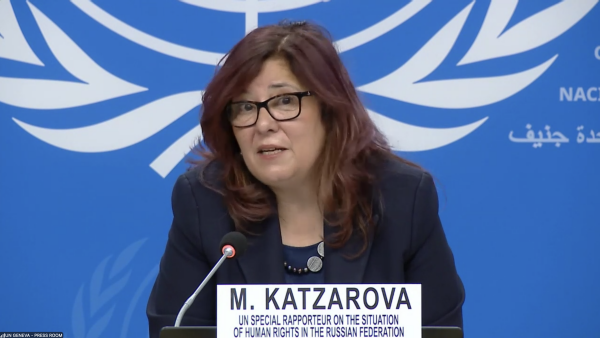
Mariana Katzarova discusses human rights in Russia as a UN Special Rapporteur.
1
1
1
Press Conferences | IOM , OHCHR , UN WOMEN , UNFPA , UNHCR , UNOPS , WHO
UN Geneva briefing: Yemen crisis worsens, urgent aid needed across multiple sectors.
1
1
1
Press Conferences | HRC
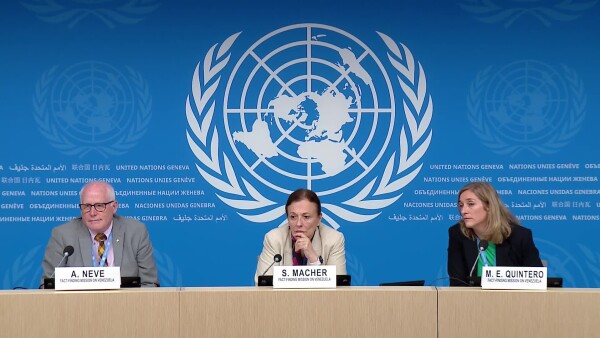
Press conference on the latest report of the Independent International Fact-Finding Mission on the Bolivarian Republic of Venezuela to the UN Human Rights Council
1
1
1
Press Conferences | OHCHR
Victims Still Waiting: A Global Briefing on Transitional Justice Around the World
2
1
2
Edited News , Press Conferences | WMO
As world’s water reserves change, countries must prepare for a new reality: WMO
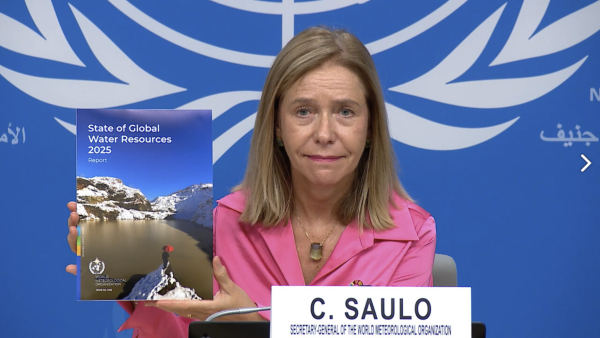
New data showing that rivers were at their lowest level for decades last year provides further evidence that the climate crisis is real and countries must act immediately to protect themselves from the increasing threat to communities and livelihoods, the UN World Meteorological Organization (WMO) said on Thursday.
The key findings from WMO’s State of Global Water Resources 2025 report covering the hydrological cycle and extreme events in the five-year period to last year:
- 2025 was one of driest years for river discharge in 35 years
- Past seven years have seen abnorfmal river flows
- Water storage on Earth’s land surface has decreased in past decade
- Widespread glacier loss across all regions for fourth consecutive year
- Asia and Africa are regions most affected by water-related disasters
- Water data availability has improved, but gaps remain in hard-hit areas
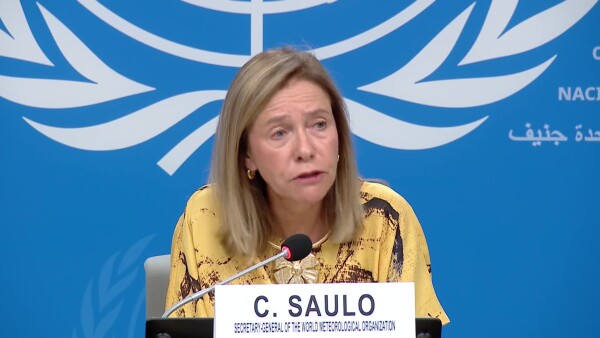
Highlighting the long-term decline in the Earth’s freshwater storage and glacier melt, WMO Secretary-General Celeste Saulo explained that the planet’s water reserves used to act as a planetary “savings account” that absorbed the occasional dry season, avoiding a water crisis. “One of the central stories of the 2025 report is what is happening to that savings account? And the simple answer is that we are depleting it,” she told journalists in Geneva.
Groundwater reserves are equally stretched and have been in decline since 2014, WMO’s report states, with nearly two-thirds of monitored wells worldwide showing levels lower than the historical norm and indicating a shift “further toward deficit…not recovery”.
“At the same time, we are seeing more water-related disasters,” Ms. Saulo said, while also stressing that the currently strengthening El Niño “will increase the risk of drought in some areas, and flooding in others”.
Glaciers disappearing
In 2025, for the fourth consecutive year, every major glaciated region on Earth lost ice mass, leading to short-term hazards including floods and long-term water insecurity, according to WMO.
Responding to a question about whether the changing global water cycle might have contributed to the deadly Nepal-China flooding disaster, Ms. Saulo explained that melting ice and rock was just one factor in the chain of events that ultimately sent a massive and deadly wall of water and debris downstream on 26 August, killing at least 1,367 people.
“You asked if it could happen again? Absolutely; the problem in this region is that there’s 63,700 glaciers at the last count,” she told a Press Conference in Geneva. “Even if you’re looking with remote sensing with satellites at these glaciers, you might see some faults, you might see some slight shifting, that does not mean necessarily catastrophic collapse. So, in order to plan for this, it’s very, very difficult. But the international community is looking very hard at ways in which we can bring people together to solve some of these monitoring issues.”
Data indicates that glaciers shrank between 2023 and 2025 with cumulative losses of 1,400 gigatonnes of water – or about one third of annual fresh water needs.
Every major glacier region on Earth lost ice for the fourth consecutive year.
“All 19 glacier regions around the globe lost ice; in Central Asia, Iceland, the Russian Arctic and western Canada and the United States, it was among the three worst years on record,” said Wayne Jenkinson, WMO’s Director of Hydrology and Cryosphere.
Some regions with smaller glaciers such as Central Europe, the Caucasus, the western Canada and the United States may already have reached “peak water”, Mr. Jenkinson warned.
“After this point, the glacier gives less meltwater each year simply because there is less ice left to melt. That matters for every community downstream that relies on water during hot, dry summers,” he explained.
Narelle van der Wel, WMO’s Head of Cryosphere Monitoring, Predictions and Services, stressed that while some further glacier loss is unavoidable, the eventual scale of the decline is not predetermined.
“Some glacier loss is inevitable, but total loss of glaciers is not yet inevitable,” she said, pointing to emissions reductions as central to limiting future losses.
Preparing for moving baselines
The report does not attribute every observed change to climate change alone. WMO says pressure on water resources and natural variability also contribute.
Mr. Jenkinson said governments need to prepare for “moving baselines” as historical patterns become less reliable.
“The situation 30 years ago is not where we are today,” he said. Countries, he added, need to prepare “for those changes that have really already arrived”.
ends
1
1
1
Press Conferences | WMO , OCHA , WHO , UNICEF , UN WOMEN , OHCHR , IOM , UNHCR
Update on Ebola from WHO and OCHA, update on the situation of children with the beginning of school in Ukraine from UNICEF, UN Women on the impact of the settlers and restrictions on women and girls in West Bank, OHCHR on the recovery of extensive human remains in Gaza, IOM and UNHCR on the new wave of displacement in Yemen
2
1
2
Press Conferences , Edited News | WFP
‘Super El Niño’ and converging crises worsen hunger in South Sudan and across the region - WFP
South Sudan’s hunger crisis is becoming increasingly catastrophic as violence, extreme weather and dwindling aid leave millions without enough food, the UN World Food Programme (WFP) warned on Tuesday.
1
1
1
Press Conferences | HRC
Update on the human rights situation in Belarus by the UN Group of Independent Experts on the Human Rights Situation in Belarus
1
1
1
Press Conferences | HRC , OHCHR
Update on the human rights situation in Syria by the Independent International Commission of Inquiry on the Syrian Arab Republic
1
1
1
Press Conferences | UNOG , IOM , UN WOMEN , UNCTAD , WHO , UNECE
IOM Yemen's Western Coast displacement; UN WOMEN on Gaza; UNCTAD Strait of Hormuz disruptions impacts; WHO Ebola logistics in DRC; WHO smoking and infertility; UNECE Data centres and energy.
1
1
1
Press Conferences | UNITAR , WMO
UNITAR: GA resolution on the merger of the United Nations System Staff College into the United Nations Institute for Training and Research; WMO: Air Quality and Climate Bulletin released; WHO: Ukraine update
2
2
2
Press Conferences , Edited News | WMO
Powerful El Niño heightens extreme-weather risks through 2027, as countries brace for impact - WMO
Fuelled by extraordinarily warm waters across the tropical Pacific Ocean, the El Niño climate pattern is expected to intensify in the coming months. Forecasters are almost certain that it will persist through February next year, with unusually warm conditions expected across the globe.