

The United Nations Office at Geneva
Multimedia Newsroom
Press Conferences | UNHCR , OCHA , WHO , ILO , HRC
Bi-weekly press briefing - 09 January 2024
PRESS BRIEFING BY THE UNITED NATIONS INFORMATION SERVICE
9 January 2024
Rolando Gómez of the United Nations Information Service (UNIS) in Geneva, chaired the hybrid briefing, attended by the spokespersons and representatives of the Office for the Coordination of Humanitarian Affairs, the United Nations High Commissioner for Refugees, the Office of the High Commissioner for Human Rights, the World Health Organization, and the International Labour Organization.
Update on the Ukrainian Crisis and Announcement of the Launch of Joint 2024 Response Plans
Jens Laerke, for the Office for the Coordination of Humanitarian Affairs (OCHA), said on Monday, 15th January, OCHA, together with the UN High Commissioner for Refugees (UNHCR), would launch the 2024 response plans for Ukraine and for the Ukrainian refugees and the host communities in the wider region.
After almost two years of relentless hostilities following the Russian Federation’s full-scale invasion, more than 14.6 million people – 40 per cent of the population in Ukraine – would need humanitarian assistance this year. The first week of January brought a wave of attacks to Ukraine, starting on the 29th of December and continuing to this day. On 2nd January, humanitarians in the capital Kyiv counted over 30 explosions in that city alone. Kharkiv in the east was also hit, at least five civilian casualties were reported, and 130 people were injured. On 3rd and 4th January, attacks continued killing and injuring civilians in the Sumy Region in the north, in the Donetsk Region in the east, and in Kherson and Mykolayiv Regions in the south. On 6th January, another wave of air strikes in the Donetsk Region killed nearly a dozen civilians, five of them children. Yesterday, more hostilities in Donetsk, Dnipro and Kherson Regions killed and injured dozens of civilians, including children, and damaged homes and schools.
On Monday, the Emergency Relief Coordinator Martin Griffiths and the High Commissioner for Refugees, Filippo Grandi, would present the UN-coordinated plans to save lives and address the suffering caused by the ongoing emergency. There would be a panel discussion to present both plans with Martin Griffiths, Filippo Grandi, the Humanitarian Coordinator for Ukraine, Denise Brown, the Deputy Prime Minister of Ukraine, Iryna Vereshchuk, and non-governmental organization representatives from Ukraine and Poland. The press was invited to attend the launch in Room XXIV and the event would be webcast on UN webtv.
Matthew Saltmarsh, for the United Nations High Commissioner for Refugees (UNHCR), said almost two years after the full-scale invasion of Ukraine, some 6.3 million refugees from Ukraine remained uprooted from their homes, the majority across Europe. 3.7 million people were internally displaced inside Ukraine, amounting to around one-quarter of the population. Inside Ukraine, humanitarian needs were growing, as shelling targeted civilians and civilian infrastructure. UNHCR welcomed the extension of Temporary Protection in the European Union until March 2025, but the focus needed to remain on including the most vulnerable in national systems in host countries. In a series of surveys of refugees, UNHCR assessed and highlighted the challenges that Ukrainian refugees faced in exile. While the majority hoped to return to Ukraine one day, just 14 per cent planned to do so in the near future, due to security concerns.
The majority of refugees planned to remain in their current host country. 62 per cent of the refugee population were women and girls and 36 per cent were children, which highlighted the heightened risk of gender-based violence. Only half of school-age refugee children and youth from Ukraine were enrolled in schools in host countries at the start of the 2023-2024 school year, marking the fourth consecutive year of education disruptions since the beginning of the war. According to UNHCR’s analysis, between 40 and 60 per cent of working age refugees were employed. Access to decent work remained a key need. Access to health care was also a key concern, with 25 per cent of the refugee population in need of health care reporting difficulties accessing the national system, due to long waits, language barriers and high costs.
The Regional Refugee Response Plan, to be launched alongside the Humanitarian Needs and Response Plan for inside Ukraine on 15 January, outlined the key strategic priorities to support refugees living in the main host countries. The Plan included 312 different partners supporting the host governments of Bulgaria, Czech Republic, Estonia, Hungary, Latvia, Lithuania, Republic of Moldova, Poland, Romania and Slovakia. Approximately 16.9 million people in Ukraine urgently needed humanitarian support. UNHCR was concerned that a lack of renewed support from the international community for the Ukraine situation, meant that essential activities in Ukraine and neighbouring countries may be cut. In 2023, UNHCR and partners reached more than 2.54 million people with protection and assistance. As temperatures plummeted, UNHCR’s winterization response targeted 900,000 vulnerable, displaced and war-affected people between 1 September 2023 to 29 February 2024.
Responding to questions, Mr. Laerke said Ukraine was not particularly underfunded in 2023; it was 64 per cent funded, from requirements of 3.95 billion USD. On New Year’s Eve, a convoy of 105 aid trucks entered Ukraine, to provide aid to the frontline communities. If the money did not come in, ongoing programmes would have to be adjusted and some programmes may never take off. These issues were present in Ukraine and everywhere. On Monday, the key message to donors would be to stay the course and keep up funding levels. The refugees were not ready to return, as the situation on the ground was horrific. OCHA would be asking for 3.1 billion USD to fund the Ukraine humanitarian response plan. This figure accounted for the humanitarian response plan inside Ukraine. The regional response plan required 1 billion USD in funding.
Responding to further questions, Mr. Laerke said Anthony Blinkin had several meetings in New York yesterday; a readout had been shared and there was nothing further to add. The 3.95 billion USD for 2023, was comparable to the 3.1 billion USD for 2024, meaning it was a slightly smaller appeal. The reason for this was a more stringent methodology, which was being used to focus urgently on those most in need across the world.
Human Rights Council Special Session
Responding to questions, Matthew Brown, for the Office of the High Commissioner for Human Rights (OHCHR), said there had been no news about a special session planned regarding Gaza, but member States could organise a special session at any time. The Council addressed matters of Gaza, the Occupied Palestinian Territory and Israel in many ways.
Update on the Health Situation in Gaza
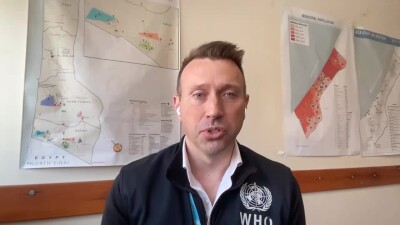
Dr. Richard Peeperkorn, World Health Organization (WHO) Representative in the occupied Palestinian territory, speaking from Jerusalem, said according to the latest figures from the Ministry of Health, there were more than 23,000 fatalities in Gaza, which amounted to 1 per cent of the population. Almost 59,000 people had been injured, which amounted to 2.7 per cent of the population. These included patients with multiple injuries, severe burns, and amputees, including children. The shrinking lack of space and humanitarian access were key issues. As long as there was no ceasefire, humanitarian corridors were required to ensure the safe delivery of aid across the whole of Gaza. The three most important hospitals in the middle and south areas, European Gaza Hospital, Nasser Medical Complex and Al-Aqsa, were near evacuation zones. These were the lifeline for the south of Gaza which was currently hosting over 2 million people. The risk of evacuation of medical staff meant the hospitals were barely functional.
WHO had not been able to reach the north for two weeks, since December 26, and had cancelled six planned missions. The team was ready to deliver but had not been able to receive the necessary permissions. Intensifying hostilities were hindering operations in the South. The health system was on its knees; there were 15 hospitals which were partially functional. Only 19 from the 72 primary health care centres were partially functional. Approximately 66 healthcare workers remained detained, with no information on their whereabouts. WHO had struggled with medical referrals into Egypt, and it was hoped this would improve over the coming weeks. The private sector in Gaza needed to get going again, as the Gaza population would be dependent on this, rather than just humanitarian support.
Rolando Gómez of the United Nations Information Service (UNIS) said the 1.9 million people displaced, according to the United Nations Relief and Works Agency for Palestinian Refugees (UNRWA), amounted to a staggering 85 per cent of the population.
Sean Casey, WHO Emergency Medical Teams Coordinator, speaking from Gaza, said a humanitarian catastrophe was unfolding across the Gaza strip. Many people had been displaced multiple times. In Rafah, there were spontaneous, makeshift shelters everywhere. The health system was collapsing at a rapid pace. Mr. Casey had visited the Al-Aqsa hospital in the “middle area”, which had lost 70 per cent of their staff who had fled with their families. Mr. Casey had seen patients being treated on the floor, mainly children with gunshot and shrapnel wounds, with just a handful of doctors and nurses to care for them. At Nasser Medical Complex, one of the last remaining trauma centres, almost 70 per cent of the staff were also gone. Patients and families feared going to the hospitals, due to the likelihood of being killed on the way. Many of those killed and injured could have been saved if they had had access to care. Gaza had no shortage of healthcare workers, but they had been forced to flee. It continued to be a shrinking humanitarian space and shrinking access to health services across the Gaza Strip. People continued to flee to the south, which was becoming extremely crowded. There was no tertiary hospital which was accessible. There was no capacity in Rafah, which now hosted over 1 million people. It was a very dramatic situation.
Responding to questions, Dr. Peeperkorn, said he feared that the hospitals in the south of Gaza were going the same way as those in the north. In the south, there were nine hospitals partially functioning, which included European Gaza Hospital, Nasser Medical Complex and Al-Aqsa. Before the crisis in Gaza there were 3,500 hospital beds. Now there were around 1,400, but the situation required at least 5,000 beds. Gaza could not afford to lose any more hospital or hospital beds. UNRWA together with WHO were trying to assess the levels of infectious diseases. More than 81,000 cases of diarrhoea had been recorded, which was concerning; normally there were around 2,000 cases.
Responding to questions, Mr. Casey said the hospital director at Al-Aqsa hospital had requested that the international community protect their hospitals. That evening, he and his staff had fled due to the intensification of the conflict. Gaza could not lose these health facilities: they must be protected. These were the last lines of tertiary centres for Gaza. It was the responsibility of the international community and the parties to the conflict to protect the hospitals. In Rafah, the food situation had slightly improved. There were rations available, as people did not have a lot of money to buy food. In the north, there had been limited food deliveries. It was difficult to say what deaths were linked to starvation, as WHO had limited communication with hospitals in the north. Patients were all asking for food. The small amounts of food getting in were not reaching the people who needed it the most.
Responding to further questions, Mr. Casey said he had not seen a lowering of the intensity of the conflict during the five weeks he had been in Gaza. At Nasser Medical Complex, a few days ago, he had witnessed multiple explosions in just a few minutes. The health workers who were fleeing had been in an area of war for 90 days and were only now fleeing, which indicated the intensity of the situation. The emergency departments were still seeing a steady stream of trauma, especially among children. There were still a huge number of casualties related to hostilities.
Responding to further questions, Dr. Peeperkorn, said while the rate of fatalities had slightly decreased, it was still enormous. WHO were unable to disaggregate the number of health workers killed. The humanitarian space in Gaza was complex and shrinking. Since 26 December, WHO had cancelled six planned missions to the north, which would have provided medical equipment. It was important to make sure Al-Shifa hospital was supported and sustained. Hospitals in the north had gone from totally functional, to barely functional in a matter of weeks. It was important to ensure that some hospitals were working in the northern area, and to ensure none were lost in the southern areas. The health care system in Gaza was showing incredible resilience. Many healthcare teams were planning to stay and serve, and this should be recognised.
Mr. Casey said the thousands of patients who left Al-Aqsa hospital had moved to hospitals which were already bursting at the seams. They were moving from one bad situation to another. There were no safe places in Gaza. Humanitarian access had not gotten better; it had only gotten more limited. Missions were planned almost every day for the middle area and the north, and there was a continuous struggle to get those missions cleared. This meant patients were being denied fuel, food, and medical equipment. The hospitals which remained, were bursting. The health care workers were heroes, doing incredible work under the most difficult circumstances.
Responding to further questions, Dr. Peeperkorn said there had been a flash appeal for 1.2 billion USD for 90 days. From October 2023 to January 2024, WHO had required 110 million USD. 49.5 million USD had been secured, with a potential additional 40 million USD in flash funds. The focus of the plan was restoring the health sector and conducting public health surveillance. WHO was revising the appeal for 2024, which would request at least 200 million USD.
Responding to further questions, Mr. Casey said he did not have exact figures on the number of children who had had limbs amputated. These amputations were happening due to delayed access to care and the lack of resources at the hospitals. There was also a lack of surgeons and a lack of operating space. The hospitals were focused on saving as many lives as possible, and their initial focus was on damage control. Al-Aqsa hospital had seen 120 patients awaiting surgery on Christmas Day. With the limited resources, doctors and nurses had to make impossible choices, and were focused on saving as many lives as they could. Dr. Peeperkorn added that the medical staff constantly had to make tough choices, including doing amputations, where typically they would not amputate. WHO had supported the limb reconstruction unit for over a decade and would continue to do so.
Responding to further questions, Mr. Casey said the shrinking humanitarian space was evident. There were evacuation orders in new areas, every couple of days. Every day WHO had lined up their convoys and waited for clearance and every day they did not get it. Between the real risk and the efforts made to coordinate movements, there were far fewer areas which could be accessed and where supplies could be delivered. WHO were ready to go and had the supplies ready but could not move. It was not WHO’s lack of willingness to reach areas but rather a lack of access.
Dr. Peeperkorn said that every day, aid deliveries in Gaza were being denied. Even if there was no ceasefire, it should be excepted that humanitarian corridors would operate. It was currently too ad hoc, too little, and too late, especially in the north. There were also concerns about law and order among the population. The UN, including WHO and partners, were completely ready for humanitarian transport in Gaza.
Mr. Casey said the food situation in the north was horrific; there was almost no food available, and everyone was begging for food. The middle area was also seeing a lack of access to food. There was not enough coming in and there was not enough to feed the two million people in the Gaza strip. WHO worked with partners like Health Central kitchen to arrange for food for patients and healthcare workers, but they were still not able to access food consistently. It was a horrific situation across the board, slightly less bad in Rafah, but dramatically bad across the entire Gaza strip.
Mr. Gómez, said today, the General Assembly, at 10am New York time (4.pm Geneva time) would hold a debate on “The situation in the Middle East, including the Palestinian question”.
Human Rights Council Update
Matthew Brown, for the Office of the High Commissioner for Human Rights (OHCHR), said tomorrow, the Human Rights Council would elect its president for 2024. The meeting would take place in Room XX at 10am. This meeting would be webcast. There were two candidates, vying for president, including the Permanent Representative of Morocco to the United Nations Office at Geneva, Ambassador Omar Zniber and the Permanent Representative of South Africa to the United Nations Office at Geneva, Ambassador Mxolisi Nkosi. The 47 members of the Council would vote for either of those two candidates in a secret ballot. The votes would be counted, and a simple majority would determine the winner, who would be announced during the meeting. Later in the afternoon, there would be a second meeting, for the selection the three member states involved in the Universal Periodic Review (UPR) process. The 45th session of the UPR would begin on the 22nd of January.
Launch of the annual ILO World Employment and Social Outlook: Trends 2024
Zeina Awad, for the International Labour Organization (ILO), said the ILO were publishing their annual World Employment and Social Outlook: Trends 2024, tomorrow on the 10th of January, which explored what the data was saying about the health of the labour market. There would be a press conference at 10:30am Geneva time on the same day. Links to the media release would be shared upon request. The report would look at figures which indicated the labour market had recovered since COVID-19 but also focused on the question of a sustainable recovery, particularly in the context of multiple global crises.
Announcements
Rolando Gómez of the United Nations Information Service (UNIS) said the closure of the building at the Palais had been extended by one additional week. There was a model UN event taking place in room XIX at 10 am. There were a host of ambassadors who were scheduled to speak, and the Director-General of UN Geneva would also address the opening.
Responding to questions, Mr. Gómez said the full closure of the Palais took place between the 20th of December till the 7th of January, with an estimated savings of 133,500 CHF. The further extension of one week was meant to save more money and reduce the carbon footprint. This was due to a budget shortfall, from a lack of dues being paid. Mr. Gómez recommended that colleagues in New York be contacted who could provide details around the member States who had not paid their dues. UN Geneva accounted for around 2.2 percent of the UN’s regular budget, at about 770 million USD of the nearly 3.4 billion USD overall regular budget for 2023.
Similar Stories
1
12
1
1
Press Conferences , Images | UNOG
Closing Press Conference following the Sixth Consultative Meeting on Enhancing Coordination of Peace Initiatives and Efforts in Sudan

2
17
1
2
Edited News , Press Conferences | OCHA , WMO
Two UN agencies teamed up on Wednesday to issue an appeal for immediate assistance to help communities already being impacted by the strongest El Niño on record.
1
1
1
Press Conferences | CITES
Wildlife trade and conservation policy discussions at the 81st meeting of the CITES Standing Committee (SC81)
1
1
1
Press Conferences | UNHCR , UNCTAD , WMO , OCHA , UNICEF , WHO
UNHCR Hungary’s 1956 Refugee Crisis: 70 Years On, UNCTAD World Investment Forum 2026, Doha, WMO Greenhouse Gas Bulletin and Climate Update for COP31, OCHA Afghanistan: Malnutrition, Girls’ Education and Recovery, UNICEF Yemen: Child Malnutrition and Unsafe Water in Taiz, WHO Inequalities in Noncommunicable Diseases and Risk Factors
1
1
1
Press Conferences | UNHCR
End of UNHCR's 77th Annual Executive Committee (ExCom) meeting week
1
1
1
Press Conferences | UNICEF , IOM , UNHCR
UN Special Assistant to the Personal Envoy Office (SUDAN): Peace Initiatives and Efforts in Sudan; UNICEF: Dire situation of children in Gaza; IOM: Damaged Homes and Energy Attacks Risk Displacing Ukrainians for this winter; UNHCR: update on EXCOM week
1
1
1
Press Conferences | IOM , UNDRR
UN stresses importance of household preparedness for disaster risk reduction.
1
1
1
Statements , Press Conferences | OHCHR
1
1
1
Press Conferences | UNHCR , UNICEF , IFRC , OHCHR , UN WOMEN , IOM , OCHA , WHO
UNHCR – ExCom Meeting, UNICEF – Nepal Recovery, IFRC – Flash Floods, WHO – Mental Health, IOM – South Sudan Floods, OCHA – DRC Humanitarian aid, UNHCR – Sahel Displacement, UNICEF – Yemen Update, IOM – Gaza Shelter, UN Women – Gaza Women, OHCHR – Arrests and detentions of Syrians by Israeli force
2
1
2
Press Conferences | UNCTAD
Presentation of the Trade and Developement Report 2026
Embargoed until 9 October 2026 at 11 a.m. (Geneva Time)
UNCTAD: UNCTAD’s flagship report finds that governments increasingly use industrial, trade, financial and technology policies to pursue economic and national security objectives. Market access and the ability to move into higher-value activities now depend more heavily on technology, finance and geopolitics.
1
1
1
Press Conferences | UPU
Release of the State of the Postal Sector Report 2026
1
1
1
Press Conferences | IOM , ITU , UNECE , UNICEF , WHO , WMO
UNICEF: Ebola, DRC - children orphans or separating them from parents and caregivers; IOM: Humanitarian needs in Djibouti amid arrivals from Yemen and increased migrant movements; WHO: Darfur, scale of health needs far exceeds available resources; WMO co-sponsored Global Heat Forum, Bangkok, monthly Global Seasonal Climate Update; UNECE: UN Forum of Mayors; ITU Plenipotentiary Conference 2026; WHO: child and adolescent obesity guidelines and new global roadmap to tackle pregnancy hypertension, a leading cause of maternal mortality