

The United Nations Office at Geneva
Multimedia Newsroom
STORYLINE
After a four-day-day pause in fighting between Israel and Hamas which started on Friday at 7 am local time, trucks carrying humanitarian deliveries entered the Gaza Strip through the Rafah crossing from Egypt bringing respite to the Gazans in the devastated Palestinian enclave, UN humanitarians said.
“The United Nations can confirm that, as I speak, trucks with humanitarian supplies continues to cross into Gaza through the Rafah crossing point,” said Jens Laerke, spokesperson for the UN humanitarian affairs coordination office (OCHA). “We hope the agreement between Israel and Hamas now in force will bring respite to the people of Gaza and Israel and some relief to the hostages and detainees who will be released and to their families.”
As the death toll in the enclave passed 14,800 as of Thursday evening, according to Gaza’s Government Media Office quoted by OCHA, thousands of people are estimated to be trapped under the ruins of their houses.
Mr. Laerke said that “we hope that the truce will allows grieving families to honor the dead and bury them with dignity, and we hope that this humanitarian pause leads to a longer-term humanitarian cease fire for the benefit of the people of Gaza, Israel and beyond.”
UN had repeatedly stressed that the humanitarian agencies needed access all over the Strip, including in the north, where needs were the largest. It was expected that people in need would be reached wherever they were, but it was still too early to confirm when that would be possible.
OCHA’s spokesperson reiterated the importance to get “access across the Gaza Strip, especially in the north. That's where the damage and the humanitarian needs are the greatest. So, we continue to call for access to reach all parts of Gaza.”
OCHA reported that 75,000 litres of fuel entered Gaza from Egypt on Thursday, following an Israeli decision from 18 November to “allow the daily entry of small amounts of fuel for essential humanitarian operations”. The UN Office said last week that some 200,000 litres of fuel per day were needed.
“It is very important to get fuel in, to be able to operate any machinery that will be required to get people out of the rubble”, stressed Mr. Laerke. “We see that in all kinds of situations where you have massive infrastructural damage and collapse.”
Welcoming the humanitarian pause, although more was needed, UN health agency (WHO) spokesperson Christian Lindmeier said that “we're working on further evacuations from hospitals as soon as possible.” He reminded that “on 22 November, together with the Palestine Red Crescent Society, a joint UN mission evacuated 151 patients, relatives and health workers accompanying them from our chief hospital in northern Gaza. This was undertaken specifically following requests from health authorities and hospitals and hospital officials in Gaza.”
This was the third mission to Al-Shifa carried out by WHO and partners in less than a week; the first had been an assessment mission on 18 November and the second an evacuation mission to transport 31 infants on 19 November. WHO was working on further evacuations from hospitals.
“We are extremely concerned about the safety of the estimated 100 patients and health workers remaining at al-Shifa and due to the limited time that the mission members were able to spend in the hospital and the urgency of moving the most critical, it was difficult to determine exactly how many remain”, said Mr. Lindmeier.
Out of 24 hospitals operating in the north prior to the war, 22 are either out of service or unable to admit new patients, while of the 11 medical facilities in the south, eight are functional. WHO said that of those, only one has the capacity to treat critical trauma cases or perform complex surgery.
-ends-
STORY: Gaza Start of truce WHO - OCHA 24 November 2023
TRT: 2:40”
SOURCE: UNTV CH
LANGUAGE: ENGLISH
ASPECT RATIO: 16:9
DATELINE: 10 November 2023 - GENEVA, SWITZERLAND
SHOTLIST
- Exterior medium shot: UN building with UN flag, UN Geneva.
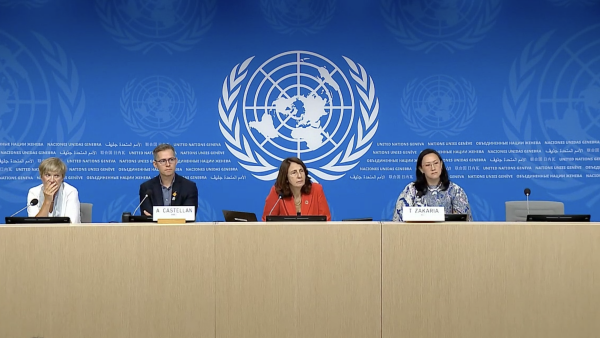
- Wide shot, press briefing room with spokesperson, journalists and screens, UN Geneva
- SOUNDBITE (ENGLISH) – Jens Laerke, OCHA spokesperson: “The United Nations can confirm that, as I speak, trucks with humanitarian supplies continues to cross into Gaza through the Rafah crossing point. We hope the agreement between Israel and Hamas now in force will bring respite to the people of Gaza and Israel and some relief to the hostages and detainees who will be released and to their families. We hope it allows grieving families to honor their dead and bury them with dignity. And we hope that this humanitarian pause leads to a longer-term humanitarian cease fire for the benefit of the people of Gaza, Israel and beyond.”
- Cutaway: Wide shot, press briefing room with spokesperson, journalists and screens, UN Geneva
- SOUNDBITE (ENGLISH) – Jens Laerke, OCHA spokesperson: “We need access across the Gaza Strip, especially in the north. That's where the damage and the humanitarian needs are the greatest. So, we continue to call for access to reach all parts of Gaza.”
- Cutaway: Wide shot, press briefing room with spokesperson, journalists and screens, UN Geneva
- SOUNDBITE (ENGLISH) – Jens Laerke, OCHA spokesperson: “It is very important to get fuel in, to be able to operate any machinery that will be required to get people out, out of the rubble. We see that in all kinds of situations where you have massive infrastructural damage and collapse.”
- Cutaway: Wide shot, press briefing room with journalists and screens, UN Geneva
- SOUNDBITE (ENGLISH) - Christian Lindmeier, spokesperson for the World Health Organization (WHO): “We're working on further evacuations from hospitals as soon as possible to remind you that on 22 November, together with the Palestine Red Crescent Society, WHO joint, a led joint UN mission, evacuate 151 patients, relatives and health workers accompanying them from Al-Shifa Hospital in northern Gaza. This was undertaken specifically following requests from health authorities and hospital officials in Gaza.”
- Cutaway: Close up, journalist listening, UN Geneva
- SOUNDBITE (ENGLISH) – Christian Lindmeier, spokesperson for the World Health Organization (WHO): “We're extremely concerned about the safety of the estimated 100 patients and health workers remaining at Al-Shifa and due to the limited time that the mission members were able to spend in the hospital and the urgency of moving the most critical, it was difficult to determine exactly how many remain.”
- Cutaway: close up, technicians listening, UN Geneva
- Cutaway: wide shot, press briefing room with journalists, UN Geneva
- Cutaway: close up, journalist listening, UN Geneva
More info
Similar Stories

1
1
1
Statements , Press Conferences | OHCHR

1
1
1
Press Conferences | UNHCR , UNICEF , IFRC , OHCHR , UN WOMEN , IOM , OCHA , WHO
UNHCR – ExCom Meeting, UNICEF – Nepal Recovery, IFRC – Flash Floods, WHO – Mental Health, IOM – South Sudan Floods, OCHA – DRC Humanitarian aid, UNHCR – Sahel Displacement, UNICEF – Yemen Update, IOM – Gaza Shelter, UN Women – Gaza Women, OHCHR – Arrests and detentions of Syrians by Israeli force

2
1
2
Press Conferences | UNCTAD
Presentation of the Trade and Developement Report 2026
Embargoed until 9 October 2026 at 11 a.m. (Geneva Time)
UNCTAD: UNCTAD’s flagship report finds that governments increasingly use industrial, trade, financial and technology policies to pursue economic and national security objectives. Market access and the ability to move into higher-value activities now depend more heavily on technology, finance and geopolitics.

1
1
1
Press Conferences | UPU
Release of the State of the Postal Sector Report 2026
1
1
1
Press Conferences | IOM , ITU , UNECE , UNICEF , WHO , WMO
UNICEF: Ebola, DRC - children orphans or separating them from parents and caregivers; IOM: Humanitarian needs in Djibouti amid arrivals from Yemen and increased migrant movements; WHO: Darfur, scale of health needs far exceeds available resources; WMO co-sponsored Global Heat Forum, Bangkok, monthly Global Seasonal Climate Update; UNECE: UN Forum of Mayors; ITU Plenipotentiary Conference 2026; WHO: child and adolescent obesity guidelines and new global roadmap to tackle pregnancy hypertension, a leading cause of maternal mortality
1
1
1
Press Conferences | OCHA , UN WOMEN , UNHCR , WFP , WHO , WTO , UNEP
OCHA – $160M CERF allocation to 12 underfunded crises; UNHCR – 5.8M refugee children remain out of school amid funding cuts; UN Women – Middle East escalation and food security among women/girls; WHO – Gaza supplies and overall situation; WFP – Yemen food insecurity and impact on global hunger ; UNEP - First International Conference of the Global Framework on Chemicals in Geneva | 16-20 November 2026
1
1
1
Press Conferences | UNHCR , WHO
Yemen's health system nears collapse amid conflict, causing rising casualties and medicine shortages.
1
1
1
Press Conferences | HRC
Update by the Expert Mechanism to Advance Racial Justice and Equality in Law Enforcement
1
1
1
Press Conferences | WIPO , WHO , UNICEF , UNHCR , IOM , WFP , FAO
WIPO Global Innovation Index 2026 launch and press conference, WHO Composition of influenza vaccines for the 2027 Southern Hemisphere flu season, UNICEF Yemen hunger and malnutrition; UNHCR Sudan displacement into Chad; IOM Ebola and population movements in DRC; WFP emergency food assistance in Nepal; and FAO food loss and waste.
2
1
2
Press Conferences | UNCTAD
Gaza reconstruction needs reach $71.5 billion as Palestinian economy and public finances face severe strain. Latest UNCTAD report documents the loss of decades of development gains, economic collapse in Gaza and tightening economic constraints in the West Bank.
The report identifies three immediate priorities: transferring withheld Palestinian revenues, safeguarding the banking system and aligning reconstruction support with the documented scale of damage and economic losses.
1
1
1
Press Conferences | HRC
Press conference on the situation of human rights in Nicaragua by the UN Group of Human Rights Experts
1
1
1
Press Conferences | ITU , UNHCR , WHO , WMO
YEMEN - UNHCR: Escalating conflict in Yemen could fuel more displacement, refugee movement
CLIMATE - WHO / WMO: Health and Climate impact of El Niño