

The United Nations Office at Geneva
Multimedia Newsroom
Press Conferences | HRC , OHCHR , UNCTAD , UNDP , UNECE , UNICEF , WHO
Bi-weekly press briefing - 26 September 2023
PRESS BRIEFING BY THE UNITED NATIONS INFORMATION SERVICE
26 September 2023
Impact of the deteriorating situation in Mali on children
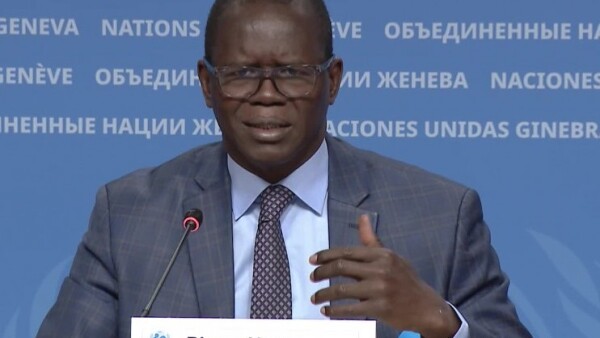
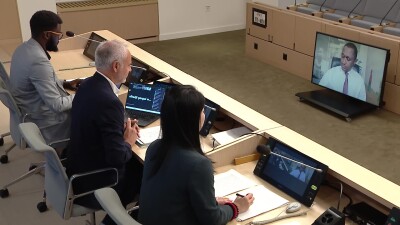
Pierre Ngom, United Nations Children’s Fund (UNICEF) Representative in Mali, said that children continued to pay the highest price of the worsening security crisis in Mali. Only this month, dozens of children had been killed, said Mr. Ngom. About one million children under five were at risk of malnutrition. Since 8 August, some non-state armed actors were imposing a blockade on Timbuktu by cutting off main supply routes, and ongoing attacks and insecurity were creating chaos for children. More than 1,500 schools in Mali were still closed, and 9,000 teachers were affected badly because of insecurity. Half a million children would miss on school when the school year starts in a few weeks. The situation was exacerbated by MINUSMA’s imminent departure. Mr. Ngom stated that emphasis on peace and security should go hand in hand with investment in children. Conditions ought to be secure for schools to be open and children to have safe and unrestricted access to education.
Responding to questions, Mr. Ngom specified that cases of polio had been detected in Gao and Timbuktu. School closures had occurred primarily in zones of insecurity; for example, in Ménaka, some 50 percent of schools were closed. He explained that access to certain areas was becoming more and more difficult in Ménaka and Timbuktu regions, which was also adversely affected by MINUSMA’s departure.
All state and non-state armed groups had to respect international humanitarian law, reminded Mr. Ngom. Some of those armed groups were implementing UNCIEF’s plans on preventing grave abuses of children’s rights. UN Secretary-General’s report on children in armed conflict, issued in June 2023, featured Mali, and included examples of the use of child soldiers, abductions, and sexual abuse. UNICEF aimed to have a prevention plan in each of the countries mentioned in Annex 2 of the report. The report did not list the Government of Mali, which had voluntarily adopted the plan to prevent grave violations against children, explained Mr. Ngom.
More information about UNICEF’s activities in Mali can be found here.
Marking Indigenous Peoples’ land in Brazil
Marta Hurtado, for the Office of the High Commissioner for Human Rights (OHCHR), said that a recent Brazilian Supreme Court ruling in favour of a case brought by Indigenous Peoples to reject time restrictions on claiming rights to their ancestral land was very encouraging.
The landmark decision - reached by nine of the 11 justices of the Supreme Court - was against what was known as the “Marco Temporal” argument. Under that legal theory, Indigenous Peoples who had not been living on their ancestral land in 1988, when Brazil’s current constitution had been adopted, would have been blocked from applying for demarcation of their land.
OHCHR remained concerned that a draft bill was currently being discussed in Congress, which sought to establish through legislation the same temporal restriction which had now been rejected by the Supreme Court. The draft bill also included further obstacles to demarcation processes. The UN Human Rights Office stressed that, while demarcation of ancestral lands was essential, it was not of itself sufficient to comprehensively protect Indigenous Peoples’ rights.
Responding to a question from the media, Ms. Hurtado stressed that there should not be any limit to the demarcation of indigenous peoples’ lands.
OHCHR statement can be found here.
Situation in Nagorno-Karabakh
On a question related to the situation in Nagorno-Karabakh, Marta Hurtado, for the Office of the High Commissioner for Human Rights (OHCHR) said that the OHCHR did not have physical presence in the area, which was why they could not verify or confirm various claims of human rights violations. The affected population had to have access to humanitarian assistance; all internally displaced people also had the right to return in safety and dignity. OHCHR was in touch with all parties and aimed to secure access.
Alessandra Vellucci, for the United Nations Information Service, said that the UN stood ready to conduct a humanitarian needs assessment and provide aid to affected people, if given an opportunity to do so.
Shabia Mantoo, for the United Nations Refugee Agency (UNHCR), said that the UNHCR was calling on all sides to protect civilians and allow for their safe passage, in line with the international humanitarian law. Nobody should be forced to flee their home in the first place. As of this morning, some 13,500 new arrivals to Armenia had been reported. People suffered from trauma and exhaustion; the Government of Armenia would reach out to the international community to request support. UNHCR was leading the interagency response plan in cooperation with the office of the UN Resident Coordinator in Armenia.
Launch of the nicotine- and tobacco-free school guide
Dr. Kerstin Schotte, Medical Officer at the World Health Organization (WHO), stated that tobacco killed eight million people every year; 1.3 million of those were not direct consumers but rather victims of second-hand smoke. Half of world’s children were reported to breathe air polluted by tobacco smoke. Tobacco was the only legal product which killed half of its users, said Dr. Schotte, so the tobacco industry was continuously looking for ways to target new, young users. The nicotine industry was doing the same, by providing new, addictive, flavoured products. Some of those products, such as vape sticks, were affordable and did not carry any warnings.
Today, WHO was launching a new guide for schools on how to become tobacco- and nicotine-free. The guide contained best examples and lessons learned from around the world and included step-by-step instructions on how to move forward. Children spent a third of their waking time in schools, where they encountered a lot of peer pressure on using such products. It was hoped that the new guide and tool book would empower school administrators and teachers on how to create tobacco- and nicotine-free schools.
The guide can be downloaded here.
Answering questions from the media, Dr. Schotte said that four million hectares in the world were used to grow tobacco – an unstainable crop which was depleting water. WHO urged governments to end subsidies for tobacco growing and to replace tobacco with crops that could be used to feed people. In Zambia and Kenya, for example, farmers were supported with substituting tobacco with high-iron beans, which also benefited farmers as tobacco growing was very labour intensive. Responding to another question, Ms. Schotte said that Switzerland was one of the few countries which was not a State Party to the WHO Framework Convention on Tobacco Control. Switzerland was also lagging in protecting its population from tobacco use, including children. Dr. Schotte said the e-cigarettes were marketed as helping adult smokers quit, but the evidence was still scant. Quitting should not be understood as switching to different addictive products. Dr. Schotte stressed that schools should be completely smoke-free indoors; 149 countries had already put into place such legislation. WHO was asking that entire school campuses be made smoke-free; there should be no tobacco or advertising on school grounds; and no sponsorships from the tobacco industry should be accepted. Most of the problem was still connected to tobacco use rather than electronic cigarettes or vapes.
Third Forum of Mayors
Jean Rodriguez, for the United Nations Economic Commission for Europe (UNECE), informed that the 3rd Forum of Mayors would bring together some 50 city leaders from around the world on 2-3 October; it would be held in Room XVII of the Palais des Nations.
As the world was becoming more urbanized, cities were on the front line of addressing humanity’s most pressing challenges, from climate change to migration as well as natural disasters and socioeconomic inequality. As a unique mechanism within the UN system that linked local and national authorities in a normative intergovernmental framework, the Forum of Mayors was helping to put into practice a stronger, more networked, and inclusive multilateralism. The Forum would be chaired by Sami Kanaan, Deputy Mayor of Geneva and Ihor Terekhov, Mayor of Kharkiv (Ukraine). Architect Norman Foster would deliver a keynote address.
On 6 October, there would be a meeting to present updates on the reconstruction plans for Ukrainian cities, supported by UNECE under the 4UkrainianCities project, with the participation of the Deputy Minister for Development of Communities, Territories and Infrastructure of Ukraine, Natalia Kozlovska, the mayor of Mykolaiv, Dmytro Falko, and the teams working on the masters plans for Kharkiv and Mykolaiv.
More details on the Third Forum of Mayors are available here.
UNITAR’s sixtieth anniversary
Akiko Perona, for the United Nations Institute for Training and Research (UNITAR), informed that, to mark its 60th anniversary, UNITAR was organizing a series of events and initiatives worldwide. In Geneva, starting on 2 October, a photo exhibition, displayed on the Rotonde du Quai du Mont-Blanc would illustrate 60 years of history as well as stories of UNITAR alumni who had made a positive change in their community. The opening ceremony would be held at 4 pm on 6 October.
On 4 October at 9 am, at the Palais des Nations, in Room XVII, the United Nations Climate Change Learning Partnership, hosted by UNITAR, would organize a hybrid Youth Climate Dialogue connecting six high schools. The event would provide students with a platform to exchange with and learn from each other about climate change, its impacts on various parts of the world, and the different solutions for it.
To conclude the celebrations, an exceptional concert would bring together artists from Ecuador, India, and the African continent on the stage of the Conservatoire de musique de Genève on 16 November, with the Jet d’eau illuminated in blue the same night. The UNITAR flags would be displayed on Mont Blanc bridge during the week of 13 November.
More information about UNITAR’s 60th anniversary is available here.
Human Rights Council
Pascal Sim, for the Human Rights Council (HRC), informed that the Council was holding a panel discussion on young people’s engagement with climate change and global environmental decision-making processes. An OHCHR report on Myanmar would be presented after that, to be followed by the Council’s general debate on country situations which required special attention. The following day, cyber-bullying against children would be on the agenda. The same day, the Council would discuss human rights of Indigenous People, informed Mr. Sim. Secretary-General’s report on reprisals would be presented on 28 September.
Announcements
Marta Hurtado, for the Office of the High Commissioner for Human Rights (OHCHR), informed that on 30 September, OHCHR’s headquarters at Palais Wilson in Geneva would open its doors to visitors, on the occasion of the 75th anniversary of the Universal Declaration of Human Rights. A number of educational and fun activities would be organized throughout the day.
Further details are available here.
Catherine Huissoud, for the United Nations Conference on Trade and Development (UNCTAD), reminded about its press conference in London on 27 September at 11:30 am Geneva time to launch its Review of Maritime Transport 2023 ahead of World Maritime Day. The report highlighted the pressing need for cleaner fuels, digital solutions, and an equitable transition to combat rising carbon emissions and regulatory uncertainty in the shipping industry. Details on how to join the press conference virtually from Geneva had been shared.
Alessandra Vellucci, for the UN Information Service, informed that the new Director-General of the International Organization for Migration (IOM), Amy Pope, would hold a press conference at the Palais des Nations on 2 October at 10:15 am.
The Building Bridge Conference would be held at the CICG from 2 to 5 October, informed Ms. Vellucci. A press conference and a press lunch were scheduled on 2 October from 12 noon on, and journalists needed to register. More information is available here.
The Committee on Enforced Disappearances would hold a public meeting with National Human Rights Institutions from 3 to 4:30 pm today [later on, it was announced that this meeting would happen tomorrow].
The Committee on Economic, Social and Cultural Rights would conclude this afternoon its review of the report of Chad.
Finally, Ms. Vellucci informed that today was the International Day for the Total Elimination of Nuclear Weapons, and 27 September would be the World Tourism Day. The messages of the Secretary-General for these days had been distributed to the journalists.
Similar Stories
1
1
1
Press Conferences | UNHCR
End of UNHCR's 77th Annual Executive Committee (ExCom) meeting week
1
1
1
Press Conferences | UNICEF , IOM , UNHCR
UN Special Assistant to the Personal Envoy Office (SUDAN): Peace Initiatives and Efforts in Sudan; UNICEF: Dire situation of children in Gaza; IOM: Damaged Homes and Energy Attacks Risk Displacing Ukrainians for this winter; UNHCR: update on EXCOM week
1
1
1
Press Conferences | IOM , UNDRR
UN stresses importance of household preparedness for disaster risk reduction.
1
1
1
Statements , Press Conferences | OHCHR
1
1
1
Press Conferences | UNHCR , UNICEF , IFRC , OHCHR , UN WOMEN , IOM , OCHA , WHO
UNHCR – ExCom Meeting, UNICEF – Nepal Recovery, IFRC – Flash Floods, WHO – Mental Health, IOM – South Sudan Floods, OCHA – DRC Humanitarian aid, UNHCR – Sahel Displacement, UNICEF – Yemen Update, IOM – Gaza Shelter, UN Women – Gaza Women, OHCHR – Arrests and detentions of Syrians by Israeli force
2
1
2
Press Conferences | UNCTAD
Presentation of the Trade and Developement Report 2026
Embargoed until 9 October 2026 at 11 a.m. (Geneva Time)
UNCTAD: UNCTAD’s flagship report finds that governments increasingly use industrial, trade, financial and technology policies to pursue economic and national security objectives. Market access and the ability to move into higher-value activities now depend more heavily on technology, finance and geopolitics.
1
1
1
Press Conferences | UPU
Release of the State of the Postal Sector Report 2026
1
1
1
Press Conferences | IOM , ITU , UNECE , UNICEF , WHO , WMO
UNICEF: Ebola, DRC - children orphans or separating them from parents and caregivers; IOM: Humanitarian needs in Djibouti amid arrivals from Yemen and increased migrant movements; WHO: Darfur, scale of health needs far exceeds available resources; WMO co-sponsored Global Heat Forum, Bangkok, monthly Global Seasonal Climate Update; UNECE: UN Forum of Mayors; ITU Plenipotentiary Conference 2026; WHO: child and adolescent obesity guidelines and new global roadmap to tackle pregnancy hypertension, a leading cause of maternal mortality
1
1
1
Press Conferences | OCHA , UN WOMEN , UNHCR , WFP , WHO , WTO , UNEP
OCHA – $160M CERF allocation to 12 underfunded crises; UNHCR – 5.8M refugee children remain out of school amid funding cuts; UN Women – Middle East escalation and food security among women/girls; WHO – Gaza supplies and overall situation; WFP – Yemen food insecurity and impact on global hunger ; UNEP - First International Conference of the Global Framework on Chemicals in Geneva | 16-20 November 2026
1
1
1
Press Conferences | UNHCR , WHO
Yemen's health system nears collapse amid conflict, causing rising casualties and medicine shortages.
1
1
1
Press Conferences | HRC
Update by the Expert Mechanism to Advance Racial Justice and Equality in Law Enforcement
1
1
1
Press Conferences | WIPO , WHO , UNICEF , UNHCR , IOM , WFP , FAO
WIPO Global Innovation Index 2026 launch and press conference, WHO Composition of influenza vaccines for the 2027 Southern Hemisphere flu season, UNICEF Yemen hunger and malnutrition; UNHCR Sudan displacement into Chad; IOM Ebola and population movements in DRC; WFP emergency food assistance in Nepal; and FAO food loss and waste.