

The United Nations Office at Geneva
Multimedia Newsroom
PRESS BRIEFING BY THE UNITED NATIONS INFORMATION SERVICE
28 July 2023
UNHCR calls for ban on forced returns to Burkina Faso
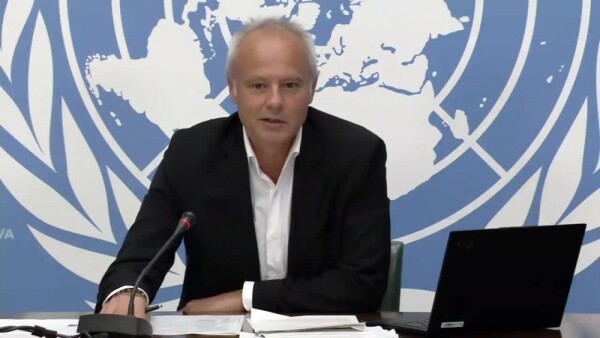
Elizabeth Tan, Director of International Protection at the United Nations Refugee Agency (UNHCR), said that today the UNHCR had issued an updated guidance on people fleeing Burkina Faso, urging States not to return them forcibly. UNHCR was gravely concerned about the increasing insecurity and a wide range of human rights violations committed against civilians. Children were also exposed to numerous human rights violations. The number of school closures had more than doubled over the past two years, and forced marriages continued to be reported. Half of all children were estimated to be exposed to gender-based violence and other mistreatment.
Over 20 per cent of the country’s population needed humanitarian assistance, said Ms. Tan. The humanitarian situation was especially severe for those living in towns blockaded by extremist groups. As of June 2023, 67,000 people from Burkina Faso had sought refuge in neighbouring countries; some two million people were internally displaced, making this one of the worst displacement crises in Africa, and also one of the most underreported crises. The principle of non-refoulement had to be respected, stressed Ms. Tan. UNHCR called on all countries to allow civilians fleeing Burkina Faso to enter their territories, and this advisory would remain in place until the situation in the country improved sufficiently to allow for dignified return. UNHCR also called upon the international community to stand in solidarity with displaced populations from Burkina Faso and the neighbouring countries hosting them.
Responding to questions, Ms. Tan said that UNHCR had observed forced returns from Ghana, which had subsided since the UNHCR’s communication with the Ghanian Government. She explained that the majority of people fleeing were women and children. UNHCR’s humanitarian operations in Niger were continuing, as the country was an important host for numerous refugees. A number of armed groups were operating in Burkina Faso and the region, and their impact on civilians was enormous, said Ms. Tan in response to another question. Ms. Tan said that in 2022, the number of internally displaced persons in Burkina Faso had significantly increased, because of the growing activity of armed groups and the worsening humanitarian situation.
More information is available here.
On Niger, Rolando Gómez, for the UN Information Service (UNIS), recalled the statement of the Secretary-General through which he strongly condemned the unconstitutional change of government in Niger, announced on 26 July, and called on all actors involved to release President Mohamed Bazoum with immediate effect and without any precondition.
Elections of new IPCC Bureau
Andrej Mahečić, for the Intergovernmental Panel on Climate Change (IPCC), speaking from Nairobi, stated that 46 sessions in the IPCC Bureau were being filled at the current session underway in Nairobi. Prof. Jim Skea had been elected as the new IPCC Chair.
Jim Skea, the IPCC Chair, also speaking from Nairobi, said that he was a professor of sustainable energy at the Imperial College in London, with considerable IPCC experience, where he had started in the 1990s. He had extensive experience with adaptation and mitigation agendas. Mr. Skea’s full CV is available here.
During its Seventh Assessment Report, expected to be completed in the coming five to seven years, the IPCC was committed to producing a report on cities; other products and their timing would be specified later. Integration of science across different domains was of paramount importance, stressed Mr. Skea, and it was his ambition to drive further integration across different areas. Overlaps and synergies among various groups ought to be considered and harnessed, he said.
World Hepatitis Day
Dr. Olufunmilayo Lesi, Technical Lead on hepatitis in the Global HIV, Hepatitis and STI Programmes at the World Health Organization (WHO), said that today was the World Hepatitis Day, under the theme “One Life, One Liver”, which emphasized the importance of liver health. Hepatitis caused liver damage and cancer and combined hepatitis B and hepatitis C caused 1.1 million deaths and 3 million new infections every year. Of the five types of hepatitis infections, hepatitis B and C caused most of the disease and deaths. Dr. Lesi said that the WHO aimed to eliminate hepatitis as a global health threat by 2030. It was estimated that, on the current trajectory, the disease could kill more people than malaria, tuberculosis, and HIV combined by 2040.
WHO had developed guidelines on what a robust global health response would entail. To reduce new infections and deaths from hepatitis B and C, countries would need to ensure access to treatment for all pregnant women living with hepatitis B, provide hepatitis B vaccines for their babies at birth, diagnose 90 per cent of people living with hepatitis B and/or hepatitis C, and provide treatment to 80 per cent of all people diagnosed with hepatitis. They also had to act to ensure optimal blood transfusion, safe injections and harm reduction. Dr. Lesi informed that only 21 per cent of people living with hepatitis C infection were diagnosed and only 13 per cent had received curative treatment. Just 10 per cent of people living with chronic hepatitis B were diagnosed, and only 2 per cent of those infected were receiving the lifesaving medicine.
Hepatitis B and C were found across the world, explained Dr. Lesi. What was less known was that hepatitis B was often transmitted from mother to child in early childhood, and could be prevented by right actions, including treatment for mothers and birth vaccination for infants.
Over past eight years, only 10 per cent of those living with hepatitis B and 20 per cent of those with hepatitis C had been diagnosed. WHO’s focus was thus also on scaled-up testing and ensuring that those who needed treatment had access to it.
WHO’s guidance is available here.
More information about World Hepatitis Day 2023 is here.
Answering questions, Dr. Lesi explained that Hepatitis C was spread across all regions of the world; in developing countries, many infections were spread through unsterilized medical injections. In more developed economies, such as the US and the UK, Hepatitis C was more prevalent among people who injected drugs. The cost of therapies for Hepatitis C had gone down from USD 90,000, when first introduced, to USD 60 today. Hepatitis B was more predominant in low- and middle-income countries, where early childhood interventions, including vaccinations, were the major way to address the issue. WHO recommended that all pregnant women should be tested for hepatitis B during their pregnancy. If positive, they should receive treatment and vaccines should be provided to their new-borns.
Announcements
Karima Cherif, for the United Nations Research Institute for Social Development (UNRISD), announced a new report about investments in childcare for gender equality in Asia and the Pacific, to be launched on 1 August. The report, result of collaborative research undertaken jointly by the Asian Development Bank, the International Labour Organization, the United Nations Development Programme, and UNRISD, assessed the public provision of childcare across 48 economies in Asia and the Pacific through the lens of accessibility, affordability, quality, and decent work for childcare workers. Based on its findings, the study offered recommendations for increased investments in the childcare sector to enable better socioeconomic outcomes for women and children, job generation, and decent work for childcare workers, as well as to support a transformative recovery from the COVID-19 pandemic that advances gender equality and sustainable development. The report showed that Asia Pacific was the only region in the world where women’s participation in the work force was decreasing.
Rolando Gómez, for the UN Information Service (UNIS), said that in his press conference the previous day, the Secretary-General had stressed that the “era of global warming had ended, and the era of global boiling had started.”
The Security Council would hold closed-door consultations on Niger today.
He informed that the Committee against Torture was meeting this morning to conclude its 77th session, during which it had reviewed reports submitted by New Zealand, Romania, Spain and Switzerland. The Committee’s concluding observations regarding these reports would be published soon on the session webpage.
The third part of the Conference on Disarmament 2023 session would begin on 31 July, under the presidency of Germany. A plenary meeting was expected to take place on 3 August.
Finally, Mr. Gómez informed that 30 July would be the World Day against Trafficking in Persons, on which occasion the Secretary-General had issued a message. The same day would also be the International Day of Friendship.
28 July
World Hepatitis Day [WHO]
30 July
International Day of Friendship
World Day against Trafficking in Persons
1 st August is a UN official holiday, and the Palais will be closed.
TOPICS
UNHCR Elizabeth Tan (B-128), UNHCR’s Director of International Protection
UNHCR calls for ban on forced returns to Burkina Faso amid escalating
humanitarian crisis
IPCC Andrej Mahecic (Zoom from Nairobi), Head, Communications and Media Relations
with Jim Skea (Zoom from Nairobi), IPCC new chair
Elections of new IPCC Bureau
WHO Dr Olufunmilayo (Funmi) Lesi (Zoom from Geneva), WHO technical lead on
hepatitis in the Global HIV, Hepatitis and STI Programmes
World Hepatitis Day on 28 July
ANNOUNCEMENTS
UNRISD Karima Cherif (Zoom)
Launch of a joint report with ILO, UNDP, Asian Development Bank: Investments in
childcare for gender equality in Asia and the Pacific
Similar Stories
1
12
1
1
Press Conferences , Images | UNOG
Closing Press Conference following the Sixth Consultative Meeting on Enhancing Coordination of Peace Initiatives and Efforts in Sudan

2
17
1
2
Edited News , Press Conferences | OCHA , WMO
Two UN agencies teamed up on Wednesday to issue an appeal for immediate assistance to help communities already being impacted by the strongest El Niño on record.
1
1
1
Press Conferences | CITES
Wildlife trade and conservation policy discussions at the 81st meeting of the CITES Standing Committee (SC81)
1
1
1
Press Conferences | UNHCR , UNCTAD , WMO , OCHA , UNICEF , WHO
UNHCR Hungary’s 1956 Refugee Crisis: 70 Years On, UNCTAD World Investment Forum 2026, Doha, WMO Greenhouse Gas Bulletin and Climate Update for COP31, OCHA Afghanistan: Malnutrition, Girls’ Education and Recovery, UNICEF Yemen: Child Malnutrition and Unsafe Water in Taiz, WHO Inequalities in Noncommunicable Diseases and Risk Factors
1
1
1
Press Conferences | UNHCR
End of UNHCR's 77th Annual Executive Committee (ExCom) meeting week
1
1
1
Press Conferences | UNICEF , IOM , UNHCR
UN Special Assistant to the Personal Envoy Office (SUDAN): Peace Initiatives and Efforts in Sudan; UNICEF: Dire situation of children in Gaza; IOM: Damaged Homes and Energy Attacks Risk Displacing Ukrainians for this winter; UNHCR: update on EXCOM week
1
1
1
Press Conferences | IOM , UNDRR
UN stresses importance of household preparedness for disaster risk reduction.
1
1
1
Statements , Press Conferences | OHCHR
1
1
1
Press Conferences | UNHCR , UNICEF , IFRC , OHCHR , UN WOMEN , IOM , OCHA , WHO
UNHCR – ExCom Meeting, UNICEF – Nepal Recovery, IFRC – Flash Floods, WHO – Mental Health, IOM – South Sudan Floods, OCHA – DRC Humanitarian aid, UNHCR – Sahel Displacement, UNICEF – Yemen Update, IOM – Gaza Shelter, UN Women – Gaza Women, OHCHR – Arrests and detentions of Syrians by Israeli force
2
1
2
Press Conferences | UNCTAD
Presentation of the Trade and Developement Report 2026
Embargoed until 9 October 2026 at 11 a.m. (Geneva Time)
UNCTAD: UNCTAD’s flagship report finds that governments increasingly use industrial, trade, financial and technology policies to pursue economic and national security objectives. Market access and the ability to move into higher-value activities now depend more heavily on technology, finance and geopolitics.
1
1
1
Press Conferences | UPU
Release of the State of the Postal Sector Report 2026
1
1
1
Press Conferences | IOM , ITU , UNECE , UNICEF , WHO , WMO
UNICEF: Ebola, DRC - children orphans or separating them from parents and caregivers; IOM: Humanitarian needs in Djibouti amid arrivals from Yemen and increased migrant movements; WHO: Darfur, scale of health needs far exceeds available resources; WMO co-sponsored Global Heat Forum, Bangkok, monthly Global Seasonal Climate Update; UNECE: UN Forum of Mayors; ITU Plenipotentiary Conference 2026; WHO: child and adolescent obesity guidelines and new global roadmap to tackle pregnancy hypertension, a leading cause of maternal mortality