

The United Nations Office at Geneva
Multimedia Newsroom
Press Conferences | OHCHR , UNICEF , UNHCR , WHO , UNITED NATIONS , WFP , UNECE
UNOG Bi-weekly press briefing 17 April 2020
COVID-19
Responding to questions, Dr. Margaret Harris for the World Health Organization (WHO), said that she did not have precise statistics on the number of health workers who had died due to COVID-19, but she reiterated that health workers were among the most exposed group.
WHO would as soon as possible provide a factsheet on the WHO’s 2020 budget and contributions from member States. She reiterated that the United States had been a great partner of the Organization.
WHO was looking into the genome of the novel coronavirus and could still not definitively confirm the origin of the virus.
Asked to comment on the firing of the Brazilian Health Minister, Dr. Harris said that the WHO did not comment on internal political matters, and reiterated Dr. Tedros’ call for solidarity. WHO had a lot of guidance in place, including on how indigenous communities could protect themselves.
Decision had not been made yet on whether the World Health Assembly would take place in May as planned or to which dates it might be postponed, said Ms. Harris.
COVID-19: Impact on children
Laurence Chandy, Director, Office of Global Insight and Policy at the United Nations Children’s Fund (UNICEF), said that the predominant focus of the threats of the pandemic on the elderly often meant that the effects on children were overlooked. Schools around the world today were empty and child protection services had closed down, which meant that the effects on children went far beyond health. Many mitigation measures adopted by countries were necessary, but they heavily affected children and sometimes caused more harm than good. When households saw a reduction of income, that immediately had effects on children, especially if the households were already living in relative poverty. Children’s education was being disrupted, risks for children’s safety were considerable, especially for children stuck at homes where there was domestic violence. The virus to date had thankfully mostly spared children, but immunizations for measles and polio around the world had been put on hold, having longer-term health consequences. Information, solidarity and action were three fronts of action needed now and in the months ahead. It was necessary to ensure a more balanced approach: working together for children, greatly expanding social spending to support the most vulnerable families, securing local food markets, and not forcing people to abandon livelihoods which they needed to survive. Continuity of child services ought to be prioritized.
Responding to a question, Mr. Chandy explained that the effect of the COVID-19 pandemics on children was near universal, given the unprecedented scale of the disease, but poor children were feeling a disproportionately high impact. Never in history had all schools around the world been closed pretty much simultaneously. Almost 30 countries in the world had closed
schools preemptively, before even registering a single COVID-19 case. Decisions on when schools would reopen would have to be country-based, according to local contexts.
Alessandra Vellucci, for the United Nations Information Service (UNIS), recalled the Policy Brief issued the previous day by the UN Secretary-General on COVID-19’s impact on children, and his appeal to governments to act now to protect children and promote their wellbeing.
More about the UN call for greater protection of children during the COVID-19 crisis here. Latest updates on COVID-19 from UNICEF can be found here.
COVID-19: Impact on food and agricultural systems
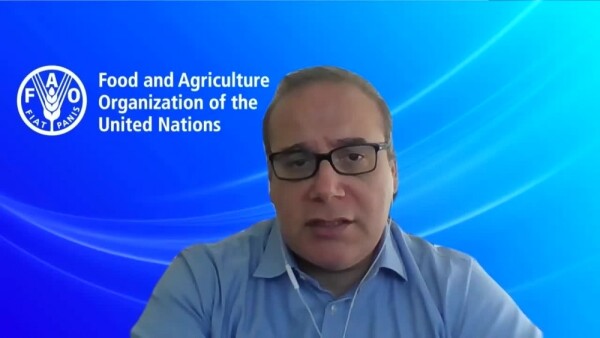
Maximo Torero, Chief Economist and Assistant Director-General for the Economic and Social Development Department at the Food and Agriculture Organization (FAO), stated that one of the major challenges of the COVID-19 pandemics was that the lockdowns affected the availability of food. Lockdowns affected both the supply and demand sides, including access to markets, access to inputs, and being able to move goods. The macroeconomic aspects referred to the exchange rate fluctuations affecting the export and import of foodstuffs. One side of the coin referred to the unstable food supplies even though there existed more than sufficient reserves of staple commodities, and it would be logical for prices to be falling. There was no need for a food crisis right now. High-labour commodities such as fruits, vegetables and meat needed to be put forward as a priority sector so that the value chain continued to operate and those types of food could be flowing as well. Fish supplies had also been affected substantially because of the lockdown of many airports. FAO was trying to come up with measures to expand its food insecurity scales to assess the hot spots of people moving into food insecurity situations. Securing food value chains in sub-Saharan Africa and southeast Asia were among the priorities at the moment. That was the other side of the coin: the expected recession which would affect the farmers and increase the rates of undernourishment around the world.
Responding to questions, Mr. Torero explained that this was an unprecedented situation in which every single country of the world was affected. The level of recovery in China was very slow at the moment, which indicated a longer and more sluggish global recovery. A tremendous reduction in remittances was also foreseen, as most migrants were sending money home from countries heavily affected by the pandemics. Given the high level of uncertainty, it was difficult to predict eventual levels of unemployment and undernourishment.
COVID-19: Raw material supplies during the pandemic
Jean Rodriguez, for the United Nations Economic Commission for Europe (UNECE), stated that with almost half of the world under lockdown, the continued supply of certain critical raw materials needed for an effective response to the COVID-19 pandemic had become a concern.
The Active Pharmaceutical Ingredients and excipients of several drugs, including antibiotics such as Azithromycin or Amoxicillin, incorporated minerals such as chromium, cobalt, copper, magnesium, manganese, molybdenum, sodium, nickel and many others.
That was also the case of the four antivirals which were being experimented in many countries as a preventive drug and treatment for COVID-19 under the WHO-led Solidarity Trial. In situations like the current pandemic with an immediate supply crunch, identifying alternative local or regional sources was key, stressed Mr. Rodriguez.
Full statement can be read here.
COVID-19: West and Central Africa
Babar Baloch, for the United Nations Refugee Agency (UNHCR), stated that the UNHCR had stepped up efforts across West and Central Africa to protect millions of vulnerable people who were facing a renewed risk from the combined effects of conflict and the coronavirus pandemic.
COVID-19 had exacerbated challenges in a region already dealing with one of the world’s largest humanitarian crises, involving over nine million forcibly displaced people. The pandemic had led to border closures and added an increased strain on fragile health systems and weak economies. West and Central Africa had one of Africa’s largest displaced population with some 5.6 million internally displaced, 1.3 million refugees, 1.4 million returnees who still needed assistance, and 1.6 million stateless people. So far, all the 21 countries of the region had reported a total of over 5,000 COVID-19 cases and more than 100 deaths since the first detection on 28 February 2020. So far, only host populations appeared to have been affected with no coronavirus cases so far reported among the displaced.
Although, COVID-19 related restrictions were not targeted at refugees and asylum-seekers specifically, UNHCR had expressed concern that measures in the region could see people in need of international protection attempting even more risky and dangerous border crossings.
More details can be found in the UNHCR briefing note.
COVID-19: Situation in Libya
Rupert Colville, for the Office of the High Commissioner for Human Rights (OHCHR), said that the OHCHR was gravely concerned by the continued fighting in Libya, and the repeated impact the hostilities had had on civilians, hospitals and other medical facilities assigned to deal with the COVID-19 pandemic. Despite numerous calls for a global ceasefire during these difficult times, OHCHR had received reports that attacks had in fact escalated in Libya. OHCHR called on all parties to the conflict to immediately observe a humanitarian pause.
On three separate occasions from 6 to 10 April, the al Khadra Hospital in Tripoli, which had been assigned to receive patients infected with COVID-19, had been struck by rockets. Intensified fighting along the western coast over the past week had resulted in the suspension of services at four hospitals in Sabratha and Surman. Indiscriminate attacks as well as the targeting of hospitals and other medical facilities were violations of international humanitarian law and could, depending on the circumstances, amount to war crimes.
OHCHR urged the authorities to release anyone whose detention is arbitrary and to strictly limit pre-trial detention. Women, children, the elderly and those with a medical condition, people with disabilities, migrants and refugees currently in detention in Libya should also be released as a matter of urgency.
Full statement can be found here.
Safa Msehli, for the International Organization for Migration (IOM), stated that the IOM expressed grave concerns for the fate of hundreds of migrants returned to Libya by the coast guard this year who were now unaccounted for. According to recent government figures, roughly 1,500 people were currently detained in 11 state-run Directorate for Combatting Illegal Migration centres.
However, at least 3,200 men, women and children aboard boats bound for Europe had been rescued or intercepted by the coast guard and returned to the war-torn north African country in 2020. Most ended up in data collection and investigation facilities or unofficial detention centres. IOM did not have access to those centres. Despite multiple requests, Libyan authorities had not provided any clear accounting as to the whereabouts of these people, or why they had been taken to unofficial detention facilities.
Ms. Msehli stressed that the IOM was alarmed by the deteriorating humanitarian situation in Libya and reiterated that it was unacceptable for people rescued at sea to be returned to abuse, trafficking, and war. The Organization reiterated its call to the European Union for urgent action to establish a clear and swift disembarkation mechanism to end returns to Libya.
Full IOM statement can be read here.
Regarding who would be the next Special Envoy for Libya, Alessandra Vellucci, for the United Nations Information Service (UNIS), said that Stephanie Turco Williams was the acting head of the UN Support Mission in Libya and the acting Special Envoy. An announcement on the next Special Envoy would be shared as soon as the decision had been made.
COVID-19: Myanmar/Bangladesh - Rohingya
Rupert Colville, from the Office of the High Commissioner for Human Rights (OHCHR), stated that the OHCHR was shocked by the news that more than 30 Rohingya refugees from Myanmar had died on board a boat in the Bay of Bengal, and that nearly 400 others had been found dehydrated, malnourished and in need of immediate medical attention after nearly two months at sea.
In light of reports of other vessels in similar circumstances still at sea, the OHCHR strongly urged stepped-up search and rescue efforts to be conducted in a timely manner.
Today, the situation in Rakhine and neighbouring Chin State was again dire. There had been a spike in violence between the ethnic Arakan Army armed group and the Myanmar army, impacting civilians of all ethnic groups living in the area, including Rohingya, Rakhine, Chin, Mro, Daignet and others. Myanmar’s military had been carrying out almost daily airstrikes and shelling in populated areas resulting in at least 32 deaths and 71 injuries since 23 March, the majority women and children, and destroying and burning schools and homes.
Recalling the UN Secretary-General’s appeal for a global ceasefire to fight against the COVID-19 pandemic, OHCHR called on parties to the conflict in Myanmar to heed that call and to adhere to their obligations under international human rights and international humanitarian law by protecting civilians and civilian infrastructure.
Full OHCHR statement can be read here.
Babar Baloch, for the United Nations Refugee Agency (UNHCR), added that the UNHCR was taking care of the rescued group and providing shelter and assistance to close of 400 survivors. Most of them were in need of immediate medical attention, and absolute focus at the moment was on their wellbeing.
COVID-19: Violence in the Democratic Republic of the Congo
Babar Baloch, for the United Nations Refugee Agency (UNHCR), warned that the latest rounds of violence in eastern parts of the Democratic Republic of the Congo displacing thousands of people could unleash terrible consequences for the country as it grappled to initiate a new fight against COVID-19.
More than five million people had been uprooted by conflict within the DRC's borders, the single-largest internally displaced population in Africa. The country also hosted over half a million refugees, fleeing unrest and persecution in the neighbouring countries. Recent attacks in North Kivu and Ituri provinces were reported to have displaced more than 35,000 people in recent weeks including some 25,000 in villages south of Lubero territory. In the meantime, security had deteriorated in the Djugu Territory in Ituri province, where a growing number of attacks by unknown assailants had displaced over 12,000 persons so far this month. Those attacks hampered humanitarian access, hinder assistance to desperate displaced people, and disrupted vital coordination on COVID-19 prevention and sensitization.
Full UNHCR statement can be read here.
Rupert Colville, for the Office of the High Commissioner of Human Rights (OHCHR), stated that the OHCHR was alarmed by the worsening security situation in Djugu and Mahagi territories,
Ituri province, where more than 150 people had been killed in the last 40 days in a series of attacks by Djugu-based perpetrators. The attackers included members of the CODECO armed group, most of whom were from the Lendu ethnic community.
In March alone, the OHCHR had recorded 107 civilians killed and 43 injured. So far in April, another 49 people had been killed, 13 wounded and six abducted. In total, since the beginning of the year, 334 civilian casualties (206 civilians killed, 74 wounded and 54 abducted) had been recorded. The brutality of the attacks, with perpetrators using machetes to kill women and children, raping, looting property, destroying houses and killing livestock, suggested that the aim was to inflict lasting trauma on the affected populations, forcing them to flee, and so gain control over the territory, rich in natural resources.
Full OHCHR statement is available here.
COVID-19: UNCTAD announcement
Reading a statement on behalf of the United Nations Conference on Trade and Development (UNCTAD), Alessandra Vellucci informed that UNCTAD had just published a commentary and analysis on the way investment promotion agencies had changed their ways and means to serve their investor clients in the time of the pandemic. The text would be sent shortly to journalists.
COVID-19: ILO announcement
Reading a statement on behalf of the International Labour Organization (ILO), Alessandra Vellucci said that the ILO had carried out a number of analyses on the impact of COVID-19 pandemics on tourism, car, food, health sector, retail and other industries, threatening the livelihoods of millions of workers. ILO would hold a virtual press conference with ILO experts on Tuesday, 21 April at 2 p.m. Interested journalists should inform Rosalind Yarde.
* * *
The webcast for this briefing is available here: https://bit.ly/unog170420
Similar Stories
1
1
1
Press Conferences | UNHCR
End of UNHCR's 77th Annual Executive Committee (ExCom) meeting week
1
1
1
Press Conferences | UNICEF , IOM , UNHCR
UN Special Assistant to the Personal Envoy Office (SUDAN): Peace Initiatives and Efforts in Sudan; UNICEF: Dire situation of children in Gaza; IOM: Damaged Homes and Energy Attacks Risk Displacing Ukrainians for this winter; UNHCR: update on EXCOM week

1
1
1
Press Conferences | IOM , UNDRR
UN stresses importance of household preparedness for disaster risk reduction.

1
1
1
Statements , Press Conferences | OHCHR

1
1
1
Press Conferences | UNHCR , UNICEF , IFRC , OHCHR , UN WOMEN , IOM , OCHA , WHO
UNHCR – ExCom Meeting, UNICEF – Nepal Recovery, IFRC – Flash Floods, WHO – Mental Health, IOM – South Sudan Floods, OCHA – DRC Humanitarian aid, UNHCR – Sahel Displacement, UNICEF – Yemen Update, IOM – Gaza Shelter, UN Women – Gaza Women, OHCHR – Arrests and detentions of Syrians by Israeli force

2
1
2
Press Conferences | UNCTAD
Presentation of the Trade and Developement Report 2026
Embargoed until 9 October 2026 at 11 a.m. (Geneva Time)
UNCTAD: UNCTAD’s flagship report finds that governments increasingly use industrial, trade, financial and technology policies to pursue economic and national security objectives. Market access and the ability to move into higher-value activities now depend more heavily on technology, finance and geopolitics.

1
1
1
Press Conferences | UPU
Release of the State of the Postal Sector Report 2026
1
1
1
Press Conferences | IOM , ITU , UNECE , UNICEF , WHO , WMO
UNICEF: Ebola, DRC - children orphans or separating them from parents and caregivers; IOM: Humanitarian needs in Djibouti amid arrivals from Yemen and increased migrant movements; WHO: Darfur, scale of health needs far exceeds available resources; WMO co-sponsored Global Heat Forum, Bangkok, monthly Global Seasonal Climate Update; UNECE: UN Forum of Mayors; ITU Plenipotentiary Conference 2026; WHO: child and adolescent obesity guidelines and new global roadmap to tackle pregnancy hypertension, a leading cause of maternal mortality
1
1
1
Press Conferences | OCHA , UN WOMEN , UNHCR , WFP , WHO , WTO , UNEP
OCHA – $160M CERF allocation to 12 underfunded crises; UNHCR – 5.8M refugee children remain out of school amid funding cuts; UN Women – Middle East escalation and food security among women/girls; WHO – Gaza supplies and overall situation; WFP – Yemen food insecurity and impact on global hunger ; UNEP - First International Conference of the Global Framework on Chemicals in Geneva | 16-20 November 2026
1
1
1
Press Conferences | UNHCR , WHO
Yemen's health system nears collapse amid conflict, causing rising casualties and medicine shortages.
1
1
1
Press Conferences | HRC
Update by the Expert Mechanism to Advance Racial Justice and Equality in Law Enforcement
1
1
1
Press Conferences | WIPO , WHO , UNICEF , UNHCR , IOM , WFP , FAO
WIPO Global Innovation Index 2026 launch and press conference, WHO Composition of influenza vaccines for the 2027 Southern Hemisphere flu season, UNICEF Yemen hunger and malnutrition; UNHCR Sudan displacement into Chad; IOM Ebola and population movements in DRC; WFP emergency food assistance in Nepal; and FAO food loss and waste.