

The United Nations Office at Geneva
Multimedia Newsroom
Edited News , Press Conferences | OHCHR
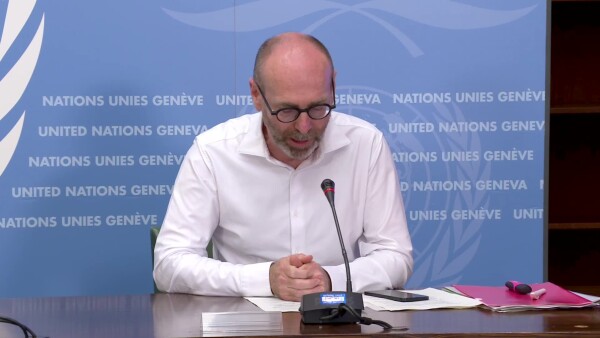
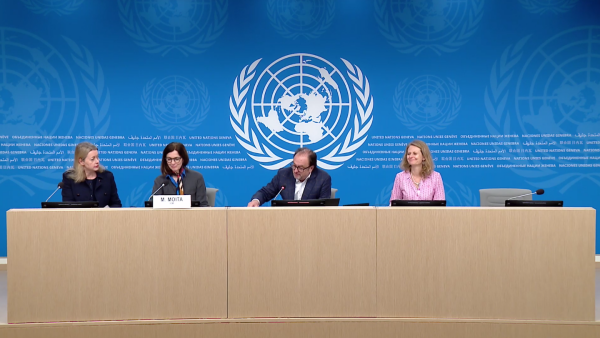
UN Human Rights Spokesperson Jeremy Laurence comment on Cambodia
“UN Human Rights Chief Volker Türk today urged the Cambodian Government to act swiftly to enable and protect a conducive environment for a free and fair general election next month, saying he was deeply concerned by the curtailing of civic space ahead of the poll” he said.
“He says ahead of the election, there must be an open and pluralistic environment that guarantees the rights to freedom of expression and opinion, and freedom of assembly and association. These elements lie at the core of open and free societies as envisaged by the Universal Declaration of Human Rights, the UN High Commissioner for Human Rights said,” Jeremy Laurence stated.
The National Election Commission (NEC) earlier this year disqualified the Candlelight Party (CLP) and Khmer United Great Nation Party from running for election while long prison sentences had been handed down against other opposition figures. Under international law, all citizens have an equal right to stand for election, a right that may only be subjected to restrictions that are objective, reasonable, and non-discriminatory.
Heavy fines have been imposed on other political actors, such as Son Chhay the Vice-President of CLP, who was ordered to pay over USD one million in fines and compensation to the National Election Committee (NEC) and the ruling Cambodian People’s Party for defamation.
“And this week, the Prime Minister said the Government would amend the election law to bar anyone who boycotts the vote, or encourages others to do so, from running as a candidate in future elections. Such an amendment, if enacted, would constitute an overbroad restriction on the right to freedom of expression and a breach of the right of all citizens to stand for election, guaranteed by the Constitution of Cambodia and international human rights instruments” he said.
“Human rights defenders, trade unionists and political activists reportedly face legal sanctions for having exercised their rights to freedoms of expression, peaceful assembly or association protected by international human rights instruments, including the International Covenant on Civil and Political Rights ratified by Cambodia in 1992” Jeremy Laurence said.
Jeremy Laurence quoted the High Commissioner and said that “the Paris Peace Agreement and international human rights treaties are the guarantors of peace, prosperity and a better future for Cambodia”.
“I urge Cambodia’s leadership to change course now to enable a vibrant civil society, a space for open debate and respect for human rights.”
For more information and media requests, please contact:
Ravina Shamdasani - + 41 22 917 9169 / ravina.shamdasani@un.org or
Liz Throssell + 41 22 917 9296 / elizabeth.throssell@un.org or
Jeremy Laurence + +41 22 917 9383 / jeremy.laurence@un.org or
Marta Hurtado - + 41 22 917 9466 / marta.hurtadogomez@un.org
Tag and share
Twitter @UNHumanRights
Facebook unitednationshumanrights
Instagram @unitednationshumanrights
Tag and share - Twitter: @UNHumanRights and Facebook: unitednationshumanrights
- Exterior shots: Palais Wilson
- SOUNDBITE (English)—Jeremy Laurence, Spokesperson for the Office of the UN High Commissioner for Human Rights (OHCHR): “UN Human Rights Chief Volker Türk today urged the Cambodian Government to act swiftly to enable and protect a conducive environment for a free and fair general election next month, saying he was deeply concerned by the curtailing of civic space ahead of the poll”.
- Cut aways: briefing room
- SOUNDBITE (English)—Jeremy Laurence, Spokesperson for the Office of the UN High Commissioner for Human Rights (OHCHR): “He says ahead of the election, there must be an open and pluralistic environment that guarantees the rights to freedom of expression and opinion, and freedom of assembly and association. These elements lie at the core of open and free societies as envisaged by the Universal Declaration of Human Rights,”
- Cut aways: briefing room
- SOUNDBITE (English)—Jeremy Laurence, Spokesperson for the Office of the UN High Commissioner for Human Rights (OHCHR): “And this week, the Prime Minister said the Government would amend the election law to bar anyone who boycotts the vote, or encourages others to do so, from running as a candidate in future elections. Such an amendment, if enacted, would constitute an overbroad restriction on the right to freedom of expression and a breach of the right of all citizens to stand for election, guaranteed by the Constitution of Cambodia and international human rights instruments”.
- Cut aways: briefing room
- SOUNDBITE (English)—Jeremy Laurence, Spokesperson for the Office of the UN High Commissioner for Human Rights (OHCHR): “Human rights defenders, trade unionists and political activists reportedly face legal sanctions for having exercised their rights to freedoms of expression, peaceful assembly or association protected by international human rights instruments, including the International Covenant on Civil and Political Rights ratified by Cambodia in 1992”.
- Cut aways: briefing room
- SOUNDBITE (English)—Jeremy Laurence, Spokesperson for the Office of the UN High Commissioner for Human Rights (OHCHR): the Paris Peace Agreement and international human rights treaties are the guarantors of peace, prosperity and a better future for Cambodia. I urge Cambodia’s leadership to change course now to enable a vibrant civil society, a space for open debate and respect for human rights.”
Similar Stories
1
1
1
Edited News | OCHA , UNICEF , WFP
Aid agencies warned on Friday of the fast-developing humanitarian emergency inside Taiz City in Yemen, which has been encircled by de facto Houthi forces fighting government troops along the country’s west coast.
1
1
1
Press Conferences | UN WOMEN , WFP , WHO
UN WOMEN: Sudan Women and girls one year after the fall of El Fasher; increasing drone attacks across the country; WFP: DRC - Ebola spreads to eighth DRC province as WFP delivers food, builds treatment centres and keeps supplies moving; WHO - Update on Ebola (Bundibugyo Virus Disease)
1
12
1
1
Press Conferences , Images | UNOG
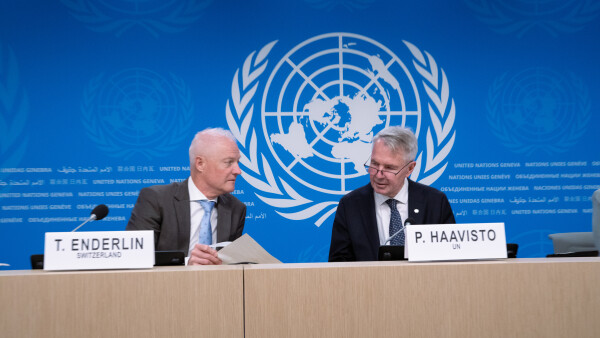
Closing Press Conference following the Sixth Consultative Meeting on Enhancing Coordination of Peace Initiatives and Efforts in Sudan

2
17
1
2
Edited News , Press Conferences , Images | OCHA , WMO
Two UN agencies teamed up on Wednesday to issue an appeal for immediate assistance to help communities already being impacted by the strongest El Niño on record.

3
16
2
2
Edited News , B-roll , Conferences , Images | UNITED NATIONS , UNOG
Sixth Consultative Meeting on Enhancing Coordination of Peace Initiatives and Efforts for Sudan
1
1
1
Press Conferences | CITES
Wildlife trade and conservation policy discussions at the 81st meeting of the CITES Standing Committee (SC81)

1
1
1
Edited News | UNICEF , WHO , UNHCR
Yemen war continues to force families from homes amid hunger and disease
More than 250,000 people have now fled renewed fighting in Yemen, the UN said on Tuesday, citing particular concern for those sheltering in the southwestern city of Taiz and the wider governorate, where access is “essentially blocked”.
1
1
1
Press Conferences | UNHCR , UNCTAD , WMO , OCHA , UNICEF , WHO
UNHCR Hungary’s 1956 Refugee Crisis: 70 Years On, UNCTAD World Investment Forum 2026, Doha, WMO Greenhouse Gas Bulletin and Climate Update for COP31, OCHA Afghanistan: Malnutrition, Girls’ Education and Recovery, UNICEF Yemen: Child Malnutrition and Unsafe Water in Taiz, WHO Inequalities in Noncommunicable Diseases and Risk Factors
1
1
1
Press Conferences | UNHCR
End of UNHCR's 77th Annual Executive Committee (ExCom) meeting week

1
1
1
Edited News | UNICEF
A little over one year since a ceasefire agreement was announced between Hamas fighters and Israel, more than 340 children have been reported killed and hundreds more injured, the UN Children’s Fund, UNICEF, said on Friday.
1
1
1
Press Conferences | UNICEF , IOM , UNHCR
UN Special Assistant to the Personal Envoy Office (SUDAN): Peace Initiatives and Efforts in Sudan; UNICEF: Dire situation of children in Gaza; IOM: Damaged Homes and Energy Attacks Risk Displacing Ukrainians for this winter; UNHCR: update on EXCOM week
1
1
1
Press Conferences | IOM , UNDRR
UN stresses importance of household preparedness for disaster risk reduction.