

The United Nations Office at Geneva
Multimedia Newsroom
UN seeks highest funding appeal ever for Sudan; nearly $3 billion needed for urgent humanitarian aid
Amid a massive increase in the number of people in Sudan impacted by more than a month of heavy fighting, the UN on Wednesday said that it needed a record near $3 billion to help them.
In addition to the revised request from the UN aid coordination office OCHA for $2.56 billion to fund its Humanitarian Response Plan targeting some 18 million people in Sudan, the UN refugee agency (UNHCR) said that it needed $472 million to assist those forced to flee across Sudan’s borders.
The revised joint humanitarian response plan updates the response strategy launched for Sudan in December 2022.
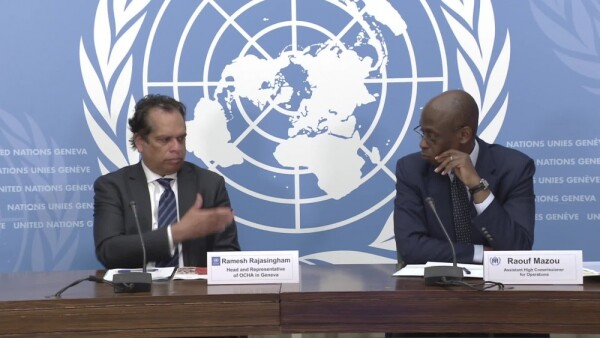
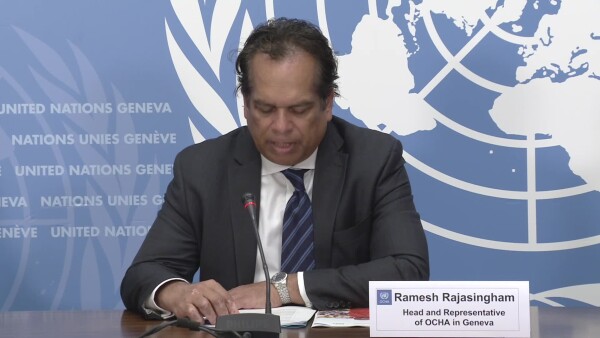
“Today 25 million people, more than half the population of Sudan, needs humanitarian aid and protection,” said Ramesh Rajasingham, Head and Representative of OCHA in Geneva, at a press briefing at UN in Geneva. “This is the highest number we have ever seen in the country. The response plan we are launching today reflects that new reality… The funding requirements of nearly USD 2.6 billion is also the highest for any humanitarian appeal for Sudan."
The fighting that started on 15 April between the Sudanese Armed Forces (SAF) and the Rapid Support Forces (RSF) has caused tremendous human suffering and exacerbated significant pre-existing humanitarian needs in Sudan.
Mr. Rajasingham warned that the crisis in Sudan is rapidly evolving into a regional crisis. “The needs in Sudan are fundamental and widespread, as you can expect from a conflict. Protection from fighting, medical support, food and water, sanitation, shelter and trauma care." He added that "we are also receiving worrying reports of increased sexual violence while the victims have little access to help. Children are especially vulnerable in this chaos that is unfolding.”
Since the fighting began nearly a million people have been displaced, the number internally displaced has risen to 730,000 and 220,000 have fled to neighboring countries, according to OCHA.
“Today we launched an appeal of some $472 million to respond to the needs of over one million persons over the next six months,” said Raouf Mazou, UNHCR’s Assistant High Commissioner for Operations. “So far, the crisis, which has just started a month ago, resulted in massive outflows into neighboring countries.”
Mr. Mazou added that “about 220,000 refugees and returnees have been seeking safety in Chad, Sudan, Egypt, Central African Republic and Ethiopia; 150,000 of them are Sudanese refugees and asylum seekers. Close to 60,000 are people who were refugees in Sudan and who are returning to their country in adverse conditions. So, South Sudanese form the largest number. And overall, we have to keep in mind that there were 1.1 million refugees living in Sudan prior to this crisis.”
A few months ago, the need for humanitarian aid was almost half of today’s requirement, said OCHA’s Mr. Rajasingham. “We had asked for a $1.75 billion for the original appeal for 2023. This has now increased to $2.6 billion. The number of people that we are targeting has gone from over 12 million to 18 million people.”
Although needs throughout the country have “expanded drastically”, Mr. Rajasingham added that so funding levels for Sudan have been poor, “as we have seen for many crises around the world in the last couple of years.”
With a reported increased number of those people living in IPC phase 3, 4, and 5 which indicates increasing dire levels of hunger, Mr. Rajasingham also warned of looming famine in the region. “When you have a crisis like this and you don't have access to basic services, you don't have access to health and water, there's an enormous risk that there will be an increased risk of famine as well,” he said.
-ends-
STORY: Sudan Humanitarian Response Plan
TRT: 03’22”
SOURCE: UNTV CH
LANGUAGE: ENGLISH/NATS
ASPECT RATIO: 16:9
RELEASE DATE: 17 May 2023
GENEVA, SWITZERLAND
SHOTLIST
- Exterior wide shot: UN flag alley UN Geneva.
- Wide shot of journalists, conference room, Palais des Nations, Geneva
- SOUNDBITE (ENGLISH) Ramesh Rajasingham, Head and Representative of OCHA in Geneva: “Today 25 million people- more than half the population of Sudan needs humanitarian aid and protection. This is the highest number we have ever seen in the country. The response plan we are launching today reflects that new reality. Through the plan, which is a revised version of the annual Humanitarian Response Plan for 2023, we aim to reach, 18 million people. The funding requirements of nearly USD 2.6 billion is also the highest for any humanitarian appeal for Sudan."
- Wide shot: speakers, podium
- SOUNDBITE (ENGLISH) Ramesh Rajasingham, Head and Representative of OCHA in Geneva: “The crisis in Sudan is rapidly evolving into a regional crisis. The needs in Sudan are fundamental and widespread, as you can expect from a conflict. Protection from fighting, medical support, food and water, sanitation, shelter, and trauma care- and we also receiving a worrying reports of increased sexual violence while the victims have little access to help. Children are especially vulnerable in this chaos that is unfolding.”
- Medium shot: camera, journalists
- SOUNDBITE (ENGLISH) Raouf Mazou, Assistant High Commissioner for Operations: “Today we launched an appeal of some USD 472 million to respond to the needs of over 1 million persons over the next six months. So far, the crisis, which has just started a month ago, resulted in massive outflows into neighboring countries.”
- Medium shot: panelists, UN logo in background
- SOUNDBITE (ENGLISH) Raouf Mazou, Assistant High Commissioner for Operations: “About 220,000 refugees and returnees have been seeking safety in Chad, Sudan, Egypt, Central African Republic, and Ethiopia. 150,000 of them are Sudanese refugees and asylum seekers. Close to 60,000 are people who were refugees in Sudan and who are returning to their country in adverse conditions. So South Sudanese form the largest number. And overall, we have to keep in mind that there were 1.1 million refugees living in Sudan prior to this crisis.”
- Wide angle shot: panel of speakers, journalists
- SOUNDBITE (ENGLISH) Ramesh Rajasingham, Head and Representative of OCHA in Geneva: “When you have a crisis like this and you don't have access to basic services, you don't have access to health and water, there's an enormous risk that there will be an increased risk of famine as well.”
- Medium shot: OCHA spokesperson, monitor in background
- SOUNDBITE (ENGLISH) Ramesh Rajasingham, Head and Representative of OCHA in Geneva: “We had asked for a USD1.75 billion for the original appeal for 2023. This has now increased to 2.6 billion. The number of people that we are targeting has gone from over 12 million to 18 million people. That's an increase of almost 6 million people. The number of people in need has gone up to 25 million. So you can imagine the needs have expanded drastically and throughout the country. Funding levels, however, as we have seen for many crises around the world in the last couple of years, has been poor and Sudan is no exception.”
- Close up: journalist filming from phone, monitor and speaker in background
- Close up: laptop
- Wide shot: panelists
Similar Stories
1
1
1
Press Conferences | UNHCR
End of UNHCR's 77th Annual Executive Committee (ExCom) meeting week
1
1
1
Press Conferences | UNICEF , IOM , UNHCR
UN Special Assistant to the Personal Envoy Office (SUDAN): Peace Initiatives and Efforts in Sudan; UNICEF: Dire situation of children in Gaza; IOM: Damaged Homes and Energy Attacks Risk Displacing Ukrainians for this winter; UNHCR: update on EXCOM week
1
1
1
Press Conferences | IOM , UNDRR
UN stresses importance of household preparedness for disaster risk reduction.
1
1
1
Statements , Press Conferences | OHCHR
1
1
1
Press Conferences | UNHCR , UNICEF , IFRC , OHCHR , UN WOMEN , IOM , OCHA , WHO
UNHCR – ExCom Meeting, UNICEF – Nepal Recovery, IFRC – Flash Floods, WHO – Mental Health, IOM – South Sudan Floods, OCHA – DRC Humanitarian aid, UNHCR – Sahel Displacement, UNICEF – Yemen Update, IOM – Gaza Shelter, UN Women – Gaza Women, OHCHR – Arrests and detentions of Syrians by Israeli force
2
1
2
Press Conferences | UNCTAD
Presentation of the Trade and Developement Report 2026
Embargoed until 9 October 2026 at 11 a.m. (Geneva Time)
UNCTAD: UNCTAD’s flagship report finds that governments increasingly use industrial, trade, financial and technology policies to pursue economic and national security objectives. Market access and the ability to move into higher-value activities now depend more heavily on technology, finance and geopolitics.
1
1
1
Press Conferences | UPU
Release of the State of the Postal Sector Report 2026
1
1
1
Press Conferences | IOM , ITU , UNECE , UNICEF , WHO , WMO
UNICEF: Ebola, DRC - children orphans or separating them from parents and caregivers; IOM: Humanitarian needs in Djibouti amid arrivals from Yemen and increased migrant movements; WHO: Darfur, scale of health needs far exceeds available resources; WMO co-sponsored Global Heat Forum, Bangkok, monthly Global Seasonal Climate Update; UNECE: UN Forum of Mayors; ITU Plenipotentiary Conference 2026; WHO: child and adolescent obesity guidelines and new global roadmap to tackle pregnancy hypertension, a leading cause of maternal mortality
1
1
1
Press Conferences | OCHA , UN WOMEN , UNHCR , WFP , WHO , WTO , UNEP
OCHA – $160M CERF allocation to 12 underfunded crises; UNHCR – 5.8M refugee children remain out of school amid funding cuts; UN Women – Middle East escalation and food security among women/girls; WHO – Gaza supplies and overall situation; WFP – Yemen food insecurity and impact on global hunger ; UNEP - First International Conference of the Global Framework on Chemicals in Geneva | 16-20 November 2026
1
1
1
Press Conferences | UNHCR , WHO
Yemen's health system nears collapse amid conflict, causing rising casualties and medicine shortages.
1
1
1
Press Conferences | HRC
Update by the Expert Mechanism to Advance Racial Justice and Equality in Law Enforcement
1
1
1
Press Conferences | WIPO , WHO , UNICEF , UNHCR , IOM , WFP , FAO
WIPO Global Innovation Index 2026 launch and press conference, WHO Composition of influenza vaccines for the 2027 Southern Hemisphere flu season, UNICEF Yemen hunger and malnutrition; UNHCR Sudan displacement into Chad; IOM Ebola and population movements in DRC; WFP emergency food assistance in Nepal; and FAO food loss and waste.