

The United Nations Office at Geneva
Multimedia Newsroom
PRESS BRIEFING BY THE UNITED NATIONS INFORMATION SERVICE
21 April 2023
Fighting in Sudan
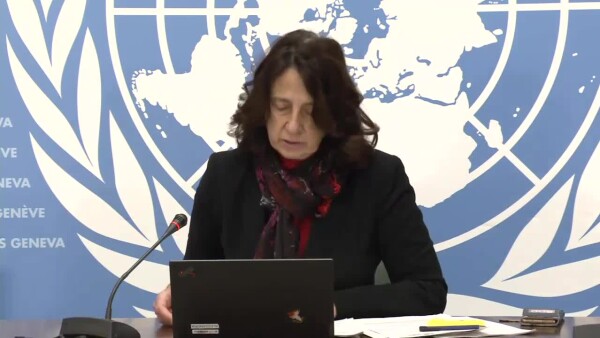
Alessandra Vellucci, for the United Nations Information Service (UNIS), said that the previous day the Secretary-General had a meeting with the League of Arab States, the Intergovernmental Authority on Development, the European Union, as well as representatives from a number of countries that are deeply committed to solving the crisis in Sudan. As an immediate priority, the Secretary-General appealed for a ceasefire to take place for at least three days, marking the Eid al-Fitr celebrations, to allow civilians trapped in conflict zones to escape and to seek medical treatment, food, and other essential supplies.
James Elder, for the United Nations Children’s Fund (UNICEF), said that the week of devastating hostilities had had a terrible effect on children, with at least nine killed and 50 injured. A large number of people were trapped, running out of electricity, water, and medicine. Sudan had already had one of the highest children malnutrition rates in the world, and the current fighting was putting some 50,000 extremely malnourished and hospitalized children at additional risk. It was important to remember that three quarters of Sudanese children were estimated to be living in extreme poverty; an estimated 600,000 cases of severe acute malnutrition had existed in the country before the current eruption of hostilities. Hostilities ought to stop so that UNICEF and partners would be able to reach the children in need, stressed Mr. Elder.
Responding to questions, Mr. Elder stated that any child in hospital, especially in emergency care, was at a particularly high risk once there were problems with fuel or medicine supplies. Many children were currently hunkered down in basements and schools, which clearly had a very negative effect on their mental health as well.
Margaret Harris, for the World Health Organization (WHO), informed that there had been 11 verified attacks against health care thus far. Some 20 health facilities had stopped working, according to the Sudanese authorities. This meant that all those people who had needed treatment before the hostilities, in addition to the people currently in need of healthcare, were particularly vulnerable. There were 3,551 people injured and 413 people killed, according to the latest figures provided by the Sudanese authorities.
Health situation in Yemen
Dr. Annette Heinzelmann, Health Emergencies Team Lead at the World Health Organization (WHO), speaking from Amman, provided an update on the health crisis in Yemen, where nine years of armed conflict had left 21.6 million people in acute need of humanitarian and protection services. About 13 million people were targeted by urgent humanitarian health care assistance.
An estimated 540,000 Yemeni children under five were currently suffering from severe acute malnutrition with a direct risk of death. Forty-six percent of health facilities across the country were only partially functioning or completely out of service due to shortages of staff, funds, electricity, or medicines, informed Dr. Heinzelmann. While recent political talks had raised new hopes that lasting peace might finally be achievable in Yemen, the country’s fragile health system was severely overburdened and edging closer to collapse, while international donor funding was insufficient to avert further deterioration of the country’s failing health services.
The Yemen Health Cluster had received only 16 percent of the USD 392 million needed to reach 12.9 million most-vulnerable people with urgent and life-saving health assistance. Disease outbreaks – notably of measles, diphtheria, dengue, cholera, and polio – were accelerating Yemen’s deepening health crisis. WHO was focused on coordinating health response, preventive and disease outbreak activities, health service delivery, and treatment of chronic diseases, including diabetes and renal failure. Also, since 2020, WHO, UNICEF and the Global Alliance for Vaccines and Immunization had been administering an average of 25 million doses of WHO-prequalified vaccines every year, but recently misinformation campaigns were increasing distrust towards UN agencies working on vaccinations, leading to more vaccine scepticism.
Finally, Dr. Heinzelmann emphasized the consequences of Yemen becoming a forgotten humanitarian crisis. The Yemeni people were resilient but suffering greatly. More than two of every three Yemenis were dependent on food, medical, and other humanitarian assistance, and the international community had to scale up its financial support to Yemen to avert untold human suffering and deaths in coming months.
Alessandra Vellucci, for the United Nations Information Service (UNIS), reminded that the previous day, the United Nations Development Programme had announced of having finalized the contract for the Boskalis subsidiary SMIT Salvage to transfer the million barrels of oil aboard the FSO Safer to a safe replacement vessel and prepare the Safer for towing to a green scrapping yard. The United Nations had received firm funding commitments of USD 99.6 million. The total budget for this first phase was USD 129 million, leaving a gap of USD 29.4 million, and was appealing to the international community to fill the funding gap, in order to prevent a catastrophic oil spill off Yemen’s Red Sea coast.
Humanitarian conditions of migrants along the Mediterranean and Balkan routes
Ezekiel Simperingham, lead on migration global programmes at the International Federation of Red Cross and Red Crescent Societies (IFRC), speaking from Budapest, said that the IFRC was deeply concerned about the humanitarian conditions for many migrants and refugees crossing the Mediterranean and in the Western Balkans.
With the deadliest last few months for migrants in the Central Mediterranean, rescue operations are an ever-more urgent humanitarian imperative. With continued numbers of people on the move across the Balkans, the humanitarian needs there were also immense. Many suffered from a lack of food, water, dry clothes, and medical assistance. Some faced violence and abuse and require urgent mental health support. IFRC was supporting migrants and refugees in meeting their humanitarian needs along their journeys. There were mobile teams of staff and volunteers offering food, water, hygiene items, medicine, and facilitating contact with family members. IFRC had volunteers for hiking in mountainous regions providing help to desperate migrants. In the Mediterranean, the IFRC was providing humanitarian assistance to people rescued on the board of the Ocean Viking. Blind eye could not be turned on people who had gone missing. All people on the move should have access to life-saving assistance, regardless of their status and where they were coming from. Human life and dignity ought to be put first, stressed Mr. Simperingham.
Sara Mancinelli, operations manager for the Ocean Viking at the International Federation of Red Cross and Red Crescent Societies (IFRC), speaking from Bolzano, Italy, informed that the previous night the Ocean Viking had rescued 29 people from a small boat in the Central Mediterranean. They were generally well but exhausted after having spent almost five days at the sea before being rescued. The team on board was providing medical care to those in need and identifying specifying vulnerabilities before disembarking. More than 26,000 people had lost their lives in the central Mediterranean since 2014, with the true number likely to be higher. On board the Ocean Viking, the IFRC was assisting people with essential services such as emergency healthcare, provision of food, water and clothes and psychological first aid. Some rescued people were grateful and euphoric, others broke down, and yet some were in shock and were unable to speak. There were new-born babies and persons with disabilities on board as well, said Ms. Mancinelli. The biggest problem was the lack of coordination of search-and-rescue operations.
Announcements
Alessandra Vellucci, for the United Nations Information Service (UNIS), reminded that today at 1 p.m., the World Meteorological Organization (WMO) would present its State of Global Climate 2022 report. Speakers at the hybrid press conference would be Petteri Taalas, WMO Secretary-General, and Omar Baddour, Chief of WMO Climate Monitoring.
On 28 April at 1:30 p.m., the Committee on the Elimination of Racial Discrimination would present its findings on Argentina, Niger, Philippines, Portugal, Russian Federation, and Tajikistan. The Committee was reviewing Tajikistan this morning.
The Committee Against Torture would also continue its session the following week.
Today was the World Creativity and Innovation Day, and 22 April would be the Earth Day, on which occasion the Secretary-General had shared a message. Ms. Vellucci informed that 24 April would be the International Day of Multilateralism and Diplomacy for Peace. The Secretary-General would participate in a Security Council debate on the maintenance of peace and security, which would be webcast on UNTV.
On 24 April, UN Geneva would be closed because of Eid al-Fitr.
Similar Stories
1
1
1
Press Conferences | CITES
Wildlife trade and conservation policy discussions at the 81st meeting of the CITES Standing Committee (SC81)
1
1
1
Press Conferences | UNHCR , UNCTAD , WMO , OCHA , UNICEF , WHO
UNHCR Hungary’s 1956 Refugee Crisis: 70 Years On, UNCTAD World Investment Forum 2026, Doha, WMO Greenhouse Gas Bulletin and Climate Update for COP31, OCHA Afghanistan: Malnutrition, Girls’ Education and Recovery, UNICEF Yemen: Child Malnutrition and Unsafe Water in Taiz, WHO Inequalities in Noncommunicable Diseases and Risk Factors

1
1
1
Press Conferences | UNHCR
End of UNHCR's 77th Annual Executive Committee (ExCom) meeting week

1
1
1
Press Conferences | UNICEF , IOM , UNHCR
UN Special Assistant to the Personal Envoy Office (SUDAN): Peace Initiatives and Efforts in Sudan; UNICEF: Dire situation of children in Gaza; IOM: Damaged Homes and Energy Attacks Risk Displacing Ukrainians for this winter; UNHCR: update on EXCOM week

1
1
1
Press Conferences | IOM , UNDRR
UN stresses importance of household preparedness for disaster risk reduction.

1
1
1
Statements , Press Conferences | OHCHR

1
1
1
Press Conferences | UNHCR , UNICEF , IFRC , OHCHR , UN WOMEN , IOM , OCHA , WHO
UNHCR – ExCom Meeting, UNICEF – Nepal Recovery, IFRC – Flash Floods, WHO – Mental Health, IOM – South Sudan Floods, OCHA – DRC Humanitarian aid, UNHCR – Sahel Displacement, UNICEF – Yemen Update, IOM – Gaza Shelter, UN Women – Gaza Women, OHCHR – Arrests and detentions of Syrians by Israeli force

2
1
2
Press Conferences | UNCTAD
Presentation of the Trade and Developement Report 2026
Embargoed until 9 October 2026 at 11 a.m. (Geneva Time)
UNCTAD: UNCTAD’s flagship report finds that governments increasingly use industrial, trade, financial and technology policies to pursue economic and national security objectives. Market access and the ability to move into higher-value activities now depend more heavily on technology, finance and geopolitics.
1
1
1
Press Conferences | UPU
Release of the State of the Postal Sector Report 2026
1
1
1
Press Conferences | IOM , ITU , UNECE , UNICEF , WHO , WMO
UNICEF: Ebola, DRC - children orphans or separating them from parents and caregivers; IOM: Humanitarian needs in Djibouti amid arrivals from Yemen and increased migrant movements; WHO: Darfur, scale of health needs far exceeds available resources; WMO co-sponsored Global Heat Forum, Bangkok, monthly Global Seasonal Climate Update; UNECE: UN Forum of Mayors; ITU Plenipotentiary Conference 2026; WHO: child and adolescent obesity guidelines and new global roadmap to tackle pregnancy hypertension, a leading cause of maternal mortality
1
1
1
Press Conferences | OCHA , UN WOMEN , UNHCR , WFP , WHO , WTO , UNEP
OCHA – $160M CERF allocation to 12 underfunded crises; UNHCR – 5.8M refugee children remain out of school amid funding cuts; UN Women – Middle East escalation and food security among women/girls; WHO – Gaza supplies and overall situation; WFP – Yemen food insecurity and impact on global hunger ; UNEP - First International Conference of the Global Framework on Chemicals in Geneva | 16-20 November 2026
1
1
1
Press Conferences | UNHCR , WHO
Yemen's health system nears collapse amid conflict, causing rising casualties and medicine shortages.