

The United Nations Office at Geneva
Multimedia Newsroom
PRESS BRIEFING BY THE UNITED NATIONS INFORMATION SERVICE
18 April 2023
Fighting in Sudan
Alessandra Vellucci, for the United Nations Information Service (UNIS), said that the Secretary-General was continuing his diplomatic activities and had spoken to the two Sudanese generals, the President of Egypt, the head of the Arab League, the African Union, and other stakeholders. United Nations reiterated its condemnation of the killing of civilians and three staff members of the World Food Programme. The Secretary-General once again appealed to the leaders of the Sudanese Armed Forces and the Rapid Support Forces to immediately cease hostilities, restore calm and begin a dialogue to resolve the crisis.
Seif Magango, for the Office of the High Commissioner for Human Rights (OHCHR), speaking from Nairobi, informed that the High Commissioner had just issued a press statement this morning in which he was calling for immediate cessation to hostilities and for the Sudan Armed Forces and Rapid Support Forces to return to the negotiating table.
“Sudan has already endured so much pain and suffering. The fighting is borne out of power games and personal interests that only serve to alienate the democratic aspirations of the population. Do those responsible not understand that the civilian population now only craves a peaceful life,” said High Commissioner Volker Türk. He emphasized that both parties had to remind their fighters of their obligations under international law to ensure the protection of civilians and civilian infrastructure such as schools and hospitals and ensure that they respect them. He called for prompt, thorough, and independent investigations into the killings of civilians, including three WFP staff, along with other reported human rights violations, and to hold those responsible to account. High Commissioner’s statement is available here.
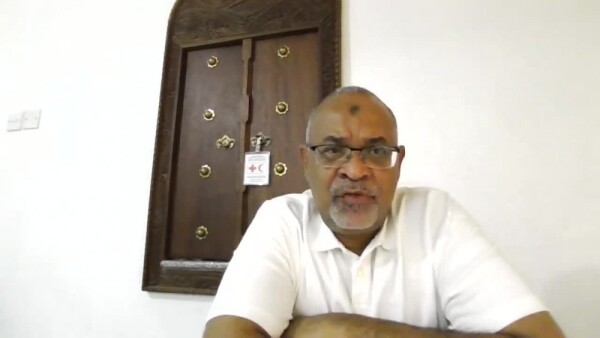
Farid Aiywar, Head of the Delegation of the International Federation of Red Cross and Red Crescent Societies (IFRC) in Sudan, speaking from Nairobi, said that at the moment it was impossible to provide humanitarian services in and around Khartoum. Electricity had been rationed in some places, and there was lack of water and food in certain areas. Until assurances for safety of volunteers were given, humanitarian assistance could not be delivered. The Sudanese Red Crescent had nonetheless managed to mobilize about 250 of its volunteers from the Khartoum branch, some of whom were deployed in hospitals. IFRC was calling for assurances for humanitarian services to be able to reach people in need. It was hoped that the situation would soon stabilize so that the volunteers could provide the necessary help.
Responding to numerous questions from the media, Ms. Vellucci stated that the very strong diplomatic activity by the Secretary-General, seen in the previous days, was continuing. It was important to stress that this had to be a concerted, coordinated effort by the United Nations, the Arab League, the African Union and all the stakeholders in the region. Mr. Magango added that talks remained the only way to resolve this situation. Mr. Aiywar explained that the eight partner national Red Cross and Red Crescent societies were active in Sudan, in addition to the many thousands of trained Sudanese Red Crescent volunteers. However, as long as the shooting continued and safety could not be assured, there was no possibility to provide the much-needed humanitarian assistance. Safe humanitarian access was the major request by the Red Cross and Red Crescent Movement, he reiterated.
Answering questions, Ms. Vellucci said that the UN had about 4,000 staff working in the country, 800 of whom were international staff; most of them were working on humanitarian issues. Ten UN agencies and more than 80 NGOs were running over 250 projects in the country. United Nations was committed to staying in Sudan and delivering on its humanitarian mandate, she emphasized.
On another question, Mr. Magango stated that the OHCHR was present in several locations across Sudan, and since the start of the fighting, most casualties had been in Khartoum. The numbers of over 185 casualties were the latest UN numbers, as presented by the Secretary-General’s Special Representative the previous day. OHCHR had not been able to verify accounts of possible engagement of armed fighters from other countries.
Replying to a question, Olga Sarrado, for the United Nations Refugee Agency (UNHCR), said that until now UNHCR had not received reports of refugees moving from Sudan to other countries. UNHCR was updating its contingency plan, monitoring the situation, and it would keep the media informed if any outflows were noticed.
Also answering to a question, Margaret Harris, for the World Health Organization (WHO), said that many of the nine hospitals in Khartoum were reporting shortages of everything, including blood, and fluids, in addition to dealing with water and electricity shortages. The severe restriction of movement was making it very difficult to reach hospitals; three attacks against healthcare had been verified thus far, leading to three deaths. There were reports of military forces occupying some health facilities; it was not safe for ambulances and medical staff to be on the streets. She stressed that attacks on healthcare were a flagrant violation of the international humanitarian law and had to stop.
New report on Afghanistan socio-economic outlook for 2023
Abdallah Al Dardari, United Nations Development Programme (UNDP) Representative in Afghanistan, stated that the new report on Afghanistan’s socio-economic outlook of this year showed that the economic situation continued to spiral. GDP was estimated to have further declined by 3.6 percent in 2022 after the 20.7 contraction in 2021. Afghanistan was among the countries with the lowest per capita income in the world.
While there were signs of recovery: a rise in exports; an expected increase in domestic fiscal revenue by 8 percent; stabilization of the exchange rate; and a reduction in inflation, recovery was weak and in the long term insufficient. Mr. Al Dardari said that any reduction in international aid would worsen the economic prospects of Afghanistan and extreme poverty would perpetuate for decades, but the economy could not be reignited if women cannot work, while future economic growth was constrained by underinvestment in girls’ and women’s education.
UNDP’s report can be accessed here.
Alessandra Vellucci, for the United Nations Information Service (UNIS), said that the United Nations called for an immediate revocation of the Taliban’s decision to ban women from working for the United Nations. Mr. Al Dardari added that there was, until now, no positive response from the Taliban regarding women’s employment, but the contacts continued daily. Finally, Ms. Vellucci informed that the humanitarian response plan for Afghanistan was currently less than five percent funded.
Preventing hepatitis C among high-risk groups in low and middle income countries
Dr. Meg Doherty, Director of Global HIV, Hepatitis and STIs Programmes at the World Health Organization (WHO), said that the WHO was very much commending the work of Unitaid on promoting health equity among injection drug users and those at high risk for HIV and hepatitis C. WHO would be providing quality assurance in this process, she said. The new investment, announced by Unitaid today, would help generate new evidence necessary for high-quality guidance on opioid-substitution therapies. Prioritizing harm reduction would help end hepatitis C until 2030. Right now, 58 people were living with hepatitis C, she reminded, and there were 1.5 new infections and a million deaths every year. Unitaid’s investment was very much appreciated, and the WHO looked forward to further collaboration.
Herve Verhoosel, for Unitaid, informed that, in a major boost to harm reduction efforts, Unitaid today announced a USD 31 million commitment to preventing hepatitis C among people who injected drugs and other at-risk populations such as people in prisons. The prevention tools and approaches would also help prevent transmission of other blood-borne diseases, including HIV. Breakthrough advances in recent years had made hepatitis C treatment highly effective and affordable in most low- and middle-income countries. However, limited awareness and insufficient access to care severely hindered efforts to eliminate the disease, particularly amongst communities where rates of transmission were the highest.
Unitaid’s funding would support the integration of hepatitis C testing and treatment within harm reduction programs and trial the use of two products to prevent infection: low dead space syringes and new, long-acting formulations of buprenorphine, a medicine used in opioid agonist therapy. Slow-release formulations of buprenorphine, a medicine that reduced opioid cravings and withdrawal, could provide a valuable option for clients who face challenges with daily doses of the oral formulation, such as high out-of-pocket expenses, police harassment, or discrimination.
Mr. Verhoosel informed that 80 percent of all those affected by hepatitis C lived in low- and middle-income countries. People who faced the greatest barriers to accessing healthcare were disproportionately impacted. He said that both products would be piloted at sites in Egypt, India, Kyrgyzstan, Nigeria, South Africa, Tanzania, Ukraine, and Vietnam. Sites in two additional countries – Armenia and Georgia – would trial low dead space syringes. All ten countries would integrate service delivery within harm reduction programs. Full statement is available here.
Malaria vaccines
Responding to a question on malaria vaccines, Margaret Harris, for the World Health Organization (WHO), said that the WHO had processes in place to provide guidance to Member States on vaccines. A global expert group was currently looking into the R21 malaria vaccine, and all data was not available yet, stressed Ms. Harris. This process had to be duly completed before any recommendation could be made.
Announcements
Alessandra Vellucci, for the United Nations Information Service (UNIS), reminded that on 21 April at 1 pm, there would be a hybrid press conference by the World Meteorological Organization (WMO) to present State of Global Climate 2022 report. Speakers would be Petteri Taalas, WMO Secretary-General, and Omar Baddour, Chief of WMO Climate Monitoring.
Ms. Vellucci informed that the Committee on the Elimination of Racial Discrimination would conclude this morning the review of Argentina and would begin this afternoon the review of Portugal.
The Committee Against Torture, which had opened on 17 April, was beginning this morning the review of Colombia.
Finally, Ms. Vellucci informed that on 20 April, the international community would mark the Chinese Language Day. On that occasion, an exhibition would open in Building E of the Palais des Nations at 12:30 pm that day.
Similar Stories
1
1
1
Press Conferences | CITES
Wildlife trade and conservation policy discussions at the 81st meeting of the CITES Standing Committee (SC81)
1
1
1
Press Conferences | UNHCR , UNCTAD , WMO , OCHA , UNICEF , WHO
UNHCR Hungary’s 1956 Refugee Crisis: 70 Years On, UNCTAD World Investment Forum 2026, Doha, WMO Greenhouse Gas Bulletin and Climate Update for COP31, OCHA Afghanistan: Malnutrition, Girls’ Education and Recovery, UNICEF Yemen: Child Malnutrition and Unsafe Water in Taiz, WHO Inequalities in Noncommunicable Diseases and Risk Factors

1
1
1
Press Conferences | UNHCR
End of UNHCR's 77th Annual Executive Committee (ExCom) meeting week

1
1
1
Press Conferences | UNICEF , IOM , UNHCR
UN Special Assistant to the Personal Envoy Office (SUDAN): Peace Initiatives and Efforts in Sudan; UNICEF: Dire situation of children in Gaza; IOM: Damaged Homes and Energy Attacks Risk Displacing Ukrainians for this winter; UNHCR: update on EXCOM week

1
1
1
Press Conferences | IOM , UNDRR
UN stresses importance of household preparedness for disaster risk reduction.

1
1
1
Statements , Press Conferences | OHCHR

1
1
1
Press Conferences | UNHCR , UNICEF , IFRC , OHCHR , UN WOMEN , IOM , OCHA , WHO
UNHCR – ExCom Meeting, UNICEF – Nepal Recovery, IFRC – Flash Floods, WHO – Mental Health, IOM – South Sudan Floods, OCHA – DRC Humanitarian aid, UNHCR – Sahel Displacement, UNICEF – Yemen Update, IOM – Gaza Shelter, UN Women – Gaza Women, OHCHR – Arrests and detentions of Syrians by Israeli force

2
1
2
Press Conferences | UNCTAD
Presentation of the Trade and Developement Report 2026
Embargoed until 9 October 2026 at 11 a.m. (Geneva Time)
UNCTAD: UNCTAD’s flagship report finds that governments increasingly use industrial, trade, financial and technology policies to pursue economic and national security objectives. Market access and the ability to move into higher-value activities now depend more heavily on technology, finance and geopolitics.

1
1
1
Press Conferences | UPU
Release of the State of the Postal Sector Report 2026
1
1
1
Press Conferences | IOM , ITU , UNECE , UNICEF , WHO , WMO
UNICEF: Ebola, DRC - children orphans or separating them from parents and caregivers; IOM: Humanitarian needs in Djibouti amid arrivals from Yemen and increased migrant movements; WHO: Darfur, scale of health needs far exceeds available resources; WMO co-sponsored Global Heat Forum, Bangkok, monthly Global Seasonal Climate Update; UNECE: UN Forum of Mayors; ITU Plenipotentiary Conference 2026; WHO: child and adolescent obesity guidelines and new global roadmap to tackle pregnancy hypertension, a leading cause of maternal mortality
1
1
1
Press Conferences | OCHA , UN WOMEN , UNHCR , WFP , WHO , WTO , UNEP
OCHA – $160M CERF allocation to 12 underfunded crises; UNHCR – 5.8M refugee children remain out of school amid funding cuts; UN Women – Middle East escalation and food security among women/girls; WHO – Gaza supplies and overall situation; WFP – Yemen food insecurity and impact on global hunger ; UNEP - First International Conference of the Global Framework on Chemicals in Geneva | 16-20 November 2026
1
1
1
Press Conferences | UNHCR , WHO
Yemen's health system nears collapse amid conflict, causing rising casualties and medicine shortages.