

The United Nations Office at Geneva
Multimedia Newsroom
Press Conferences | OHCHR , UNDP , UNHCR , UNICEF , WHO , WMO
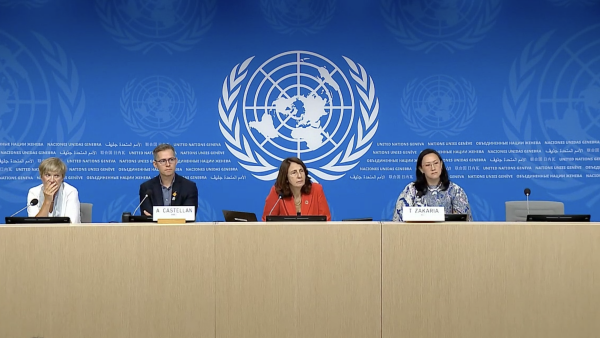
Bi-Weekly Press Briefing 24 February 2023
PRESS BRIEFING BY THE UNITED NATIONS INFORMATION SERVICE
24 February 2023
Announcements
Alessandra Vellucci, for the United Nations Information Service (UNIS), said Monday, Tuesday and Wednesday next week would be the busiest days the Palais des Nations had seen in years. Journalists had been informed about security and safety measures. The Human Rights Council high-level segment would start on Monday, coinciding with the high-level segment of the Conference on Disarmament, and with a high-level pledging event for the humanitarian situation in Yemen to take place on Monday afternoon. Everyone coming to the Palais by car would have to go enter through the Chemin de Fer gate. The Human Rights Council would open at 9 a.m. and then the high-level segment of the Conference on Disarmament would open at 10 a.m. There was an audio streaming service if journalists could not be in the room, and the list of speakers would be shared with the media today.
At 11:30 a.m., there would be a stakeout organized by the Permanent Mission of France, and at 1pm, there would be a hybrid press conference on the high-level pledging event for the humanitarian situation in Yemen, which would take place at 2 p.m. On Tuesday there would be the usual press briefing, and at 12 p.m., a virtual press conference from WIPO, on the release of 2022 global data for international intellectual property filings, including patents, trademarks, and designs. At 1:30 p.m. there should be a conference by WHO on the Prevention of Sexual Misconduct (still to be confirmed) and at 3:15 p.m. there would be a hybrid press conference by the President of the 77th UN General Assembly, who would be visiting Geneva next week.
Human Rights Council Update
Rolando Gomez, for the Office of the High Commissioner for Human Rights (OHCHR), said the Human Rights Council would open its 52nd session on Monday and would last for five and a half weeks; the longest session since the Council started meeting in 2006. The session would open at 9 a.m. in Room XX. The Council would open with remarks from the President of the Council Václav Bálek, followed by an address by the President of the General Assembly, Csaba Kőrösi, the United Nations Secretary-General, António Guterres, and the High Commissioner for Human Rights, Volker Türk. This would be Mr. Türk’s first regular session of the Human Rights Council in his capacity as High Commissioner. Following Mr. Türk, the Council would hear from the Head of the Swiss Federal Department of Foreign Affairs, Ignazio Cassis. All statements would be made in person.
After 10 a.m., the Council’s high-level segment would begin. There were 46 dignitaries expected to speak on Monday alone, among them three heads of State, for the Democratic People’s Republic of Congo and Montenegro (in person), and Colombia (virtually). The high-level segment would continue over the next week. Among them, there were 146 dignitaries inscribed to speak, with nearly 100 due to appear in person, which was another record. The full list of speakers was available online and would be shared with the media. At 4pm on Monday afternoon the high-level segment would be paused for the convening of the Council’s annual high-level panel discussion on human rights mainstreaming. The entire session would be broadcast in all six official UN languages and press summaries would be produced courtesy of UNIS. If the press could not be accommodated in Room XX there was a spill over room in Room XIX. It would be beneficial to arrive as early as possible due to extra security measures. Media updates would be sent every day, spelling out the programme for the following day. There would be a link to Sched, an application which provided live programme updates.
Answering questions, Ms. Vellucci said if journalists were coming by foot, they would have to go through the Peace Gate and they would be screened. She also said there the UN did not have a schedule of what happened outside the Palais. The security of the Palais premises was ensured by UN security, and everything that happened outside fell to local authorities. Ideally all statements would be sent to the media ahead of time.
Mr. Gomez said there would be 146 statements in total from dignitaries. The order of the protocol was dictated from heads of State; the President’s of the Democratic People’s Republic of Congo, Montenegro and Colombia would speak first. There was a protocol and a logic to the list, but also practicality, depending on their schedules. The President of Colombia would be speaking by video message, at 10:20 a.m. on Monday. The other dignitaries would be speaking in person.
Türkiye And Syria Earthquakes
Sudipto Mukerjee speaking for the United Nations Development Programme (UNDP), Damascus, said he had visited Aleppo, Lattakia and Homs last week and was appalled by the conditions. The devastating earthquake, combined with the last twelve years of crises had drained Syria of capacities in every sector. Over 15.3 million people were in need of humanitarian assistance, of whom 12 million people were estimated to be food insecure. Over 6,000 people had been killed across Syria as a result of the earthquake and more than 10,600 people had been injured. At least 8.8 million people in Syria had been affected by the earthquake, with 4.9 million in acute need. Significant damage to thousands of residential and public buildings and critical infrastructure were affecting living conditions and livelihoods. Tens of thousands of people had been displaced. It was estimated that around 40,000 families had been displaced within their own communities in Northwest Syria. Over 454 schools had sustained damage and more than 150 undamaged schools were being used as temporary shelters, unable to deliver education.
UNDP’s post-earthquake assistance strategy for the next 24 months focused on strengthening the resilience of disaster-affected communities. UNDP was assessing the damage to get a better overview and a clearer understanding of immediate and longer-term recovery needs. Rapid assessments of damaged buildings had already been completed. UNDP was supporting local level response coordination, data and analytics, and debris removal to open humanitarian corridors and pave the way for the rehabilitation of key infrastructure and access to services. Psychosocial support through UNDP was ongoing with 813 people already reached. Several encouraging developments had occurred including 23% of the Flash Appeal, amounting to US$ 93 million already committed. An acceleration of the recovery and rehabilitation process was a must. The level of loss and damage could have been mitigated if recovery of communities, systems, and infrastructure had been prioritised.
Afshan Khan for the United Nations Children’s Fund (UNICEF), said she had just returned from Türkiye where 13.5 million Turkish citizens had been affected by the earthquakes, and more than 1.7 million Syrian refugees were displaced. One third of this population were children and adolescents. A huge number of people were still living in tents without access to water, or hygiene, and shortages of major services such as healthcare. The government had opened up temporary accommodation centres across all the impacted cities. A centre in Kahramanmaras had initially hosted 9000 people prior to the earthquake 17 days ago. Now 18,000 people lived in that same centre, and nearly a third of them were children. Ms. Khan had visited schools that were destroyed. Four million children, including 350,000 refugee children, were no longer in any form of learning in school. Learning was part of the recovery; it was important for children to get to some sense of normalcy. UNICEF had provided more than 163,000 children with hygiene kits, winter clothes, electric heaters and blankets, and had relocated 724 children from ruined homes into other parts of Türkiye.
Ongoing needs would focus on psychosocial support. Children in Türkiye were at risk of developing anxiety, depression, and post-traumatic stress disorder. UNICEF was working with the Government and partners to provide lifesaving supplies and immediate psychosocial support. The organisation was supporting the Government in identifying unaccompanied and separated children; setting up child-friendly temporary learning spaces; and assessing water, health and nutrition needs. UNICEF required US$196 million to reach 3 million people, including 1.5 million children, in Türkiye over three months.
Responding to questions, Ms. Khan said UNICEF was working alongside the government inside Syria as well, with a key focus on water sanitation, hygiene, and support for malnutrition. UNICEF had had a presence in Syria well before the start of the war, so the response in Syria had been vast. Staff had been deployed into northwest Syria to provide immediate support to affected areas.
Mr. Mukerjee for UNDP acknowledged the immense amount of work which had been undertaken in Syria by UNICEF. The government had put in a lot of facilitation measures, including making sure visas were issued quickly, and had provided the UN with a blanket approval for cross land deliveries to Northwest Syria until July. In Syria there were schools which still continued to be used as shelters, but the Government was looking at places to move these people to, to free up the schools for education.
Children in Yemen
Responding to questions, Afshan Khan for the United Nations Children’s Fund (UNICEF), highlighted the incidence of malnutrition in Yemen which was an ongoing tragedy. Yemen had been unprecedented in terms of scope. UNICEF had a wide scale response inside Yemen, coordinating with other UN agencies. Materials about this would be shared with the media today.
Impacts of Ukraine conflict 12 months on
Birgitte Bischoff Ebbesen for the International Federation of the Red Cross (IFRC) speaking from Budapest, said the devastation of the last 12 months had affected every aspect of the lives of people in Ukraine. People had lost their loved ones or been wounded, homes had been destroyed, families torn apart, and millions had been forced to flee. People were living without power, heat and in some cases water. More than 6 million people had fled Ukraine and needed assistance as they settled into new countries. The Red Cross were providing language classes, to help people settle into their new reality and were looking into how they could assist with legal services. The increase of rental costs was another issue. IFRC had been able to provide cash assistance for hosting families and the people who had arrived, but this was not a long-term solution. These every day challenges were making the process of resettlement very tough.
So much more was needed for the people affected by Ukraine. One of the top issues was the psychological wounds. IFRC were receiving a growing number of pleas for mental health help. 34 national societies and the IFRC were supporting mental health support and psychosocial services. In the long term, many would need places to stay, a steady income, healthcare, and schools. Host communities had stepped up to support; it was crucial that the solidarity shown in Europe and around the world continued. With an operation spanning 58 countries, the IFRC network had reached more than two million people with medical care, mental health support and shelter. So far more than CHF 87 million had been distributed in cash assistance. Red Cross and Red Crescent teams were working everywhere and continued to offer support
Afshan Khan for the United Nations Children’s Fund (UNICEF), said in the last year, 487 children had been killed and 954 injured inside Ukraine. The use of explosive weapons had caused these child casualties. The number of children impacted by the conflict was huge; more than 5 million children in Ukraine had no access to schooling and almost 2 million children were continuing online learning. Thousands of preschools and secondary schools were damaged by the war. UNICEF had provided several hundreds of millions in cash assistance, focusing on large families, and children with a disability. 400,000 women and children in Ukraine had been reached with gender-based violence prevention, and 1.2 million children and caregivers had accessed mental health services in surrounding countries. 5.5 million people inside Ukraine were receiving support for damaged infrastructure. UNICEF had been able to provide 1.7 million people with support for hygiene and sanitation services. The multipurpose cash assistance inside Ukraine had reached more than 224,000 households.
Shabia Mantoo, for the United Nations High Commissioner for Refugees (UNHCR), said UNHCR, had issued two reports yesterday, looking at the 12 months into the war in Ukraine. 13 million people remained uprooted from their homes, including nearly 8 million refugees across Europe and more than 5 million internally displaced people within Ukraine. UNHCR had interviewed thousands of refugees and internally displaced persons for the report. Key findings from the reports found that the majority of refugees and internally displaced Ukrainians –77 per cent and 79 per cent respectively – wanted to return home one day, however, only 12 per cent planned to do so in the next three months. The main impediments preventing refugees from returning were safety and security concerns. Other concerns cited were about access to and availability of basic services - including electricity, water and healthcare, work opportunities and adequate housing.
Alessandra Vellucci, for UNIS, reminded the media that a high-level debate would be held at the Security Council on the situation of Ukraine today at 4pm Geneva time. Secretary General António Guterres was expected to brief, and this could be followed on UN Web TV.
Update on the global cholera situation
Dr Philippe Barboza, for the World Health Organisation (WHO), said 2022 was an unprecedented year for cholera, with 50% more countries reporting outbreaks than the years before, some of which had been cholera-free for many years. That trend, continued in 2023. Poverty, conflict and disasters continued to fuel outbreaks, now turbo-charged by climate change. Only last week, 3 more countries had reported new outbreaks and 22 countries were fighting outbreaks of cholera, spanning over 5 WHO regions. WHO estimated that over 1 billion people in 43 countries were directly at risk of cholera. The surge was straining the global response capacity and mortality remained too high. The case fatality rates were the highest recorded in over a decade.
Vaccines were still in short supply. Any increase in vaccine production was not expected to materialize before next year; WHO would need to make do with the approximate 37 million doses available this year. Even using just one dose, WHO was not able to meet demand. WHO was working with UNICEF and other partners to optimize the limited global medicine supply. In countries with large outbreaks, WHO was supporting the government to boost the health workforce and set up oral rehydration points and cholera treatment centres. For the first time ever, WHO had asked for US$ 25 million specifically to fight cholera in 2023. But more needed to be done to prevent cholera in the first place. WHO and UNICEF estimated that in 2020, 1 in 4 people lacked safely managed drinking water in their homes and nearly half the world’s population lacked safely managed sanitation. Access to safe drinking water and sanitation were human rights. Making these rights a reality would also end cholera.
Responding to questions, Dr. Barboza said seasonality was an important factor; different parts of the world were impacted at different time periods. Typically, this was a period where cholera was more active in the Eastern part of Africa. Currently there were 22 countries where there were active outbreaks. There had been some progress; in 2022 there were 30 countries which had reported outbreaks. The main areas of concern were the Eastern parts of Africa, and the Southern parts of Africa, due to climate change. La Niña was a major trigger last year in cholera outbreaks. Cyclone Freddy which would continue to generate mass rain was also contributing to this. There was also the Horn of Africa where the outbreak was not driven by floods, but instead by drought. This brought a major risk of spread to other parts of the continent. The situation would continue to evolve over the coming weeks and months.
Dr. Barboza said the situation of vaccines remained unchanged. There was no rapid silver bullet solution to vaccines. It could be expected that between 2.5 to 3 million new doses would be rolled out a month. A lot of efforts had been made; there was a new manufacturer that had declared interest, but this would take time. Other manufacturers were trying to speed up production. This would hopefully materialize in the year to come, however at present, it was the same situation as last year. It was not a question of money, but a question of capacity of production. The doses were used as soon as they were produced.
For Haiti, a vaccination campaign had been conducted in part of the country, and the situation was stabilizing, however deaths continued to increase in other parts of the country. For Yemen, the number of cases of cholera reported remained low compared to what had been reported in the past. Compared to other places, Yemen was relatively quiet.
Tropical cyclone Freddy poses a threat to Mozambique
Clare Nullis, for the World Meteorological Organisation (WMO), said Tropical Cyclone Freddy hit Madagascar with strong winds and high seas and now threatened Mozambique with dangerous and exceptional rainfall levels. Accurate early warnings and early action on the ground helped limit loss of life – there were seven fatalities which were seven too many - underlining the importance of the UN’s ongoing Early Warnings for All campaign. Freddy was
expected to make landfall in Mozambique as a severe tropical storm on Friday 24 midday, likely between Beira and Inhambane. There was a risk that months’ worth of rainfall could fall in the space of a few days, causing widespread flooding in the area, which already had saturated soils from unusually heavy seasonal rains.
It was not just Mozambique which was going to be impacted, but also Malawi, Zimbabwe and parts of South Africa. The South African Weather Service warned of “widespread significant flooding”. Mozambique’s National Institute for Disaster Management estimated that flooding might affect up to 1.75 million people. The Office for the Coordination of Humanitarian Affairs (OCHA) warned that “the confluence of multiple threats was compounding a severe humanitarian situation in Mozambique”.
Announcements
Alessandra Vellucci, for the United Nations Information Service (UNIS) said the Human Rights Committee would open on Monday at Palais Wilson, and would review the reports of Egypt, Turkmenistan, Zambia, Peru, Sri Lanka, and Panama.
Similar Stories

1
1
1
Statements , Press Conferences | OHCHR

1
1
1
Press Conferences | UNHCR , UNICEF , IFRC , OHCHR , UN WOMEN , IOM , OCHA , WHO
UNHCR – ExCom Meeting, UNICEF – Nepal Recovery, IFRC – Flash Floods, WHO – Mental Health, IOM – South Sudan Floods, OCHA – DRC Humanitarian aid, UNHCR – Sahel Displacement, UNICEF – Yemen Update, IOM – Gaza Shelter, UN Women – Gaza Women, OHCHR – Arrests and detentions of Syrians by Israeli force

2
1
2
Press Conferences | UNCTAD
Presentation of the Trade and Developement Report 2026
Embargoed until 9 October 2026 at 11 a.m. (Geneva Time)
UNCTAD: UNCTAD’s flagship report finds that governments increasingly use industrial, trade, financial and technology policies to pursue economic and national security objectives. Market access and the ability to move into higher-value activities now depend more heavily on technology, finance and geopolitics.

1
1
1
Press Conferences | UPU
Release of the State of the Postal Sector Report 2026
1
1
1
Press Conferences | IOM , ITU , UNECE , UNICEF , WHO , WMO
UNICEF: Ebola, DRC - children orphans or separating them from parents and caregivers; IOM: Humanitarian needs in Djibouti amid arrivals from Yemen and increased migrant movements; WHO: Darfur, scale of health needs far exceeds available resources; WMO co-sponsored Global Heat Forum, Bangkok, monthly Global Seasonal Climate Update; UNECE: UN Forum of Mayors; ITU Plenipotentiary Conference 2026; WHO: child and adolescent obesity guidelines and new global roadmap to tackle pregnancy hypertension, a leading cause of maternal mortality
1
1
1
Press Conferences | OCHA , UN WOMEN , UNHCR , WFP , WHO , WTO , UNEP
OCHA – $160M CERF allocation to 12 underfunded crises; UNHCR – 5.8M refugee children remain out of school amid funding cuts; UN Women – Middle East escalation and food security among women/girls; WHO – Gaza supplies and overall situation; WFP – Yemen food insecurity and impact on global hunger ; UNEP - First International Conference of the Global Framework on Chemicals in Geneva | 16-20 November 2026
1
1
1
Press Conferences | UNHCR , WHO
Yemen's health system nears collapse amid conflict, causing rising casualties and medicine shortages.
1
1
1
Press Conferences | HRC
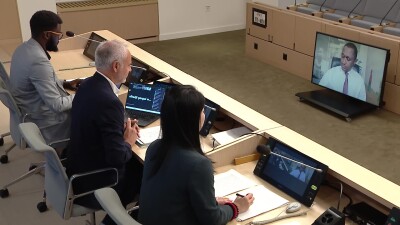
Update by the Expert Mechanism to Advance Racial Justice and Equality in Law Enforcement
1
1
1
Press Conferences | WIPO , WHO , UNICEF , UNHCR , IOM , WFP , FAO
WIPO Global Innovation Index 2026 launch and press conference, WHO Composition of influenza vaccines for the 2027 Southern Hemisphere flu season, UNICEF Yemen hunger and malnutrition; UNHCR Sudan displacement into Chad; IOM Ebola and population movements in DRC; WFP emergency food assistance in Nepal; and FAO food loss and waste.
2
1
2
Press Conferences | UNCTAD
Gaza reconstruction needs reach $71.5 billion as Palestinian economy and public finances face severe strain. Latest UNCTAD report documents the loss of decades of development gains, economic collapse in Gaza and tightening economic constraints in the West Bank.
The report identifies three immediate priorities: transferring withheld Palestinian revenues, safeguarding the banking system and aligning reconstruction support with the documented scale of damage and economic losses.
1
1
1
Press Conferences | HRC
Press conference on the situation of human rights in Nicaragua by the UN Group of Human Rights Experts
1
1
1
Press Conferences | ITU , UNHCR , WHO , WMO
YEMEN - UNHCR: Escalating conflict in Yemen could fuel more displacement, refugee movement
CLIMATE - WHO / WMO: Health and Climate impact of El Niño