

The United Nations Office at Geneva
Multimedia Newsroom
PRESS BRIEFING BY THE UNITED NATIONS INFORMATION SERVICE
3 February 2022
Earthquake in Türkiye and Syria
Ms. Vellucci read out a statement from United Nations Secretary-General António Guterres, who welcomed the decision yesterday by President Bashar al-Assad of Syria to open the two crossing points of Bab Al-Salam and Al Ra’ee from Türkiye to north-west Syria for an initial period of three months to allow for the timely delivery of humanitarian aid.
Mr. Guterres said that as the toll of the 6 February earthquake continued to mount, delivering food, health, nutrition, protection, shelter, winter supplies and other life-saving supplies to all the millions of people affected was of the utmost urgency.
Opening these crossing points -- along with facilitating humanitarian access, accelerating visa approvals and easing travel between hubs -- would allow more aid to go in, faster, the Secretary-General said.
Kenn Crossley, Country Director in Syria, World Food Programme (WFP), said there was a triangle between Aleppo, Hama and Latakia that had been seriously affected by the earthquake, and all people, not just one faction, had been impacted.
WFP had an extensive network of cooperating partners, including in the north-west of Syria, that had done remarkable work. WFP had been worked with partners to provide hot meals in voluntary shelters within hours of the earthquake. WFP had been able to leverage its contingency stocks and partnerships in Syria to deliver food assistance within days. Roughly 180,000 people within north-west Syria had been provided with food assistance. Within the triangle of the disaster area, an additional 60,000 to 70,000 people had been provided with assistance.
WFP welcomed the opening of the border to north-west Syria. It was extremely important that humanitarian access was maintained. 18 trucks with food and medical supplies were ready to go to the region, but WFP had not been able to receive humanitarian assurances from all parties to facilitate access for these trucks.
This was a crisis on top of a crisis. There were already 5.5 million people badly in need of food assistance before the earthquake hit, and the earthquake had compounded the issue.
Paul Dillon for the International Organization for Migration (IOM) said that ten IOM trucks [later on, he said that there were eleven trucks] loaded with humanitarian assistance had left the organisation’s warehouse in Gaziantep today for the newly opened Bab Al-Salam border crossing into north-west Syria.
The trucks would deliver critically needed aid to the women, children and men who survived the earthquake. They were carrying essential, lifesaving materials including shelter, mattresses, blankets and carpets.
Four additional trucks had left IOM’s warehouse today bound for north-west Syria via the Bab el Hawa border crossing. As of Monday night, IOM had delivered 30 truckloads of aid to Idleb.
IOM was deeply concerned about the circumstances of the tens of thousands of people who remained without a warm, secure place to live. Aid delivered to date to north-west Syria represented a tiny fraction of the needs of people. Thousands of homes had been levelled or rendered unliveable, the health system had been devastated, and fuel stocks were scarce, adding to the mystery of people huddled against sub-zero night-time temperatures.
James Elder for the United Nations Children's Fund (UNICEF) said as families faced the heart-breaking reality that the focus in Türkiye and Syria was moving from rescue to recovery, UNICEF feared that many thousands of children had been killed. Even without verified numbers, it was tragically clear that numbers would continue to grow.
In Türkiye, the total number of children living in the 10 provinces hit by the two earthquakes was 4.6 million. In Syria, 2.5 million children had been affected. Children and families were in desperate need of additional support. Many local partner organisation’s staff and first responders have been killed, injured, displaced, and their offices and equipment destroyed. Everyone, everywhere needed more support. Families were sleeping in the streets for fear of returning to their homes. This meant tens of thousands of families were exposed to bitingly cold temperatures. Reports were rising daily of the number of children suffering from hypothermia and respiratory infections.
In Syria, UNICEF’s immediate life-saving response included providing safe drinking water, warm winter clothes, medical and nutritional supplies; in Türkiye, dispatching winter clothes for children, family, baby and mother hygiene kits, family travel hygiene kits and blankets. UNICEF was also procuring sleeping bags, power banks and sleeping chairs across the 10 affected provinces.
It was clear that many children would have lost parents in these devastating earthquakes.
In Türkiye, UNICEF, in coordination with the Ministry of Family and Social Services, had deployed social workers to hospitals to help identify unaccompanied and separated children and make sure their basic needs were met. In addition, together with the Ministry, UNICEF had launched 10 new hotlines in the affected provinces for unaccompanied and separated children. Alongside these efforts, UNICEF was also working with partners to provide children affected with critical psycho-social and mental health support.
For many of these children – particularly in war-affected Syria – this was unyielding trauma on top of trauma. UNICEF had trained close to 70 trainers on psychological first aid, while mobilizing longer term mental health and psychosocial support, and provided hundreds of recreational kits to help children cope with the impact of the earthquake.
In Syria, every child under the age of almost 12 knew nothing but conflict, violence or displacement. Some children had been displaced six or seven times. More than 1.7 million registered refugees from Syria lived in the 10 affected provinces in Türkiye, and an estimated 811,000 of them were children. Years of violence, destruction and deteriorating economic conditions had made living conditions unbearable. This was the international community’s last chance to show solidarity to these millions of children.
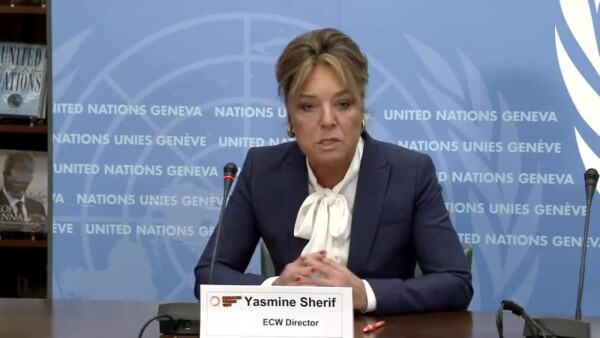
Yasmeen Sherif, Director, Education Cannot Wait (ECW), said that 239 schools had been damaged and destroyed in Syria because of the earthquake. Schools played a vital role as humanitarian shelters, providing food and psychological support for children and families. ECW was making an emergency allocation of seven million United States dollars to get schools up and running. It called on all donors to support this effort.
Read more about ECW’s efforts here.
Ms. Vellucci also announced that Jagan Chapagain, International Federation of Red Cross and Red Crescent Societies (IFRC) Secretary-General, was travelling to Syria and Türkiye. He and the IFRC would hold briefings with journalists in the region to provide perspective on the unfolding disaster.
In response to questions, Mr. Crossley said that a United Nations Disaster Assessment and Coordination (UNDAC) team had reached Syria this morning. This mission, organised by the Office for the Coordination of Humanitarian Affairs, was largely an assessment mission. It was cooperating with local authorities on the ground.
Mr. Elder said the numbers of child casualties were still unknown but would likely reach several thousands. Türkiye had registered more than 13,000 children who had been separated from their families, around 300 of whom had managed to reunite with family or community members. Training needed to be provided to increase the number of counsellors and psychologists on the ground. UNICEF would use social media and other digital tools to help reunite children with their families.
Mr. Crossley said WFP worked in Syria with humanitarian partners to distribute assistance and to negotiate access to conflict zones with conflicting parties. It had been providing assistance to 1.4 million people in north-west Syria each month. There was an opportunity to bring in more assistance more frequently if additional border points could be opened. WFP was negotiating with non-State party armed groups to increase the number of crossings and the amount of time that each convoy could spend in the region.
Mr. Dillon said the Government of Türkiye was the best current source of information on the number of displaced persons and destroyed infrastructure until a complete damage assessment had been made.
Mr. Elder said that reuniting children was a priority for UNICEF. UNICEF had 5,000 volunteers who were supporting children to reunite with their families. Adoption should be put on hold during crises such as this. Education and psychological support were as vital for children as resources like water.
Ms. Sherif said that schools provided safe spaces for children, which was why they needed to be up and running as soon as possible.
Christian Lindmeier for World Health Organization (WHO) said that United Nations convoys had not been able to deliver cross-border aid to north-west Syria yet, but with the opening of the border, that was now possible. Such access was vital for delivering aid from the Government controlled area to the north-west.
Wave of Arrests of Perceived Political Opponents in Tunisia
Jeremy Laurence for the Office of the High Commissioner for Human Rights (OHCHR) said the High Commissioner Volker Türk had today expressed his concern over the deepening crackdown against perceived political opponents and civil society in Tunisia. Since Saturday, at least nine people, including former civil servants, had been reportedly arrested and some detained on security and graft charges.
The General Prosecutor had increasingly initiated criminal proceedings against perceived opponents, charging them with “conspiracy against State security”, “causing offence to the Head of State” or “violating the decree-law to fight Cybercrime.”
The Office was additionally concerned that some of those held had been tried in military courts. It called on the Tunisian authorities to cease immediately practices of trying civilians before military tribunals. It also called on the authorities to respect due process and fair trial standards in all judicial proceedings and to release immediately all those arbitrarily detained, including anyone detained for exercising their rights to freedom of opinion or expression.
Since July 2021, the authorities had also taken a series of measures that had undermined the independence of the judiciary, including dissolving the High Judicial Council and summarily dismissing 57 judges. The Office called on the authorities to bring legislation, procedures and practices into line with applicable international norms and standards, and through the separation of powers, to uphold the independence of the judiciary and the rule of law.
In response to questions, Mr. Laurence said the Office had issues with trying civilians in military courts as such courts did not have sufficient fair trial guarantees. At least three people were arrested yesterday, and a number of people were arrested over the weekend, including judges and political opponents. The former Human Rights Minister had been tried under decree 54, and a Tunisian blogger had been detained for writing “the revolution continues” on social media.
Marburg Virus Outbreak in Equatorial Guinea
Christian Lindmeier for World Health Organization (WHO) said that there had been an outbreak of the Marburg virus in Equatorial Guinea. There had reportedly been nine deaths from the virus thus far, one of which had been confirmed by WHO. There were additionally 16 suspected cases. Symptoms included fever, fatigue, vomiting and diarrhoea.
WHO would convene an urgent meeting of the Marburg virus vaccine consortium (MARVAC) at 3 p.m. CET today, 14 February 2023, to discuss the outbreak. The MARVAC included leaders in the field of vaccine research and development, working together to develop vaccines against this infectious disease threat.
Persons interest in attending could register here.
Responding to questions, Mr. Lindmeier said that the meeting today would discuss would which vaccines could or could not be delivered. A press release on the topic would be released in the coming days.
Announcements
Yasmeen Sherif, Director, Education Cannot Wait (ECW), announced that this week in Geneva on 16 and 17 February, ECW was hosting a high-level financing conference, co-hosted by the Government of Switzerland and co-convened by the governments of Colombia, Germany, Niger, Norway, and South Sudan.
Speeches by the United Nations Secretary-General and Deputy Secretary-General would be played at the event. Main speakers included Gordon Brown, Special Envoy for Global Education and Chair of ECW’s High-Level Steering Group; Ministers from key donors around the globe; and Education Ministers from countries affected by crisis, such as the Palestinian, Columbian and South Sudan Ministers.
ECW’s goal was to raise 1.5 billion United States dollars over a period of four years to reach 20 million children and adolescents in crisis situations, such as children in Syria and Afghanistan, through strategic partners on the ground. The percentage of aid funding that was invested in education was 2.4 per cent as of September 2022. This was a very small amount, considering the importance of education. Education could not wait for crises to subside. ECW was hoping to raise 50 per cent of the 1.5 billion at the conference.
Ms. Sherif called on all reporters to attend a hybrid press briefing at noon on the conference on Thursday, 16 February. Reporters can register to attend the press conference here, or contact Elisa Landozzi (elisa.landozzi@un.org) to request access.
Alessandra Vellucci, Director of the United Nations Information Service (UNIS) in Geneva, said that OCHA and United Nations High Commissioner for Refugees would hold a press conference on Wednesday, 15 February at 9:15 a.m. to launch the Ukraine Regional Refugee Response Plan and Humanitarian Response Plan. Speaking would be Martin Griffiths, Under-Secretary-General for Humanitarian Affairs and Emergency Relief Coordinator, and Filippo Grandi, United Nations High Commissioner for Refugees.
WHO would also hold an online press conference on Friday, 17 February at 9:30 a.m. to discuss the health impacts and needs in Ukraine, one year after the start of the war. Speaking were Dr. Hans Henri P. Kluge, WHO Regional Director for Europe, and Dr. Jarno Habicht, WHO Representative in Ukraine.
The Committee on the Elimination of Discrimination against Women was continuing its 84th session. Today, it would review the report of Bahrain. It would review the reports of Bahrain, Costa Rica, Mauritania, Slovenia and Tunisia.
The Committee on Economic, Social and Cultural Rights was continuing its 73rd session, during which it was reviewing the reports of Cambodia, China, Lithuania, Panama, Portugal and Yemen. Today, it would continue its review of the report of Panama.
PRESS BRIEFING BY THE UNITED NATIONS INFORMATION SERVICE
3 February 2022
Alessandra Vellucci, Director of the United Nations Information Service (UNIS) in Geneva, chaired the hybrid briefing, which was attended by spokespersons and representatives from the World Health Organization, the World Food Programme, the International Organization for Migration, the United Nations Children's Fund, Education Cannot Wait and the Office of the High Commissioner for Human Rights.
Earthquake in Türkiye and Syria
Ms. Vellucci read out a statement from United Nations Secretary-General António Guterres, who welcomed the decision yesterday by President Bashar al-Assad of Syria to open the two crossing points of Bab Al-Salam and Al Ra’ee from Türkiye to north-west Syria for an initial period of three months to allow for the timely delivery of humanitarian aid.
Mr. Guterres said that as the toll of the 6 February earthquake continued to mount, delivering food, health, nutrition, protection, shelter, winter supplies and other life-saving supplies to all the millions of people affected was of the utmost urgency.
Opening these crossing points -- along with facilitating humanitarian access, accelerating visa approvals and easing travel between hubs -- would allow more aid to go in, faster, the Secretary-General said.
Kenn Crossley, Country Director in Syria, World Food Programme (WFP), said there was a triangle between Aleppo, Hama and Latakia that had been seriously affected by the earthquake, and all people, not just one faction, had been impacted.
WFP had an extensive network of cooperating partners, including in the north-west of Syria, that had done remarkable work. WFP had been worked with partners to provide hot meals in voluntary shelters within hours of the earthquake. WFP had been able to leverage its contingency stocks and partnerships in Syria to deliver food assistance within days. Roughly 180,000 people within north-west Syria had been provided with food assistance. Within the triangle of the disaster area, an additional 60,000 to 70,000 people had been provided with assistance.
WFP welcomed the opening of the border to north-west Syria. It was extremely important that humanitarian access was maintained. 18 trucks with food and medical supplies were ready to go to the region, but WFP had not been able to receive humanitarian assurances from all parties to facilitate access for these trucks.
This was a crisis on top of a crisis. There were already 5.5 million people badly in need of food assistance before the earthquake hit, and the earthquake had compounded the issue.
Paul Dillon for the International Organization for Migration (IOM) said that ten IOM trucks [later on, he said that there were eleven trucks] loaded with humanitarian assistance had left the organisation’s warehouse in Gaziantep today for the newly opened Bab Al-Salam border crossing into north-west Syria.
The trucks would deliver critically needed aid to the women, children and men who survived the earthquake. They were carrying essential, lifesaving materials including shelter, mattresses, blankets and carpets.
Four additional trucks had left IOM’s warehouse today bound for north-west Syria via the Bab el Hawa border crossing. As of Monday night, IOM had delivered 30 truckloads of aid to Idleb.
IOM was deeply concerned about the circumstances of the tens of thousands of people who remained without a warm, secure place to live. Aid delivered to date to north-west Syria represented a tiny fraction of the needs of people. Thousands of homes had been levelled or rendered unliveable, the health system had been devastated, and fuel stocks were scarce, adding to the mystery of people huddled against sub-zero night-time temperatures.
James Elder for the United Nations Children's Fund (UNICEF) said as families faced the heart-breaking reality that the focus in Türkiye and Syria was moving from rescue to recovery, UNICEF feared that many thousands of children had been killed. Even without verified numbers, it was tragically clear that numbers would continue to grow.
In Türkiye, the total number of children living in the 10 provinces hit by the two earthquakes was 4.6 million. In Syria, 2.5 million children had been affected. Children and families were in desperate need of additional support. Many local partner organisation’s staff and first responders have been killed, injured, displaced, and their offices and equipment destroyed. Everyone, everywhere needed more support. Families were sleeping in the streets for fear of returning to their homes. This meant tens of thousands of families were exposed to bitingly cold temperatures. Reports were rising daily of the number of children suffering from hypothermia and respiratory infections.
In Syria, UNICEF’s immediate life-saving response included providing safe drinking water, warm winter clothes, medical and nutritional supplies; in Türkiye, dispatching winter clothes for children, family, baby and mother hygiene kits, family travel hygiene kits and blankets. UNICEF was also procuring sleeping bags, power banks and sleeping chairs across the 10 affected provinces.
It was clear that many children would have lost parents in these devastating earthquakes.
In Türkiye, UNICEF, in coordination with the Ministry of Family and Social Services, had deployed social workers to hospitals to help identify unaccompanied and separated children and make sure their basic needs were met. In addition, together with the Ministry, UNICEF had launched 10 new hotlines in the affected provinces for unaccompanied and separated children. Alongside these efforts, UNICEF was also working with partners to provide children affected with critical psycho-social and mental health support.
For many of these children – particularly in war-affected Syria – this was unyielding trauma on top of trauma. UNICEF had trained close to 70 trainers on psychological first aid, while mobilizing longer term mental health and psychosocial support, and provided hundreds of recreational kits to help children cope with the impact of the earthquake.
In Syria, every child under the age of almost 12 knew nothing but conflict, violence or displacement. Some children had been displaced six or seven times. More than 1.7 million registered refugees from Syria lived in the 10 affected provinces in Türkiye, and an estimated 811,000 of them were children. Years of violence, destruction and deteriorating economic conditions had made living conditions unbearable. This was the international community’s last chance to show solidarity to these millions of children.
Yasmeen Sherif, Director, Education Cannot Wait (ECW), said that 239 schools had been damaged and destroyed in Syria because of the earthquake. Schools played a vital role as humanitarian shelters, providing food and psychological support for children and families. ECW was making an emergency allocation of seven million United States dollars to get schools up and running. It called on all donors to support this effort.
Read more about ECW’s efforts here.
Ms. Vellucci also announced that Jagan Chapagain, International Federation of Red Cross and Red Crescent Societies (IFRC) Secretary-General, was travelling to Syria and Türkiye. He and the IFRC would hold briefings with journalists in the region to provide perspective on the unfolding disaster.
In response to questions, Mr. Crossley said that a United Nations Disaster Assessment and Coordination (UNDAC) team had reached Syria this morning. This mission, organised by the Office for the Coordination of Humanitarian Affairs, was largely an assessment mission. It was cooperating with local authorities on the ground.
Mr. Elder said the numbers of child casualties were still unknown but would likely reach several thousands. Türkiye had registered more than 13,000 children who had been separated from their families, around 300 of whom had managed to reunite with family or community members. Training needed to be provided to increase the number of counsellors and psychologists on the ground. UNICEF would use social media and other digital tools to help reunite children with their families.
Mr. Crossley said WFP worked in Syria with humanitarian partners to distribute assistance and to negotiate access to conflict zones with conflicting parties. It had been providing assistance to 1.4 million people in north-west Syria each month. There was an opportunity to bring in more assistance more frequently if additional border points could be opened. WFP was negotiating with non-State party armed groups to increase the number of crossings and the amount of time that each convoy could spend in the region.
Mr. Dillon said the Government of Türkiye was the best current source of information on the number of displaced persons and destroyed infrastructure until a complete damage assessment had been made.
Mr. Elder said that reuniting children was a priority for UNICEF. UNICEF had 5,000 volunteers who were supporting children to reunite with their families. Adoption should be put on hold during crises such as this. Education and psychological support were as vital for children as resources like water.
Ms. Sherif said that schools provided safe spaces for children, which was why they needed to be up and running as soon as possible.
Christian Lindmeier for World Health Organization (WHO) said that United Nations convoys had not been able to deliver cross-border aid to north-west Syria yet, but with the opening of the border, that was now possible. Such access was vital for delivering aid from the Government controlled area to the north-west.
Wave of Arrests of Perceived Political Opponents in Tunisia
Jeremy Laurence for the Office of the High Commissioner for Human Rights (OHCHR) said the High Commissioner Volker Türk had today expressed his concern over the deepening crackdown against perceived political opponents and civil society in Tunisia. Since Saturday, at least nine people, including former civil servants, had been reportedly arrested and some detained on security and graft charges.
The General Prosecutor had increasingly initiated criminal proceedings against perceived opponents, charging them with “conspiracy against State security”, “causing offence to the Head of State” or “violating the decree-law to fight Cybercrime.”
The Office was additionally concerned that some of those held had been tried in military courts. It called on the Tunisian authorities to cease immediately practices of trying civilians before military tribunals. It also called on the authorities to respect due process and fair trial standards in all judicial proceedings and to release immediately all those arbitrarily detained, including anyone detained for exercising their rights to freedom of opinion or expression.
Since July 2021, the authorities had also taken a series of measures that had undermined the independence of the judiciary, including dissolving the High Judicial Council and summarily dismissing 57 judges. The Office called on the authorities to bring legislation, procedures and practices into line with applicable international norms and standards, and through the separation of powers, to uphold the independence of the judiciary and the rule of law.
In response to questions, Mr. Laurence said the Office had issues with trying civilians in military courts as such courts did not have sufficient fair trial guarantees. At least three people were arrested yesterday, and a number of people were arrested over the weekend, including judges and political opponents. The former Human Rights Minister had been tried under decree 54, and a Tunisian blogger had been detained for writing “the revolution continues” on social media.
Marburg Virus Outbreak in Equatorial Guinea
Christian Lindmeier for World Health Organization (WHO) said that there had been an outbreak of the Marburg virus in Equatorial Guinea. There had reportedly been nine deaths from the virus thus far, one of which had been confirmed by WHO. There were additionally 16 suspected cases. Symptoms included fever, fatigue, vomiting and diarrhoea.
WHO would convene an urgent meeting of the Marburg virus vaccine consortium (MARVAC) at 3 p.m. CET today, 14 February 2023, to discuss the outbreak. The MARVAC included leaders in the field of vaccine research and development, working together to develop vaccines against this infectious disease threat.
Persons interest in attending could register here.
Responding to questions, Mr. Lindmeier said that the meeting today would discuss would which vaccines could or could not be delivered. A press release on the topic would be released in the coming days.
Announcements
Yasmeen Sherif, Director, Education Cannot Wait (ECW), announced that this week in Geneva on 16 and 17 February, ECW was hosting a high-level financing conference, co-hosted by the Government of Switzerland and co-convened by the governments of Colombia, Germany, Niger, Norway, and South Sudan.
Speeches by the United Nations Secretary-General and Deputy Secretary-General would be played at the event. Main speakers included Gordon Brown, Special Envoy for Global Education and Chair of ECW’s High-Level Steering Group; Ministers from key donors around the globe; and Education Ministers from countries affected by crisis, such as the Palestinian, Columbian and South Sudan Ministers.
ECW’s goal was to raise 1.5 billion United States dollars over a period of four years to reach 20 million children and adolescents in crisis situations, such as children in Syria and Afghanistan, through strategic partners on the ground. The percentage of aid funding that was invested in education was 2.4 per cent as of September 2022. This was a very small amount, considering the importance of education. Education could not wait for crises to subside. ECW was hoping to raise 50 per cent of the 1.5 billion at the conference.
Ms. Sherif called on all reporters to attend a hybrid press briefing at noon on the conference on Thursday, 16 February. Reporters can register to attend the press conference here, or contact Elisa Landozzi (elisa.landozzi@un.org) to request access.
Alessandra Vellucci, Director of the United Nations Information Service (UNIS) in Geneva, said that OCHA and United Nations High Commissioner for Refugees would hold a press conference on Wednesday, 15 February at 9:15 a.m. to launch the Ukraine Regional Refugee Response Plan and Humanitarian Response Plan. Speaking would be Martin Griffiths, Under-Secretary-General for Humanitarian Affairs and Emergency Relief Coordinator, and Filippo Grandi, United Nations High Commissioner for Refugees.
WHO would also hold an online press conference on Friday, 17 February at 9:30 a.m. to discuss the health impacts and needs in Ukraine, one year after the start of the war. Speaking were Dr. Hans Henri P. Kluge, WHO Regional Director for Europe, and Dr. Jarno Habicht, WHO Representative in Ukraine.
The Committee on the Elimination of Discrimination against Women was continuing its 84th session. Today, it would review the report of Bahrain. It would review the reports of Bahrain, Costa Rica, Mauritania, Slovenia and Tunisia.
The Committee on Economic, Social and Cultural Rights was continuing its 73rd session, during which it was reviewing the reports of Cambodia, China, Lithuania, Panama, Portugal and Yemen. Today, it would continue its review of the report of Panama.
Similar Stories
1
1
1
Press Conferences | OCHA , UN WOMEN , UNHCR , WFP , WHO , WTO , UNEP
OCHA – $160M CERF allocation to 12 underfunded crises; UNHCR – 5.8M refugee children remain out of school amid funding cuts; UN Women – Middle East escalation and food security among women/girls; WHO – Gaza supplies and overall situation; WFP – Yemen food insecurity and impact on global hunger ; UNEP - First International Conference of the Global Framework on Chemicals in Geneva | 16-20 November 2026
1
1
1
Press Conferences | UNHCR , WHO
Yemen's health system nears collapse amid conflict, causing rising casualties and medicine shortages.
1
1
1
Press Conferences | HRC
Update by the Expert Mechanism to Advance Racial Justice and Equality in Law Enforcement
1
1
1
Press Conferences | WIPO , WHO , UNICEF , UNHCR , IOM , WFP , FAO
WIPO Global Innovation Index 2026 launch and press conference, WHO Composition of influenza vaccines for the 2027 Southern Hemisphere flu season, UNICEF Yemen hunger and malnutrition; UNHCR Sudan displacement into Chad; IOM Ebola and population movements in DRC; WFP emergency food assistance in Nepal; and FAO food loss and waste.
2
1
2
Press Conferences | UNCTAD
Gaza reconstruction needs reach $71.5 billion as Palestinian economy and public finances face severe strain. Latest UNCTAD report documents the loss of decades of development gains, economic collapse in Gaza and tightening economic constraints in the West Bank.
The report identifies three immediate priorities: transferring withheld Palestinian revenues, safeguarding the banking system and aligning reconstruction support with the documented scale of damage and economic losses.
1
1
1
Press Conferences | HRC
Press conference on the situation of human rights in Nicaragua by the UN Group of Human Rights Experts
1
1
1
Press Conferences | ITU , UNHCR , WHO , WMO
YEMEN - UNHCR: Escalating conflict in Yemen could fuel more displacement, refugee movement
CLIMATE - WHO / WMO: Health and Climate impact of El Niño
1
1
1
Press Conferences | HRC , OHCHR
Mariana Katzarova discusses human rights in Russia as a UN Special Rapporteur.
1
1
1
Press Conferences | IOM , OHCHR , UN WOMEN , UNFPA , UNHCR , UNOPS , WHO
UN Geneva briefing: Yemen crisis worsens, urgent aid needed across multiple sectors.
1
1
1
Press Conferences | HRC
Press conference on the latest report of the Independent International Fact-Finding Mission on the Bolivarian Republic of Venezuela to the UN Human Rights Council
1
1
1
Press Conferences | OHCHR
Victims Still Waiting: A Global Briefing on Transitional Justice Around the World
2
1
2
Edited News , Press Conferences | WMO
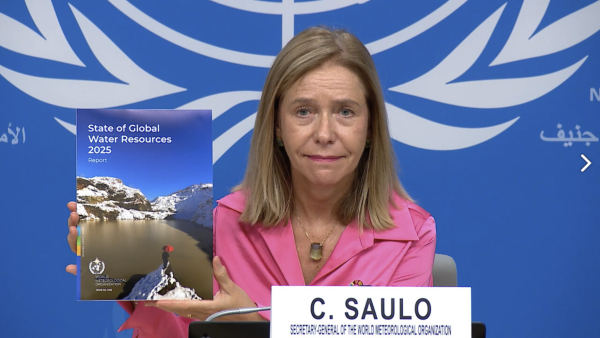
As world’s water reserves change, countries must prepare for a new reality: WMO
New data showing that rivers were at their lowest level for decades last year provides further evidence that the climate crisis is real and countries must act immediately to protect themselves from the increasing threat to communities and livelihoods, the UN World Meteorological Organization (WMO) said on Thursday.
The key findings from WMO’s State of Global Water Resources 2025 report covering the hydrological cycle and extreme events in the five-year period to last year:
- 2025 was one of driest years for river discharge in 35 years
- Past seven years have seen abnorfmal river flows
- Water storage on Earth’s land surface has decreased in past decade
- Widespread glacier loss across all regions for fourth consecutive year
- Asia and Africa are regions most affected by water-related disasters
- Water data availability has improved, but gaps remain in hard-hit areas
Highlighting the long-term decline in the Earth’s freshwater storage and glacier melt, WMO Secretary-General Celeste Saulo explained that the planet’s water reserves used to act as a planetary “savings account” that absorbed the occasional dry season, avoiding a water crisis. “One of the central stories of the 2025 report is what is happening to that savings account? And the simple answer is that we are depleting it,” she told journalists in Geneva.
Groundwater reserves are equally stretched and have been in decline since 2014, WMO’s report states, with nearly two-thirds of monitored wells worldwide showing levels lower than the historical norm and indicating a shift “further toward deficit…not recovery”.
“At the same time, we are seeing more water-related disasters,” Ms. Saulo said, while also stressing that the currently strengthening El Niño “will increase the risk of drought in some areas, and flooding in others”.
Glaciers disappearing
In 2025, for the fourth consecutive year, every major glaciated region on Earth lost ice mass, leading to short-term hazards including floods and long-term water insecurity, according to WMO.
Responding to a question about whether the changing global water cycle might have contributed to the deadly Nepal-China flooding disaster, Ms. Saulo explained that melting ice and rock was just one factor in the chain of events that ultimately sent a massive and deadly wall of water and debris downstream on 26 August, killing at least 1,367 people.
“You asked if it could happen again? Absolutely; the problem in this region is that there’s 63,700 glaciers at the last count,” she told a Press Conference in Geneva. “Even if you’re looking with remote sensing with satellites at these glaciers, you might see some faults, you might see some slight shifting, that does not mean necessarily catastrophic collapse. So, in order to plan for this, it’s very, very difficult. But the international community is looking very hard at ways in which we can bring people together to solve some of these monitoring issues.”
Data indicates that glaciers shrank between 2023 and 2025 with cumulative losses of 1,400 gigatonnes of water – or about one third of annual fresh water needs.
Every major glacier region on Earth lost ice for the fourth consecutive year.
“All 19 glacier regions around the globe lost ice; in Central Asia, Iceland, the Russian Arctic and western Canada and the United States, it was among the three worst years on record,” said Wayne Jenkinson, WMO’s Director of Hydrology and Cryosphere.
Some regions with smaller glaciers such as Central Europe, the Caucasus, the western Canada and the United States may already have reached “peak water”, Mr. Jenkinson warned.
“After this point, the glacier gives less meltwater each year simply because there is less ice left to melt. That matters for every community downstream that relies on water during hot, dry summers,” he explained.
Narelle van der Wel, WMO’s Head of Cryosphere Monitoring, Predictions and Services, stressed that while some further glacier loss is unavoidable, the eventual scale of the decline is not predetermined.
“Some glacier loss is inevitable, but total loss of glaciers is not yet inevitable,” she said, pointing to emissions reductions as central to limiting future losses.
Preparing for moving baselines
The report does not attribute every observed change to climate change alone. WMO says pressure on water resources and natural variability also contribute.
Mr. Jenkinson said governments need to prepare for “moving baselines” as historical patterns become less reliable.
“The situation 30 years ago is not where we are today,” he said. Countries, he added, need to prepare “for those changes that have really already arrived”.
ends