

The United Nations Office at Geneva
Multimedia Newsroom
PRESS BRIEFING BY THE UNITED NATIONS INFORMATION SERVICE
10 February 2023
Earthquakes in Türkiye and Syria
Corinne Fleischer, World Food Programme (WFP) Regional Director in the Middle East, Northern Africa, and Eastern Europe, speaking from Cairo, said that the region had been plagued by years of loss. Right now, it was freezing cold, and rapid life-saving humanitarian aid could not be delayed. WFP had mobilized its search staff and logistics services and was using prepositioned food and was purchasing new food; 115,000 people had been reached over the past four days. Today, WFP would start soup kitchens in numerous Turkish municipalities, and over next three months, WFP planned to reach some 590,000 people in Türkiye. In Syria, 280,000 people were expected to be reached in the coming months. Northwest Syria was of major concern, said Ms. Fleischer, and the existing stocks had to be quickly replenished. New border crossings needed to open; crossline operations ought to be augmented fast. All parties needed to do the right thing now: natural disasters knew no borders, and neither should humanitarian aid. More details are available here.
Responding to questions, Ms. Fleischer said that the WFP had prepositioned stocks in northwest Syria, which were going out through its local partners; some 43,300 people had been reached in the country. She stressed the importance of replenishing the WFP stocks. The roads were damaged, which slowed down the delivery; therefore, WFP was calling for the Bab al-Salam border crossing to reopen now, as only the Bab al-Hawa border crossing was functioning at the moment. Ms. Fleischer further called on the prohibition of the import of dual-use items to be lifted so that necessary provisions would be able to enter into Syria. There were no sanctions on humanitarian assistance, she reminded.
Michele Zaccheo, for the United Nations Information Service (UNIS), quoted the Secretary-General who had said that no sanctions should interfere with the delivery of humanitarian aid into Syria.
Sivanka Dhanapala, United Nations Refugee Agency (UNHCR) Representative in Syria, connecting from Damascus, said that that there had been a number of aftershocks in Syria. Ordinary Syrians were traumatized and dazed in the face of huge uncertainty. Many UNHCR staff, for example, were sleeping outside their homes because they had been damaged. It was the coldest time of the year in Syria, with blizzards raging in the affected areas. Some 6.8 million people had already been internally displaced in Syria, reminded Mr. Dhanapala. In the immediate aftermath of the earthquake, UNHCR had mobilized the stock items it had, targeting the most vulnerable among the affected populations. UNHCR was focused on shelter and relief items, including tents, plastic sheeting, thermal blankets, etc. UNHCR teams in the field were ensuring that the most affected populations had their essential needs met. UNHCR’s stocks needed to be replenished, stressed Mr. Dhanapala, and planning for the coming weeks and months was already underway. UNHCR was taking the lead in the protection sector, including child protection, through its large country-wide network of community centers, partners, and volunteers.
Answering questions from the media, Mr. Dhanapala said that UNHCR used the same assistance items in both government and non-government-controlled areas. He explained that the UN had had prepositioned stocks in the non-government-controlled areas, and trucks – part of the interagency humanitarian convoys – had been distributing them. Four most affected areas were Aleppo, Idlib, Hama, and Latakia; the previous night, a building had also collapsed in the vicinity of Damascus. He confirmed that UNHCR was able to move easily in the northeast area, which was not under government control. In the northwest, the situation was different, and this region could be reached primarily through the cross-border crossing. Crossline crossings needed both authorization and security guarantees, he said. More information is available here.
Paul Dillon, for the International Organization for Migration (IOM), informed that 14 additional trucks carrying much-needed humanitarian aid had just crossed to northwest Syria today; they were bound for Idlib and were sufficient for 1,100 families. The convoy carried tents, blankets, electric heaters, and related non-food items. A large IOM warehouse capacity existed in the Gaziantep area, and it was made available to the Turkish government partners. Mr. Dillon confirmed that one six-truck convoy had arrived from Türkiye to northwest Syria on 9 February, sufficient for 5,000 people. He explained that the planning for deliveries in both countries was continuously ongoing. All UN agencies were working around the clock with government partners to respond to the needs of people in Türkiye and Syria.
Matthew Saltmarsh, for the United Nations Refugee Agency (UNHCR), said that needs were as acute in Türkiye as in Syria. Support was being provided to both Turkish citizens and Syrian refugees residing in the affected areas.
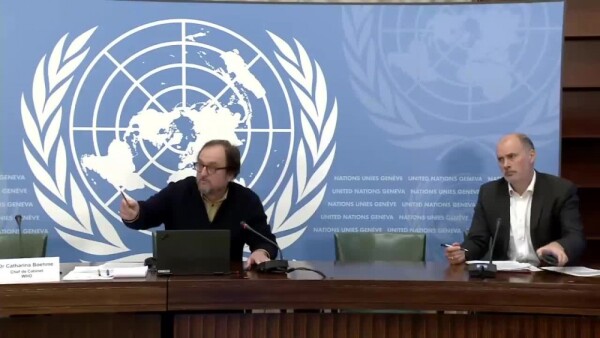
Dr. Catharina Boehme, for the World Health Organization (WHO), stressed that the situation was desperate, and there was a race against time. Dr. Tedros would be arriving to Aleppo today, where he would meet with local partners and affected people. He would advocate access to healthcare for all. WHO had released its prepositioned medical and surgical supplies to 16 hospitals in northwest Syria. On 9 February, a flight with supplies had arrived from Dubai; two more flights were expected today and in the coming days. In total, the three lights would bring in 120 metric tons of supplies. WHO had released some USD 3 million from its contingency funds, but much more was needed, emphasized Dr. Boehme. Replying to questions, Dr. Boehme said that the WHO insisted on access to assistance and healthcare for all in need. The exact itinerary of Dr. Tedros in Syria was still being discussed.
Margaret Harris, also for the WHO, said that there was still no full damage assessment, but she could confirm that hundreds of health facilities had been affected. WHO had been working for a long time in northwest Syria. The emergency medical teams deployed to Syria were trained for a wide range of services, which were all needed.
Tommaso Della Longa, for the International Federation of Red Cross and Red Crescent Societies (IFRC), stated that volunteers were working around the clock to rescue people under the rubble. IFRC called on the international community to support the people of Syria and Türkiye not just in the next days, but also in the months and years needed for the recovery. IFRC had issued an emergency appeal for CHF 200 million, reminded Mr. Della Longa.
Birgitte Bischoff Ebbesen, Director for Europe at the International Federation of Red Cross and Red Crescent Societies (IFRC), speaking from Ankara, said that the current situation in the country was heartbreaking. There was still no information on how many people were missing. Staff and volunteers were also personally affected. Today was day 5, and the chances of finding survivors were dwindling. Before the earthquake, the IFRC had been supporting almost one million people with cash assistance; that support was continuing. Aid was not reaching everyone in need, as many roads were damaged. Freezing temperatures and aftershocks were hampering help efforts. It was also critical to ensure access to psychosocial and mental health support. Global solidarity would be needed for the years to come, stressed Ms. Ebbesen.
Hossam Elsharkawi, Director for Middle East and North Africa at the International Federation of Red Cross and Red Crescent Societies (IFRC), connecting from Beirut, said that the IFRC was supporting Syrian Red Crescent operations. IFRC’s appeal for Syria stood at CHF 80 million; two million had already been released for local procurement. A lot of national solidarity could be observed within Syria, said Mr. Elsharkawi. IFRC welcomed the decision by the US Treasury to provide a 180-day waiver on the ban of financial transfers to Syria.
Responding to questions, Ms. Ebbesen and Mr. Elsharkawi stressed that the numbers of the people in need on the ground were changing by the hour and were certain to be significantly higher than currently reported.
Prevention and response to sexual exploitation, abuse and harassment
Dr. Catharina Boehme, Chef de Cabinet at the World Health Organization (WHO), emphasized that the Director-General and the WHO leadership were committed to tackling sexual misconduct across board. WHO’s work in this regard might not always be captured by the media, but it was making a difference. Results, nonetheless, would take time, and more cases were likely to emerge. Over the past 18 months, WHO had been rolling out a comprehensive programme across the Organization with the view of achieving a thorough change. In 2022, three staff had been dismissed for sexual harassment and one consultant contract had been terminated for sexual exploitation. In 2022, 107 complaints had been received, informed Dr. Boehme. WHO was at the beginning of the journey, which would be seen through. The process would take time, as more cases emerged and confidence grew.
Dr. Gaya Gamhewage, Head of Prevention and response to sexual exploitation, abuse and harassment at the WHO, stressed that the WHO had really accelerated its work in this regard over the past two years. In Türkiye and Syria, WHO had activated staff it had on the ground, because in disasters like this, vulnerabilities immediately increased. WHO was investing both money and human resources into this process; some 350 people across the WHO were working to address the issue, including 40 full-time staff. There was a new policy in place at the WHO, as well as a new incident management system. Complaints were being addressed in real time in order to avoid future backlogs. The work was both groundbreaking and heartbreaking, said Ms. Gamhewage. Numerous briefings on the topic had been held both for staff and Member States.
Responding to questions from the media, Dr. Gamhewage explained that the WHO had the responsibility to ensure that WHO personnel and implementing partners were not perpetrators of gender-based violence, sexual harassment, and abuse. Regarding the case of Dr. Maurizio Barbeschi, which was gaining significant media attention these days, Ms. Gamhewage said that the WHO did not comment on ongoing cases; it had to implement a proper, thorough process. After cleaning up of the backlog, it now took 120 days to conduct an investigate any and all cases of allegations of sexual harassment, abuse, and exploitation. Following the earthquakes in Türkiye and Syria, people were so vulnerable that it made them easier to exploit. Risk assessment and response were the work of all agencies, stressed Ms. Gamhewage. If WHO personnel were to be found guilty of sexual harassment or abuse, they would be dismissed and blacklisted for future UN jobs. Appropriate forms of sanctions were also in place for lesser forms of sexual harassment. Cases of those who had committed criminal sexual offences were referred to national authorities; the conditions were that the victim had to consent to it, and the judicial system needed to be sufficiently robust.
WHO’s mandate was to investigate its own personnel, she said; any allegations against UN peacekeepers were immediately shared with the UN Office of Internal Oversight. WHO also had a fund in place to support victims of sexual abuse and exploitation, including those abused during the tenth Ebola outbreak in the Democratic Republic of the Congo. Dr. Gamhewage stressed that the focus of the new WHO policy was on the perpetrator, and the WHO could take action regardless of who the victim was. WHO personnel and implementing partners were the subject of the policy. She reiterated that the policy was being widely disseminated across the Organization, in headquarters and the field alike.
Lisa McClennon, Head Investigator at the WHO, speaking from New York, stated that the investigators were not commenting on individual and ongoing cases. WHO was examining what it could do better. Anything related to sexual abuse and exploitation that had a WHO-nexus would fall within the scope of investigations, she explained.
Dr. Boehme reiterated that addressing sexual harassment, abuse, and exploitation was a priority for Dr. Tedros, who regularly discussed the issue with his senior management.
Announcements
Michele Zaccheo, for the United Nations Information Service (UNIS), informed that UN Humanitarian Chief Martin Griffiths was on his way to the areas affected by the earthquakes in Türkiye.
On 15 February at 9:15 a.m., there would be a joint launch of the Ukraine Regional Refugee Response Plan and Ukraine Humanitarian Response Plan 2023. Speakers at this hybrid briefing would be Martin Griffiths, Under-Secretary-General for Humanitarian Affairs and Emergency Relief Coordinator, and Filippo Grandi, United Nations High Commissioner for Refugees.
Today was the World Pulses Day, a key crop with great benefits on food security, nutrition, health, climate change, and biodiversity.
International Day of Women and Girls in Science would be on 11 February, on which occasion the Secretary-General had issued a message.
On 16-17 February in Geneva, Education Cannot Wait would host its High-Level Financing Conference with numerous high-profile speakers.
Finally, Mr. Zaccheo informed that the Committee on the Elimination of Discrimination against Woman was reviewing today the report of Tunisia.
The Committee on Economic, Social and Cultural Rights would open on 13 February, at 10 a.m., its 73rd session, during which it would review the reports of Panama, China, Portugal, Yemen, Cambodia, and Lithuania.
Similar Stories
1
1
1
Press Conferences | UN WOMEN , WFP , WHO
UN WOMEN: Sudan Women and girls one year after the fall of El Fasher; increasing drone attacks across the country; WFP: DRC - Ebola spreads to eighth DRC province as WFP delivers food, builds treatment centres and keeps supplies moving; WHO - Update on Ebola (Bundibugyo Virus Disease)
1
12
1
1
Press Conferences , Images | UNOG
Closing Press Conference following the Sixth Consultative Meeting on Enhancing Coordination of Peace Initiatives and Efforts in Sudan

2
17
1
2
Edited News , Press Conferences , Images | OCHA , WMO
Two UN agencies teamed up on Wednesday to issue an appeal for immediate assistance to help communities already being impacted by the strongest El Niño on record.
1
1
1
Press Conferences | CITES
Wildlife trade and conservation policy discussions at the 81st meeting of the CITES Standing Committee (SC81)
1
1
1
Press Conferences | UNHCR , UNCTAD , WMO , OCHA , UNICEF , WHO
UNHCR Hungary’s 1956 Refugee Crisis: 70 Years On, UNCTAD World Investment Forum 2026, Doha, WMO Greenhouse Gas Bulletin and Climate Update for COP31, OCHA Afghanistan: Malnutrition, Girls’ Education and Recovery, UNICEF Yemen: Child Malnutrition and Unsafe Water in Taiz, WHO Inequalities in Noncommunicable Diseases and Risk Factors
1
1
1
Press Conferences | UNHCR
End of UNHCR's 77th Annual Executive Committee (ExCom) meeting week
1
1
1
Press Conferences | UNICEF , IOM , UNHCR
UN Special Assistant to the Personal Envoy Office (SUDAN): Peace Initiatives and Efforts in Sudan; UNICEF: Dire situation of children in Gaza; IOM: Damaged Homes and Energy Attacks Risk Displacing Ukrainians for this winter; UNHCR: update on EXCOM week
1
1
1
Press Conferences | IOM , UNDRR
UN stresses importance of household preparedness for disaster risk reduction.
1
1
1
Statements , Press Conferences | OHCHR
1
1
1
Press Conferences | UNHCR , UNICEF , IFRC , OHCHR , UN WOMEN , IOM , OCHA , WHO
UNHCR – ExCom Meeting, UNICEF – Nepal Recovery, IFRC – Flash Floods, WHO – Mental Health, IOM – South Sudan Floods, OCHA – DRC Humanitarian aid, UNHCR – Sahel Displacement, UNICEF – Yemen Update, IOM – Gaza Shelter, UN Women – Gaza Women, OHCHR – Arrests and detentions of Syrians by Israeli force
2
1
2
Press Conferences | UNCTAD
Presentation of the Trade and Developement Report 2026
Embargoed until 9 October 2026 at 11 a.m. (Geneva Time)
UNCTAD: UNCTAD’s flagship report finds that governments increasingly use industrial, trade, financial and technology policies to pursue economic and national security objectives. Market access and the ability to move into higher-value activities now depend more heavily on technology, finance and geopolitics.
1
1
1
Press Conferences | UPU
Release of the State of the Postal Sector Report 2026