

The United Nations Office at Geneva
Multimedia Newsroom
PRESS BRIEFING BY THE UNITED NATIONS INFORMATION SERVICE
25 October 2022
Continued Deportation of Myanmar Asylum-Seekers from Malaysia
Shabia Mantoo for United Nations High Commissioner for Refugees (UNHCR) said UNHCR was seriously concerned over the continued deportation by Malaysia of asylum-seekers from Myanmar back to their country, placing lives at risk.
UNHCR had received multiple disturbing reports of forced returns of Myanmar nationals from Malaysia since April this year, including people seeking international protection. In the last two months alone, hundreds of Myanmar nationals were reported to have been sent back against their will by the authorities. Such deportations of refugees and asylum-seekers amounted to refoulement.
The latest incident was reported to have happened over the weekend. According to information received by UNHCR, an asylum-seeker from Myanmar was deported on 21 October from detention despite UNHCR interventions.
UNHCR continued to call on Malaysia to immediately stop the forced returns of Myanmar nationals seeking safety from serious harm. Sending them back to Myanmar exposed them to harm and danger.
People fleeing Myanmar needed to be allowed access to territory to seek asylum and be protected against refoulement, Ms. Mantoo said. Myanmar nationals already abroad should not be forced to return when seeking international protection.
The situation in Myanmar was forcing people to flee to seek safety within the country and across borders. UNHCR appealed to the Malaysian authorities to abide by their international legal obligations and ensure the full respect for the rights of people in need of international protection.
Ms. Mantoo reiterated UNHCR’s call on states in the region to continue offering protection to Myanmar nationals fleeing for safety. This included ending the practice of indefinite detention of asylum-seekers and refugees from Myanmar.
Read the full press release here.
Ms. Vellucci added that yesterday, the Secretary-General expressed deep concerns regarding reports of airstrikes by the military in Kachin state in Myanmar, which were said to have killed and injured many civilians.
While still verifying the details of this attack, the Secretary-General and the country team offered their condolences to the families and friends of all those who were killed or injured.
The Secretary-General reiterated the United Nations’ call for the immediate cessation of violence, and for all those who were injured to be given urgent medical treatment.
In response to questions, Ms. Mantoo said that it was very concerning that refoulement had been continuing since April this year. UNHCR continued to appeal to authorities to halt these deportations and had made contacts for its appeals to be heard.
UNHCR did not have information on what happened to deportees after they arrived in Myanmar. It also did not have a top-line figure on the number of deportees.
It was imperative that all countries hosting refugees upheld their international obligations and ensured that refugees were not sent back, Ms. Mantoo said. UNHCR was very concerned about the humanitarian consequences of the deportations. It had not yet received a response from the Malaysian Government to its calls, but was continuing to approach authorities.
WHO Updates
Tarik Jašarević for World Health Organization (WHO) said that a press conference would be held today at 3 p.m. on the release of a list of fungal priority pathogens. This was the first ever list of the 19 fungi that represented the greatest threat to global health. Speakers at the press conference included Dr. Hatim Sati, Technical Lead Member of the Project Team, and Haileyesus Getahun, Director of AMR Global Coordination. The embargo on the list would be lifted at 5 p.m. Geneva time.
Mr. Jašarević also said that on Thursday, October 27, WHO would release its 2022 Global Tuberculosis Report. This report would have data on the trends and the response to the epidemic. It would contain data on over 250 countries and areas, including all 194 WHO member States, and would provide a comprehensive and up-to-data assessment of the tuberculosis epidemic; progress in the response at global, regional and country level; and information on the impact of COVID-19 on tuberculosis-related services. A press conference to announce the report release would be held at 4:30 p.m. Geneva time on Thursday, October 27.
In response to questions on upcoming events, Mr. Jašarević said that he hoped that the Emergency Committee on Monkeypox would release a statement this week, and WHO would also hold its regular press briefing on global health issues this week.
Latest ILO Monitor on the World of Work Release
Sophy Fisher for International Labour Organization (ILO) said that ILO would publish the 10th edition of its Monitor on the world of work series on Monday 31 October.
The Monitor tracked the impact of multiple crises on workers and businesses worldwide. The upcoming edition provided a global overview of how overlapping economic and geopolitical crises were threatening labour market recovery worldwide, including the divergence between developed and developing countries.
It also analysed the impact of high inflation, tightening monetary policy, increasing debt burdens and declining consumer confidence, and included the latest data on the labour market impact of the war in Ukraine.
There would be an embargoed virtual press briefing on Monday 31 October from 10 to 11 a.m. Geneva time, conducted by Gilbert Houngbo, ILO Director-General, and Sangheon Lee, Director, ILO Employment Policy Department and leader of the team compiling the Monitor.
Embargoed copies of the report and the press release would be made available to recognized media on request.
In response to questions, Ms. Fisher said that the ILO website was being updated, and the Organization was considering adding the Director-General’s Twitter feeds to the new website.
UN Environment Programme Emissions Gap Report
Mark Grassi for the United Nations Environment Programme (UNEP) said that this Thursday, the UNEP’s 2022 Emissions Gap report would be launched. This was an annual report that revealed the temperature rise by the end of the century compared to pre-industrial times based on current national climate data.
The report included recommendations for specific sectors on how to close the emissions gap. It calculated the amount by which emissions need to be cut to bring the global temperature rise down to 1.5 degrees Celsius.
An online press conference would be held at 1 p.m. Geneva time on Thursday to announce the launch of the report. Speaking at the press conference would be Inger Andersen, UNEP Executive Director and Anne Olhoff, Chief Scientific Editor of the report.
Announcements
Mr. Vellucci announced that the Committee on the Elimination of Discrimination against Women was having this morning, Tuesday, 25 October, a meeting with States parties.
The Human Rights Committee would hold its next public meeting on Thursday, 27 October, at 3 p.m., to review its report on the follow-up of concluding observations.

Similar Stories

1
1
1
Statements , Press Conferences | OHCHR

1
1
1
Press Conferences | UNHCR , UNICEF , IFRC , OHCHR , UN WOMEN , IOM , OCHA , WHO
UNHCR – ExCom Meeting, UNICEF – Nepal Recovery, IFRC – Flash Floods, WHO – Mental Health, IOM – South Sudan Floods, OCHA – DRC Humanitarian aid, UNHCR – Sahel Displacement, UNICEF – Yemen Update, IOM – Gaza Shelter, UN Women – Gaza Women, OHCHR – Arrests and detentions of Syrians by Israeli force

2
1
2
Press Conferences | UNCTAD
Presentation of the Trade and Developement Report 2026
Embargoed until 9 October 2026 at 11 a.m. (Geneva Time)
UNCTAD: UNCTAD’s flagship report finds that governments increasingly use industrial, trade, financial and technology policies to pursue economic and national security objectives. Market access and the ability to move into higher-value activities now depend more heavily on technology, finance and geopolitics.

1
1
1
Press Conferences | UPU
Release of the State of the Postal Sector Report 2026
1
1
1
Press Conferences | IOM , ITU , UNECE , UNICEF , WHO , WMO
UNICEF: Ebola, DRC - children orphans or separating them from parents and caregivers; IOM: Humanitarian needs in Djibouti amid arrivals from Yemen and increased migrant movements; WHO: Darfur, scale of health needs far exceeds available resources; WMO co-sponsored Global Heat Forum, Bangkok, monthly Global Seasonal Climate Update; UNECE: UN Forum of Mayors; ITU Plenipotentiary Conference 2026; WHO: child and adolescent obesity guidelines and new global roadmap to tackle pregnancy hypertension, a leading cause of maternal mortality
1
1
1
Press Conferences | OCHA , UN WOMEN , UNHCR , WFP , WHO , WTO , UNEP
OCHA – $160M CERF allocation to 12 underfunded crises; UNHCR – 5.8M refugee children remain out of school amid funding cuts; UN Women – Middle East escalation and food security among women/girls; WHO – Gaza supplies and overall situation; WFP – Yemen food insecurity and impact on global hunger ; UNEP - First International Conference of the Global Framework on Chemicals in Geneva | 16-20 November 2026
1
1
1
Press Conferences | UNHCR , WHO
Yemen's health system nears collapse amid conflict, causing rising casualties and medicine shortages.
1
1
1
Press Conferences | HRC
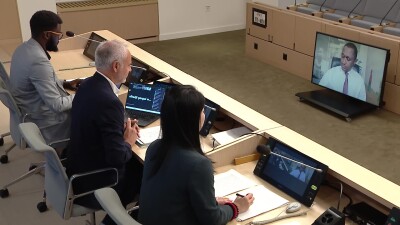
Update by the Expert Mechanism to Advance Racial Justice and Equality in Law Enforcement
1
1
1
Press Conferences | WIPO , WHO , UNICEF , UNHCR , IOM , WFP , FAO
WIPO Global Innovation Index 2026 launch and press conference, WHO Composition of influenza vaccines for the 2027 Southern Hemisphere flu season, UNICEF Yemen hunger and malnutrition; UNHCR Sudan displacement into Chad; IOM Ebola and population movements in DRC; WFP emergency food assistance in Nepal; and FAO food loss and waste.
2
1
2
Press Conferences | UNCTAD
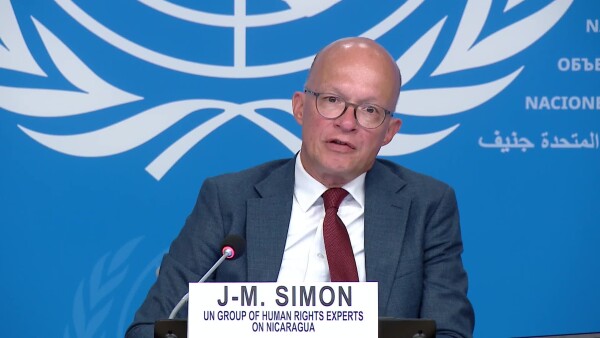
Gaza reconstruction needs reach $71.5 billion as Palestinian economy and public finances face severe strain. Latest UNCTAD report documents the loss of decades of development gains, economic collapse in Gaza and tightening economic constraints in the West Bank.
The report identifies three immediate priorities: transferring withheld Palestinian revenues, safeguarding the banking system and aligning reconstruction support with the documented scale of damage and economic losses.
1
1
1
Press Conferences | HRC
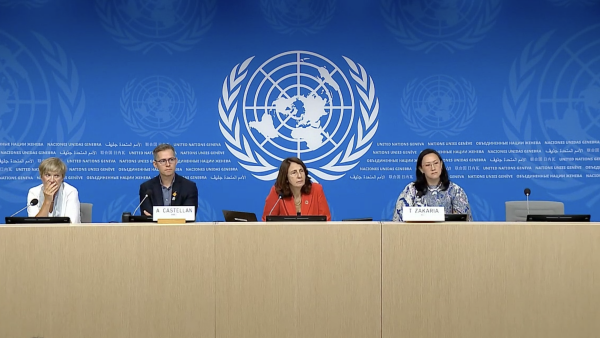
Press conference on the situation of human rights in Nicaragua by the UN Group of Human Rights Experts
1
1
1
Press Conferences | ITU , UNHCR , WHO , WMO
YEMEN - UNHCR: Escalating conflict in Yemen could fuel more displacement, refugee movement
CLIMATE - WHO / WMO: Health and Climate impact of El Niño