

The United Nations Office at Geneva
Multimedia Newsroom
PRESS BRIEFING BY THE UNITED NATIONS INFORMATION SERVICE
22 July 2022
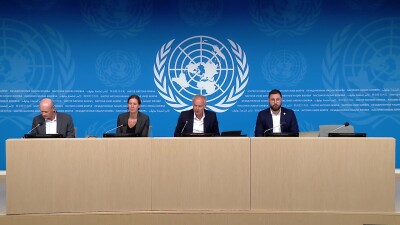
Michele Zaccheo, Chief of the Television, Radio and Webcast Section within the United Nations Information Service(UNIS) in Geneva, chaired the hybrid briefing, attended by the spokespersons and representatives of the World Health Organization, World Meteorological Organization, United Nations High Commissioner for Refugees, and the World Trade Organization.
Update on Signing of the Black Sea Grain Initiative
Michele Zaccheo, Chief of the Television, Radio and Webcast Section within the United Nations Information Service(UNIS) in Geneva, said that the Secretary-General was in Istanbul today as part of the United Nations efforts to ensure full global access to Ukraine’s food products and the Russian Federation’s food and fertiliser products.
The signature of the agreement, also referred to as the United Nations initiative on global access to Ukrainian food products and Russian food and fertilizer was expected to take place this afternoon at 4:30 p.m. Istanbul time (3:30 p.m. Geneva time, 9:30 a.m. New York time). A broadcast of the signing would be carried on UN Web TV as fed by the host broadcaster TRT via partners at the European Broadcasting Union. UN Web TV would livestream the feed and links would be shared with accredited news media to a Google Drive containing the recorded audio-visual material at broadcast quality.
Representatives of Ukrainian and Russian parties would attend the event, along with President Erdogan of Türkiye and Secretary-General António Guterres.
Updated WHO COVID-19 Vaccination Strategy
Margaret Harris, for the World Health Organization (WHO), said that an updated version of the WHO COVID-19 vaccination strategy would be released this afternoon or on Monday.
The updated strategy stressed the importance of achieving a 100 per cent vaccination rate for vulnerable groups, such as elderly persons and health care workers; looked at who should receive booster vaccinations; and examined how to increase vaccination rates in countries that were not yet delivering even the first few doses of the vaccine to the most vulnerable groups.
In response to questions on monkeypox, Ms. Harris said the committee analysing the disease was still finalising their advice. Their advice was not time-bound.
There was a considerable number of countries that had yet to reach a 70 per cent vaccination rate.
Brutal Attacks in Democratic Republic of the Congo’s Eastern Provinces
Matthew Saltmarsh, for the United Nations High Commissioner for Refugee (UNHCR), said that UNHCR was deeply saddened and gravely concerned by the accumulating death toll and suffering of civilians, including forcibly displaced people, in brutal attacks in Democratic Republic of the Congo’s eastern provinces.
This month, simultaneous attacks by armed groups in Ituri Province had left 11 people dead and 250 homes looted and burned. Between February and June this year, UNHCR and partners had recorded over 800 deaths from firearm attacks and machete raids on local communities in Ituri. At least 715 of these victims had been sheltering in internal displacement sites or were killed as they returned home. In June alone, 97 returning or displaced people were killed in attacks that included abductions, looting and burning of homes. More than 20,700 people had been driven from their homes by raids, which were also fuelling acute food insecurity in Ituri.
UNHCR’s operation in Democratic Republic of the Congo had received just 19 per cent of the US$225 million required to respond to the increasing needs of refugees and displaced people. Significant additional resources were urgently required to match the soaring needs of newly displaced populations.
UNHCR called on all parties to immediately cease this senseless violence, which was forcing the displacement of tens of thousands. It also called on authorities to respect international humanitarian and human rights law, protect civilians and humanitarian workers from violence, and ensure that the perpetrators of violence were brought to justice immediately.
Read the full press briefing here.
In response to questions, Mr. Saltmarsh said that instability in the region had been rife for many years, fuelled by tussles over mineral resources, and a lack of judicial structures and infrastructure. There had been an alarming upsurge in the activities of armed groups, particularly M23, in the region in recent months. There were an estimated 120 armed groups active in the region.
UNHCR was calling for more financial assistance from the international community. Fuel and food prices were rising, making financial aid needed now more than ever. The international community needed work with the Government to secure an effective and lasting peace process. The United Nations Special Envoy for the Great Lakes Huang Xia had recently urged the M23 group to disarm unconditionally, and encouraged countries to maintain dialogue towards peace.
If financial aid was not received, vitally needed UNHCR programmes would need to be cut. This included shelter for displaced persons; clean drinking water supply; core relief items such as blankets, sleeping mats, soap, and sanitary supplies; cash assistance; and support for cases of gender-based violence, which had been rampant in the region.
It was an extremely dangerous environment for humanitarian workers, and this was a big concern for UNHCR. There had been redeployments and changes in security resources in the region recently, and militant groups had sought to take advantage. This had led to innocent civilians becoming victims of violence.
Update on Heatwaves
Brigitte Perrin, for the World Meteorological Organization (WMO), said that the high-pressure system which has led to record-breaking temperatures in the UK and France had moved east and was now sitting, a bit weaker, over southern Germany/western Austria.
Temperatures were forecast to drop over most of western Europe as this high-pressure system, which was responsible for the extraordinary high maximum temperatures this week, was losing strength. Ms. Perrin said that there could be days towards the end of next week with high maximum temperatures, in the 30°C range over France, Spain, Italy, southern Germany, Greece and the northern Balkans.
On Tuesday, 19 July, WMO recorded a new daily maximum temperature in the United Kingdom of 40.3°C. 39 recording stations across the United Kingdom had exceeded the previous highest daily temperature extreme. The new high exceeded the previous record set in Cambridge in 2019 by a remarkable 1.6°C. Northern and/or central Italy were forecast to endure temperatures of 38°C towards the end of this week.
Germany had recorded its hottest day of the year as temperatures reached 40.3°C, while Hungary and Italy had been hit with high temperatures reaching nearly 38°C. In the north of France, the city of Brest and north-western Brittany reached temperatures exceeding 40°C. Temperatures in Portugal reached 47°C on 14 July, a new record for July. In Spain and Portugal, over 1,000 deaths had been attributed to heat.
Wildfires had been raging in Spain, destroying 40,000 hectares of forest. Greece and Italy also had to fight against wildfires this week. In France, in the Department of Gironde over 14,000 hectares had been consumed by wildfires since Tuesday. The wildfires in France had led to a degradation of air quality.
In Morocco, several wildfires had been reported in mid-July in at least three provinces, consuming over 1,600 hectares of forest, damaging homes and killing at least one person.
In Texas, United States, at least 21 homes had been destroyed by wildfires. On Wednesday, the United States Forest Service said that 99 per cent of Texas was experiencing some level of drought. In Yosemite National Park in California, a wildfire had consumed 1,500 hectares.
WTO Aid for Trade Global Review
Fernando Puchol, for the World Trade Organization (WTO), said that this year’s Aid for Trade Global Review event would take place from 27 to 29 July. The event would feature over 50 sessions held in-person at the WTO’s headquarters in Geneva and online.
The theme of the event was "Empowering Connected, Sustainable Trade”. It would examine the opportunities that digital connectivity provided for economic and export diversification in developing and least-developed countries, and explore how the Aid for Trade initiative could help empower various economic actors, such as women.
A provisional programme for the Global Review was available on the WTO website, and a final version would be prepared by early next week.
The opening plenary would take place on Wednesday at 9am. Speakers would be Ngozi Okonjo-Iweala, WTO Director General; Gerd Müller, Director General of the United Nations Industrial Development Organization; and Mathias Cormann, Secretary-General of the Organisation for Economic Co-operation and Development (OECD).
The Global Review would also feature the launch of a WTO publication on Aid for Trade, which would draw on the responses to the 2022 edition of the OECD-WTO Monitoring and Evaluation Exercise.
Journalists wishing to attend the Global Review in person were requested to send an email to fernando.puchol@wto.org.
Daniel Pruzin, WTO spokesperson, would be briefing on Monday, 25 July at 5:30 p.m. following the meeting of the General Council. This meeting could be attended remotely or in-person.
State of the Climate in the Latin America and Caribbean Report Release
Brigitte Perrin, for the World Meteorological Organization (WMO), said that WMO was releasing at 4 p.m. today Geneva time the State of the Climate in the Latin America and Caribbean report at a high-level panel event in Cartagena, Colombia.
The report detailed extreme weather and climate change impacts in the region in 2021. It gave information on climate indicators including temperatures, ocean heat and acidification, sea level rise and glaciers, as well as on extreme events like tropical cyclones, heatwaves, drought, heavy precipitation and cold waves. It also highlighted the impacts of the changing climate on agriculture and food security, migration and displacement, socio-economic development, the environment and ecosystem services.
Announcements
Michele Zaccheo, Chief of the Television, Radio and Webcast Section within the United Nations Information Service(UNIS) in Geneva, announced that UNAIDS would hold a hybrid press briefing today Friday, 22 July at 2 p.m., under embargo until 27 July, to launch a new report ahead of the 24th International AIDS Conference taking place in Montreal, Canada. The report presented powerful new data on the AIDS response. Speaking at the briefing from UNAIDS were Ben Phillips, Director ad interim, Communications; Mary Mahy, Director ad interim, Data for Impact; and Liana Moro, Technical Officer, Programme Monitoring and Reporting.
On 26 July at 10 a.m., the Committee Against Torture (CAT) would meet to discuss follow-up to its concluding observations, individual communications and reprisals against persons who have collaborated with the Committee. The Human Rights Committee would also meet on Wednesday, 27 July, at around 5 p.m., to end its current session.
Similar Stories
1
1
1
Press Conferences | IOM , OHCHR , UN WOMEN , UNFPA , UNHCR , UNOPS , WHO
UN Geneva briefing: Yemen crisis worsens, urgent aid needed across multiple sectors.
1
1
1
Press Conferences | HRC
Press conference on the latest report of the Independent International Fact-Finding Mission on the Bolivarian Republic of Venezuela to the UN Human Rights Council
1
1
1
Press Conferences | OHCHR
Victims Still Waiting: A Global Briefing on Transitional Justice Around the World
2
1
2
Edited News , Press Conferences | WMO
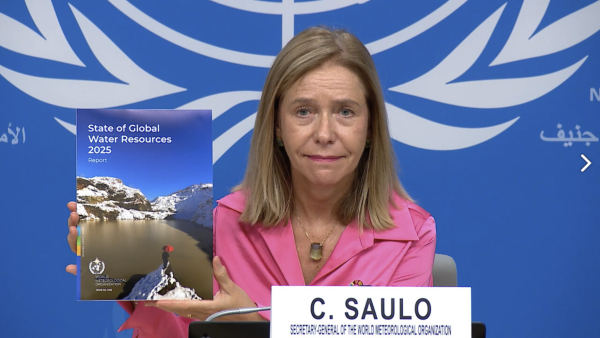
As world’s water reserves change, countries must prepare for a new reality: WMO
New data showing that rivers were at their lowest level for decades last year provides further evidence that the climate crisis is real and countries must act immediately to protect themselves from the increasing threat to communities and livelihoods, the UN World Meteorological Organization (WMO) said on Thursday.
The key findings from WMO’s State of Global Water Resources 2025 report covering the hydrological cycle and extreme events in the five-year period to last year:
- 2025 was one of driest years for river discharge in 35 years
- Past seven years have seen abnorfmal river flows
- Water storage on Earth’s land surface has decreased in past decade
- Widespread glacier loss across all regions for fourth consecutive year
- Asia and Africa are regions most affected by water-related disasters
- Water data availability has improved, but gaps remain in hard-hit areas
Highlighting the long-term decline in the Earth’s freshwater storage and glacier melt, WMO Secretary-General Celeste Saulo explained that the planet’s water reserves used to act as a planetary “savings account” that absorbed the occasional dry season, avoiding a water crisis. “One of the central stories of the 2025 report is what is happening to that savings account? And the simple answer is that we are depleting it,” she told journalists in Geneva.
Groundwater reserves are equally stretched and have been in decline since 2014, WMO’s report states, with nearly two-thirds of monitored wells worldwide showing levels lower than the historical norm and indicating a shift “further toward deficit…not recovery”.
“At the same time, we are seeing more water-related disasters,” Ms. Saulo said, while also stressing that the currently strengthening El Niño “will increase the risk of drought in some areas, and flooding in others”.
Glaciers disappearing
In 2025, for the fourth consecutive year, every major glaciated region on Earth lost ice mass, leading to short-term hazards including floods and long-term water insecurity, according to WMO.
Responding to a question about whether the changing global water cycle might have contributed to the deadly Nepal-China flooding disaster, Ms. Saulo explained that melting ice and rock was just one factor in the chain of events that ultimately sent a massive and deadly wall of water and debris downstream on 26 August, killing at least 1,367 people.
“You asked if it could happen again? Absolutely; the problem in this region is that there’s 63,700 glaciers at the last count,” she told a Press Conference in Geneva. “Even if you’re looking with remote sensing with satellites at these glaciers, you might see some faults, you might see some slight shifting, that does not mean necessarily catastrophic collapse. So, in order to plan for this, it’s very, very difficult. But the international community is looking very hard at ways in which we can bring people together to solve some of these monitoring issues.”
Data indicates that glaciers shrank between 2023 and 2025 with cumulative losses of 1,400 gigatonnes of water – or about one third of annual fresh water needs.
Every major glacier region on Earth lost ice for the fourth consecutive year.
“All 19 glacier regions around the globe lost ice; in Central Asia, Iceland, the Russian Arctic and western Canada and the United States, it was among the three worst years on record,” said Wayne Jenkinson, WMO’s Director of Hydrology and Cryosphere.
Some regions with smaller glaciers such as Central Europe, the Caucasus, the western Canada and the United States may already have reached “peak water”, Mr. Jenkinson warned.
“After this point, the glacier gives less meltwater each year simply because there is less ice left to melt. That matters for every community downstream that relies on water during hot, dry summers,” he explained.
Narelle van der Wel, WMO’s Head of Cryosphere Monitoring, Predictions and Services, stressed that while some further glacier loss is unavoidable, the eventual scale of the decline is not predetermined.
“Some glacier loss is inevitable, but total loss of glaciers is not yet inevitable,” she said, pointing to emissions reductions as central to limiting future losses.
Preparing for moving baselines
The report does not attribute every observed change to climate change alone. WMO says pressure on water resources and natural variability also contribute.
Mr. Jenkinson said governments need to prepare for “moving baselines” as historical patterns become less reliable.
“The situation 30 years ago is not where we are today,” he said. Countries, he added, need to prepare “for those changes that have really already arrived”.
ends
1
1
1
Press Conferences | WMO , OCHA , WHO , UNICEF , UN WOMEN , OHCHR , IOM , UNHCR
Update on Ebola from WHO and OCHA, update on the situation of children with the beginning of school in Ukraine from UNICEF, UN Women on the impact of the settlers and restrictions on women and girls in West Bank, OHCHR on the recovery of extensive human remains in Gaza, IOM and UNHCR on the new wave of displacement in Yemen
2
1
2
Press Conferences , Edited News | WFP
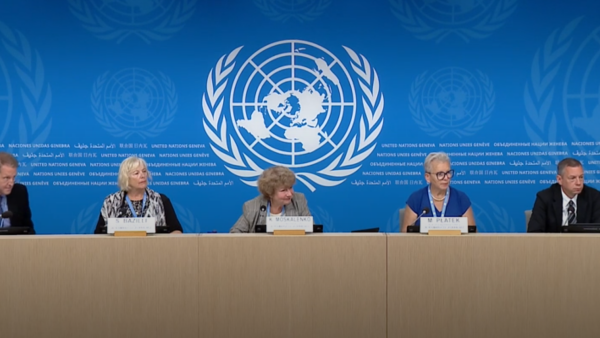
‘Super El Niño’ and converging crises worsen hunger in South Sudan and across the region - WFP
South Sudan’s hunger crisis is becoming increasingly catastrophic as violence, extreme weather and dwindling aid leave millions without enough food, the UN World Food Programme (WFP) warned on Tuesday.
1
1
1
Press Conferences | HRC
Update on the human rights situation in Belarus by the UN Group of Independent Experts on the Human Rights Situation in Belarus
1
1
1
Press Conferences | HRC , OHCHR
Update on the human rights situation in Syria by the Independent International Commission of Inquiry on the Syrian Arab Republic
1
1
1
Press Conferences | UNOG , IOM , UN WOMEN , UNCTAD , WHO , UNECE
IOM Yemen's Western Coast displacement; UN WOMEN on Gaza; UNCTAD Strait of Hormuz disruptions impacts; WHO Ebola logistics in DRC; WHO smoking and infertility; UNECE Data centres and energy.
1
1
1
Press Conferences | UNITAR , WMO
UNITAR: GA resolution on the merger of the United Nations System Staff College into the United Nations Institute for Training and Research; WMO: Air Quality and Climate Bulletin released; WHO: Ukraine update
2
2
2
Press Conferences , Edited News | WMO
Powerful El Niño heightens extreme-weather risks through 2027, as countries brace for impact - WMO
Fuelled by extraordinarily warm waters across the tropical Pacific Ocean, the El Niño climate pattern is expected to intensify in the coming months. Forecasters are almost certain that it will persist through February next year, with unusually warm conditions expected across the globe.
1
1
1
Press Conferences | IFRC , UN WOMEN , WFP , WHO , WMO , OCHA
UN WOMEN/IFRC: Update on the impact of the floods in Nepal, WFP: Food assistance in the West Bank, WHO: Gaza’s rehabilitation needs and continued spread of diseases