

The United Nations Office at Geneva
Multimedia Newsroom
8th Session of the Syrian Constitutional Committee
Jenifer Fenton, for the Special Envoy for Syria (OSE), said the Syrian-led, Syrian owned, UN-facilitated Small Body of the Constitutional Committee convened on Monday and the meetings were business-like. The second day of meetings had just begun.
On Sunday, the United Nations Special Envoy for Syria Mr. Geir O. Pedersen met jointly with the Co-Chairs and then SE Pedersen and the two Co-Chairs met with the civil society delegation. The agenda for the week was reviewed and the four principles to be discussed throughout the week were approved. These included unilateral coercive measures; maintaining and strengthening State’s institutions; the supremacy of the Constitution and transitional justice. One day would be spent on each principle.
Mr. Pedersen was scheduled to brief the Security Council today, and Ms. Fenton would advise the media of any press opportunity.
Mental Health and Climate Change
Carla Drysdale, for the World Health Organization (WHO), said WHO mental health climate change and policy brief, was embargoed until 3 June 09.00 CEST. A media advisory had been sent out which highlighted five important approaches for governments to address the mental health impacts of climate change. The mental health and climate policy brief would be launched on the 3rd of June at the Stockholm +50 conference, to mark the World Environment Day. To receive an embargoed copy of the policy brief, the media could contact WHO. A virtual press conference was being held tomorrow on COVID-19 and other global health issues, and the media advisory would be updated today.
WHO Tobacco Report
Ruediger Krech, Director of Health Promotion with the World Health Organization (WHO) said the theme of this year’s World No-Tobacco Day was “Tobacco: Poisoning our planet”. Tobacco was one of the world’s worst polluters, causing deforestation; water waste; air pollution and littered beaches, parks and city sidewalks. Forests were cleared to grow tobacco plants; water was depleted, and CO2 omitted. Every year the tobacco industry costs the world more than 8 million human lives, 600 million trees, 200 000 hectares of land, 22 billion tons of water and 84 million tons of CO2. The trees cut down to make way for tobacco made up 5 percent of deforestation. Twenty-two billion tons of water were used in tobacco production globally. Products like cigarettes, smokeless tobacco and e-cigarettes also added to the build-up of plastic pollution. 4.5 trillion cigarette butts were improperly discarded each year worldwide, making them one of the most littered items on earth.
The tobacco industry dumped toxic waste into communities and depleted natural resources; tobacco was not only poising people, but also the planet. So what could be done? The costs of cleaning up littered tobacco products fell on taxpayers, rather than the industry creating the problem. WHO urged countries to create legislation enforcing the tobacco industry to be responsible for clearing up their deadly tobacco products and paying for damaging the environment. Each year, this costed China roughly US$ 2.6 billion and India roughly US$ 766 million. The cost for Brazil and Germany came in at over US$ 200 million. Mr. Krech said that governments should also stop subsiding tobacco growth. Annually, the deadly industry was subsidized by 500 billion US dollars which was taxpayers’ money; these subsidies contributed to killing 8 million people every year.
Cigarette filters contained microplastics and made up the second-highest form of plastic pollution worldwide. Despite tobacco industry marketing, there was no evidence that filters have any proven health benefits. WHO called on policy-makers to treat cigarette filters, as what they are, single use plastics, and consider banning cigarette filters to protect public health and the environment. Governments could also consider imposing an environmental tax on those involved in tobacco industry. The environmental consequences of tobacco use moved it from a human problem to a planetary problem. Tabaco was no longer just a health threat, but also a threat to human development.
Responding to questions, Mr. Krech said that WHO had been looking at the employment implication for farmers for some time. WHO had joined forces with the World Food Programme (WFP) and the Food and Agricultural Organization (FAO) to use the United Nations procurement power. To help farmers, WHO needed to understand why these farmers grew tobacco, as this was a very unhealthy practice – in fact tobacco farmers consumed the equivalent of up to 50 cigarettes a day as a result of working in close proximity with tobacco, which had huge health implications. Farmers chose to grow tobacco as they had a steady income. To combat this, WHO, FAO and WFP promised that if farmers chose to grow other plants, they would buy farmers’ crops through WFP and provide seeds which the farmers would not have to repay. The programme had begun in Kenya and had been widely taken up and was now being expanded. As the UN and as member states, the correct measures needed to be put in place, to guarantee a stable income for farmers to enable them to move out of the tobacco industry. Mr. Krech said that the administrative processes in the three above-mentioned organizations had been tweaked, in order to implement this approach and better serve the farmers. The programme had begun with 250 farmers and was now at 2,500. This demonstrated that the programme worked and produced more profit for the farmers than the production of tobacco.
Mr. Krech said there were figures for each country on subsidies, and this would be provided to the journalists. Mr. Krech also said WHO were working closely on these issues with the World Trade Organization (WTO) and the International Labor Organization (ILO). Farmers health and safety issues had been discussed with the ILO. WHO were in constructive discussions with the WTO on the trade aspects of this issue.
Meteorological and humanitarian agencies sound alert on East Africa
Clare Nullis for the World Metrological Organisation (WMO), said Meteorological agencies, including WMO, and humanitarian partners had issued a joint alert that the threat of starvation looms in East Africa after four failed rainy seasons, and that the situation was set to worsen.
A statement issued by the Food and Agriculture Organization of the United Nations on behalf of 14 agencies, said that the current extreme, widespread, and persistent multi-season drought affecting Somalia, Kenya, and Ethiopia, was unprecedented. Four consecutive rainy seasons had failed; a climatic event not seen in at least 40 years.
The latest long-lead seasonal forecasts, supported by a broad consensus from meteorological experts, indicated that there was now a concrete risk that the October-December rainy season could also fail. Should these forecasts materialize, the already severe humanitarian emergency in the region would further deepen.
The 2022 March-May rainy season appeared likely to be the driest on record, devastating livelihoods and driving sharp increases in food, water, and nutrition insecurity. The Food Security and Nutrition Working Group estimated that 16.7 million people currently face high acute food insecurity and projects figures to increase to 20 million people by September. The predicted below-average rainy season would drive a deterioration of an already dire food security and malnutrition situation in 2023. However, irrespective of rainfall between October and December, conditions would not recover quickly enough to see food security improvements before mid-2023.
Ms. Nullis said that a rapid scaling up of actions was needed to save lives and avert starvation and death. The alert provided an example of the hydro-meteorological and humanitarian community coming together in order to catalyse Anticipatory Action and translating complex hydromet information into simple actionable advice.
WMO Secretary General Professor Petteri Taalas said that during 2020, 2021 and 2022, a multiyear La Niña event contributed to less rainfall across eastern Africa, which was comparable to the devastating drought of East Africa in 2010-2011. La Niña was part of the climate’s natural variability. However human induced climate change was leading to more intense and severe extremes. Climate change was also increasing air temperatures which exacerbates droughts increasing the evapotranspiration (loss of moisture from plants and soil).
The Intergovernmental Panel on Climate Change’s Sixth Assessment Report stated that there was evidence of a human contribution to observed decreases in mean precipitation in Northeastern Africa and observed increase in the intensity and frequency of hot extremes. A decreasing precipitation amount of −2 to −7% per decade (1983-2010 period) was reported for the March-to-May “Long rains season” in eastern Africa. In Africa, agricultural productivity growth had been reduced by 34% since 1961 due to climate change, more than any other region.
Ms. Nullis said that the WMO community continued to work actively with the humanitarian sector to try to reduce the impacts of the devastating drought, and would continue to engage and strengthen climate services and early warnings to protect lives and livelihoods.
Responding to questions, Ms. Nullis said this was a “perfect storm” with disastrous consequences, combining the three-consecutive-year La Nina event with climate change and the Ukraine war, with the later having increased the price of commodities and diverted donor attention. This was a key reason as to why the alert had been issued today; WMO were calling for action before things got worse.
Ms. Nullis said the warnings had been loud and clear for months, and the metrological and humanitarian communities had been alerting the failing of seasonal rains. The region was badly hit by a desert locust crisis in 2019 and 2020, which weakened the local coping mechanisms. Ms. Nullis said she would share seasonal outlooks with the media shortly. The climate signals being picked up indicated the drought would continue.
Answering a final question, Ms. Nullis said there were certain parts of the Middle East actively engaged with cloud seeding. WMO followed cloud seeding from the research perspective, but it was not one of the priorities of the organisation
Increasing Migrant Arrival to Yemen
Paul Dillon, for the International Organization for Migration (IOM), said at least 27,800 people had crossed from the Horn of Africa to war-torn Yemen in the first five months of 2022. This was more than the total who made the journey all
last year along what was the world’s busiest maritime migration route prior to COVID-19. Last year, IOM reported that an estimated 27,700 migrants entered Yemen through the Eastern Route, down from 138,000 in 2019 due to heightened COVID-19 mobility restrictions. Approximately 37,500 made the journey in 2020. The rise in arrivals was cause for alarm in a country now grappling with its eighth year of conflict.
IOM were increasingly concerned about the safety and well-being of people moving through Yemen. A variety of factors were potentially influencing this year’s increase, including a loosening of COVID- 19 mobility restrictions, more favorable weather conditions, and the security situation and drought in Ethiopia, where most migrants originate from. Upon arriving in Yemen, migrants faced perilous onward journeys to Gulf countries in search of work. They often travelled across conflict frontlines and faced grave human rights violations such as detention in inhumane conditions, exploitation and forced transfers across lines of control.
Women and girls often reported experiencing gender-based violence, abuse, or exploitation, usually at the hands of traffickers and smugglers. In the north of the 1,000 migrants – including women and children – had been injured or killed by attacks this year. Every month, hundreds were treated for gunshot wounds at an IOM-supported hospital near the border town of Sa’dah. At a time when funding for the Yemen response is on a decline, we could not turn our backs on stranded migrants who were often forgotten in times of crisis. IOM urgently required greater funding to ease the suffering of more than 190,000 migrants in need of assistance in Yemen. More than 900 had left on Voluntary Return Flights, from Aden in May, including a flight this morning with 150 people on board.
Responding to questions, Mr. Dillon said some of the accounts of people been thrown off boats were horrific. He did not have figures at hand for the number of missing migrants thus far along that route in 2022. The Missing Migrants website tracked these instances in a timely manner.
Mr. Dillon said that IOM did not have a presence along the border, and therefore were not able to inform about those crossing into Saudi Arabia and the circumstances thereafter.
High Commissioner for Human Rights’ Trip to China
Responding to questions on Michele Bachelet’s recent trip to China, Ravina Shamdasani, for the Office of the High Commissioner for Human Rights (OHCHR), said Michele Bachelet had held a press conference in China at the end of her visit. There was no plan for another press briefing on this trip for the Geneva press corps, but Ms. Shamdasani could look into the possibility of organizing a general press briefing by the High Commissioner, perhaps on the occasion of the upcoming Human Rights Council’s session.
Also answering to questions, Ms. Shamdasani said there were over 100 journalists who attended the press conference held by Michele Bachelet in China. The report on China would need to be updated and shared with the authorities for their factual comments prior to publication. Ms. Shamdasani did not have a timeline to share on this matter.
Ms. Shamdasani also said that Michele Bachelet’s visit to China was not intended to be an investigation but a visit to engage with local counterparts. While the access had been limited, particularly due to COVID-19 bubble requirements, Ms. Bachelet had been able to meet and interact with regional officials and to have extensive human rights discussions at many levels. The government had agreed to continued discussions, which was one of the outcomes of the visit.
Responding to further questions, Ms. Shamdasani said OHCHR organised and managed the press conference in China, including the invitation lists. These were only for journalists based in the country; no NGOs, or delegates were able to have access. This was not a violation of Article 19 of the Universal Declaration of Human Rights. OHCHR said there was no transcript of the press conference, but the video could be provided.
Ms. Shamdasani acknowledged that the Geneva press corps had a lot of experience covering human rights issues, and this was appreciated. The press conference in China was logistically complicated to organise.
Announcements
Alessandra Vellucci, Director of the United Nations Information Service (UNIS), spoke about the Secretary General’s travel to Sweden to attend the Stockholm+50 conference, which was being convened by the United Nations and co-hosted by the governments of Sweden and Kenya. The meeting would take place five decades after the 1972 United Nations Conference on the Human Environment which led to the creation of the United Nations Environment Programme (UNEP) and would provide leaders with an opportunity to draw on 50 years of multilateral environmental action to secure a better future on a healthy planet. On the margins of the conference, the Secretary-General would meet with the authorities of Sweden including the Prime Minister and the King of Sweden.
Ms. Vellucci confirmed that the Conference of Disarmament’s next public plenary would happen this Thursday, June 2 at 10am. This would be the first meeting under the presidency of the Democratic People’s Republic of Korea.
Ms. Vellucci said the 2021 annual report of UN Geneva had been released, which focused on efforts made to shape a renewed multilateralism, including through modern technologies and features. A number of important phases of the Strategic Heritage Plan which encompassed new and innovative ways of working were described in the report.
Similar Stories
1
1
1
Press Conferences | IOM , UNDRR
UN stresses importance of household preparedness for disaster risk reduction.
1
1
1
Statements , Press Conferences | OHCHR
1
1
1
Press Conferences | UNHCR , UNICEF , IFRC , OHCHR , UN WOMEN , IOM , OCHA , WHO
UNHCR – ExCom Meeting, UNICEF – Nepal Recovery, IFRC – Flash Floods, WHO – Mental Health, IOM – South Sudan Floods, OCHA – DRC Humanitarian aid, UNHCR – Sahel Displacement, UNICEF – Yemen Update, IOM – Gaza Shelter, UN Women – Gaza Women, OHCHR – Arrests and detentions of Syrians by Israeli force
2
1
2
Press Conferences | UNCTAD
Presentation of the Trade and Developement Report 2026
Embargoed until 9 October 2026 at 11 a.m. (Geneva Time)
UNCTAD: UNCTAD’s flagship report finds that governments increasingly use industrial, trade, financial and technology policies to pursue economic and national security objectives. Market access and the ability to move into higher-value activities now depend more heavily on technology, finance and geopolitics.
1
1
1
Press Conferences | UPU
Release of the State of the Postal Sector Report 2026
1
1
1
Press Conferences | IOM , ITU , UNECE , UNICEF , WHO , WMO
UNICEF: Ebola, DRC - children orphans or separating them from parents and caregivers; IOM: Humanitarian needs in Djibouti amid arrivals from Yemen and increased migrant movements; WHO: Darfur, scale of health needs far exceeds available resources; WMO co-sponsored Global Heat Forum, Bangkok, monthly Global Seasonal Climate Update; UNECE: UN Forum of Mayors; ITU Plenipotentiary Conference 2026; WHO: child and adolescent obesity guidelines and new global roadmap to tackle pregnancy hypertension, a leading cause of maternal mortality
1
1
1
Press Conferences | OCHA , UN WOMEN , UNHCR , WFP , WHO , WTO , UNEP
OCHA – $160M CERF allocation to 12 underfunded crises; UNHCR – 5.8M refugee children remain out of school amid funding cuts; UN Women – Middle East escalation and food security among women/girls; WHO – Gaza supplies and overall situation; WFP – Yemen food insecurity and impact on global hunger ; UNEP - First International Conference of the Global Framework on Chemicals in Geneva | 16-20 November 2026
1
1
1
Press Conferences | UNHCR , WHO
Yemen's health system nears collapse amid conflict, causing rising casualties and medicine shortages.
1
1
1
Press Conferences | HRC
Update by the Expert Mechanism to Advance Racial Justice and Equality in Law Enforcement
1
1
1
Press Conferences | WIPO , WHO , UNICEF , UNHCR , IOM , WFP , FAO
WIPO Global Innovation Index 2026 launch and press conference, WHO Composition of influenza vaccines for the 2027 Southern Hemisphere flu season, UNICEF Yemen hunger and malnutrition; UNHCR Sudan displacement into Chad; IOM Ebola and population movements in DRC; WFP emergency food assistance in Nepal; and FAO food loss and waste.
2
1
2
Press Conferences | UNCTAD
Gaza reconstruction needs reach $71.5 billion as Palestinian economy and public finances face severe strain. Latest UNCTAD report documents the loss of decades of development gains, economic collapse in Gaza and tightening economic constraints in the West Bank.
The report identifies three immediate priorities: transferring withheld Palestinian revenues, safeguarding the banking system and aligning reconstruction support with the documented scale of damage and economic losses.
1
1
1
Press Conferences | HRC
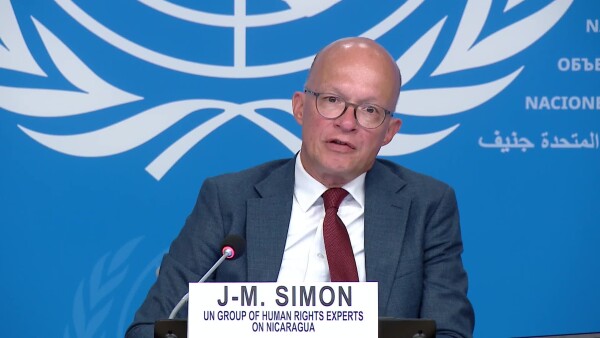
Press conference on the situation of human rights in Nicaragua by the UN Group of Human Rights Experts