

The United Nations Office at Geneva
Multimedia Newsroom
Press Conferences , Images | UNITED NATIONS
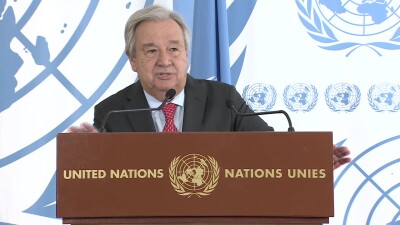
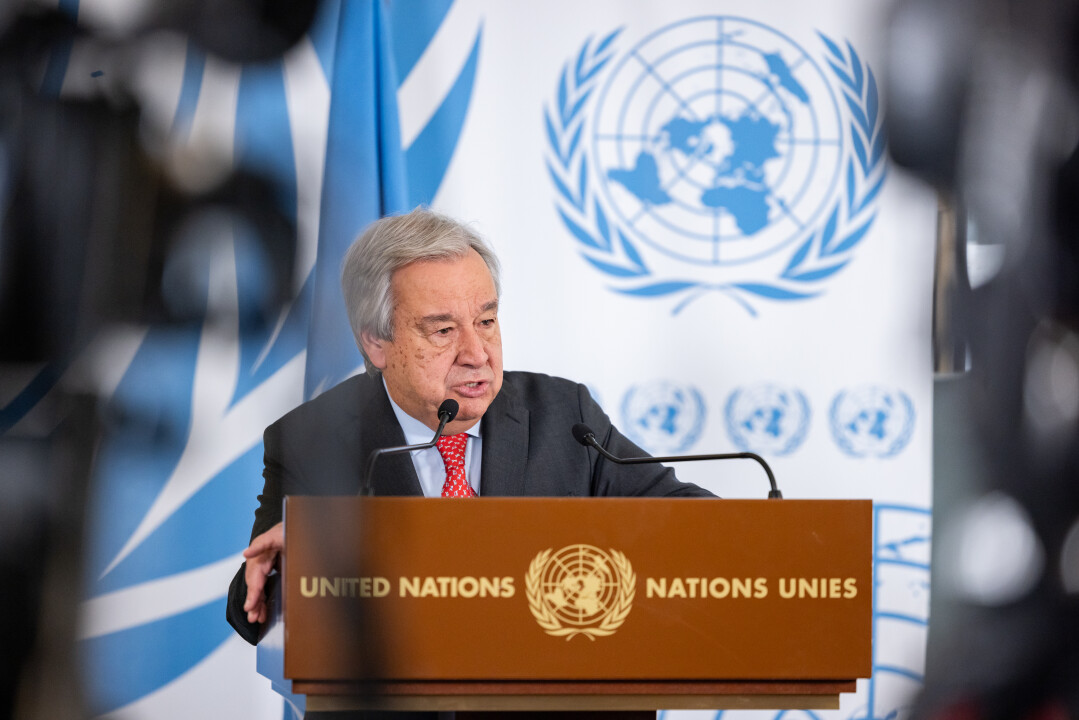
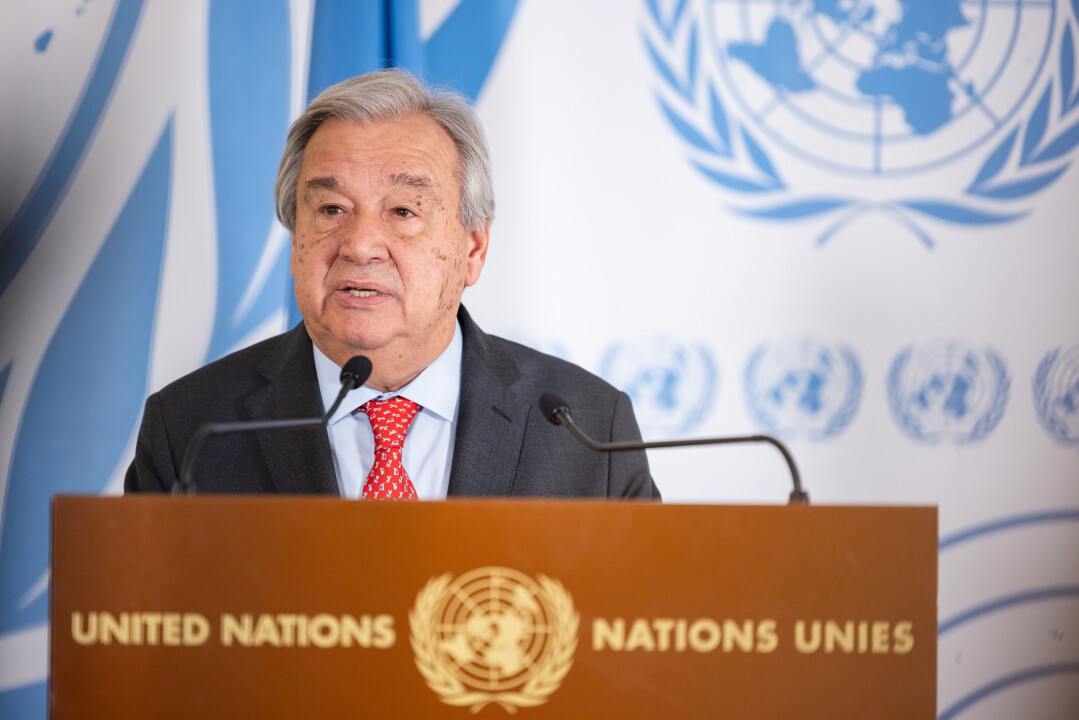
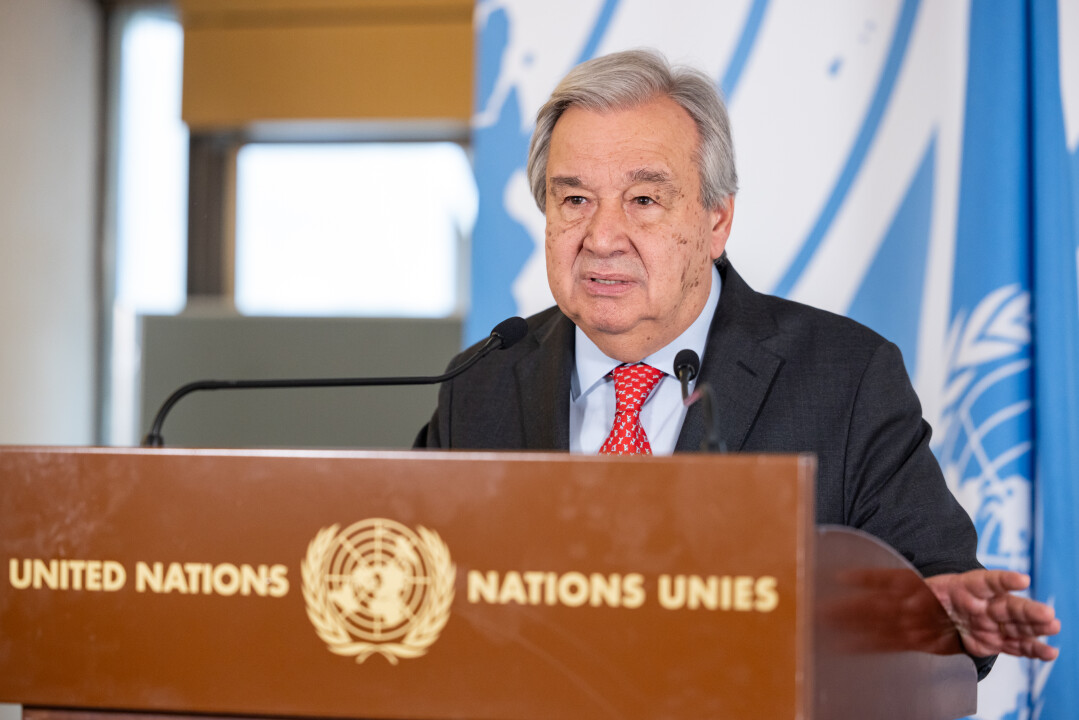
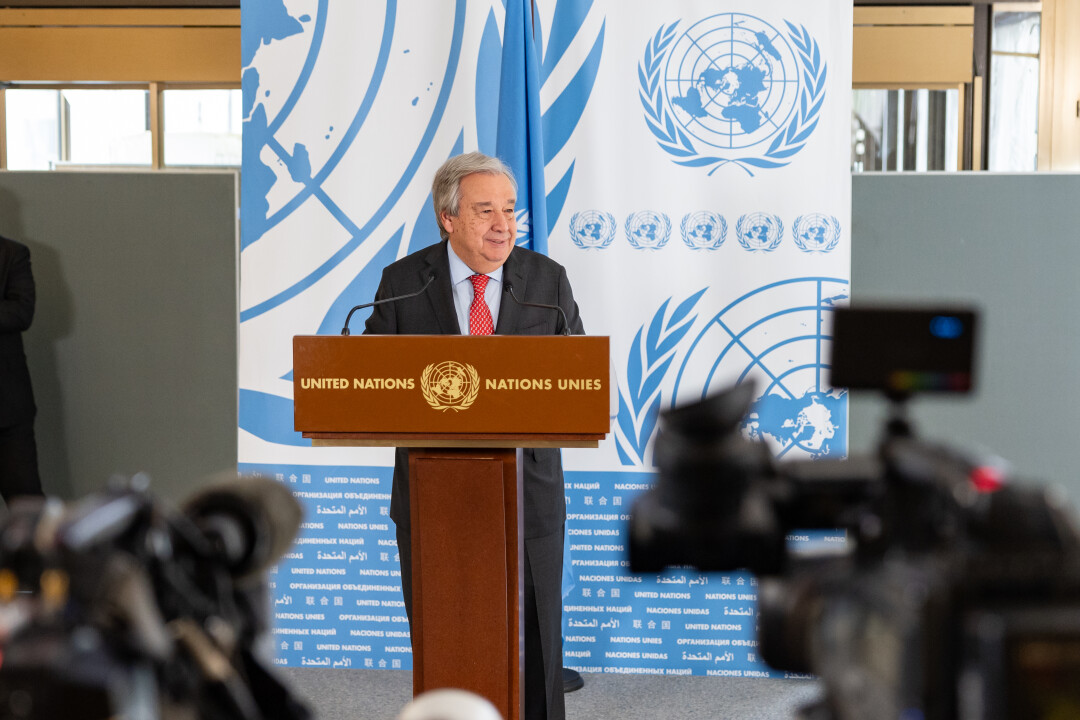
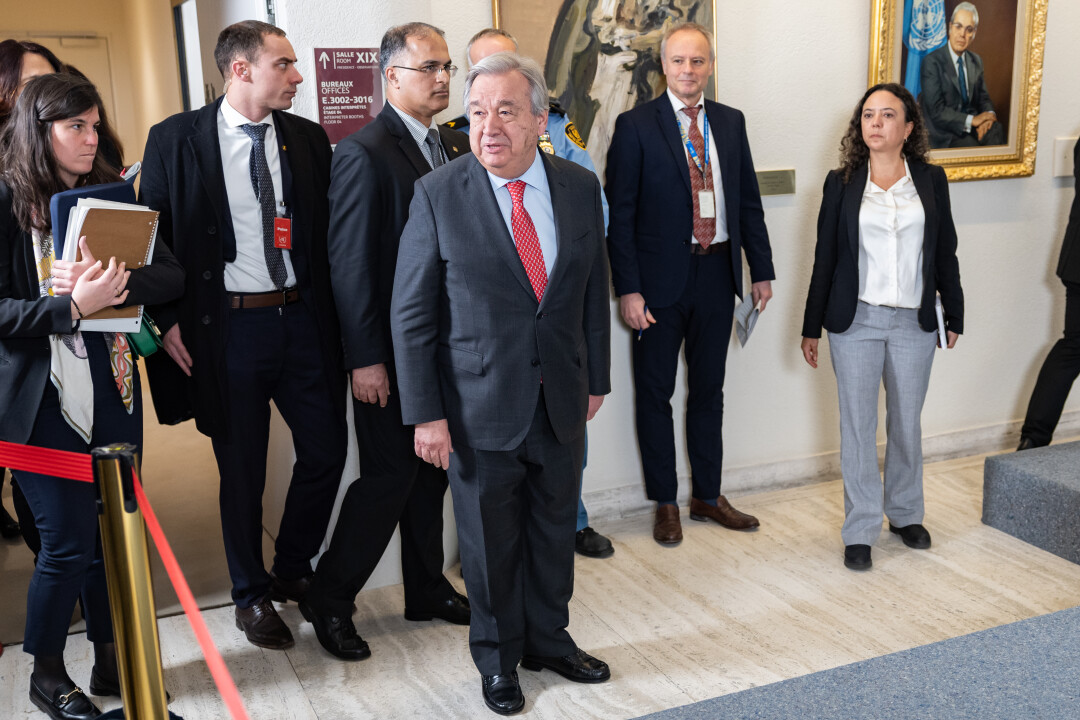
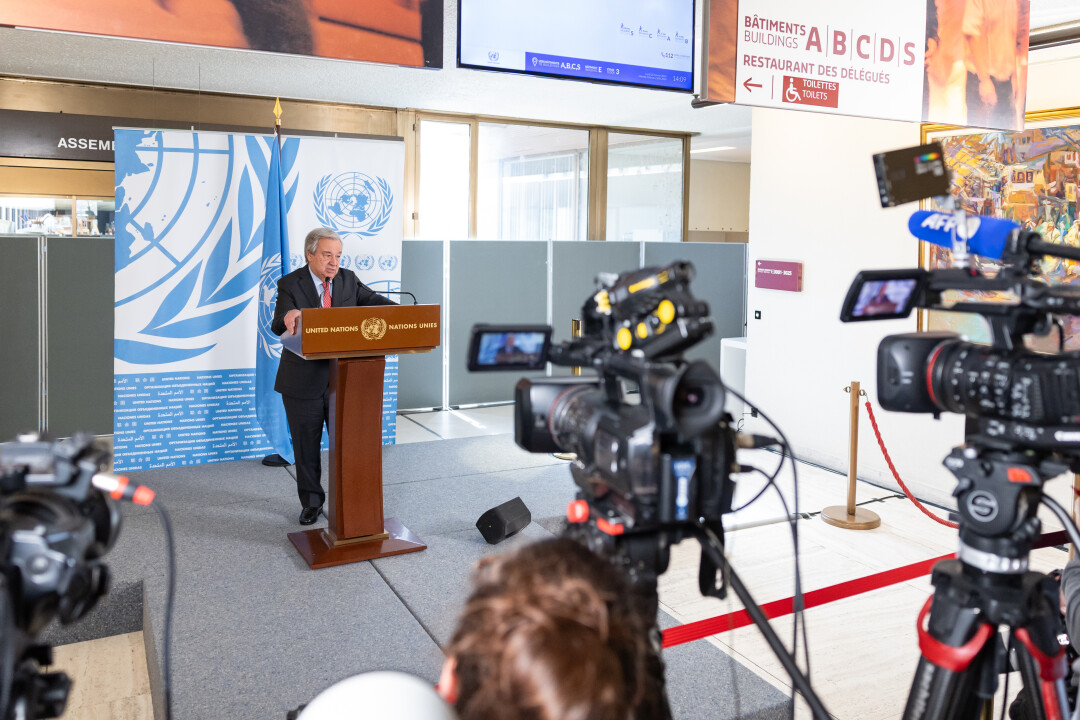
UN Secretary-General António Guterres - media stake-out - 26 February 2024
THE SECRETARY-GENERAL
PRESS ENCOUNTER
Geneva, 26 February 2024
Ladies and gentlemen of the media, good morning.
It is a pleasure to be once again with you, the first time in 2024.
As you know, I’m here in Geneva to address both the Human Rights Council and the Conference on Disarmament.
I am not going to repeat my remarks, but my main messages to the Human Rights Council were:
· There is a fundamental link between peace and human rights. Human rights are under attack on all fronts, particularly in conflicts, as states ignore their commitments to the United Nations Charter, and to international humanitarian law and international human rights law
· So civilians are suffering appallingly – and we see this most dramatically in the clear violations of international humanitarian law taking place in Gaza;
· And we must use the Summit of the Future in September to recommit to multilateral governance based on human rights – including the laws of the war.
I’ll also speak to the Conference on Disarmament this afternoon, and my message is the following one:
At a time when we need the Conference more than ever, it is not working as it should. And I will recommend some steps the Conference should take to revitalize the work.
Thank you very much, and as I promised, I was brief. I am here to answer four questions.
Question: Vous avez dit tout à l’heure devant le Conseil [des droits de l’homme] que l’autorité du Conseil de sécurité a été « mortellement sapée ». S’il ne parvient pas, dans les semaines ou les mois à venir, à agir sur un cessez-le-feu humanitaire à Gaza, est-ce que vous prononcerez officiellement sa mort cérébrale ?
The Secretary-General: Bon, j’ai parlé au conditionnel, je n’ai dit formellement. Mais je dirais que la mort cérébrale correspond à une personne qui est vivante mais qui n’est capable de rien faire. Alors si le Conseil de sécurité, un jour, démontrera qu’il ne sera pas capable de faire quoi que ce soit, alors il sera très proche de cette condition clinique.
Question: La Suisse essaie d’organiser un sommet pour une conférence de paix sur l’Ukraine. Est-ce que l’ONU peut participer à aider la Suisse à organiser ce sommet et est-ce que l’ONU veut prendre part, en tant qu’observateur, à cette évolution?
Le Secrétaire général: La Suisse n’a pas besoin d’aide, j’en suis sûr. Mais je tiens à vous dire que nous sommes absolument en faveur d’une paix, mais d’une paix qui soit dans le respect de la Charte des Nations Unies, dans le respect de la loi internationale et dans le respect de l’intégrité territoriale de l’Ukraine.
Question: On Ukraine, you have said that there is a real risk that the conflict could escalate and spread. What exactly do you mean by that? Do you think it also could reach and touch NATO countries? And what role do you see for the United Nations in helping to find a peaceful solution to the war in Ukraine?
The Secretary-General: I was not referring to the entrance of other countries in the war as such. But obviously, this is a conflict that is lasting and lasting, and when a conflict lasts, there is always a risk of escalation. There are many modern weapons that can be used that can be extremely dangerous, as you know. On the other hand, the UN is totally committed to support any serious effort for peace. The UN at the same time is working hard in relation to humanitarian aid in Ukraine, and extremely interested in the re-establishment of the freedom of navigation in the Black Sea. These are our priorities for the moment.
Question: I wanted to ask you about the discussions on the ceasefire and the hostage release that’s going on, and your understanding of how that is going, and also the fact that the UN is absent from the talks, and what that says - that the UN is absent from the talks on the hostage release and ceasefire for Gaza.
The Secretary-General: We have very clear positions. We are in favour of a humanitarian ceasefire tout court, and we are in favour and claiming for the immediate and unconditional release of the hostages. This is what we would like to see happening. This is not what is on the table. What is on the table at the present moment is a negotiation aiming at a progressive release of hostages and some interruption of the fighting. Not being our objective, our final objective, we fully support any efforts that will lead to the liberation of hostages and to the reduction of the suffering of the Palestinian people. Merci.
Similar Stories
1
1
1
Press Conferences | UNHCR
End of UNHCR's 77th Annual Executive Committee (ExCom) meeting week
1
1
1
Press Conferences | UNICEF , IOM , UNHCR
UN Special Assistant to the Personal Envoy Office (SUDAN): Peace Initiatives and Efforts in Sudan; UNICEF: Dire situation of children in Gaza; IOM: Damaged Homes and Energy Attacks Risk Displacing Ukrainians for this winter; UNHCR: update on EXCOM week
1
1
1
Press Conferences | IOM , UNDRR
UN stresses importance of household preparedness for disaster risk reduction.
1
1
1
Statements , Press Conferences | OHCHR
1
1
1
Press Conferences | UNHCR , UNICEF , IFRC , OHCHR , UN WOMEN , IOM , OCHA , WHO
UNHCR – ExCom Meeting, UNICEF – Nepal Recovery, IFRC – Flash Floods, WHO – Mental Health, IOM – South Sudan Floods, OCHA – DRC Humanitarian aid, UNHCR – Sahel Displacement, UNICEF – Yemen Update, IOM – Gaza Shelter, UN Women – Gaza Women, OHCHR – Arrests and detentions of Syrians by Israeli force
2
1
2
Press Conferences | UNCTAD
Presentation of the Trade and Developement Report 2026
Embargoed until 9 October 2026 at 11 a.m. (Geneva Time)
UNCTAD: UNCTAD’s flagship report finds that governments increasingly use industrial, trade, financial and technology policies to pursue economic and national security objectives. Market access and the ability to move into higher-value activities now depend more heavily on technology, finance and geopolitics.
1
1
1
Press Conferences | UPU
Release of the State of the Postal Sector Report 2026
1
1
1
Press Conferences | IOM , ITU , UNECE , UNICEF , WHO , WMO
UNICEF: Ebola, DRC - children orphans or separating them from parents and caregivers; IOM: Humanitarian needs in Djibouti amid arrivals from Yemen and increased migrant movements; WHO: Darfur, scale of health needs far exceeds available resources; WMO co-sponsored Global Heat Forum, Bangkok, monthly Global Seasonal Climate Update; UNECE: UN Forum of Mayors; ITU Plenipotentiary Conference 2026; WHO: child and adolescent obesity guidelines and new global roadmap to tackle pregnancy hypertension, a leading cause of maternal mortality
1
1
1
Press Conferences | OCHA , UN WOMEN , UNHCR , WFP , WHO , WTO , UNEP
OCHA – $160M CERF allocation to 12 underfunded crises; UNHCR – 5.8M refugee children remain out of school amid funding cuts; UN Women – Middle East escalation and food security among women/girls; WHO – Gaza supplies and overall situation; WFP – Yemen food insecurity and impact on global hunger ; UNEP - First International Conference of the Global Framework on Chemicals in Geneva | 16-20 November 2026
1
1
1
Press Conferences | UNHCR , WHO
Yemen's health system nears collapse amid conflict, causing rising casualties and medicine shortages.
1
1
1
Press Conferences | HRC
Update by the Expert Mechanism to Advance Racial Justice and Equality in Law Enforcement
1
1
1
Press Conferences | WIPO , WHO , UNICEF , UNHCR , IOM , WFP , FAO
WIPO Global Innovation Index 2026 launch and press conference, WHO Composition of influenza vaccines for the 2027 Southern Hemisphere flu season, UNICEF Yemen hunger and malnutrition; UNHCR Sudan displacement into Chad; IOM Ebola and population movements in DRC; WFP emergency food assistance in Nepal; and FAO food loss and waste.