

The United Nations Office at Geneva
Multimedia Newsroom
Press Conferences | OHCHR , UNHCR , OCHA , WHO , UNOG , UNITED NATIONS , WFP , WMO , FAO , IOM
UNOG Bi-weekly press briefing 22 January 2021
Tropical storm Eloise
Clare Nullis, for the World Meteorological Organization (WMO), said that Eloise, currently a severe tropical storm, was expected to intensify and reach tropical cyclone intensity and make landfall overnight tonight in Mozambique, as the equivalent of a category II strength on the Saffir Simpson scale, bringing high winds, heavy rainfall and the risk of coastal flooding to a large area. Eloise had impacted Madagascar before crossing the Mozambican Channel, causing damage and several reported casualties. Eloise was expected to make landfall near the city of Beira, which had been hit by Idai in 2019 and was still recovering from it, said Ms. Nullis. Winds of up to 100km/h were expected to hit large swathes of coastal Mozambique, to be followed by heavy rainfall. Zimbabwe, Botswana and the north part of South Africa would also experience heavy rainfall. A storm surge of 1.5 meters above normal tide levels was anticipated.
Paul Dillon, for the International Organization for Migration (IOM), added that the IOM had about 160 staff in the storm’s immediate path, many of whom were describing the resilience and courage, but also exasperation of people on the ground. There were more than 350 families already in a collective center, plus additional people seeking shelter in government buildings, schools and churches. IOM was working with the authorities to anticipate possible effects of COVID-19, ensuring that people were wearing masks and social distancing was being observed. The next 24 to 36 hours would be very difficult; the current focus was position supplies to cover the needs during and in the immediate aftermath of the cyclone. Mr. Dillon said there were still some 100,000 people in settlement sites following cyclone Idai almost two years earlier; Idai’s total damages amounted to over USD 2.2 billion.
Tomson Phiri, for the World Food Programme (WFP), said that ahead of tropical storm Eloise, the World Food Programme had mobilized contingency stocks to support 100,000 people. A total of 640 metric tonnes of food was available in central and southern hubs for the first phase of the Eloise emergency response. Although the WFP had been significantly investing in disaster preparedness efforts over the past years, including the mapping of key river basins using UAVs to inform Government’s preparedness and evacuation plans, the WFP did not have dedicated resources to respond to the ensuing Cyclone Eloise needs, said Mr. Phiri.
Health needs in Tigray, Ethiopia
Dr. Ibrahima Soce Fall, Assistant Director-General for Emergency Response at the World Health Organization (WHO), said that, due to the conflict and disruptions, the WHO was concerned about the potential for a number of diseases to spread in this region, including malaria, COVID-19, measles, cholera, meningitis and yellow fever. Additionally, many hospitals and clinics were only partially functioning or had to close. Access was one of the major challenges. Vulnerable populations needed to have access to health services, and the health care workforce needed to have access to the population. Conditions had to be created for health care workers to be able to return home and return to work. The availability of supplies and presence of health care workers were two critical conditions that needed to be met for health services to resume, stressed Dr. Soce Fall, adding that an estimated more than 4.5 million people needed assistance.
Dr. Teresa Zakaria, Health Emergency Officer at the World Health Organization (WHO), said the WHO and partners had visited several affected communities in the region. The situation was particularly severe outside of main cities, where people had even more difficulties to access health services. WHO had not been able to access the entire Tigray region, so the organization still did not have a full picture. Thus, much more was needed to reach those in need. The incidence of COVID-19 in the region was higher than the country’s average, which represented a major risk. Cases of measles had been reported among children, along with over 9,000 recorded cases of malaria, said Dr. Zakaria. The Tigray region was also located on the meningitis belt and was susceptible to yellow fever.
In a response to questions, Dr. Zakaria added that the rate of malnutrition in Tigray was higher than in the entire country. She explained that the WHO was concerned about the health and wellbeing of the entire population of Tigray, which was affected by the conflict. With most disease-prevention activities interrupted and based on the history of outbreaks, the risk of COVID-19, measles, cholera, malaria, yellow fever and meningitis spreading was very real. However, without a functional disease surveillance system, the WHO was not able to gauge the epidemiological situation of the region.
Security situation in the Al Hol camp in Syria
Jens Laerke, for the Office for the Coordination of Humanitarian Affairs (OCHA), shared serious concerns over the deteriorating humanitarian situation in the Al Hol camp in Syria. There were reports of at least 12 Syrian and Iraqi camp residents being murdered, including one woman, between 1 and 16 January, in this largest camp for the internally displaced people in Syria. Al Hol hosted some 62,000 people. The recent rise of violence jeopardized the ability of the United Nations to continue delivering aid to residents, including water, shelter, good and hygiene distribution. The safety and wellbeing of people in Al Hol was of paramount importance, underscored Mr. Laerke, who stressed the need to find durable solutions.
Responding to a question, Mr. Laerke said the camp was controlled by Kurdish troops.
Marixie Mercado, for the United Nations Children’s Fund (UNICEF), added that an estimated 94 per cent of the population in the camp were women and children, and some 86 per cent of all residents were Iraqi and Syrian.
Intercommunal violence in Darfur
Ravina Shamdasani, for the Office of the High Commissioner for Human Rights (OHCHR), said that the OHCHR had received deeply disturbing information about two deadly incidents of inter-communal violence in Darfur over the previous week. OHCHR feared the lack of security and chronic impunity in the region left it vulnerable to further serious violence.
On 16-17 January, 160 people had been reportedly killed and 215 injured in clashes between armed men of the Masalit and Arab communities around the Krinding camp for internally displaced people in West Darfur. In a separate incident, on 18 January, 72 people had been reportedly killed and 73 others were injured in South Darfur’s Gereida locality following clashes between armed men from the Falata tribe and the Reizigat tribe. Those incidents raised serious concerns about the imminent risk of further violence in Darfur, in an environment where decades-old ethnic and tribal tensions, stoked by the previous regime, continued to fester. OHCHR called on the Government of Sudan to promptly ensure the full implementation of its National Plan for the protection of civilians, and to restore public order and the rule of law in Darfur. OHCHR also urged the judicial authorities to take immediate action on the findings of a previous report into intercommunal violence between 29-31 December 2019 in El Geneina, West Darfur, as a crucial step in the fight against impunity.
OHCHR press briefing note is available here.
In a response to a question, Ms. Shamdasani explained that while the Sudanese authorities had pledged to deploy 12,000 troops to Darfur to take over from UNAMID, that had not happened yet.
Boris Cheshirkov, for the United Nations Refugee Agency (UNHCR), said UNHCR was concerned by recent violence in Sudan’s Darfur region, which had caused thousands of people to flee their homes in search of safety – including across the border into Chad. The intercommunal clashes, which had started on 15 January in West Darfur and spread to South Darfur the following day, had claimed the lives of 250 people – including three humanitarian workers – and displaced more than 100,000. Among the newly displaced, some 3,500 Sudanese had arrived in Ouaddaï Province in eastern Chad. Those refugees, most of them women and children, had been hosted in four very remote locations that lack basic services or public infrastructure, where they have been sheltering under trees.
UNHCR briefing note is here.
Displacement in the Sahel
Boris Cheshirkov, for the United Nations Refugee Agency (UNHCR), said the UNHCR was calling for an end to the unrelenting violence in Africa’s Sahel. It had now displaced more than two million people within the borders of their countries for the first time ever. Needs were surging across a region where multiple crises converged, including armed conflict, extreme poverty, food insecurity, climatic changes, and the COVID-19 pandemic.
The humanitarian response was dangerously overstretched, and UNHCR was urging the international community to redouble its support for the region. States had to act now to help Sahel countries address the root causes of this forced displacement, to boost strategic and sustainable development, and to strengthen institutions such as schools and hospitals, many of which have shut due to ongoing violence. Internal displacement in the region had quadrupled in just two years. The Sahel also hosted over 850,000 refugees, mainly from Mali. Across the region, UNHCR and its partners were working to provide critical assistance to hundreds of thousands of displaced people and their hosts, such as shelter, aid items, and cash.
Full briefing note is available here.
COVID-19 rapid tests
Herve Verhoosel, for UNITAID, said UNITAID and the Foundation for Innovative New Diagnostics (FIND) were announcing an important step towards ensuring equitable access to antigen-detecting rapid diagnostic tests for COVID-19. The initial agreement would increase capacity on the part of the companies involved to supply antigen-detecting rapid diagnostic tests, enough to meet about 50 per cent of the total estimated antigen testing needs of low- and middle-income countries. It would also cut in half the price of those tests.
Some 264 million test kits could be produced in the coming twelve months following this agreement. FIND and UNITAID were working as members of the ACT-Accelerator. Mr. Verhoosel said that testing had played a critical role since the beginning of the COVID-19 pandemic, enabling patient care as well as providing decision makers with vital data to inform test-trace-isolate strategies and lockdowns. Despite the introduction of two Ag RDTs in September 2020, testing capacity remained highly centralized in many countries, and often insufficient to meet the current demand. The tests could detect the new variants of COVID-19. Further agreements focused on technology transfer and scale up of regional manufacturing capacity were expected to be signed in the coming weeks.
Universal Periodic Review
Rhéal LeBlanc, speaking on behalf of the Human Rights Council (HRC), said the Human Rights Council’s Universal Periodic Review Working Group was reviewing Austria this morning, while in the afternoon it would adopt the reports for reviews of Micronesia, Lebanon, Mauritania, St Kitts and Nevis, Australia, and St Lucia.
Secretary-General’s statements
Mr. LeBlanc said the United Nations Secretary-General had welcomed the decision by the new United States President, Joseph Biden, to return the US to the Paris Agreement.
The Secretary-General further welcomed the United States’ stated re-engagement with the World Health Organization. Supporting the WHO was absolutely critical to the world’s efforts for a better coordinated response against COVID-19.
Finally, the Secretary-General welcomed the positive steps announced by the US administration relating to migration and refugees. The Secretary-General was hoping to see the United States join the Global Compact for Safe, Orderly and Regular Migration.
Today, the Treaty on the Prohibition of Nuclear Weapons was entering into force, which was also warmly welcomed by the Secretary-General, who hailed it as an important step towards a world free of nuclear weapons.
Mr. LeBlanc also informed that the Secretary-General had convened a high-level Replenishment Conference for the Peacebuilding Fund. It would be held virtually on 26 January to mobilize critical support from Member States for conflict prevention and peacebuilding to meet the Fund’s USD 1.5 billion requirements for the period 2020-2024. Journalists would be able to follow it on webtv.un.org.
Geneva announcements
Catherine Huissoud, for the United Nations Conference on Trade and Development (UNCTAD), informed a press conference today at noon on the publication of the Global Investment Trends Monitor n°38 - (New FDI data for 2020). The report would be under embargo until 24 January at 7 p.m. The speakers would be James Zhan, Director, Division on Investment and Enterprise, UNCTAD, and Astrit Sulstarova, Chief, Investment Trends and Data Section, Division on Investment and Enterprise.
Rhéal LeBlanc, for the United Nations Information Service (UNIS), informed that the Small Body of the Syrian Constitutional Committee would be meeting at the Palais des Nations the following week. Today at 3 p.m., Geir O. Pedersen, UN Special Envoy for Syria, would hold a hybrid press conference.
On 25 January at 12 noon, there would be a press conference by the International Labour Organization on the launch of the 7th ILO Monitor on the impact of COVID-19 on the world of work, which would be under embargo until 25 January at 1 p.m. Speakers would include Guy Ryder, ILO Director-General, and Sangheon Lee, Director, ILO Employment Policy Department.
On 26 January at 2 p.m., the United Nations Development Programme (UNDP) would present its report World’s largest survey of public opinion on climate change: a majority of people call for wide-ranging action, embargoed until 27 January at 6:01 a.m. The speaker would be Cassie Flynn, UNDP Climate Advisor.
Finally, Mr. LeBlanc informed about three events the following week to commemorate the Holocaust: “Keeping the Memory Alive – Dimensions in Testimony”, an innovative video project featuring interactive biographies of survivors on the exterior walls of the Beth Yaacov Great Synagogue of Geneva, from 25 to 31 January; the Ciné-ONU screening of the documentary “The Albanian Code” on 26 January at 5 p.m., followed by a discussion; and the official commemorative ceremony at the Palais des Nations on 27 January at 12 noon, which would be webcast live at webtv.un.org, and would feature a testimony of Fanny Ben-Ami, a Holocaust survivor.
Similar Stories
1
1
1
Press Conferences | UNHCR , WHO
Yemen's health system nears collapse amid conflict, causing rising casualties and medicine shortages.
1
1
1
Press Conferences | HRC
Update by the Expert Mechanism to Advance Racial Justice and Equality in Law Enforcement
1
1
1
Press Conferences | WIPO , WHO , UNICEF , UNHCR , IOM , WFP , FAO
WIPO Global Innovation Index 2026 launch and press conference, WHO Composition of influenza vaccines for the 2027 Southern Hemisphere flu season, UNICEF Yemen hunger and malnutrition; UNHCR Sudan displacement into Chad; IOM Ebola and population movements in DRC; WFP emergency food assistance in Nepal; and FAO food loss and waste.
2
1
2
Press Conferences | UNCTAD
Gaza reconstruction needs reach $71.5 billion as Palestinian economy and public finances face severe strain. Latest UNCTAD report documents the loss of decades of development gains, economic collapse in Gaza and tightening economic constraints in the West Bank.
The report identifies three immediate priorities: transferring withheld Palestinian revenues, safeguarding the banking system and aligning reconstruction support with the documented scale of damage and economic losses.
1
1
1
Press Conferences | HRC
Press conference on the situation of human rights in Nicaragua by the UN Group of Human Rights Experts
1
1
1
Press Conferences | ITU , UNHCR , WHO , WMO
YEMEN - UNHCR: Escalating conflict in Yemen could fuel more displacement, refugee movement
CLIMATE - WHO / WMO: Health and Climate impact of El Niño
1
1
1
Press Conferences | HRC , OHCHR
Mariana Katzarova discusses human rights in Russia as a UN Special Rapporteur.
1
1
1
Press Conferences | IOM , OHCHR , UN WOMEN , UNFPA , UNHCR , UNOPS , WHO
UN Geneva briefing: Yemen crisis worsens, urgent aid needed across multiple sectors.
1
1
1
Press Conferences | HRC
Press conference on the latest report of the Independent International Fact-Finding Mission on the Bolivarian Republic of Venezuela to the UN Human Rights Council
1
1
1
Press Conferences | OHCHR
Victims Still Waiting: A Global Briefing on Transitional Justice Around the World
2
1
2
Edited News , Press Conferences | WMO
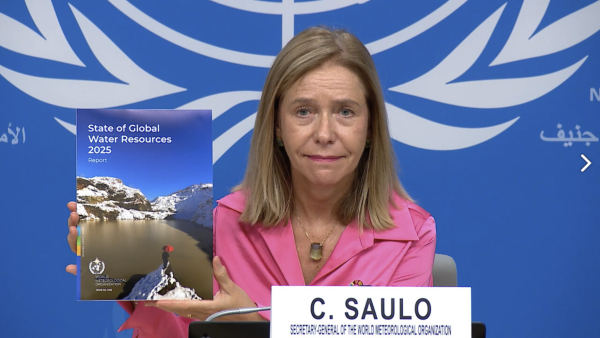
As world’s water reserves change, countries must prepare for a new reality: WMO
New data showing that rivers were at their lowest level for decades last year provides further evidence that the climate crisis is real and countries must act immediately to protect themselves from the increasing threat to communities and livelihoods, the UN World Meteorological Organization (WMO) said on Thursday.
The key findings from WMO’s State of Global Water Resources 2025 report covering the hydrological cycle and extreme events in the five-year period to last year:
- 2025 was one of driest years for river discharge in 35 years
- Past seven years have seen abnorfmal river flows
- Water storage on Earth’s land surface has decreased in past decade
- Widespread glacier loss across all regions for fourth consecutive year
- Asia and Africa are regions most affected by water-related disasters
- Water data availability has improved, but gaps remain in hard-hit areas
Highlighting the long-term decline in the Earth’s freshwater storage and glacier melt, WMO Secretary-General Celeste Saulo explained that the planet’s water reserves used to act as a planetary “savings account” that absorbed the occasional dry season, avoiding a water crisis. “One of the central stories of the 2025 report is what is happening to that savings account? And the simple answer is that we are depleting it,” she told journalists in Geneva.
Groundwater reserves are equally stretched and have been in decline since 2014, WMO’s report states, with nearly two-thirds of monitored wells worldwide showing levels lower than the historical norm and indicating a shift “further toward deficit…not recovery”.
“At the same time, we are seeing more water-related disasters,” Ms. Saulo said, while also stressing that the currently strengthening El Niño “will increase the risk of drought in some areas, and flooding in others”.
Glaciers disappearing
In 2025, for the fourth consecutive year, every major glaciated region on Earth lost ice mass, leading to short-term hazards including floods and long-term water insecurity, according to WMO.
Responding to a question about whether the changing global water cycle might have contributed to the deadly Nepal-China flooding disaster, Ms. Saulo explained that melting ice and rock was just one factor in the chain of events that ultimately sent a massive and deadly wall of water and debris downstream on 26 August, killing at least 1,367 people.
“You asked if it could happen again? Absolutely; the problem in this region is that there’s 63,700 glaciers at the last count,” she told a Press Conference in Geneva. “Even if you’re looking with remote sensing with satellites at these glaciers, you might see some faults, you might see some slight shifting, that does not mean necessarily catastrophic collapse. So, in order to plan for this, it’s very, very difficult. But the international community is looking very hard at ways in which we can bring people together to solve some of these monitoring issues.”
Data indicates that glaciers shrank between 2023 and 2025 with cumulative losses of 1,400 gigatonnes of water – or about one third of annual fresh water needs.
Every major glacier region on Earth lost ice for the fourth consecutive year.
“All 19 glacier regions around the globe lost ice; in Central Asia, Iceland, the Russian Arctic and western Canada and the United States, it was among the three worst years on record,” said Wayne Jenkinson, WMO’s Director of Hydrology and Cryosphere.
Some regions with smaller glaciers such as Central Europe, the Caucasus, the western Canada and the United States may already have reached “peak water”, Mr. Jenkinson warned.
“After this point, the glacier gives less meltwater each year simply because there is less ice left to melt. That matters for every community downstream that relies on water during hot, dry summers,” he explained.
Narelle van der Wel, WMO’s Head of Cryosphere Monitoring, Predictions and Services, stressed that while some further glacier loss is unavoidable, the eventual scale of the decline is not predetermined.
“Some glacier loss is inevitable, but total loss of glaciers is not yet inevitable,” she said, pointing to emissions reductions as central to limiting future losses.
Preparing for moving baselines
The report does not attribute every observed change to climate change alone. WMO says pressure on water resources and natural variability also contribute.
Mr. Jenkinson said governments need to prepare for “moving baselines” as historical patterns become less reliable.
“The situation 30 years ago is not where we are today,” he said. Countries, he added, need to prepare “for those changes that have really already arrived”.
ends
1
1
1
Press Conferences | WMO , OCHA , WHO , UNICEF , UN WOMEN , OHCHR , IOM , UNHCR
Update on Ebola from WHO and OCHA, update on the situation of children with the beginning of school in Ukraine from UNICEF, UN Women on the impact of the settlers and restrictions on women and girls in West Bank, OHCHR on the recovery of extensive human remains in Gaza, IOM and UNHCR on the new wave of displacement in Yemen