
The United Nations Office at Geneva
Multimedia Newsroom
Press Conferences | UNHCR , UNCTAD , WMO , OCHA , UNICEF , WHO
UN Geneva Press Briefing - 20 October 2026
Alarming humanitarian situation in Afghanistan ahead of the lean season
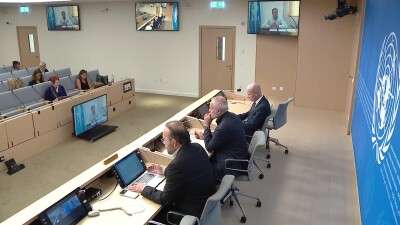
Olga Cherevko, for the Office for the Coordination of Humanitarian Affairs (OCHA), speaking from Kabul, said it was important to remember that a harvest could improve, markets could have food, but families could still go hungry. That was one of the clearest takeaways from her recent visits to southern and north-eastern Afghanistan, where she had seen firsthand that this crisis was not simply about whether food existed, but whether people could afford it, whether they could earn an income, access basic services, or whether they had anything left to fall back on when the next shock hit. Providing latest statistics, Ms. Cherevko informed that between September and October, 15.9 million people - nearly one in three Afghans – had been facing acute food insecurity at crisis level or worse, with the outlook deteriorating in the upcoming winter lean season. It was projected that more than four million children aged six months to five years would need treatment for acute malnutrition the following year. One of the most striking findings, said Ms. Cherevko, was that food was available but remained inaccessible for millions of people. Better rainfall and agricultural production had helped, but one good harvest after several years of drought could not undo the damage of several years of draught.
Ms. Cherevko then turned to the systematic exclusion of women and girls in Afghanistan. When a girl was denied secondary education, the consequences extended beyond the classroom. UNICEF warned recently that, if current restrictions continued, Afghanistan could lose up to 20,000 women teachers and 5,400 female health workers by 2030. The impact on nutrition was equally important: malnutrition was not only from lack of food, but it was shaped by maternal health, access to healthcare, dietary diversity, education and the ability to earn a living. Humanitarian assistance was indispensable, stressed Ms. Cherevko, and that response had to be sustained. Afghanistan also needed sustained investment in the foundations of recovery: agriculture and rural livelihoods, local markets, employment, water systems, health and nutrition services, and opportunities for women to participate in economic life. Humanitarians had to act before winter, not after families had exhausted their options. Ms. Cherevko concluded by stressing that humanitarian aid could and does save lives today, but only sustained, inclusive investment in livelihoods, services and economic opportunity could help people build lives that are less dependent on emergency assistance the day after.
Deteriorating situation in Taiz
Akhil Iyer, United Nations Children’s Fund (UNICEF) Country Representative in Yemen, connecting from Aden, warned that in Taiz, escalating fighting and fuel shortages were threatening UNICEF water systems serving an estimated three million people. Already one of Yemen's most water-scarce areas, Taiz was now facing renewed pressure on its most essential services for thousands of displaced families. Since the latest escalation in September, an estimated 120,000 people – more than half of all those newly displaced across Yemen – had been displaced to Taiz. Many had fled repeatedly, arriving in overcrowded communities with little food, limited clean water and almost nothing left to sustain themselves. Fighting had disrupted critical supply routes, including the Taiz–Aden corridor. Food and fuel were becoming scarcer, prices were rising, and essential services were at risk of suspension. Mr. Iyer said that the World Food Programme had already warned that wheat flour stocks in affected areas of Taiz were nearly exhausted – an alarming development in a governorate already facing some of Yemen’s highest levels of food insecurity, with ten of its 16 districts previously classified at Emergency levels. For families struggling to feed their children, this was another devastating blow, particularly for those already suffering from malnutrition.
This year, UNICEF had screened more than 168,000 children in Taiz, and more than 52,000 children had been found to be acutely malnourished. Now, diesel shortages threatened to bring water pumps to a halt, while the cost of trucked water had tripled since this latest escalation. For families already struggling to buy food, safe water was becoming increasingly unaffordable. UNICEF was helping keep water pumping systems serving an estimated three million people in Taiz operational through the provision of diesel, while providing emergency water and sanitation services to more than 300,000 people. Mr. Iyer warned that unsafe water and poor sanitation increased the risk of diarrheal diseases and cholera. For children in Taiz, hunger, unsafe water and disease were becoming an increasingly dangerous combination. UNICEF called on all parties to protect children and civilians, safeguard water systems and health facilities, and uphold their obligations under international humanitarian law. Children in Taiz had already endured years of conflict and deprivation; they could not afford to lose services that were keeping them alive.
Answering questions from the media, Mr. Iyer said that the cost of trucked water had tripled in recent weeks. People were rationing water because pumping stations were not working constantly due to fuel shortages. In Taiz, local authorities did not have adequate amounts of diesel fuel, which affected regular collection of garbage and led to piles of garbage in certain parts of the city. While UNICEF had some therapeutic food prepositioned, it was now more access than supply problem. Receiving authorizations from the warring parties was necessary before distribution of therapeutic food could be conducted, he explained. The routes were blocked by fighting in general, he explained, and no route was safe. Negotiating with both sides was thus necessary to secure safe access.
Tarik Jašarević, for the World Health Organization (WHO), said that cholera was rising sharply across Yemen: from 221 the week of 6-12 September to 673 the week of 4-10 October. In addition, over 20,000 measles 400 diphtheria cases had been recorded. Access problems affected delivering supplies to 12 hospitals in Taiz, which were facing fuel and essential medicine shortages. On a question from a journalist, Mr. Jašarević stressed the importance of safe access which would ensure provision of fuel and other much-needed supplies.
Matthew Saltmarsh, for the United Nations Refugee Agency (UNHCR), added that over 250,000 people had been displaced internally between 1 August and 17 October. The most immediate needs were around shelter, food, and cash assistance. UNHCR had provided cash assistance to some 2,000 families and shelter to over 3,000 families. He reminded that there were some 65,000 refugees and asylum seekers in Yemen, with some 3,800 new arrivals from Yemen to Djibouti.
Inequalities in non-communicable diseases
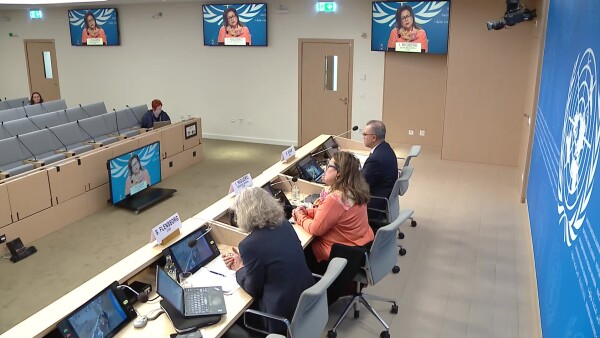
Dr. Søren Brostrøm, Director, Department of Noncommunicable Diseases and Mental Health, at the World Health Organization (WHO), said that the report State of inequality: Noncommunicable Diseases and Their Risk Factors published today provided a global assessment of inequalities in noncommunicable diseases (NCDs) and their risk factors, examining differences between population groups within countries. The report covered four major NCDs: cancer, cardiovascular diseases, chronic respiratory
diseases and diabetes, and key risk factors including tobacco and alcohol use, obesity
and unhealthy diets, insufficient physical activity and air pollution. Eight out of top ten causes of death globally were now attributed to the NCDs, which led to death of an estimated 75 percent of people around the world.
Almost 20 million deaths per year were caused by cardiovascular diseases, some nine million deaths by cancer, and four million by chronic respiratory diseases. For comparison, AIDS and tuberculosis each killed about 1.5 million people per year. Drawing from national data collected over the past decade, the report examined
differences in NCD burden, prevention and care by age, gender, economic status,
education, place of residence, disability status, employment and migration status. People’s income, education, gender, age and where they lived could influence their exposure to NCD risk factors and access to health services. Hypertension was equally distributed among men and women, but women were more likely to get it diagnosed and treated. Evidence from low- and middle-income countries also showed that less educated and poorer populations
tended to have higher rates of hypertension and diabetes. Dr. Brostrøm also said that men of productive age were more likely to use tobacco and consume alcohol. Rates of getting screened for cervical cancer also varied widely between low- and high-income countries. Alcohol, tobacco, unhealthy diets and air pollution were among the highest driving factors of NCDs, he stressed. Forty percent of rural populations in low- and middle-income countries were exposed to air pollution; that percentage was much lower for urban and richer populations.
The global report is available here, while the advocacy brief is here.
Responding to questions, Dr. Brostrøm said that scaling up interventions that worked was one way to address the NCDs, including taxing alcohol, tobacco and sugary products, which would especially have an impact on low-educated and poorer groups. Looking at risk populations, monitoring their blood pressure and offering cheap generic medicine to control high blood pressure and cholesterol were all relatively low cost, effective ways to address this NCD.
Ninth World Investment Forum
Marcelo Risi, for the United Nations Trade and Development (UNCTAD), said that the ninth World Investment Forum would open in Doha on 25 October and run until 27 October, under the theme “Investing in the Future.” There were more than 5,000 registrations, including around 300 media representatives. The Forum would bring together governments, investors and business leaders, including sovereign wealth funds, development finance institutions and entrepreneurs. Mr. Risi said that the Forum came as geopolitical tensions and technological change reshaped where investment went. Governments increasingly used trade, investment and technology policies to pursue strategic objectives. Companies were reassessing their suppliers and production locations, creating opportunities for countries to enter new industries and strengthen their position in global markets. UNCTAD’s research showed how quickly that investment map was changing. Strategic sectors, including AI infrastructure, semiconductors and energy-transition technologies, accounted for 44 percent of global greenfield investment project values in 2025, up from 16 percent in 2020. The development challenge was to turn these investments into local industries and jobs. That requiresd reliable infrastructure, skilled workers and stronger domestic suppliers, alongside policies that give investors confidence to commit for the long term.
Mr. Risi reminded that the previous week in Bangkok, the Borrowers’ Platform had held its first Governing Council meeting. Thirty-one developing countries had formally joined this Member State-led initiative, with UNCTAD serving as secretariat. The Platform gave borrower countries a dedicated space to share experience, strengthen their capacity and develop a collective voice on debt issues. That work addressed financing constraints that also shaped countries’ ability to attract and benefit from investment. Some 3.7 billion people lived in countries which spent more on servicing debt than on social services and education. In Doha, more than 70 sessions would bring policymakers and investors together around all these questions.
Finally, Mr. Risi said that for journalists, an opening press conference was scheduled for the morning on 25 October. The opening press conference and plenary sessions on 25 and 26 October will be webcast live on UN Web TV. All information is available here: worldinvestmentforum.unctad.org.
Announcements
Clare Nullis, for the World Meteorological Organization (WMO), said that WMO would be releasing its annual Greenhouse Gas Bulletin on 27 October, which would include the 2025 figures. A press conference with the WMO Secretary-General would be held the same day. WMO would also be releasing its State of the Global Climate update on 9 November, and an embargoed press conference could possibly be held on 6 November.
Matthew Saltmarsh, for the United Nations Refugee Agency (UNHCR), announced that on 23 October marked the 70th anniversary of the Hungarian revolution, which had forced 200,000 people had fled to Austria and Yugoslavia. This had been the first refugee crisis to play out on TV screens and had video footage available, he reminded. Recognizing the Hungarians as 'prima facie' refugees, UNHCR had led efforts to resettle them. This uprising and its aftermath shaped the way humanitarian organizations would deal with refugee crises in the future. Some 180,000 people had then been resettled to 37 different countries. In 2025, only 18,000 refugees had been resettled, said Mr. Saltmarsh as a matter of comparison. A lot of archived materials from the Hungarian refugee crisis were available.
Rolando Gómez, for the United Nations Information Service (UNIS), said that today at 2:30 pm, the Secretariat of the Convention on International Trade in Endangered Species of Wild Fauna and Flora (CITES) would hold a press conference on wildlife trade and conservation policy discussions at the 81st meeting of the CITES Standing Committee.
He reminded that on 21 October, the Sixth Consultative Meeting on Enhancing Coordination of Peace Initiatives and Efforts in Sudan would be held in the Council Chamber, including 27 delegations and some 80 participants. The opening statements would be streamed live. Arrivals were expected at Door 4 from 8:45 to 9:15 am. A press conference was expected at the end of the meeting, including the Special Envoy Pekka Haavisto.
The Human Rights Committee was considering the reports of Austria on 20-21 October and Rwanda on 21-22 October.
***
Similar Stories
1
1
1
Press Conferences | CITES
Wildlife trade and conservation policy discussions at the 81st meeting of the CITES Standing Committee (SC81)
1
1
1
Press Conferences | UNHCR
End of UNHCR's 77th Annual Executive Committee (ExCom) meeting week
1
1
1
Press Conferences | UNICEF , IOM , UNHCR
UN Special Assistant to the Personal Envoy Office (SUDAN): Peace Initiatives and Efforts in Sudan; UNICEF: Dire situation of children in Gaza; IOM: Damaged Homes and Energy Attacks Risk Displacing Ukrainians for this winter; UNHCR: update on EXCOM week
1
1
1
Press Conferences | IOM , UNDRR
UN stresses importance of household preparedness for disaster risk reduction.
1
1
1
Statements , Press Conferences | OHCHR
1
1
1
Press Conferences | UNHCR , UNICEF , IFRC , OHCHR , UN WOMEN , IOM , OCHA , WHO
UNHCR – ExCom Meeting, UNICEF – Nepal Recovery, IFRC – Flash Floods, WHO – Mental Health, IOM – South Sudan Floods, OCHA – DRC Humanitarian aid, UNHCR – Sahel Displacement, UNICEF – Yemen Update, IOM – Gaza Shelter, UN Women – Gaza Women, OHCHR – Arrests and detentions of Syrians by Israeli force
2
1
2
Press Conferences | UNCTAD
Presentation of the Trade and Developement Report 2026
Embargoed until 9 October 2026 at 11 a.m. (Geneva Time)
UNCTAD: UNCTAD’s flagship report finds that governments increasingly use industrial, trade, financial and technology policies to pursue economic and national security objectives. Market access and the ability to move into higher-value activities now depend more heavily on technology, finance and geopolitics.
1
1
1
Press Conferences | UPU
Release of the State of the Postal Sector Report 2026
1
1
1
Press Conferences | IOM , ITU , UNECE , UNICEF , WHO , WMO
UNICEF: Ebola, DRC - children orphans or separating them from parents and caregivers; IOM: Humanitarian needs in Djibouti amid arrivals from Yemen and increased migrant movements; WHO: Darfur, scale of health needs far exceeds available resources; WMO co-sponsored Global Heat Forum, Bangkok, monthly Global Seasonal Climate Update; UNECE: UN Forum of Mayors; ITU Plenipotentiary Conference 2026; WHO: child and adolescent obesity guidelines and new global roadmap to tackle pregnancy hypertension, a leading cause of maternal mortality
1
1
1
Press Conferences | OCHA , UN WOMEN , UNHCR , WFP , WHO , WTO , UNEP
OCHA – $160M CERF allocation to 12 underfunded crises; UNHCR – 5.8M refugee children remain out of school amid funding cuts; UN Women – Middle East escalation and food security among women/girls; WHO – Gaza supplies and overall situation; WFP – Yemen food insecurity and impact on global hunger ; UNEP - First International Conference of the Global Framework on Chemicals in Geneva | 16-20 November 2026
1
1
1
Press Conferences | UNHCR , WHO
Yemen's health system nears collapse amid conflict, causing rising casualties and medicine shortages.
1
1
1
Press Conferences | HRC
Update by the Expert Mechanism to Advance Racial Justice and Equality in Law Enforcement