

The United Nations Office at Geneva
Multimedia Newsroom
Press Conferences | OCHA , UN WOMEN , UNHCR , WFP , WHO , WTO , UNEP
UN Geneva Press Briefing - 02 October 2026
UN GENEVA PRESS BRIEFING
2 October 2026
UN Women Report
Nyaradzayi Gumbonzvanda, UN Women, Deputy Executive Director, said she was presenting the findings of a new UN Women analysis on the impact of the escalation in the Middle East on food security among women and girls in 28 countries. Disruptions to shipping through the Strait of Hormuz were raising energy, fertilizer, and transport costs, and pushing up food prices and straining humanitarian operations, labour markets and remittances far beyond the region. UN Women estimated that 11.7 million additional women and girls across 28 countries could become food insecure by the end of December 2026, on top of an estimated 208 million women and girls who were already food insecure prior to the escalation. Women and girls were estimated to make up 53 per cent of the projected 22 million additional people affected in the countries analysed, and an even larger share in some countries. In Afghanistan, women and girls made up 60 per cent of people who could face food insecurity; in Yemen, more than 57 per cent; in Sudan, nearly 56 per cent. Countries such as South Sudan, Sudan, Haiti, Yemen and Palestine faced more concentrated risks, as multiple sources of vulnerability facing women and girls overlapped. In South Sudan, the additional number of women and girls who could face food insecurity represented around 14 per cent of the South Sudanese female population.
In Egypt, Iraq, Palestine, Sudan and Syria, more than 80 per cent of women were outside the labour force, rising to around 95 per cent in Afghanistan and Yemen. Among women who were employed, many were in vulnerable employment, including 80 per cent of women in Afghanistan, Burkina Faso, Ethiopia, Haiti, Mali and South Sudan. Access to financial services could provide a buffer, but in Iraq, Lebanon, Pakistan and Yemen, fewer than one in five women owned a bank or mobile-money account. The available evidence helped identify where risks may be more concentrated, but it did not consistently provide information within a household on who was eating less or last, whose diet was becoming less diverse, or who was taking on more unpaid work to secure and prepare food, meaning it was difficult to create a proper response. It was vital to protect women’s access to food and the resources they needed to withstand and recover from shocks; to target resources where women and girls faced multiple risks such as conflict, internal displacement, climate vulnerability, humanitarian funding gaps and structural inequalities; and to make women’s and girls’ experiences visible in food-security data. This was the response, but crucially, to end the suffering of women and girls, peace and security was needed. UN Women called for de-escalation and respect for international law.
Responding to questions from the media, Ms. Gumbonzvanda clarified that the analysis was building on an existing gap and identifying an additional risk. The analysis took the recently published Food and Agricultural Organization (FAO) report into account.
Ms. Gumbonzvanda said women were already vulnerable, and in many countries could not own land. This meant they could not receive their farm inputs, means of production or produce sufficiently for themselves and their families. Often, they could not afford to buy the food they needed. Women would eat less, eat last or even skip a meal. The impact was not just on their health and wellbeing but also resulted in issues like gender-based violence, resulting in walking longer distances to get food. Food insecurity resulted in undermining development and was an issue which touched at the heart of the United Nations itself. El Nino was also an exacerbating factor for food insecurity, which could be seen in many countries.
UN Women had a strong programme in the Arab region and was seeing that the food crisis was exacerbated by the crisis in the Strait of Hormuz. The longstanding conflict in Lebanon had created food insecurity. UN Women continued to stand with the voice of the Secretary-General and called for peace in the Middle East.
Gaza – flow of supplies and overall situation
Dr. Reinhilde Van De Weerdt, World Health Organization (WHO) Representative in the Occupied Palestinian Territory, speaking from Jerusalem, said today not one hospital in Gaza was fully functional, largely due to chronic shortages of medicines and medical supplies. One year after the ceasefire announcement and three years since the conflict began, the core problem remained unchanged: humanitarian aid was not entering Gaza at the scale needed to restore health services. A major bottleneck was the approval process for medical supplies. Before shipments could move toward Gaza, they must be cleared by Israeli authorities, a lengthy and uncertain process. WHO analysis showed that medical supplies waited a median of 74 days for approval, and if a shipment was rejected, the process must start again. Requirements also changed regularly, often without clear explanation.
Some supplies faced particular challenges in getting delivered. WHO standard health kits have the lowest approval rates, while critical equipment such as X-ray machines, sterilization equipment, CT scan spare parts, and laboratory supplies were frequently delayed or rejected. Currently, 40 per cent of laboratory and diagnostic equipment remained pending approval. In the past six months, one shipment of prosthetics and assistive devices was rejected four times, delaying support for people waiting to regain mobility. Even after approval, additional checks and delays could prevent supplies from reaching Gaza promptly. The consequences were severe: without functioning laboratory and diagnostic equipment, health authorities could not effectively detect and contain disease outbreaks. WHO needed unimpeded, predictable entry of humanitarian and health supplies into Gaza at scale, supported by a multi-crossing access model. Clear, published guidance on entry procedures was essential to reduce delays and rejections. Finally, success should not be measured by the number of trucks crossing or tonnes delivered, but by whether the right supplies reached people in time to meet their health needs and save lives.
Responding to questions, Dr. Van De Weerdt said as per figures from the United Nations Children’s Fund (UNICEF) one child a day was killed in Gaza. A lack of laboratory diagnostics in Gaza meant WHO did not have the capacity to respond to outbreaks in a timely manner. Medicines were generally permitted, but other shipments, such as prosthetics were often rejected multiple times.
The situation in Gaza was very precarious. WHO collected the medical supplies from the IDF-controlled part of the country. This required security arrangements, including armed vehicles, personal protective equipment and the deployment of international staff. It was a complicated process that had to be coordinated by the Israeli authorities.
Responding to another, Dr. Van De Weerdt said the main problem with the medical supplies were around items that were “dual use”, which were items that the Israeli army considered to be used by terrorists, however WHO disputed these claims and said they were standard medical supplies across the world.
Escalating food insecurity in Yemen and the potential impact of the conflict on global hunger
Matthew Hollingworth, World Food Programme (WFP) Assistant Executive Director for Programme Operations, speaking from Rome, said hunger in Yemen was worsening rapidly, and the latest escalation in conflict threatened to severely deepen food insecurity. WFP was scaling up its response, but with limited resources and restricted access, and again called for the immediate and unconditional release of the 73 UN personnel detained in Yemen, including 38 WFP colleagues. The impact of the conflict on families had been immediate. WFP monitoring showed that nearly three in four households could not meet their basic food needs, the highest level recorded this year. Food prices were rising sharply, with wheat flour increasing by 10 per cent in just two weeks in parts of Taiz. Yemen imported around 90 per cent of its food, making it highly vulnerable to supply disruptions.
More than 152,000 people had been displaced in recent weeks, many fleeing multiple times. Families were arriving in areas around Aden and Taiz after days without food or water, surviving on little more than bread and improvised soups. The influx was placing additional strain on communities and displacement sites already under pressure. WFP had provided hot meals and other lifesaving assistance to more than 70,000 people in major displacement hotspots over the past weeks and stood ready to scale up further. However, conflict had cut off access to parts of Taiz and Hodeidah, preventing assistance from reaching 350,000 people in need. At the same time, WFP was being forced to draw on stocks intended for later in the year. Without new funding, supplies and resources would soon run out.
Yemen was already one of the world's most severe humanitarian and hunger crises. Unless support increased urgently, conditions would deteriorate further. The consequences also extended beyond Yemen. More than 3,700 Yemenis had fled to Djibouti, where WFP was providing emergency assistance. Beyond the immediate region, instability around the Bab al-Mandab Strait threatened global trade routes critical for food, fuel, and commercial goods. Combined with pressure on other key maritime corridors, including the Black Sea and the Strait of Hormuz, these disruptions risked driving up food and energy prices worldwide. While this could mean higher costs for consumers in wealthier countries, in vulnerable nations it could push millions more people into acute food insecurity. Today's humanitarian crisis and supply chain disruptions risked becoming tomorrow's global food crisis.
Rolando Gómez, Chief of the Press and External Relations Section, United Nations Information Service (UNIS) at Geneva, noted that Yemen was one of the countries highlighted in the UN Women report, and the UN SG special envoy for Yemen, Hans Grundberg, continued to be in close contact with the Government of Yemen as well as the Houthis.
Responding to questions, Mr. Hollingworth said, prior to the intensification of conflict, WFP were planning to serve around 1.7 million people prior to the escalation of conflict, but only in controlled areas. If they could have access to the country safely, the number would be starkly higher. WFP was requesting USD 250 million but needed half of this urgently to meet immediate needs.
The organisations had significant supporters from around the world, including from European and Asian countries, but needed more.
Mr. Hollingworth said people in Yemen were finding it hard to put any food on the table. They were skipping meals and eating a much smaller diversity of food types and facing hunger daily. WFP did not have accurate information outside of Government-controlled areas.
UN emergency fund CERF allocation of $160 million to 12 underfunded crises
Jens Laerke, for the United Nations Office for the Coordination of Humanitarian Affairs (OCHA), said today the United Nations had allocated USD $160 million from the Central Emergency Response Fund (CERF) to support life-saving assistance in 12 of the world’s most underfunded humanitarian crises across Africa, Asia, Latin America and the Middle East. This allocation was part of a wider push to reach 87 million people facing the most severe humanitarian needs this year. Of the new allocation, $150 million would support life-saving responses in Africa, Asia and the Middle East, with the top three recipients being Afghanistan, the occupied Palestinian territory and Yemen, who would receive $18 million each. The allocation also included $10 million to address the urgent needs of people with disabilities in the 12 crises and make humanitarian assistance more accessible and inclusive. CERF was partnering with the UN Global Disability Fund, which would provide up to $4 million in complementary funding and technical support through its Inclusion Catalyst Hub, including to strengthen the capacity and participation of local organizations of persons with disabilities in humanitarian response. Today’s allocation brought total CERF funding allocated so far in 2026 to $483 million. (See press release)
UNHCR’s new report: 5.8 million refugee children still out of school as funding cuts threaten hard-won progress
Eujin Byun, for the United Nations High Commissioner for Refugees (UNHCR), said a press release on the latest escalation report on the latest data for refugee children and youth around the world. Despite some progress, the overall report remained very concerning. 44 per cent of refugee children remained out of school. However, a record 11 per cent of refugee children were now enrolled in education, the highest number ever recorded. But the progress was uneven across countries. Education for refugees was about much more than being in a classroom. It was pathway to opportunity, employment and greater self-reliance. Having access to higher education could fundamentally change their future opportunities. However, cuts to education now risked reversing years of progress for an entire generation of refugee children and young people.
World Health Organization new Global Health Estimates show changing global landscape
Christian Lindmeier, for the World Health Organization (WHO), said this morning WHO had released the latest global health estimates, which provided the latest available data on the causes of death and disease burden, worldwide. The estimates covered health trends across countries and regions from 2000 to 2023, including trends in life expectancy, mortality and morbidity and burden of disease. The global life expectancy rebounded to 73.3 years in 2023, close to pre-pandemic levels. But healthy life expectancy remained below the 2019 level. Non-communicable diseases now accounted for 74 per cent of global deaths, up from 58 per cent in 2000, while dementia deaths, had tripled and anxiety and depression related health loss had risen sharply since the pandemic. In 2023, the ten leading causes of deaths accounted for 33 million of the 61 million, deaths worldwide. Non-communicable diseases represented eight out of the ten leading causes. The data was accessible online, and an update would be sent to the media shortly.
Responding to questions, Mr. Lindmeier said the data used in the update was existing, hard data, which was not always complete, as not every country recorded data the same way.
First International Conference of the Global Framework on Chemicals in Geneva
Eduardo Caldera Petit, Global Framework Conference Fund Coordinator for the Global Framework on Chemicals, for the United Nations Environment Programme (UNEP), said the first international conference of the Global Framework on Chemicals would take place in Geneva, from 16-20 November 2026. This conference would bring together governments, financial institutions, international organizations and civil society. The framework, which was voluntary, was adopted in 2023 and set targets to protect people and the environment from the harm caused by chemicals and waste. Chemicals were present in our daily lives and how they were produced, used and disposed of affected the environment, health and workers. The conference would examine what had been done since the adoption of the framework, and what happened next, focusing on tracking progress, accelerating action and investing for impact. In the margins of the conference there would be a high-level dialogue with multiple stakeholders discussing how to protect the health of workers. Media registration was open now and closed on October 31. UNEP could help to arrange interviews with UN leadership if required.
Responding to questions from the media, Mr. Caldera Petit said as the global framework on chemicals was voluntary, there was formal conference to the parties, but there was global representation. There were focal points in each of the UN regions and most of the Governments around the world had been participating in the framework including small island developing states. It was estimated by UNEP that over 90 per cent of products contained chemicals, but many of these had not been widely researched. The conference would discuss the implementation arrangements which would be required. He did not have information on chemicals which had proven to have a harmful impact.
UNEP worked in close collaboration with other Conventions, including the Minamata Convention on Mercury, which oversaw the regulation of mercury.
Mr. Caldera Petit said the conference was one of negotiation, and UNEP were expecting outcomes on how to move forward. A set of indicators had been discussed, and it was hoped these would be approved after the conference, as well as new issues of concern.
Announcements
Rolando Gómez, Chief of the Press and External Relations Section, United Nations Information Service (UNIS) at Geneva, said on Monday, 5 October, at 10 a.m, the Committee on the Elimination of Discrimination against Women would open its 93rd session, during which it would review the reports of Kazakhstan, Cook Islands, Kenya, Republic, Moldova, Paraguay, Togo, Angola and Cabo Verde.
Also on Monday, the Human Rights Council would begin taking action on the resolutions tabled during its 63rd session, which would end on Wednesday, 7 October. The Information Service would be producing a complete roundup in English and French of all the resolutions.
Mr. Gómez also announced two press conferences on Thursday October 8: one for the World Trade Organization (WTO), on the Global Trade Outlook and statistics October update, featuring the WTO Director-General and Chief Economist; and the other for the Universal Postal Union, on the release of the state of the Postal Sector Report for 2026.
Finally, Mr. Gómez said today, October 2 was the International Day of Non-Violence. He read excerpts from the message of the Secretary-General, who honoured the life of Mahatma Ghandi and his unwavering commitment to peace, truth and dignity for all.
***
Similar Stories
1
1
1
Press Conferences | UN WOMEN , WFP , WHO
UN WOMEN: Sudan Women and girls one year after the fall of El Fasher; increasing drone attacks across the country; WFP: DRC - Ebola spreads to eighth DRC province as WFP delivers food, builds treatment centres and keeps supplies moving; WHO - Update on Ebola (Bundibugyo Virus Disease)
1
12
1
1
Press Conferences , Images | UNOG
Closing Press Conference following the Sixth Consultative Meeting on Enhancing Coordination of Peace Initiatives and Efforts in Sudan

2
17
1
2
Edited News , Press Conferences , Images | OCHA , WMO
Two UN agencies teamed up on Wednesday to issue an appeal for immediate assistance to help communities already being impacted by the strongest El Niño on record.
1
1
1
Press Conferences | CITES
Wildlife trade and conservation policy discussions at the 81st meeting of the CITES Standing Committee (SC81)
1
1
1
Press Conferences | UNHCR , UNCTAD , WMO , OCHA , UNICEF , WHO
UNHCR Hungary’s 1956 Refugee Crisis: 70 Years On, UNCTAD World Investment Forum 2026, Doha, WMO Greenhouse Gas Bulletin and Climate Update for COP31, OCHA Afghanistan: Malnutrition, Girls’ Education and Recovery, UNICEF Yemen: Child Malnutrition and Unsafe Water in Taiz, WHO Inequalities in Noncommunicable Diseases and Risk Factors
1
1
1
Press Conferences | UNHCR
End of UNHCR's 77th Annual Executive Committee (ExCom) meeting week
1
1
1
Press Conferences | UNICEF , IOM , UNHCR
UN Special Assistant to the Personal Envoy Office (SUDAN): Peace Initiatives and Efforts in Sudan; UNICEF: Dire situation of children in Gaza; IOM: Damaged Homes and Energy Attacks Risk Displacing Ukrainians for this winter; UNHCR: update on EXCOM week
1
1
1
Press Conferences | IOM , UNDRR
UN stresses importance of household preparedness for disaster risk reduction.
1
1
1
Statements , Press Conferences | OHCHR
1
1
1
Press Conferences | UNHCR , UNICEF , IFRC , OHCHR , UN WOMEN , IOM , OCHA , WHO
UNHCR – ExCom Meeting, UNICEF – Nepal Recovery, IFRC – Flash Floods, WHO – Mental Health, IOM – South Sudan Floods, OCHA – DRC Humanitarian aid, UNHCR – Sahel Displacement, UNICEF – Yemen Update, IOM – Gaza Shelter, UN Women – Gaza Women, OHCHR – Arrests and detentions of Syrians by Israeli force
2
1
2
Press Conferences | UNCTAD
Presentation of the Trade and Developement Report 2026
Embargoed until 9 October 2026 at 11 a.m. (Geneva Time)
UNCTAD: UNCTAD’s flagship report finds that governments increasingly use industrial, trade, financial and technology policies to pursue economic and national security objectives. Market access and the ability to move into higher-value activities now depend more heavily on technology, finance and geopolitics.
1
1
1
Press Conferences | UPU
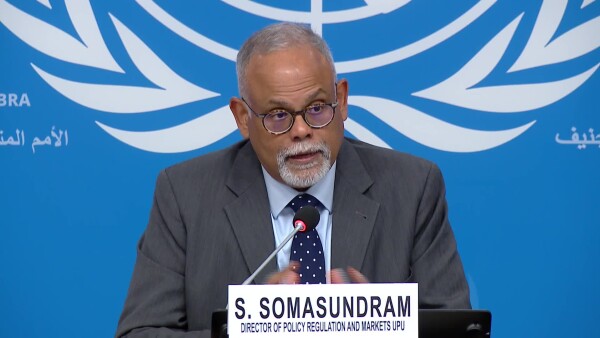
Release of the State of the Postal Sector Report 2026