

The United Nations Office at Geneva
Multimedia Newsroom
Update on the health situation in Yemen
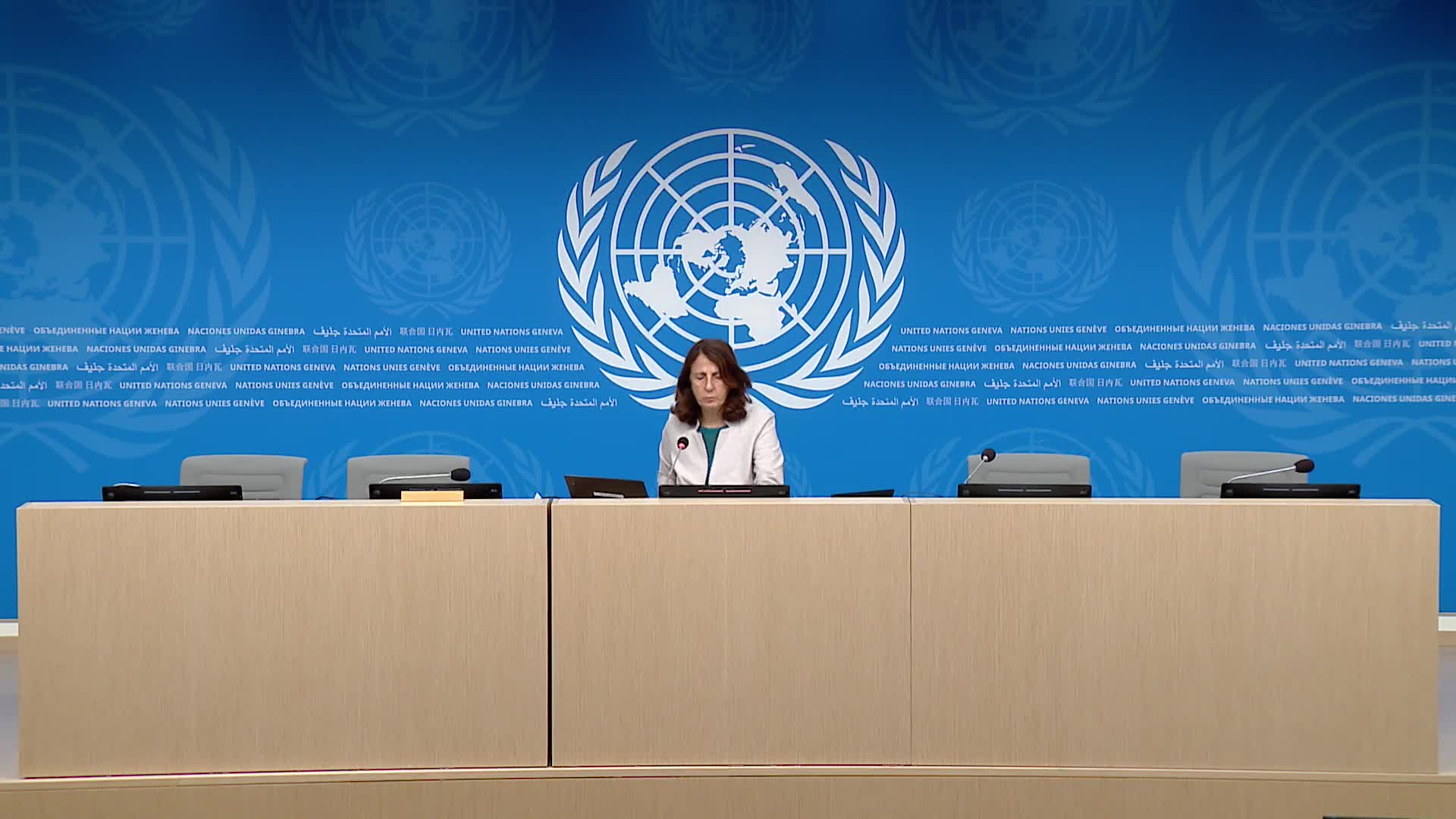
Dr. Annette Heinzelmann, World Health Organization (WHO) Regional Emergency Director for the Eastern Mediterranean, speaking from Cairo, Egypt, said Yemen’s health system had suffered from more than a decade of conflict, with the latest escalation pushing it towards breaking point. Casualties were rising, more people were being displaced, essential health services were under growing strain, and shortages of medicines and supplies, as well as limited access, were preventing services from consistently reaching people in need. Since August 6, 2026, there had been 4,481 casualties, including 838 deaths. Comprehensive emergency obstetric and newborn care had been suspended in two hospitals due to staff being redirected to trauma care. Nine health facilities had now been damaged, closed or attacked. Displaced families urgently needed essential health services, including maternal and childcare, nutrition, vaccination and mental health support.
More than 3,600 Yemenis had crossed to Djibouti since 10 September, nearly half of them children, with around 5,000–10,000 arrivals expected from Yemen in the coming weeks. This influx was placing additional pressure in Djibouti, a country already under pressure. Even before the escalation, only about 60 percent of health facilities in Yemen were fully functional. Disease outbreaks were already bursting on a large scale. Suspected cholera cases had reached 7,784 cases and 22 deaths, while dengue had reached 9,604 cases and 37 deaths. Measles was particularly concerning, with more than 22,000 suspected cases and 128 deaths reported this year. WHO had dispatched 59.3 metric tonnes of medical supplies, worth around USD$ 656,000, to 40 facilities and offices across 10 governorates, and more than 20 mobile medical teams had been deployed across priority governorates receiving displaced populations. But several lifesaving supply lines in WHO's Aden warehouse were already at zero stock, including trauma kits and essential medicines. Out of USD $9 million required for the WHO response, just USD $2 million had been secured.
Responding to questions from the media, Dr. Heinzelmann said cholera was endemic in Yemen, and the current outbreak had been ongoing before the most recent escalation of violence. When people were living in an overcrowded setting with limited access to water and sanitation, these factors could support a wider spread of cholera. There was a preparedness plan which was being rolled out, but in these circumstances the outbreak could increase. WHO were working with partners to ensure the outbreak was contained.
Dr. Heinzelmann said WHO’s data was based on data from the Ministry of Health, and the Organization was working in tandem with the public health centre and the Ministry. The latest figures they had were 4,481 casualties, including 831 deaths since August 6. She would respond later with a figure on dengue.
Amna Smailbegović, for the World Health Organization (WHO), said additional information would be sent by email and the media had already received the briefing notes.
Omondi Okoth, for the International Organization for Migration (IOM), said the IOM figures received since 28 September showed that 145,000 people had been displaced within Yemen. This was an increase, with an additional 15,870 compared to the previous figure. These figures had been since the most recent escalation of the violence.
Dr. Heinzelmann said WHO’s figures showed 180,000 displaced persons. These figures had been received from the Ministry of Health; there could be different sources and timelines for the figures, which could account for the difference. The data did not include data from areas controlled by the defacto authorities
New report: UNHCR sounds the alarm as 8.3 million risk losing their lifeline
Dominique Hyde, Director of External Relations, for the United Nations High Commissioner for Refugees (UNHCR), said she had recently returned from Burundi and Rwanda, where she had met refugees, fleeing attacks, including from the Democratic Republic of Congo. These included a woman who had lost one of her eleven children when her family fled to safety, as well as a 16-year-old girl who was separated from her family and held hostage and gang-raped. UNHCR warned that without USD $8.3 million, refugees, internally displaced and stateless people would lose access to vital support this year because of the deepening funding crisis. This was not about doing less in a few places; these were wholesale draconian cutbacks that would impact countless lives negatively. In some of the world's largest displacement crises, funding had now fallen to a level where entire protection systems were being dismantled.
In Chad, 319,000 refugees faced delays in registration, which meant they would struggle to access basic services, including food, healthcare, and education, and were exposed to risk of detention. Up to 200,000 women and girls would lose access to safe spaces and programs designed to prevent and respond to violence, and up to 233,000 children would lose access to child protection services in Ethiopia. The number of safe houses available to survivors of gender-based violence had more than halved in one year. In some areas, child protection coverage had fallen below 85 percent. Reaching safety was only the beginning; people arriving after conflict and displacement needed documentation, family tracing, psychosocial support, protection from violence, and help accessing health care or employment. If that support disappeared when people needed it most, they could be pushed into deeper vulnerability.
This came at a time when the Agency had already taken some very difficult decisions. Income fell from USD $5.2 billion in 2024 to USD $3.9 billion in 2025, and by the end of July of this year, UNHCR would have received only 32 percent of the funding required for 2026. Last year, UNHCR cut their workforce by 33 percent and had closed 140 offices and generated USD $135 million in efficiencies. Additionally, the funding being received was tightly earmarked, and flexible in the current environment was essential. There was a threshold below which protection systems could no longer function. UNHCR were asking governments, institutions, foundations, and individuals to sustain aid wherever and wherever, possible, and extend support. The consequences were already being felt by refugees and displaced families every day.
Detainees in the United States
Responding to a question from the media regarding the activities of the United States Immigration and Customs Enforcement, Matthew Saltmarsh, for the United Nations High Commissioner for Refugees (UNHCR), said that while he did not have details on reports of children and mothers being detained in cages, but in general terms, people who were fleeing war, violence, torture or persecution had a right to claim asylum and their request for asylum should be heard. International protection should be provided if required. There was a process around the best interests of children; they should not be kept in detention. People who were applying for asylum needed to be treated with dignity and given the support they needed. The High Commissioner was currently visiting Mexico providing support to asylum seekers in the country.
Myanmar Returns
Responding to another question on a large group of people being returned from Malaysia to Myanmar, Matthew Saltmarsh, for the United Nations High Commissioner for Refugees (UNHCR), said these individuals had not yet left the country and there were some ongoing appeals. The agency was concerned that current conditions would not permit safe, dignified and sustainable returns under international law, and remained committed to engage with the Government of Malaysia through technical support and effective protection measures.
Ethiopia Civil War
Responding to another question, on the renewed civil war in Ethiopia, Matthew Saltmarsh, for the United Nations High Commissioner for Refugees (UNHCR), said the UNHCR joined the Secretary-General in his concerns about this escalation, and were monitoring the situation very closely. Appropriate measures were being taken by staff in the region to support those on the ground.
Alessandra Vellucci, for the United Nations Information Service (UNIS) at Geneva, said access for humanitarians had been severely disrupted, which was limiting the movement of relief supplies. The UN was calling for safe and unhindered access for humanitarian workers.
Amna Smailbegović, for the World Health Organization (WHO) said the WHO had a response plan, covering emergency response, surveillance and early warning and response operations.
Ebola patient care and access to oxygen
Dr. Janet Diaz, Unit Head, Safe Scalable Care, World Health Organization (WHO) Health Emergencies Programme, said she had recently returned from the Democratic Republic of Congo (DRC), her second visit to the country since the start of the Ebola outbreak caused by the Bundibugyo virus. While a reduction in transmission was being seen in some areas, the number of cases remained high. In this outbreak, many people were still dying at home or in their communities because they were unable to reach health facilities in time. Delays in seeking care, together with challenges in access and referral, continued to complicate the response. WHO and partners had focused on strengthening early recognition of illness, rapid referral systems, and early supportive care in the response. During her five weeks in Bunia, Dr. Diaz had visited Ebola treatment centres within the hotspots, working with the Ministry of health and partners to ensure a coordinated treatment scale-up.
WHO had taken important steps to improve patient care, including by expanding Ebola treatment capacity, to more than 1600 beds across 50 treatment centres with further expansion planned to reach just over 2000 beds; supporting free access to Ebola care and the provision of meals for patients; training nearly 400 health workers with the newly launched training hub in Bunia; launching a survivor programme to support recovery and long-term well-being after Ebola disease; and supporting clinical trials for candidate therapeutics and prophylaxis. Dr. Diaz underscored the importance of access to medical oxygen, which was an essential, life-saving medicine and a critical component of supportive care for patients with Ebola. Ensuring access to required functioning health systems, reliable infrastructure, trained health workers and sustainable delivery systems. Ahead of World Oxygen Day later this week, WHO called for renewed investment in medical oxygen systems so that every patient, everywhere, could receive the care they needed.
Responding to questions from the media, Dr. Diaz said the challenges in ensuring access to medical oxygen across the treatment centres was dependent on the health system prior to the outbreak. Flow oxygen devices had been able to fill the gap in Bunia, but in some areas where there was limited oxygen, the scale of delivery had been dependent on whether there were reliable electricity, water and sanitation.
Mexico
Responding to a question regarding health services in Mexico, including the lack of materials and medicine in public hospitals, Amna Smailbegović, for the World Health Organization (WHO), said WHO had contacted the regional office in Mexico and were waiting to hear back. There was also a health information website on Mexico. Mexico had made important health gains in the past two decades, but challenges remained, including an aging population, financing, out of pocket expenditure and high rates of non-communicable diseases. These challenges were not unique to Mexico. Over two billion people worldwide had experienced catastrophic expenditure due to health costs.
Announcements
Alessandra Vellucci, Director of the United Nations Information Service (UNIS) at Geneva, said today WIPO would hold an online press conference at at 12:15 p.m. on the 2026 edition of their Global Innovation Index.
Ms. Vellucci also said that for the first time, on October 1, the United Nations would commemorate International Coffee Day. Coffee sustained the livelihoods of at least 12.5 million farming families and underpinned a global market worth close to USD 250 billion a year. The International Trade Centre (ITC) and the International Coffee Organization (ICO) were launching the Coffee Market Intelligence Platform, which, among other things, would outline stock options and annual production and consumption data. Journalists were invited to attend the press conference on 30 September to hear directly from the ICO's Executive Director about the platform.
Ms. Vellucci also said that a high-level plenary meeting was taking place in New York today, to commemorate the international day for the total elimination of nuclear weapons, highlighting the risk posed by the almost 12,000 nuclear weapons worldwide. The Secretary-General was expected to make a statement.
TOPICS
UNHCR Matthew Saltmarsh (PR) with Dominique Hyde, Director of External Relations (PR)
· New report: Protection Eroded: The Human Cost of Underfunding
UNHCR sounds the alarm as 8.3 million risk losing their lifeline
WHO Amna Smailbegović (PR) with Dr Annette Heinzelmann, WHO Regional Emergency Director for the Eastern Mediterranean (From Cairo, Egypt)
· Update on the health situation in Yemen
Amna Smailbegović (PR) with Dr Janet Diaz, Unit Head, Safe Scalable Care, WHO Health Emergencies Programme (PR)
· Ebola patient care and access to oxygen
Similar Stories
1
1
1
Press Conferences | CITES
Wildlife trade and conservation policy discussions at the 81st meeting of the CITES Standing Committee (SC81)
1
1
1
Press Conferences | UNHCR , UNCTAD , WMO , OCHA , UNICEF , WHO
UNHCR Hungary’s 1956 Refugee Crisis: 70 Years On, UNCTAD World Investment Forum 2026, Doha, WMO Greenhouse Gas Bulletin and Climate Update for COP31, OCHA Afghanistan: Malnutrition, Girls’ Education and Recovery, UNICEF Yemen: Child Malnutrition and Unsafe Water in Taiz, WHO Inequalities in Noncommunicable Diseases and Risk Factors
1
1
1
Press Conferences | UNHCR
End of UNHCR's 77th Annual Executive Committee (ExCom) meeting week
1
1
1
Press Conferences | UNICEF , IOM , UNHCR
UN Special Assistant to the Personal Envoy Office (SUDAN): Peace Initiatives and Efforts in Sudan; UNICEF: Dire situation of children in Gaza; IOM: Damaged Homes and Energy Attacks Risk Displacing Ukrainians for this winter; UNHCR: update on EXCOM week

1
1
1
Press Conferences | IOM , UNDRR
UN stresses importance of household preparedness for disaster risk reduction.
1
1
1
Statements , Press Conferences | OHCHR
1
1
1
Press Conferences | UNHCR , UNICEF , IFRC , OHCHR , UN WOMEN , IOM , OCHA , WHO
UNHCR – ExCom Meeting, UNICEF – Nepal Recovery, IFRC – Flash Floods, WHO – Mental Health, IOM – South Sudan Floods, OCHA – DRC Humanitarian aid, UNHCR – Sahel Displacement, UNICEF – Yemen Update, IOM – Gaza Shelter, UN Women – Gaza Women, OHCHR – Arrests and detentions of Syrians by Israeli force
2
1
2
Press Conferences | UNCTAD
Presentation of the Trade and Developement Report 2026
Embargoed until 9 October 2026 at 11 a.m. (Geneva Time)
UNCTAD: UNCTAD’s flagship report finds that governments increasingly use industrial, trade, financial and technology policies to pursue economic and national security objectives. Market access and the ability to move into higher-value activities now depend more heavily on technology, finance and geopolitics.
1
1
1
Press Conferences | UPU
Release of the State of the Postal Sector Report 2026
1
1
1
Press Conferences | IOM , ITU , UNECE , UNICEF , WHO , WMO
UNICEF: Ebola, DRC - children orphans or separating them from parents and caregivers; IOM: Humanitarian needs in Djibouti amid arrivals from Yemen and increased migrant movements; WHO: Darfur, scale of health needs far exceeds available resources; WMO co-sponsored Global Heat Forum, Bangkok, monthly Global Seasonal Climate Update; UNECE: UN Forum of Mayors; ITU Plenipotentiary Conference 2026; WHO: child and adolescent obesity guidelines and new global roadmap to tackle pregnancy hypertension, a leading cause of maternal mortality
1
1
1
Press Conferences | OCHA , UN WOMEN , UNHCR , WFP , WHO , WTO , UNEP
OCHA – $160M CERF allocation to 12 underfunded crises; UNHCR – 5.8M refugee children remain out of school amid funding cuts; UN Women – Middle East escalation and food security among women/girls; WHO – Gaza supplies and overall situation; WFP – Yemen food insecurity and impact on global hunger ; UNEP - First International Conference of the Global Framework on Chemicals in Geneva | 16-20 November 2026
1
1
1
Press Conferences | HRC
Update by the Expert Mechanism to Advance Racial Justice and Equality in Law Enforcement