

The United Nations Office at Geneva
Multimedia Newsroom
Famine in Gaza
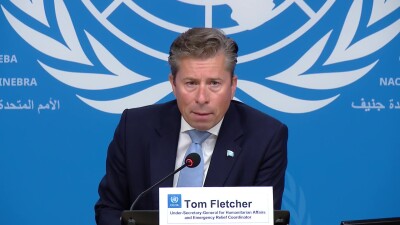
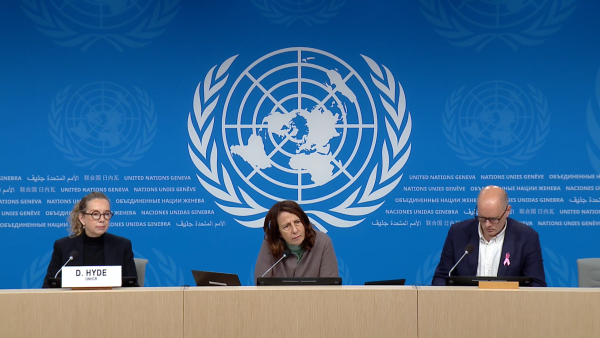
Tom Fletcher, United Nations Under-Secretary-General for Humanitarian Affairs, urged the media to read the new Integrated Food Security Phase Classification (IPC) report in full, and to see it in human terms, rather than just mere numbers. This report was an irrefutable testimony: famine was unfolding in Gaza now, the famine which could have been prevented if only aid had been allowed in. It was a famine within few hundred meters of food and on fertile land. It was a famine that hit the most vulnerable first, each with a name and with a story, stripping people of dignity before stripping them of life. It was a famine that the humanitarians had repeatedly warned of, but that international media had not been allowed to cover from within. It was a famine in 2025, watched over by drones and other modern technology. It was a famine on everyone’s watch; it was the world’s famine which asked everyone “What did you do?”. It was a predictable and preventable famine, caused by cruelty, enabled by indifference, and sustained by complicity. This famine should shame the world to do better. Mr. Fletcher asked for an immediate ceasefire and for the opening of all crossings to allow for unimpeded aid access. It was too late for far too many, but not for everyone in Gaza. “Enough! For humanity’s sake, let us in,” concluded Mr. Fletcher.
Responding to questions from the media, Mr. Fletcher said this was a moment of collective shame. The international community had been watching it happen in real time, and it would have been even more closely watched had international media been allowed into Gaza. This famine could have been prevented had all the trucks with aid been let in. People in Gaza did not need to read the IPC report; they had known too well their own situation for many weeks and months. It was important to recognize that there was a growing constituency in Israel that supported allowing aid into Gaza.
On 6 August, UN humanitarian agencies and the Gaza Humanitarian Foundation had held a meeting at the US Mission in New York, confirmed Mr. Fletcher. Experienced humanitarians had a know-how and knew how to deliver aid; what others did was up to them, but UN humanitarians had to be allowed to do their job in accordance with the established, tried and tested humanitarian standards.
OCHA was in regular contact with US officials, said Mr. Fletcher, and US President Trump had issued a clear instruction that the starvation in Gaza ought to be ended. Humanitarians would need to be allowed to operate at scale, he reiterated. During the ceasefire earlier this year, 600 to 700 trucks had been brought in Gaza every single day; the same should be allowed to happen now, as this was essential to end the starvation. Commercial access at scale into Gaza was also needed, as well as access for UN humanitarian partners. When calling for unimpeded access into Gaza, it was a call for the entire humanitarian community, including NGO partners.
The new Integrated Food Security Phase Classification (IPC) report on famine in Gaza was further discussed at the UN Geneva press briefing that followed: https://www.unognewsroom.org/story/en/2774/un-geneva-press-briefing-22-august-2025-1
MR. TOM FLETCHER, UNDER-SECRETARY-GENERAL FOR HUMANITARIAN AFFAIRS AND EMERGENCY RELIEF COORDINATOR
Remarks on Gaza at the UN press briefing and Q&A
Watch the press briefing here: https://webtv.un.org/en/asset/k13/k130jdmvdz
Geneva, 22 August 2025
[AS DELIVERED]
"Please read the IPC report, cover to cover. Read it in sorrow and in anger. Not as words and numbers but as names and lives. Be in no doubt that this is irrefutable testimony.
It is a famine. The Gaza Famine.
It is a famine that we could have prevented, if we had been allowed. Yet food stacks up at borders because of systematic obstruction by Israel.
It is a famine within a few hundred metres of food, in a fertile land.
It is a famine that hits the most vulnerable first. Each with a name, each with a story. That strips people of dignity before it strips them of life. That forces a parent to choose which child to feed. That forces people to risk their lives to seek food.
It is a famine that we repeatedly warned of. But that the international media has not been allowed in to cover. To bear witness.
It is a famine in 2025. A 21st century famine watched over by drones and the most advanced military technology in history.
It is a famine openly promoted by some Israeli leaders as a weapon of war.
It is a famine on all of our watch. Everyone owns this. The Gaza Famine is the world’s famine. It is a famine that asks ‘but what did you do?’ A famine that will and must haunt us all.
It is a predictable and a preventable famine. A famine caused by cruelty, justified by revenge, enabled by indifference and sustained by complicity.
It is a famine that must spur the world to more urgent action. That must shame the world to do better. It is a famine that therefore also asks ‘… and what now will you do?’
My ask, my plea, my demand to Prime Minister Netanyahu and anyone who can reach him:
Enough. Ceasefire. Open the crossings, north and south, all of them. Let us get food and other supplies in, unimpeded and at the massive scale required. End the retribution. It is too late for far too many. But not for everyone in Gaza. Enough. For humanity’s sake, let us in."
Similar Stories
1
1
1
Press Conferences | UNHCR , WFP , FAO , UNECE
UNHCR warns of refugee risks; FAO and WFP assess hunger hotspots; UNECE addresses environmental risks.
2
1
2
Press Conferences | UNCTAD
UNCTAD's flagship report finds that global maritime trade is set to stall in 2026, with zero growth after 1.9% in 2025, as disruptions at major shipping routes and chokepoints force ships onto longer voyages and drive-up costs.
1
1
1
Press Conferences | UNICEF
UNICEF: Increase in emotional, verbal, and physical violence against girls and women in DRC since the start of the Ebola outbreak.
1
1
1
Press Conferences | UNODA
Conclusion of 7th Review Conference on the Convention on Certain Conventional Weapons (CCW)
1
1
1
Press Conferences | IIMM , WFP , UNICEF , UN WOMEN , ECW , UNAIDS
IIMM: ICC ruling on Myanmar genocide against the Rohingya; WFP Global Outlook 2027: Meeting today’s needs, investing in tomorrow’s solutions; ECW -Education Cannot Wait: US$52 million to keep 300,000 children learning in Lebanon, Myanmar and South Sudan; UNICEF: Alarming number of child casualties in the first 10 months of 2026 as attacks on civilian infrastructure continue; UN WOMEN: assault on the rights and freedoms of women and girls in Afghanistan continues, alongside funding cuts and ongoing humanitarian crises; UNAIDS: UNAIDS World AIDS Day Report 2026
2
1
2
Press Conferences | OHCHR , WFP , IOM , UN WOMEN , UNEP , WHO , UNOPS
OHCHR: Sudan situational update, drones; Rights situation in Haiti. WFP/IOM: Dire humanitarian needs in Gaza as winter approaches, critical funding needs. UN Women: Gaza’s families struggle as rain and sewage flood makeshift shelters. UNEP/WHO - 2026 State of the Science of Endocrine Disrupting Chemicals” report. UNOPS The Global Fund for Coral Reefs - coral reefs face a climate tipping point. UNHCR - new Refugee Data Portal to strengthen evidence and drive solutions for millions displaced. UNIS: 10th 1M1B Impact Summit
1
1
1
Press Conferences | ODA , WHO , OCHA , WFP , FAO , IOM
TOPICS
WHO/OCHA: Six months since Ebola was declared in DRC: the way forward; WFP/FAO: FAO, WFP, UNICEF and WHO call for urgent action as acute hunger is projected to hit more than 30 million, including 4.2 million people facing Emergency levels of hunger in early 2027; IOM: Deadly Shipwrecks in West Africa and the need for Stronger Migration Cooperation; ODA: Upcoming 7th Review Conference of the Convention on Certain Conventional Weapons (16 - 20 November 2026)
1
1
1
Press Conferences | UNEP , ITU , UNICEF , UNHCR , OHCHR , IOM , WHO , UNECE
UNEP: Update on the first Global Framework on Chemicals Conference, ITU: 2026 Plenipotentiary Conference in Doha, UNICEF: Drones and drought worsen the crisis for children in Sudan, UNHCR: Nigerians flee violence, OHCHR attacks against press freedom in Egypt, IOM Ebola prevention and surveillance, WHO Ebola prevention and surveillance, UNECE UN Water Conference
1
1
1
Press Conferences | WMO
Speakers:
- Celeste Saulo, WMO Secretary-General
- John Kennedy, WMO Head of Climate Information
1
1
1
Press Conferences | UNHCR , IOM , UNICEF , WHO
UNHCR / IOM: Millions at risk of losing emergency shelter as funding runs out; UNHCR: warns of severe climate risks facing displaced people ahead of COP31, UNICEF: children in Ukraine face major water supply disruptions amid attacks on energy infrastructure; WHO: together for science and health.
1
1
1
Press Conferences | ILO , ITU , UNFPA , UNICEF , WHO
UNICEF: Education Cannot Wait (ECW) High-Level Replenishment Conference - mobilising funding for education for children affected by crises; Children in Ukraine have two-thirds of school hours disrupted by daily air-raid alarms. UNFPA: Yemen: conditions for women and girls in the besieged city of Taizz and in IDP camps; the status of maternal health facilities/services in Taizz City and in other conflict-affected areas. ILO: “Women in Business and Management report: Scaling Success". ITU: Facts and Figures 2026 report on global digital connectivity. WMO and International Ski and Snowboard Federation new guide on weather and climate services for ski resorts; WMO State of Climate Update at COP31
1
1
1
Press Conferences | OCHA , UN , UNHCR
UN Joint Inspection Unit: JIU at 60 - Who Holds the UN System Accountable? From Recommendations to Results – How Independent System-wide Oversight Contributes to Change; UNHCR: UNHCR winter appeal: 9m people urgently need winter aid as resources dwindle and temperatures slide; Refugees in Yemen trapped between conflict, displacement and dangerous journeys