

The United Nations Office at Geneva
Multimedia Newsroom
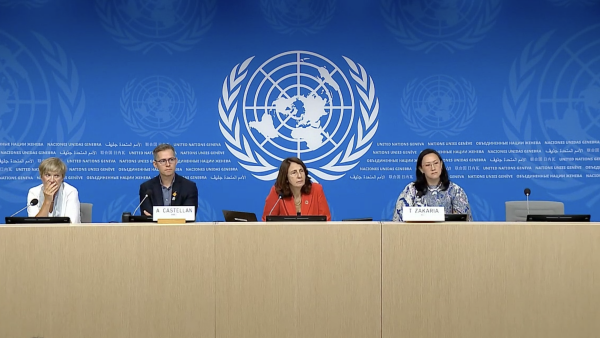
UN GENEVA PRESS BRIEFING
25 February 2025
Update on the health situation in Gaza
Dr. Rik Peeperkorn, World Health Organization (WHO) representative in the Occupied Palestinian Territory, said the WHO polio campaign in Gaza was currently underway, with support from the Gaza Ministry of Health, the United Nations Children’s Fund (UNICEF), the United Nations Relief and Works Agency for Palestinian Refugees in the Near East (UNRWA), and other partners. The campaign had two goals: to stop the transmission of the polio virus within Gaza after the discovery of possible samples; and to prevent the threat of the polio virus to neighboring countries and territories. The campaign was targeting a total number of 591,000 children under the age of 10. After three days, almost 548,000 children had been vaccinated, representing a coverage of 92 per cent. Dr. Peeperkorn said he had been in the north of Gaza, and was surprised at how well vaccinations were received, including in complex areas, despite the rain and cold weather. Today and tomorrow were catch-up days and there would be second round conducted in four days’ time. It was a massive operation with 1,660 vaccination teams and over 1,200 social mobilisers supporting the campaign.
The campaign was taking place following the collection of positive samples in Deir al Balah and Khan Younis, confirming the polio virus, Dr. Peeperkorn affirmed. In September and October, the polio vaccination campaign had reached 95 per cent of the population, and it hoped that the same target would be reached this time. Due to challenges in the previous vaccination round, including being limited to special humanitarian zones, 7,000 children had missed receiving vaccinations during the second round in 2024, creating conditions for continued polio transmissions. Sustained peace was crucial for the polio campaign and for providing access to health care, clean water, sanitation, and proper nutrition to protect children from preventable diseases.
Between the 1st and 24th of February, 889 patients, including 335 children, had been evacuated through the Rafah crossing, bringing the total number of patients evacuated since October 2023 to 6,295, including 4,640 children, Dr. Peeperkorn noted. WHO had pleaded to expand the medical corridors for medivacs, as there would be around 10,000 to 14,000 severely critical patients who needed to be medical evacuated, roughly 4,000 of which were children. This included opening the corridors to the East Jerusalem hospital and the West Bank. 772 health facilities had been partially or totally destroyed, with an estimated cost of $1.3 billion. Almost 95 per cent of hospitals were partially or severely damaged. It was estimated that there were $682 million worth of damage in the north of Gaza. The health sector in Gaza had sustained losses totaling an estimated $6.3 billion, as well as productivity losses, with more than 1,700 health workers reported as missing. The total needs estimated were more than $7 billion.
Dr. Peeperkorn had been in the north of Gaza on the weekend and visited several hospitals where the destruction was enormous, but he had seen positive signs, including at Indonesia hospital where emergency wards were now functioning, after being almost completely unfunctional a few weeks prior. It had only been a couple of weeks since the ceasefire, but there had been reconstruction. These were small, hopeful signs which should be massively expanded and supported throughout Gaza.
Responding to questions from the media, Dr. Peeperkorn recalled 591,000 children under 10 years old had been targeted for the campaign, and by yesterday, 547,848 children had received the vaccine, representing 92 per cent. The campaign had been all over Gaza. This was a remarkable achievement. There had been over 1,250 mobile teams, and this had been increased due to popularity. Overall, the results had been better than expected.
WHO had consistently advocated for medical evacuations and welcomed Jordan’s announcement of opening another corridor, hoping it would become operational as soon as possible. Traditionally, medical pathways have led to hospitals in East Jerusalem and the West Bank. WHO has been urging Israeli authorities to restore these routes, emphasizing they would be the most efficient option, but their requests have so far been denied.
Attacks on healthcare had been rising in the West Bank. Almost 40,000 people had been displaced and there were severe movement restrictions affecting all services, including health. Trauma care was currently ongoing, and there was a WHO mission going to Nablus this week to expand trauma care services.
Rolando Gómez for the United Nations Information Service (UNIS), said the Secretary-General had expressed his alarm at the escalating violence in the West Bank, particularly the northern governates, and once again called for the violence to end.
Responding to further questions, Dr. Peeperkorn confirmed the total needs for the health sector in Gaza were $7 billion. Roughly 18 out of 36 hospitals in Gaza were partially functioning. There were also five field hospitals which were operational. The health infrastructure had not collapsed, which was due to the resilience of the Gaza health workers. Al-Shifa hospital, the largest hospital in the south, was completely non-functional last year and severely damaged, and was now almost fully functioning. Palestinian health workers and partners had contributed to this. For all areas, including health, it was essential that the ceasefire held and that there was a transfer to a sustainable peace process.
In response to additional questions, Dr. Peeperkorn stated that WHO plans to deploy pre-fabricated hospitals by March. Challenges remained in setting up field hospitals, but the most effective health systems were those rooted in primary health care. He emphasized the importance of integrating mental health services at every level of the health care system.
Responding to further media questions, Dr. Peeperkorn said he did not have the exact number of detained health workers but stressed that WHO remained firm in its call for their treatment in accordance with humanitarian law. Before the crisis, Gaza had around 25,000 health workers, but many senior medical specialists had fled, leaving only a few behind. He expressed hope that a sustained ceasefire would encourage their return. WHO also aimed to deploy specialized medical teams — including oncologists — to support Palestinian colleagues. The number of hospital beds had dropped from over 3,500 to around 1,500. Al-Shifa hospital was undergoing renovations and planned to add 200 more beds, a development Dr. Peeperkorn described as impressive.
Responding to a question from the media, Tarik Jašarević for the World Health Organization (WHO), said when it came to the overall impact of funding cuts, any cuts in funding would have consequences on the different programs of WHO. WHO needed to diversify funding and mobilize resources. Member States had agreed to increase contributions by 20 per cent and WHO would introduce cost cutting measures when it came to travel and staffing, the agency would continue its engagement with the United States Government.
Dr. Peeperkorn noted that the Occupied Palestinian Territory benefited from a diverse pool of funders and donors, highlighting the United States as a significant and valued partner. He emphasized that WHO had demonstrated its effectiveness and operational capacity in responding to the crisis in Gaza. To date, more than seven million treatments had been provided, and over nine million liters of fuel had been delivered to health facilities and hospitals. Despite these efforts, the needs remained vast. Dr. Peeperkorn urged the United States to reconsider its support — not only in terms of funding but also as a vital technical partner.
In response to further questions, Dr. Peeperkorn confirmed that WHO's 2025 response plan had been prepared and shared. He noted that $46 million in planned funding for 2025 remained unusable, prompting WHO to seek support from other partners, Member States, and donors. While operations in Gaza could continue for now, Dr. Peeperkorn stressed the need for flexible funding from Member States to sustain future efforts. He acknowledged the potential impact of frozen funds from key partners but highlighted WHO's collaboration with a group of 30 partners, with hopes to expand and diversify support to ensure their work moves forward.
Dr. Peeperkorn stated that the freezing of $46 million would leave six critical areas underfunded: procurement, partner coordination, fuel supplies, rehabilitation of key facilities, parts of the medivac operations, and certain protection activities. He emphasized that these funds would have been crucial in addressing urgent needs. Despite this setback, WHO remained fully operational, using the resources currently available. Looking ahead, Dr. Peeperkorn highlighted the growing financial requirements — an estimated $250 to $300 million — to support rehabilitation and reconstruction efforts and sustain operations into 2025, 2026, and beyond.
Bat Coronavirus in China
Responding to a question, Tarik Jašarević, for the World Health Organization (WHO), said WHO was aware of the study on the Bat Coronavirus in China, which had been published recently, and had technical teams looking into this. Research into new or reemerging pathogens was crucial for public health policy and preventing outbreaks. Lab research had to be done in a practical and safe way, and WHO had published guidelines which outlined how this could be done.
Mpox
Responding to another question, Tarik Jašarević for the World Health Organization (WHO), said WHO was not sure when the outcome of the third meeting of the Mpox Emergency Committee would be ready. It would either be tonight or tomorrow.
Unknown Disease in the Democratic Republic of the Congo
In response to questions, Tarik Jašarević for the World Health Organization (WHO), said information on an unknown disease in the Democratic Republic of Congo, resulting in hundreds of cases and dozens of deaths had been shared in the regional WHO newsletter. The exact cause remained unknown; 13 samples had tested negative for Ebola and Marburg. WHO was determining if it was another infection, or a toxic agent. These were remote areas in the DR Congo with limited surveillance capacities and infrastructure. It was important for WHO to support local health authorities.
Mr. Jašarević clarified that a toxic agent was an element which had been consumed by the population, while an infective pathogen was something spread through people. WHO did not know what the disease was at this stage and needed to undertake further investigations. The area was very remote and there were no laboratories. WHO was in contact with the authorities and were determining where they could offer support.
United States Funding Withdrawal
Responding to additional questions, Tarik Jašarević, for the World Health Organization (WHO), stressed that the withdrawal of United States funding affected not only WHO but also non-governmental organizations working in the health sector. WHO was actively gathering data on service disruptions to assess how best to support affected countries. He emphasized the importance of diversifying funding sources, including for the broader United Nations system, to ensure sustainable financing. Countries had agreed to increase their core contributions, which could be allocated flexibly. Mr. Jašarević confirmed that WHO would continue its dialogue with the United States and expressed hope that the decision would be reconsidered. He did not have the exact figure for the funding impacted.
Announcements
Rolando Gómez for the United Nations Information Service (UNIS), said a statement had been shared on Sudan on behalf of the Secretary-General last night, which expressed his deep concern at the announcement of the Rapid Support Forces of a political charter which intended to establish a governing authority in Rapid Support Forces areas of Control.
Mr. Gómez also said the Committee on Economic, Social and Cultural Rights would issue its concluding observations on the reports of Croatia, Peru, United Kingdom, Rwanda and Philippines, this Friday the 28th of February.
The Conference on Disarmament continued today, under the Presidency of Ms. Ichikawa Tomiko of Japan, having begun its high-level segment yesterday.
The Human Rights Council began its 58th session yesterday with opening statements from the Secretary-General, the President of the General Assembly and the High Commissioner for Human Rights. It continued today with the bi-annual debate on the death penalty, and its high-level segment which began yesterday.
Finally, Mr. Gómez said the Group of Human Rights Expert on Nicaragua would hold a press conference tomorrow at 11am to present the results of their latest report, which would be presented to the Council next Friday.
***
Similar Stories
1
1
1
Statements , Press Conferences | OHCHR
1
1
1
Press Conferences | UNHCR , UNICEF , IFRC , OHCHR , UN WOMEN , IOM , OCHA , WHO
UNHCR – ExCom Meeting, UNICEF – Nepal Recovery, IFRC – Flash Floods, WHO – Mental Health, IOM – South Sudan Floods, OCHA – DRC Humanitarian aid, UNHCR – Sahel Displacement, UNICEF – Yemen Update, IOM – Gaza Shelter, UN Women – Gaza Women, OHCHR – Arrests and detentions of Syrians by Israeli force
2
1
2
Press Conferences | UNCTAD
Presentation of the Trade and Developement Report 2026
Embargoed until 9 October 2026 at 11 a.m. (Geneva Time)
UNCTAD: UNCTAD’s flagship report finds that governments increasingly use industrial, trade, financial and technology policies to pursue economic and national security objectives. Market access and the ability to move into higher-value activities now depend more heavily on technology, finance and geopolitics.
1
1
1
Press Conferences | UPU
Release of the State of the Postal Sector Report 2026
1
1
1
Press Conferences | IOM , ITU , UNECE , UNICEF , WHO , WMO
UNICEF: Ebola, DRC - children orphans or separating them from parents and caregivers; IOM: Humanitarian needs in Djibouti amid arrivals from Yemen and increased migrant movements; WHO: Darfur, scale of health needs far exceeds available resources; WMO co-sponsored Global Heat Forum, Bangkok, monthly Global Seasonal Climate Update; UNECE: UN Forum of Mayors; ITU Plenipotentiary Conference 2026; WHO: child and adolescent obesity guidelines and new global roadmap to tackle pregnancy hypertension, a leading cause of maternal mortality
1
1
1
Press Conferences | OCHA , UN WOMEN , UNHCR , WFP , WHO , WTO , UNEP
OCHA – $160M CERF allocation to 12 underfunded crises; UNHCR – 5.8M refugee children remain out of school amid funding cuts; UN Women – Middle East escalation and food security among women/girls; WHO – Gaza supplies and overall situation; WFP – Yemen food insecurity and impact on global hunger ; UNEP - First International Conference of the Global Framework on Chemicals in Geneva | 16-20 November 2026
1
1
1
Press Conferences | UNHCR , WHO
Yemen's health system nears collapse amid conflict, causing rising casualties and medicine shortages.
1
1
1
Press Conferences | HRC
Update by the Expert Mechanism to Advance Racial Justice and Equality in Law Enforcement
1
1
1
Press Conferences | WIPO , WHO , UNICEF , UNHCR , IOM , WFP , FAO
WIPO Global Innovation Index 2026 launch and press conference, WHO Composition of influenza vaccines for the 2027 Southern Hemisphere flu season, UNICEF Yemen hunger and malnutrition; UNHCR Sudan displacement into Chad; IOM Ebola and population movements in DRC; WFP emergency food assistance in Nepal; and FAO food loss and waste.
2
1
2
Press Conferences | UNCTAD
Gaza reconstruction needs reach $71.5 billion as Palestinian economy and public finances face severe strain. Latest UNCTAD report documents the loss of decades of development gains, economic collapse in Gaza and tightening economic constraints in the West Bank.
The report identifies three immediate priorities: transferring withheld Palestinian revenues, safeguarding the banking system and aligning reconstruction support with the documented scale of damage and economic losses.
1
1
1
Press Conferences | HRC
Press conference on the situation of human rights in Nicaragua by the UN Group of Human Rights Experts
1
1
1
Press Conferences | ITU , UNHCR , WHO , WMO
YEMEN - UNHCR: Escalating conflict in Yemen could fuel more displacement, refugee movement
CLIMATE - WHO / WMO: Health and Climate impact of El Niño