

The United Nations Office at Geneva
Multimedia Newsroom
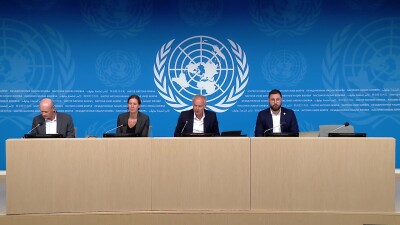
PRESS BRIEFING BY THE UNITED NATIONS INFORMATION SERVICE
26 January 2024
Gaza Update
Ajith Sunghay, Head of the Office for the Occupied Palestinian Territory, Office of the United Nations High Commissioner for Human Rights, (OHCHR) said civilians continued to face the brunt of the escalation in Gaza. The situation was nothing short of a catastrophe.
Last Saturday, Mr. Sunghay said he was in Khan Younis, where he met with people who were frustrated, angry and understandably wary. And yet, these people, explaining their situation, treating Mr. Sunghay with warmth and respect in the middle of a brutal, unconscionable situation, explaining how they fled their homes to seek shelter in overcrowded, makeshift camps. How children had not gone to school in months – and their schools have been destroyed, as had their universities, destroying their hopes for the future. The personal cost to each individual, each family, in addition to the killings of loved ones. Family separation, violence against women, documents destroyed, homes and communities uprooted, health deteriorating.
In Rafah, Mr. Sunghay saw displaced people who had been ordered by Israeli authorities to leave their homes, with no provision for their accommodation, literally living on the street, with sewage running in the streets and conditions of desperation conducive to a complete breakdown in order.
And even in the midst of it all, human rights and humanitarian non-governmental organizations in Gaza continued their courageous work, trying to make sure human rights violations were properly documented and humanitarian response continued – even as their own lives fell apart.
Over the past few days, the warm, heroic, long-suffering people of Khan Younis had been caught in the midst of ever intensifying violence, from Israeli airstrikes and street-to-street fighting between Israeli Defence Forces (IDF) and Palestinian armed groups. There had been near continuous attacks, including on medical facilities and schools in Khan Younis, UN facilities, as well as residential areas.
The people Mr. Sunghay spoke to feared the extreme violence was spilling into Rafah – which would have catastrophic implications for the more than 1.3 million people already crowded there.
Shelling by the IDF continues in areas that it has unilaterally designated as “safe” areas, including Al Mawasi in western Khan Younis. Even after explosions were reported in Al Mawasi on 22 and 23 January, the IDF continued to order residents of western Khan Younis to move there. The order, which was issued repeatedly on 23, 24 and 25 January, reportedly affected more than half a million people, as well as three hospitals which had been under heavy attacks and siege – An Nassr Hospital, Al Amal Hospital and Jordanian Field Hospital. Mr. Sunghay expressed very grave concerns that these chaotic and mass evacuation orders were ineffective in ensuring the safety of Palestinian civilians, instead placing them in increasingly vulnerable, dangerous situations.
Attacks on hospitals, schools, and other places of refuge had repeatedly displaced Palestinians into ever smaller areas, with ever decreasing access to the essentials needed to sustain life. Such a failure violated Israel’s obligations under international law.
Having personally witnessed and heard the testimonies of those who had endured so much pain and suffering, Mr. Sunghay said he was very, very worried. He feared that many more civilians would die. The continued attacks on specially protected facilities, such as hospitals, would kill civilians, and there would be a further, massive impact on access to health care, safety and security in general of Palestinians.
OHCHR was also very worried about the impact of the rainy, cold weather in Gaza, which was entirely predictable at this time of the year and risked making an already unsanitary situation completely uninhabitable for the people. Most had no warm clothes or blankets. Northern Gaza, where IDF bombardment continued, was barely accessible, even to provide basic humanitarian aid.
The apparent disregard for international law needed to end. The violence needed to end. Humanitarian aid needed to be delivered without impediment to all those who needed it. OHCHR was urging for a ceasefire, immediately. It urged the release of hostages, and a political solution to the causes of this conflict that respected and ensured the rights of all Palestinians and Israelis.
In response to questions, Ravina Shamdasani for the Office of the United Nations High Commissioner for Human Rights (OHCHR) said that human rights non-governmental organizations were continuing to work and document what was going on in Gaza. It was important that the OHCHR continued this work also, to shine a spotlight on what was going on. Much more could be done on the international level. The OHCHR was calling on all States with influence on authorities to exercise that influence to bring an end to the conflict.
OHCHR reports on the situation were shared with authorities before publication, but the Office had received no formal response from them.
Many people remained under the rubble. There could be thousands more deaths than what was being reported. It was unimaginable to even begin to think about the suffering of the people.
Mr. Sunghay said the OHCHR had extremely qualified local staff in Gaza and the West Bank who continued to do immense work. International staff had been waiting for visas for three years. Letters were being sent to authorities by the OHCHR from Geneva. Civilians were still being killed; places that were called “safe” were still being attacked. States needed to step up and put pressure on leaders with influence.
The severe shortage of food was visible. People were struggling, especially in northern Gaza, where aid could not be delivered. Families were surviving on one meal a day or less. Hundreds of children were running behind food cars. There was a lack of food and an urgent need for humanitarian aid.
A rush of people into Egypt would be a terrible situation. OHCHR was hoping that this would not occur, but the indications were that if Rafah were attacked, this could be a possibility. The situation was catastrophic. If what was happening at Khan Younis continued and displaced persons moved into already congested Rafah, there would be a breakdown in civil order. If street fighting moved into Rafah, there would be nowhere to run for 1.3 million people. This would be a massive catastrophe.
Christian Lindmeier for World Health Organization (WHO) said that the World Health Organization had registered more than 26,000 deaths, with 75 per cent being women and children, and at least 60,000 registered injuries. Over 8,000 were still missing, with many people buried under the rubble. There were over 318 attacks on health in Gaza, resulting in 615 fatalities and 778 injuries. In the West Bank, there were 358 attacks on health resulting in seven fatalities and 59 injuries.
Only 14 of the 36 health facilities in Gaza were partially functioning, seven in the south and seven in the north, with 20 not functioning at all. In the south, the seven partially functioning health facilities, such as Al Kheir and Nasser hospitals, were only minimally functioning and not accessible. Bed occupancy was at over 200 or 300 per cent at operating hospitals. People were sheltering in hospitals that were under siege, fearing for their lives. Disease surveillance had been disrupted. Laboratories had been shut down and transporting of samples was impossible. The number of diseases could thus be much higher than the surveillance system was able to detect.
Jens Laerke for the United Nations Office for the Coordination of Humanitarian Affairs (OCHA) said that trucks at the Kerem Shalom crossing had been held up for several hours yesterday by Israeli protests attempting to block the entry of humanitarian aid. As a result, only nine trucks were able to enter and many were forced to reroute to the Rafah crossing in Egypt. OCHA regretted this incident. Crossings had since resumed at Kerem Shalom.
The United Nations was working with the Israeli authorities to address the issue of restricted aid items and how those items could be approved for delivery.
Execution of Kenneth Eugene Smith by Nitrogen Gas
Ravina Shamdasani for the Office of the United Nations High Commissioner for Human Rights (OHCHR) said that Volker Türk, United Nations High Commissioner for Human Rights, had issued a statement expressing deep regret regarding the execution of Kenneth Eugene Smith in Alabama, despite serious concerns this novel and untested method of suffocation by nitrogen gas could amount to torture, or cruel, inhuman or degrading treatment.
Mr. Türk said the death penalty was inconsistent with the fundamental right to life. He urged all States to put in place a moratorium on its use, as a step towards universal abolition.
In response to questions, Ms. Shamdasani said that there were reports that the death could have taken up to 25 minutes. Rather than looking for novel methods of execution, states needed to bring an end to the death penalty. OHCHR was worried that this would now be adopted as an accepted method of execution. It was urging all states to implement a moratorium on the death penalty. This was not a satisfactory method of execution. It could amount to torture and other forms of cruel, inhumane or degrading treatment. Three other states had approved the method and a bill to approve it had been lodged in Nebraska.
OHCHR was appealing to governments directly on this issue. The United Nations Human Rights Committee had spoken out about the issue in its review of the United States and the High Commissioner had written to the Alabama government about it. The Committee against Torture was due to review the United States next year and would likely bring up this issue.
International Day of Commemoration in Memory of the Victims of the Holocaust
Ravina Shamdasani for the Office of the United Nations High Commissioner for Human Rights (OHCHR) said Volker Türk, United Nations High Commissioner for Human Rights had issued a statement for the International Day of Commemoration in Memory of the Victims of the Holocaust, commemorated on 27 January, saying that this was a day of profound importance when we remembered and honoured the millions of victims of the Nazi Holocaust – children, women and men on whom atrocious suffering and injustice were inflicted by an abominable machinery of mass murder.
Some six million Jews were murdered in the Holocaust, 1.5 million of them children. Millions of other people from targeted groups were also murdered, including Roma and Sinti people; Slavs; people with disabilities; lesbian, gay, bisexual, transgender and intersex people; members of resistance networks; and other opponents of Nazism.
The scale of these crimes engaged many perpetrators. The Nazi concentration camps and death trains were staffed. The victims had often been identified to the police, and therefore sent to their deaths, by people who they knew. Countless bystanders looked away from – or were indifferent to – what they must have suspected was extraordinary, inhuman brutality. The dehumanisation that enabled the Holocaust – the depth and scale of this failure of empathy and fellow-feeling for other human beings – was incomprehensible and terrifying.
It was our duty to seek answers to how these crimes could have been prevented. If we did not, they could happen again.
The High Commissioner paid tribute to the extraordinary courage and important lessons that so many survivors had brought to us. He said all human beings were born free and equal in dignity and rights. Antisemitism and all forms of racism and racial or religious discrimination were intolerable. They were unacceptable. Today and forever, we needed to stand against dehumanisation. We needed to work to overcome indifference and strengthen our understanding of and empathy with others. The atrocious crimes of the Holocaust should never be forgotten.
Alessandra Vellucci, Director of the United Nations Information Service (UNIS) in Geneva, said that an event would be held today at 1 p.m. at room XVIII of the United Nations Office at Geneva, at which the international community would come together for a solemn ceremony. The focus of the day was recognising the extraordinary courage of victims of the Holocaust. The ceremony would be attended by a Holocaust survivor, Martha Raviv, who would share her family’s experience of loss and survival. The United Nations Secretary-General António Guterres would also host a commemoration in New York.
Announcements
Christian Lindmeier for the World Health Organization (WHO), said that a virtual opening press conference of the global tobacco control governing bodies, the Tenth session of the Conference of the Parties (COP10) to the WHO Framework Convention on Tobacco Control (FCTC) and the Third Session of the Meeting of the Parties (MOP3), would be held on Tuesday, 30 January 2024, at 3 p.m. Geneva time.
During the virtual press conference, Dr. Adriana Blanco Marquizo, Head of the Secretariat of the WHO FCTC, would be responding to questions regarding the topics to be discussed at the COP10 and the MOP3. Among the topics to be discussed would be tobacco advertising, promotion and sponsorship, novel and emerging tobacco products, and tracking and tracing systems.
In response to questions, Mr. Lindmeier said the WHO Framework Convention on Tobacco Control was an international treaty that was housed in WHO. A conference on the Convention was held every two years.
Alessandra Vellucci, Director of the United Nations Information Service (UNIS) in Geneva, said the Committee on the Elimination of Discrimination against Women would open next Monday, 29 January, at 10 a.m., its 87th session, during which it would review the reports of Niger, Tajikistan, Italy, Turkmenistan, Greece, Oman, Djibouti and the Central African Republic.
The Committee on the Rights of the Child would have next Thursday afternoon, 1 February, a meeting with State parties. On Friday, 2 February, the Committee would close its 95th session and issue its concluding observation on the six countries whose reports have been reviewed during this session: Republic of Congo, Bulgaria, Senegal, the Russian Federation, Lithuania and South Africa.
The next public plenary meeting of the Conference on Disarmament would be held next Tuesday morning, 30 January.
Today was the International Day of Clean Energy. The United Nations Secretary-General had issued a statement for the day.
Similar Stories
1
1
1
Press Conferences | IOM , OHCHR , UN WOMEN , UNFPA , UNHCR , UNOPS , WHO
UN Geneva briefing: Yemen crisis worsens, urgent aid needed across multiple sectors.
1
1
1
Press Conferences | HRC
Press conference on the latest report of the Independent International Fact-Finding Mission on the Bolivarian Republic of Venezuela to the UN Human Rights Council
1
1
1
Press Conferences | OHCHR
Victims Still Waiting: A Global Briefing on Transitional Justice Around the World
2
1
2
Edited News , Press Conferences | WMO
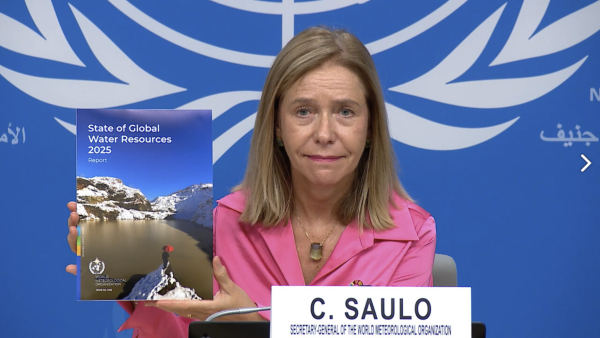
As world’s water reserves change, countries must prepare for a new reality: WMO
New data showing that rivers were at their lowest level for decades last year provides further evidence that the climate crisis is real and countries must act immediately to protect themselves from the increasing threat to communities and livelihoods, the UN World Meteorological Organization (WMO) said on Thursday.
The key findings from WMO’s State of Global Water Resources 2025 report covering the hydrological cycle and extreme events in the five-year period to last year:
- 2025 was one of driest years for river discharge in 35 years
- Past seven years have seen abnorfmal river flows
- Water storage on Earth’s land surface has decreased in past decade
- Widespread glacier loss across all regions for fourth consecutive year
- Asia and Africa are regions most affected by water-related disasters
- Water data availability has improved, but gaps remain in hard-hit areas
Highlighting the long-term decline in the Earth’s freshwater storage and glacier melt, WMO Secretary-General Celeste Saulo explained that the planet’s water reserves used to act as a planetary “savings account” that absorbed the occasional dry season, avoiding a water crisis. “One of the central stories of the 2025 report is what is happening to that savings account? And the simple answer is that we are depleting it,” she told journalists in Geneva.
Groundwater reserves are equally stretched and have been in decline since 2014, WMO’s report states, with nearly two-thirds of monitored wells worldwide showing levels lower than the historical norm and indicating a shift “further toward deficit…not recovery”.
“At the same time, we are seeing more water-related disasters,” Ms. Saulo said, while also stressing that the currently strengthening El Niño “will increase the risk of drought in some areas, and flooding in others”.
Glaciers disappearing
In 2025, for the fourth consecutive year, every major glaciated region on Earth lost ice mass, leading to short-term hazards including floods and long-term water insecurity, according to WMO.
Responding to a question about whether the changing global water cycle might have contributed to the deadly Nepal-China flooding disaster, Ms. Saulo explained that melting ice and rock was just one factor in the chain of events that ultimately sent a massive and deadly wall of water and debris downstream on 26 August, killing at least 1,367 people.
“You asked if it could happen again? Absolutely; the problem in this region is that there’s 63,700 glaciers at the last count,” she told a Press Conference in Geneva. “Even if you’re looking with remote sensing with satellites at these glaciers, you might see some faults, you might see some slight shifting, that does not mean necessarily catastrophic collapse. So, in order to plan for this, it’s very, very difficult. But the international community is looking very hard at ways in which we can bring people together to solve some of these monitoring issues.”
Data indicates that glaciers shrank between 2023 and 2025 with cumulative losses of 1,400 gigatonnes of water – or about one third of annual fresh water needs.
Every major glacier region on Earth lost ice for the fourth consecutive year.
“All 19 glacier regions around the globe lost ice; in Central Asia, Iceland, the Russian Arctic and western Canada and the United States, it was among the three worst years on record,” said Wayne Jenkinson, WMO’s Director of Hydrology and Cryosphere.
Some regions with smaller glaciers such as Central Europe, the Caucasus, the western Canada and the United States may already have reached “peak water”, Mr. Jenkinson warned.
“After this point, the glacier gives less meltwater each year simply because there is less ice left to melt. That matters for every community downstream that relies on water during hot, dry summers,” he explained.
Narelle van der Wel, WMO’s Head of Cryosphere Monitoring, Predictions and Services, stressed that while some further glacier loss is unavoidable, the eventual scale of the decline is not predetermined.
“Some glacier loss is inevitable, but total loss of glaciers is not yet inevitable,” she said, pointing to emissions reductions as central to limiting future losses.
Preparing for moving baselines
The report does not attribute every observed change to climate change alone. WMO says pressure on water resources and natural variability also contribute.
Mr. Jenkinson said governments need to prepare for “moving baselines” as historical patterns become less reliable.
“The situation 30 years ago is not where we are today,” he said. Countries, he added, need to prepare “for those changes that have really already arrived”.
ends
1
1
1
Press Conferences | WMO , OCHA , WHO , UNICEF , UN WOMEN , OHCHR , IOM , UNHCR
Update on Ebola from WHO and OCHA, update on the situation of children with the beginning of school in Ukraine from UNICEF, UN Women on the impact of the settlers and restrictions on women and girls in West Bank, OHCHR on the recovery of extensive human remains in Gaza, IOM and UNHCR on the new wave of displacement in Yemen
2
1
2
Press Conferences , Edited News | WFP
‘Super El Niño’ and converging crises worsen hunger in South Sudan and across the region - WFP
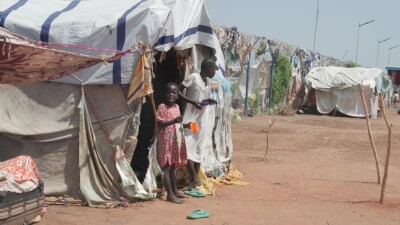
South Sudan’s hunger crisis is becoming increasingly catastrophic as violence, extreme weather and dwindling aid leave millions without enough food, the UN World Food Programme (WFP) warned on Tuesday.
1
1
1
Press Conferences | HRC
Update on the human rights situation in Belarus by the UN Group of Independent Experts on the Human Rights Situation in Belarus
1
1
1
Press Conferences | HRC , OHCHR
Update on the human rights situation in Syria by the Independent International Commission of Inquiry on the Syrian Arab Republic
1
1
1
Press Conferences | UNOG , IOM , UN WOMEN , UNCTAD , WHO , UNECE
IOM Yemen's Western Coast displacement; UN WOMEN on Gaza; UNCTAD Strait of Hormuz disruptions impacts; WHO Ebola logistics in DRC; WHO smoking and infertility; UNECE Data centres and energy.
1
1
1
Press Conferences | UNITAR , WMO
UNITAR: GA resolution on the merger of the United Nations System Staff College into the United Nations Institute for Training and Research; WMO: Air Quality and Climate Bulletin released; WHO: Ukraine update
2
2
2
Press Conferences , Edited News | WMO
Powerful El Niño heightens extreme-weather risks through 2027, as countries brace for impact - WMO
Fuelled by extraordinarily warm waters across the tropical Pacific Ocean, the El Niño climate pattern is expected to intensify in the coming months. Forecasters are almost certain that it will persist through February next year, with unusually warm conditions expected across the globe.
1
1
1
Press Conferences | IFRC , UN WOMEN , WFP , WHO , WMO , OCHA
UN WOMEN/IFRC: Update on the impact of the floods in Nepal, WFP: Food assistance in the West Bank, WHO: Gaza’s rehabilitation needs and continued spread of diseases